World Health Day highlights AIDS in Tibetan community
Monday, 9 April 2007, 12:43 p.m.
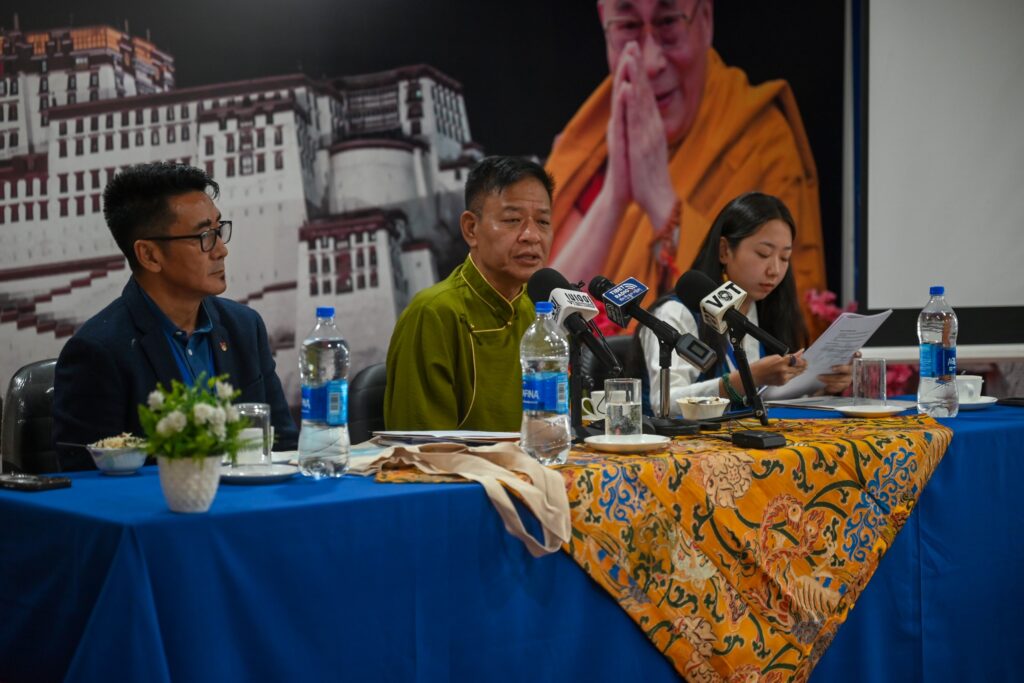
 Health Secretaray Tenpa C. Samkhar Health Secretaray Tenpa C. Samkhar |
Dharamshala: Even though the theme for this World Health Day, marked every year on 7 April, was health security, the Health Department of the Tibetan Administration availed the occasion in spreading awareness on the menace of AIDS.
Addressing a packed hall of hundreds of Tibetan civil servants, Health Secretary Tenpa C. Samkhar and Dr. Kunchok Dorjee gave insightful talks on health security and the preventive aspects of AIDS.
The function was followed by what has now become an annual spring-cleaning, in which staff devote rest of the day’s afternoon working hours in cleaning the premises of the Administration.
Following are excerpts from an interview with Health Secretary Tenpa C Samkhar, conducted by the editor of TibetNet few months back, after a news article in a Tibetan newspaper quoted the AIDS project officer of Kangra district, as saying that as many as 14 local Tibetans, in addition to two from other districts, have tested HIV positive. The officer further claimed that 85% of the patients have acquired the infection through unsafe intercourse.
Whenever Tibetan media covers anything related with AIDS, it reportedly creates a great deal of consternation in the Tibetan community. Why is it so? Do you think we Tibetans still view AIDS as an alien disease, rather than a clear and present reality?
Health Secretary: AIDS is not a crime, nor are those infected with HIV criminals. The Tibetan society needs to reform its attitude. People need to be more loving and compassionate towards HIV/AIDS patients. At present, the social stigma, which views this medical condition as a scourge on humanity, is the biggest challenge before our efforts to encourage the AIDS patients to come forward, so that we could not only contain the infection, but also help with patients in leading a quality life for a longer span.
Media must also act responsibly for there is a fine line between creating mass awareness and mass phobia. While at one hand, media must assume the responsibility of promoting mass awareness on AIDS, it should not sensationalize or exaggerate the issue to such an extent that it creates consternation among the general public. I am not being critical but it is constructive suggestion in the spirit of collective responsibility. Objective reporting should always be the very sheet anchor of media policy
How is the Health Department of the CTA, which runs a network of 7 hospitals, 4 primary health centers and 43 clinics across India and Nepal, combating the menace from AIDS in the Tibetan community?
There are widespread awareness program on AIDS organized by the department in all the Tibetan settlements in exile through its hospitals and primary health centers. We have arranged for quarterly health talks on AIDS at Tibetan schools by professionals and also for the settlement people. The Department also publishes and distributes various posters and pamphlets on AIDS in both Tibetan and English. The Department has also produced a short film on AIDS called Sangpo.
The Department and its branch hospitals and clinics celebrates the World AIDS Day on 1st December every year and initiates various activities on the day to create mass awareness on AIDS. We have also made a new DVD on World AIDS Day function this year so that people could watch and listen to AIDS talk given by the Doctors from Tibetan Delek Hospital and Tibetan Medical and Astrological Institute. The department continues to work to create more and more awareness among the Tibetans on AIDS.
Supposing an AIDS patient approaches a doctor posted at a settlement hospital run by the Health Department, what kind of support or service are provided to that patient?
When a person is diagnosed as having AIDS or if an AIDS patient approaches our hospital, he or she is tested again for AIDS by the hospital and if the result is positive then the patient is referred to a bigger hospital for more tests. For example, if the patient is from Himachal, after a positive test at Delek hospital, the patient is referred to Zonal Hospital and then to a bigger hospital in Shimla or Chandigarh for further tests.
The patients’ names are kept confidential and they are given free needed medications provided by the Indian Government. Our concerned health staff check on the patients from time to time and give counseling.
The Department provides hundred percent medical expenses for the patient and also provides other assistance like attendant for people lacking any family support.
What is the Health Department’s view about the spread of AIDS inside Tibet?
Regarding the role of Health Department in combating the spread of AIDS in Tibet, the department in a way finds itself in a tight spot. Even though statistics on the prevalence of AIDS in Tibet is not available, the assumption is, AIDS is already widespread, given the massive influx of Chinese migrant workers, particularly those hailing from the regions where AIDS is highly prevalent, in addition to the rising number of prostitutes, due to a booming sex industry, further exacerbated by lack of mass awareness about AIDS.
Although there is evidence to suggest that some form of awareness activities, like distribution of brochures, are being carried out in Tibet, especially by the NGOs, the authorities need to do far more, given the gravity of the problem. The brunt of the onus no doubt falls squarely on the Chinese authorities. They must also be aware that AIDS does not discriminate between a Tibetan and a Chinese.
We would like to urge the concerned authorities inside Tibet to take all possible measures to prevent the spread of AIDS inside Tibet by creating mass awareness in every nook and corner of Tibet about this deadly disease. This in fact remains the very essence of His Holiness the Dalai Lama’s message on the recent TCV anniversary celebration day here in Dharamsala.
We also take this opportunity to call upon all tourists visiting Tibet from various parts of the world to lend their maximum support and contribution in the campaign to prevent AIDS inside Tibet and China. We believe they can play a major role in accomplishing this enormously important task.
Apart from AIDS, what are the other major health concerns among the Tibetans in exile?
Apart from HIV/AIDS, the Department of Health, CTA, is seriously concerned over other major health problems such as Hepatitis B, Diabetes, Hypertension, Tuberculosis specially Lung TB and Cancer (particularly Gastro Intestinal) currently common in our community in exile.
The Department of Health through our various health care network is making maximum effort in curbing and eradicating these health problems and we call upon all concerned to give us your maximum cooperation and support in every possible way.