
Berlin: The German Federal Foreign Office has expressed serious concern over a new Chinese law on “ethnic unity and progress” that takes effect on 1 July 2026, warning that it could further undermine the rights of ethnic and religious minorities and enable transnational repression reaching individuals and organisations outside China, including in Germany and Europe.
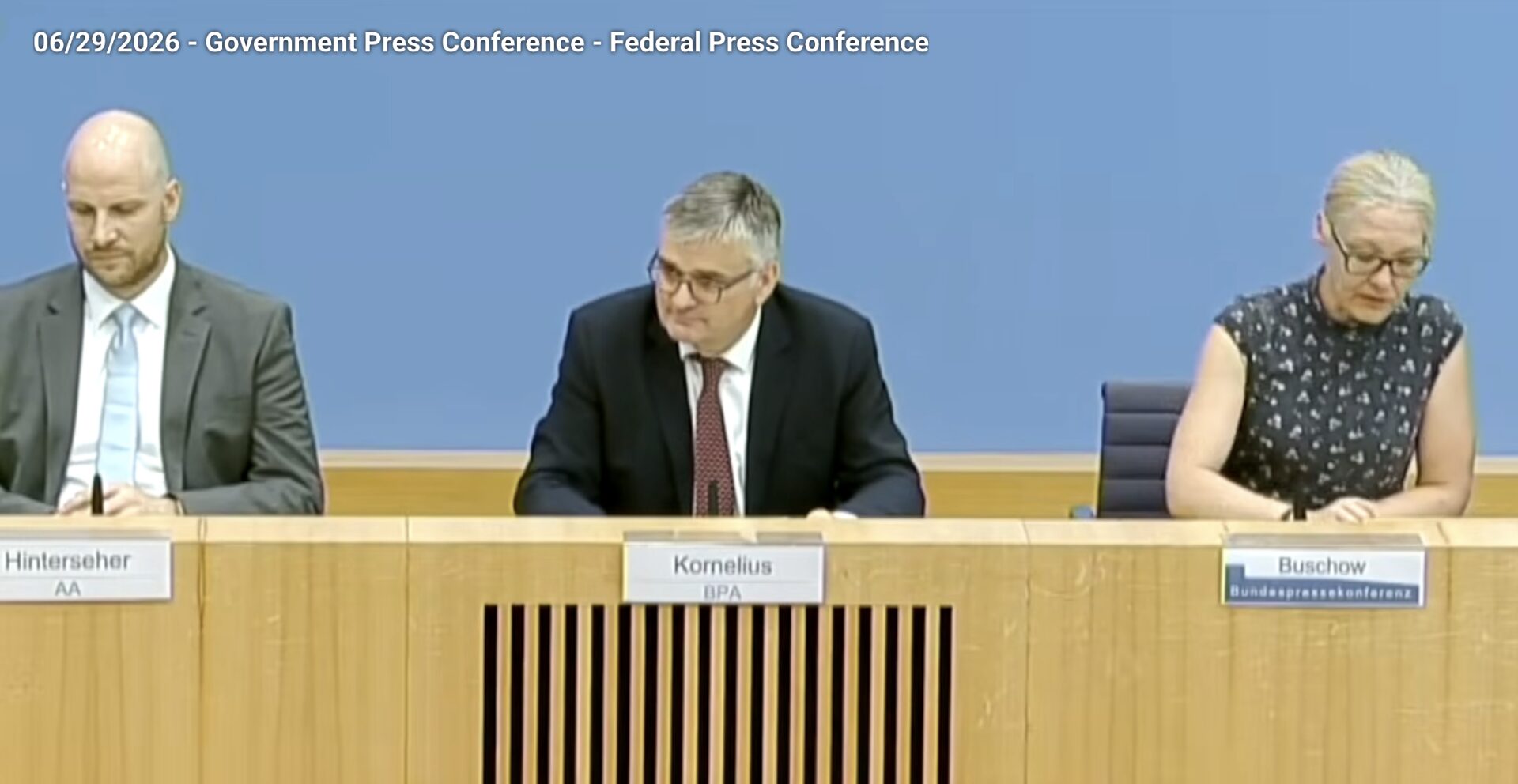
The remarks came during a regular government press conference held on 29 June 2026, when Foreign Ministry spokesperson Sebastian Hinterseher was asked whether Berlin was worried the law might have implications for German citizens. NGOs had flagged that the legislation’s reach could extend beyond China’s borders.
Hinterseher confirmed that the German government consistently raises human rights concerns with Beijing at all levels, noting this includes what China calls the Law on Promoting Ethnic Unity and Progress. He said Berlin views both the law’s passage by the National People’s Congress in March and its entry into force on 1 July “with great concern,” describing it as creating an expanded legal basis for China’s existing minority policy — particularly what he characterized as the planned Sinicization of religion.
According to the spokesperson, the Foreign Office sees a significant risk that the law will further weaken minority-language education as well as fundamental rights such as freedom of religion.
Of particular concern to Berlin are provisions in the law that explicitly allow for the prosecution of individuals and organizations outside China. Hinterseher said these provisions are open to broad interpretation and therefore pose a risk of transnational repression. He reaffirmed that the German government “resolutely opposes any form of transnational repression, regardless of its origin.”
The German Foreign Ministry’s remarks follow Sikyong Penpa Tsering’s official visit to Germany from 11–14 June, during which he met parliamentarians, government officials, and civil society leaders in Berlin and Frankfurt to raise awareness of China’s escalating repression in Tibet. His engagements included meetings with Member of Parliament and State Secretary Michael Brand, Federal Commissioner for Freedom of Religion and Belief Thomas Rachel, and officials from the German Federal Foreign Office, as well as addresses to the 3rd International Uyghur Forum and the Annual General Meeting of Tibet Initiative Deutschland. Throughout the visit, Sikyong pointed to China’s systematic assimilation policies in Tibet — including the erosion of Tibetan language, religion, and cultural identity — and warned of the growing threat of transnational repression against Tibetans and other diaspora communities. Discussions with the Foreign Office also touched on international efforts toward a peaceful resolution of the Tibetan issue.
The law’s entry into force has drawn scrutiny from rights groups concerned about its implications for Tibetans, Uyghurs, and other minority communities, as well as for diaspora organizations operating in Europe. In this regard Sikyong Penpa Tsering has issued an urgent global appeal to governments, foreign ministries, parliamentarians, think tanks, and non-governmental organisations (NGOs) worldwide through official correspondence and virtual distribution, calling for repeal of the law.
Echoing Germany’s concerns, Representative Thinlay Chukki noted: “Germany’s statement confirms what Tibetans and other affected communities have warned for years: Beijing’s so-called ‘ethnic unity’ framework is not about unity at all, but about extending control — over religion, over language, and now, explicitly, over critics living far beyond China’s borders. We welcome the Federal Foreign Office’s clarity in naming this law as a vehicle for transnational repression and assimilation, and we urge Germany and its European partners to translate this concern into concrete protections for diaspora communities and into coordinated diplomatic pressure on Beijing.”
– Report filed by Office of Tibet, Geneva