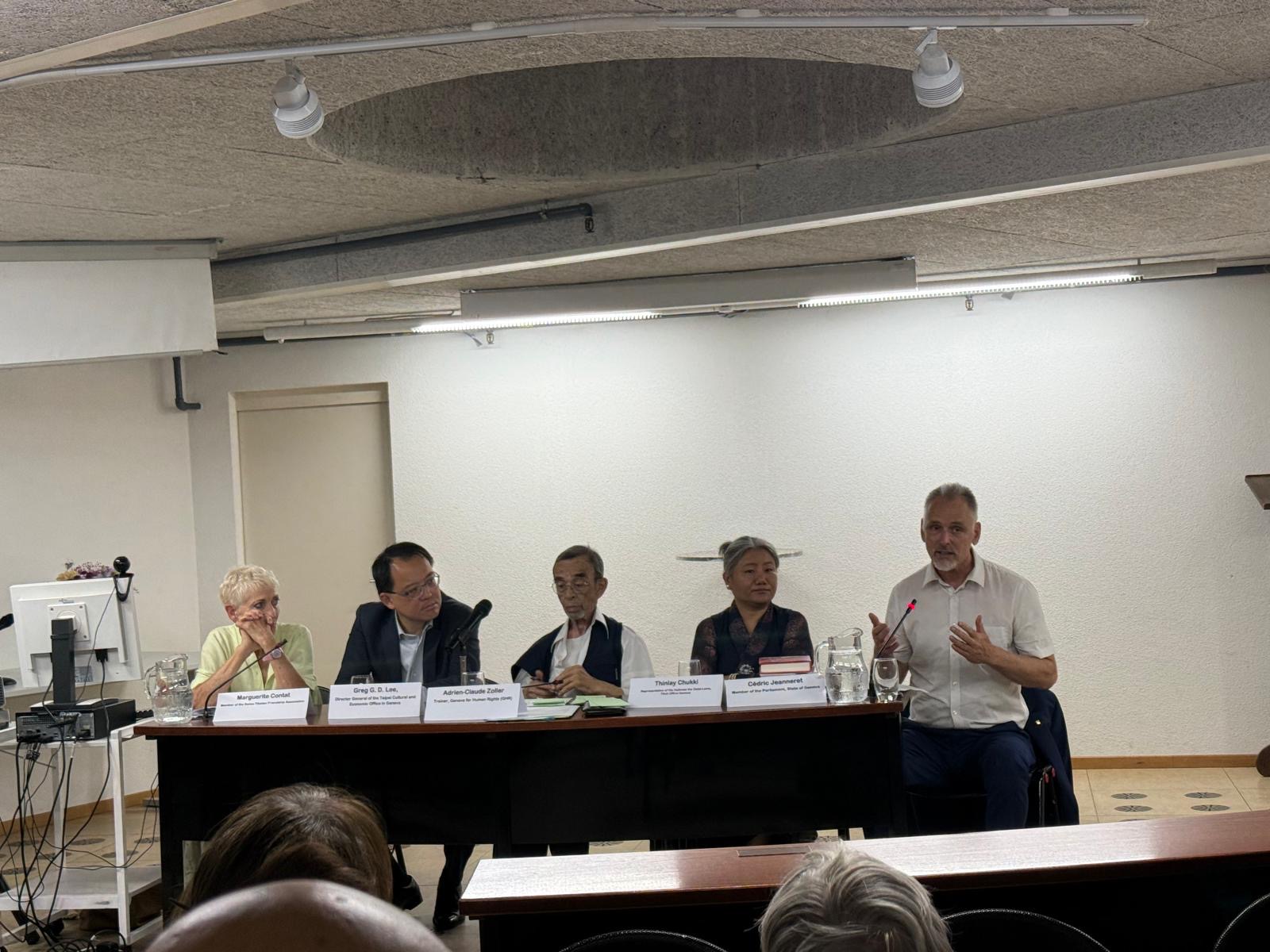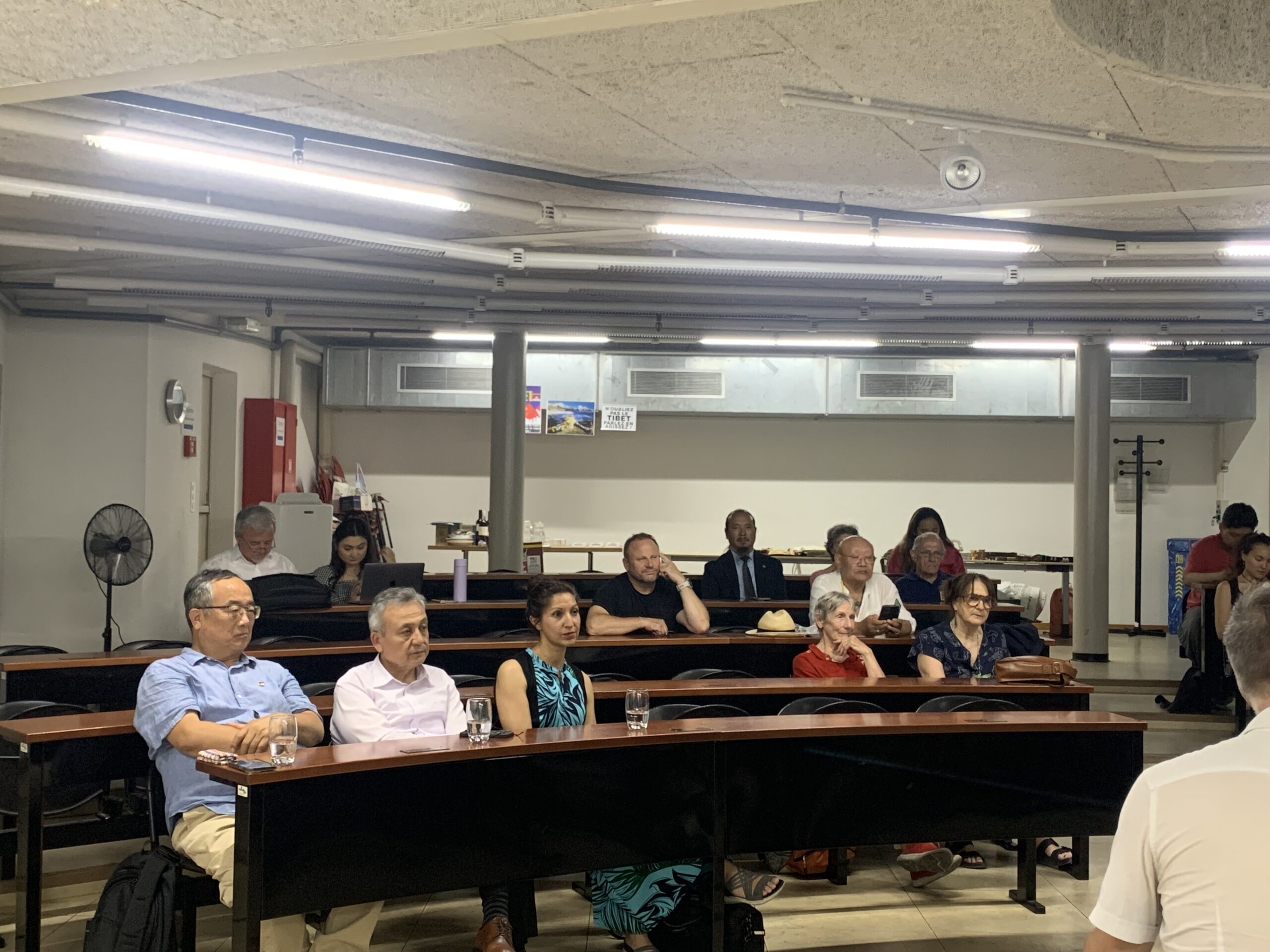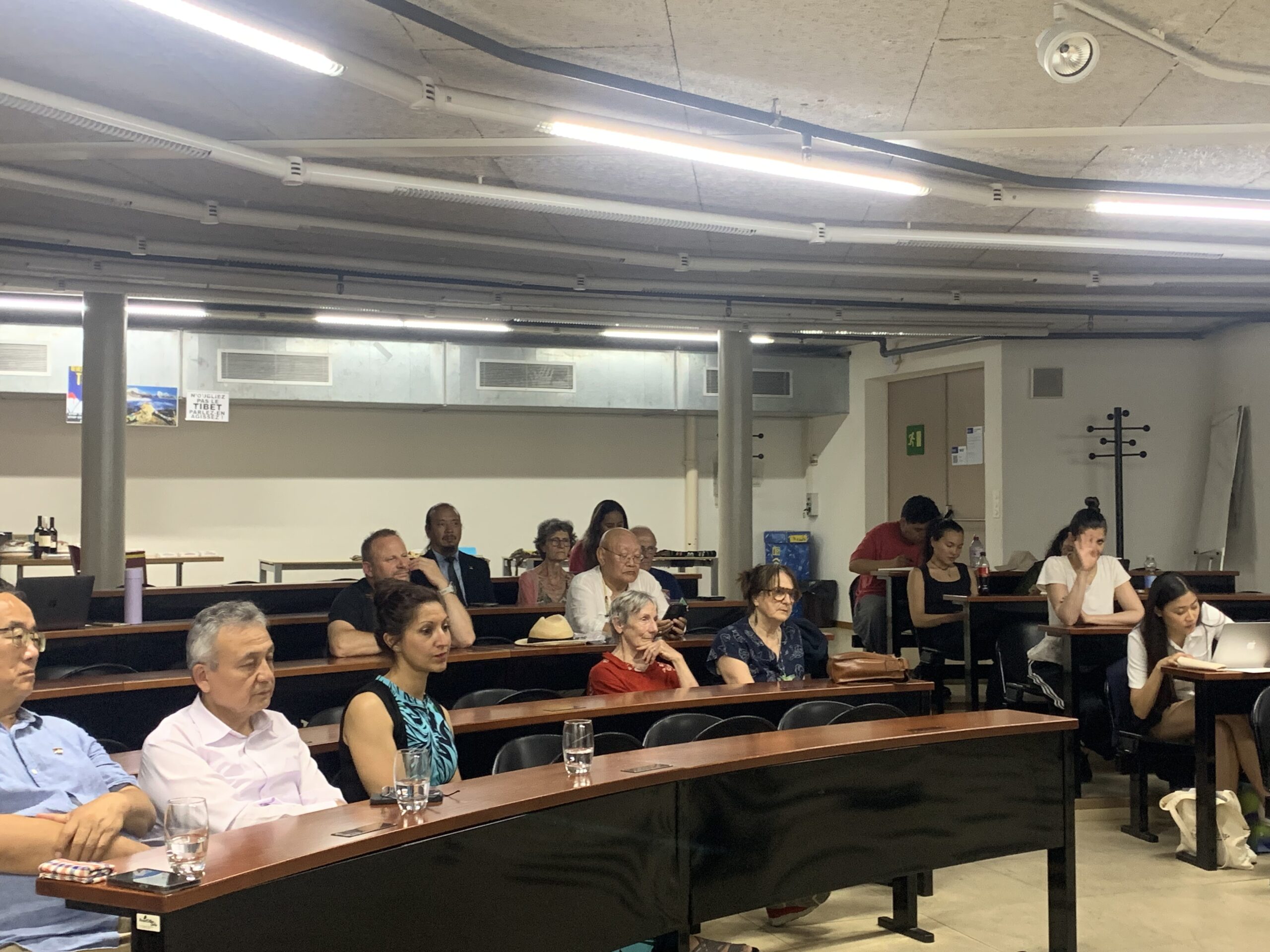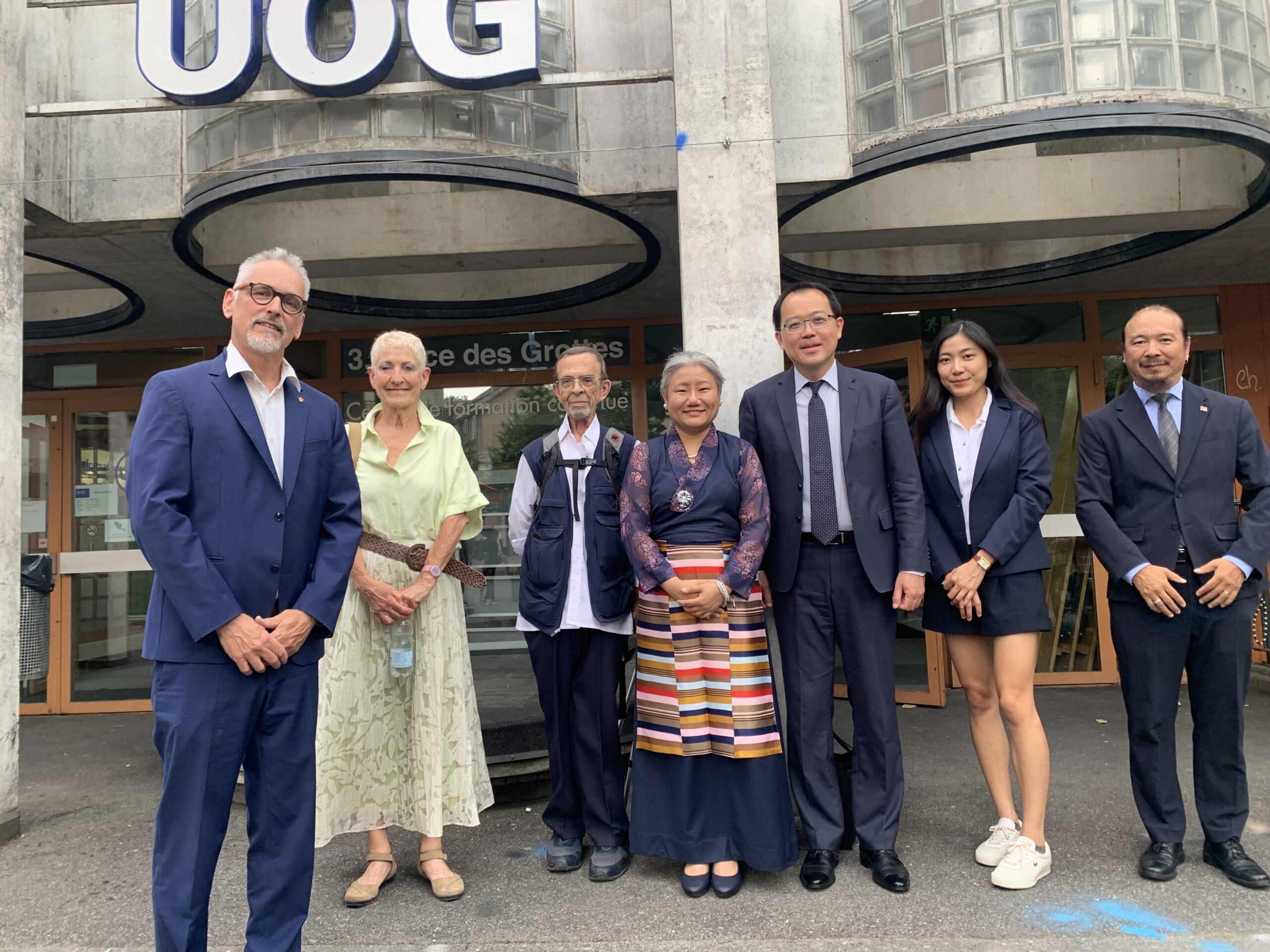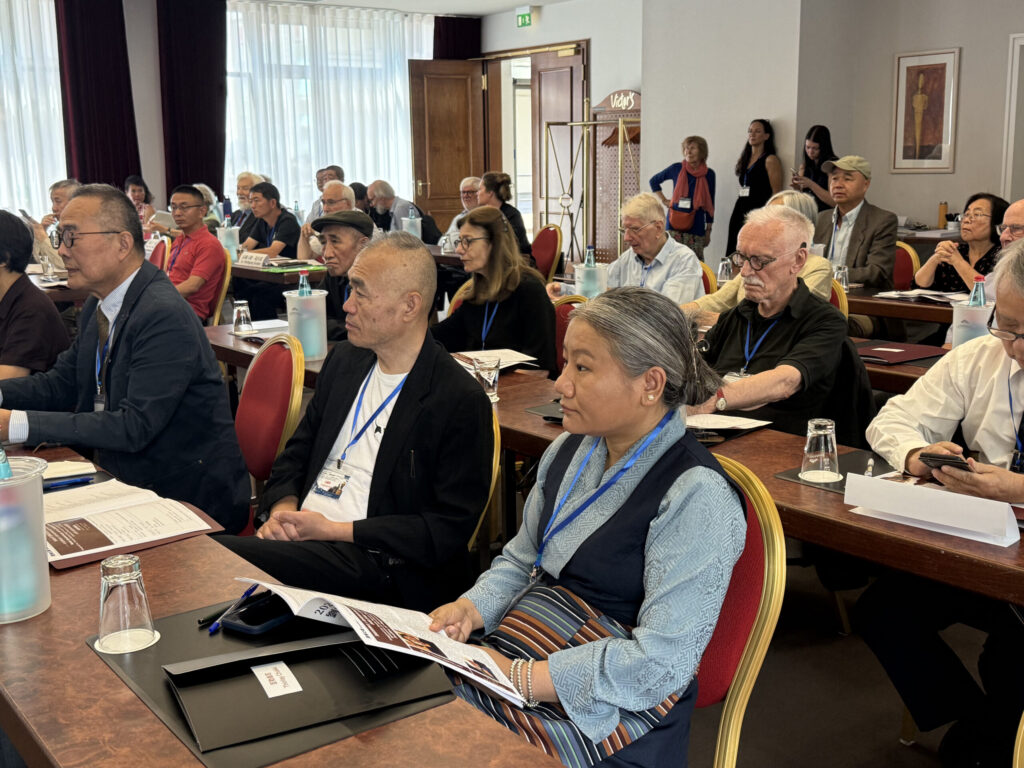

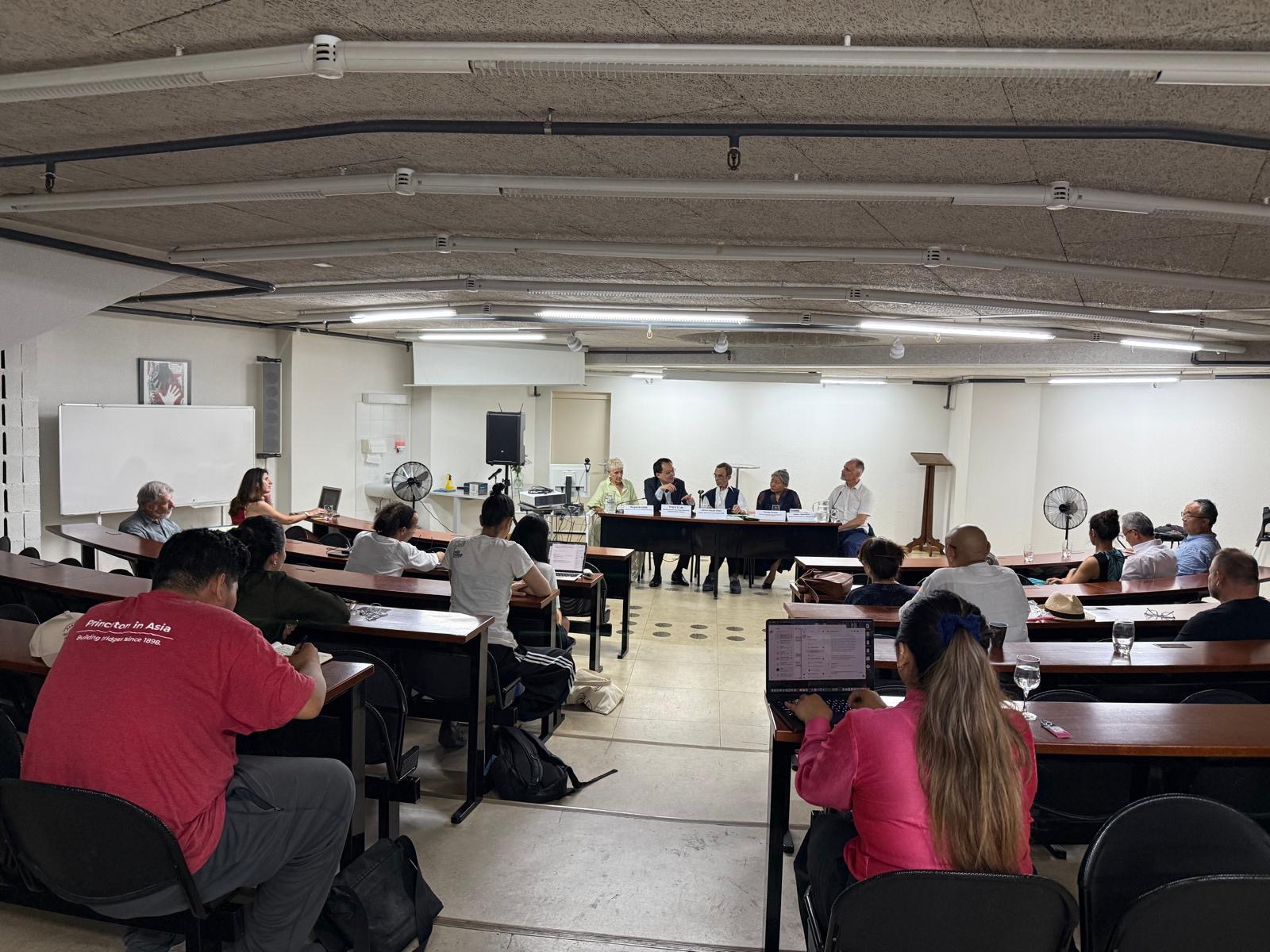
Geneva, 23 June 2026: Swiss-Tibetan Friendship Association organised a Tibet–Taiwan Roundtable at the Université Ouvrière de Genève (UOG), located at 3 Place des Grottes, Salle Berenstein, Geneva.
The round table panel discussion was chaired by Adrien-Claude Zoller, President of Geneva for Human Rights. Panelists included Marguerite Contat, Member of the Swiss-Tibetan Friendship Association; Greg G.D. Lee, Director General of the Taipei Cultural and Economic Office in Geneva; Cédric Jeanneret, Member of the Parliament of the Canton of Geneva; and Thinlay Chukki, Representative of His Holiness the Dalai Lama at the Tibet Bureau in Geneva.
During the discussion, Representative Thinlay Chukki highlighted the historical and contemporary significance of Tibet. She emphasised that Tibet had a long history of independent governance under Tibetan kings and later under the Dalai Lamas. Addressing China’s claim that Tibet has been an inseparable part of China since ancient times, she referred to historical records and international agreements, including the 1914 Simla Convention, arguing that Tibet exercised the attributes of an independent state and engaged in international diplomacy.
Representative Chukki stressed that Tibet remains relevant today for several reasons. She noted that unresolved border disputes between China and India stem from agreements negotiated when Tibet functioned independently. She also underscored Tibet’s environmental importance as the “Third Pole,” whose glaciers provide freshwater to billions of people across Asia. The preservation of Tibet’s fragile ecosystem, she said, is therefore a matter of global concern.
The Representative further raised concerns about the human rights situation in Tibet, including restrictions on religious freedom, the operation of state-run boarding schools for Tibetan children, the relocation of nomadic communities, and policies affecting Tibetan cultural identity. She argued that these developments challenge the principles enshrined in the Universal Declaration of Human Rights and warrant greater international attention.
Representative Chukki also addressed the issue of the succession of His Holiness the Dalai Lama, asserting that the selection of the next Dalai Lama is a religious matter that should be determined solely by Tibetan Buddhists and not by the Chinese atheist government. She called on governments and international institutions to support the Tibetan people’s right to preserve their religious and cultural traditions.
Reaffirming the Central Tibetan Administration’s commitment to the Middle Way Approach, Representative Chukki explained that the policy seeks a peaceful and mutually beneficial resolution to the Tibet-China conflict through dialogue and genuine autonomy for the Tibetan people. She stated that progress has been hindered by China’s unwillingness to resume negotiations and urged the international community to encourage meaningful dialogue.
She welcomed recent initiatives by democratic institutions, including resolutions adopted by the European Parliament and the Czech Senate concerning Tibet and the succession of His Holiness the Dalai Lama. She further encouraged governments to engage with the Central Tibetan Administration and support efforts aimed at achieving a peaceful resolution of the Tibet issue.
Concluding her remarks, Representative Chukki expressed confidence in the resilience of the Tibetan people, particularly younger generations, who continue to preserve Tibetan language, culture, and identity despite decades of challenges. She thanked the Swiss-Tibetan Friendship Association, Swiss parliamentarians, and supporters of Tibet for their continued solidarity and commitment to human rights, democracy, and freedom.
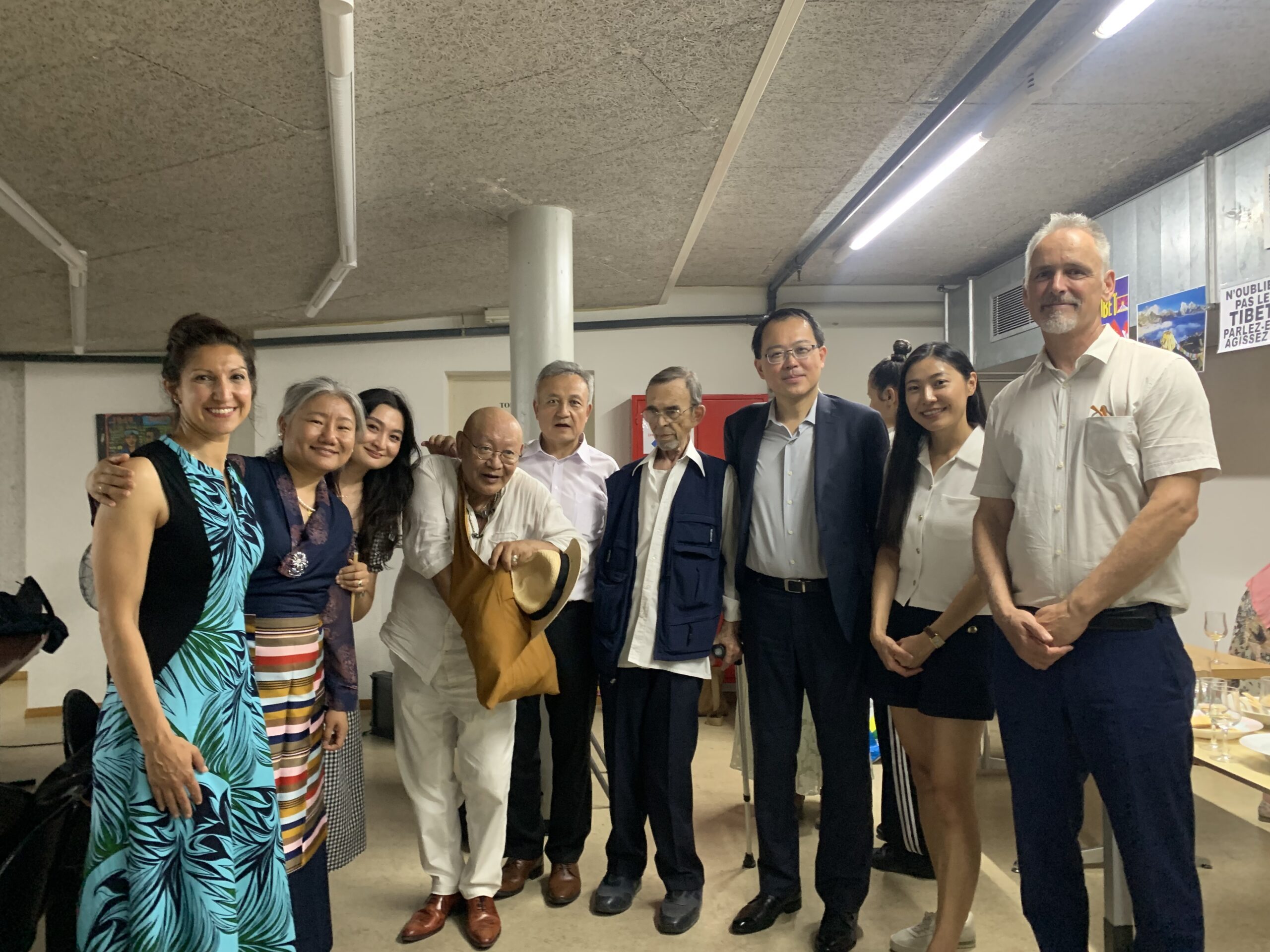
The roundtable was attended by the President, Vice President, and former President of the World Uyghur Congress, the Secretary General of the UNPO, Dr. Gyalo of the Tibet Action Institute, and several other distinguished guests.
The event concluded with an interactive question-and-answer session, followed by a light reception with refreshments and snacks.
– Report filed by Office of Tibet, Geneva