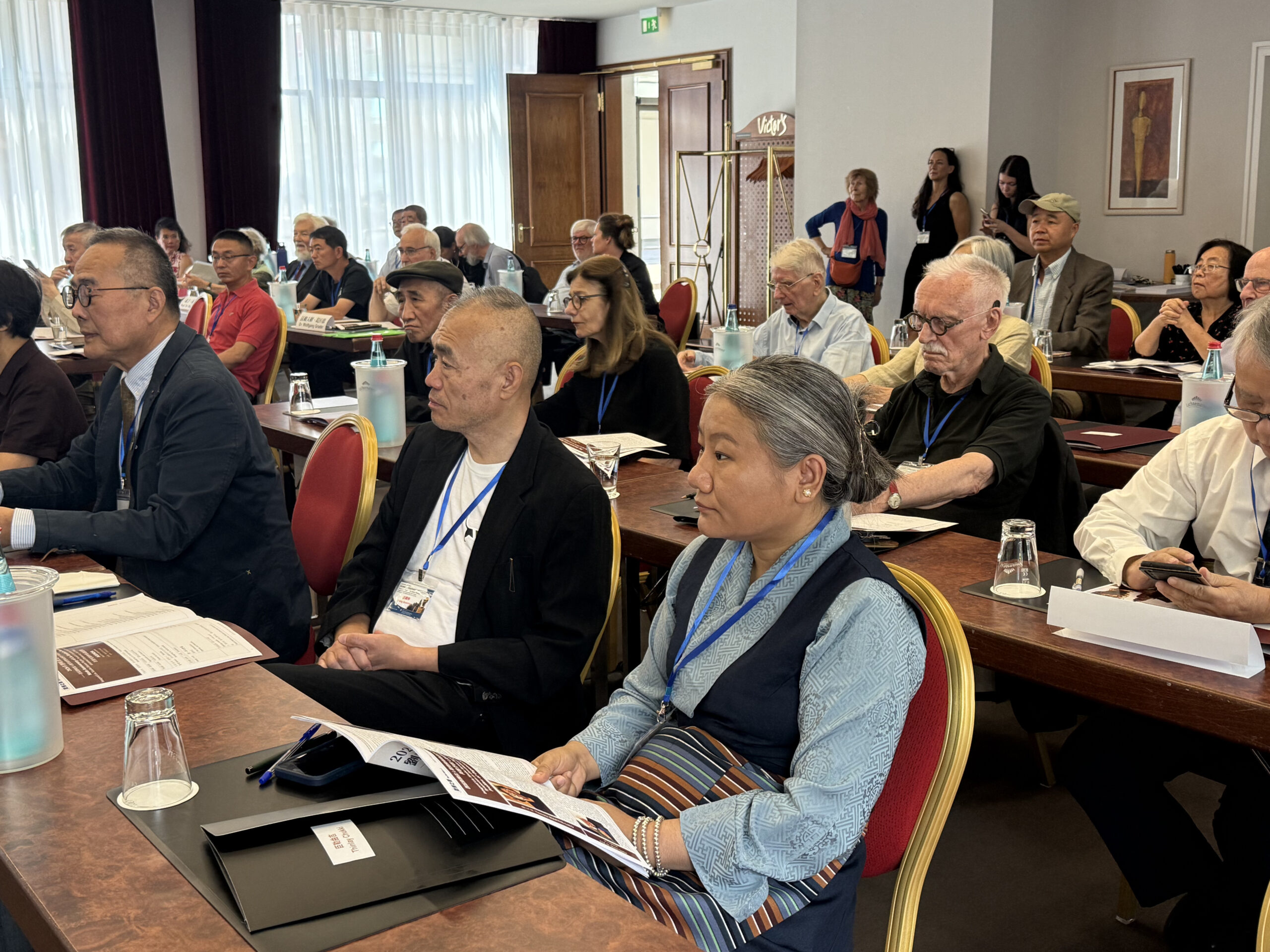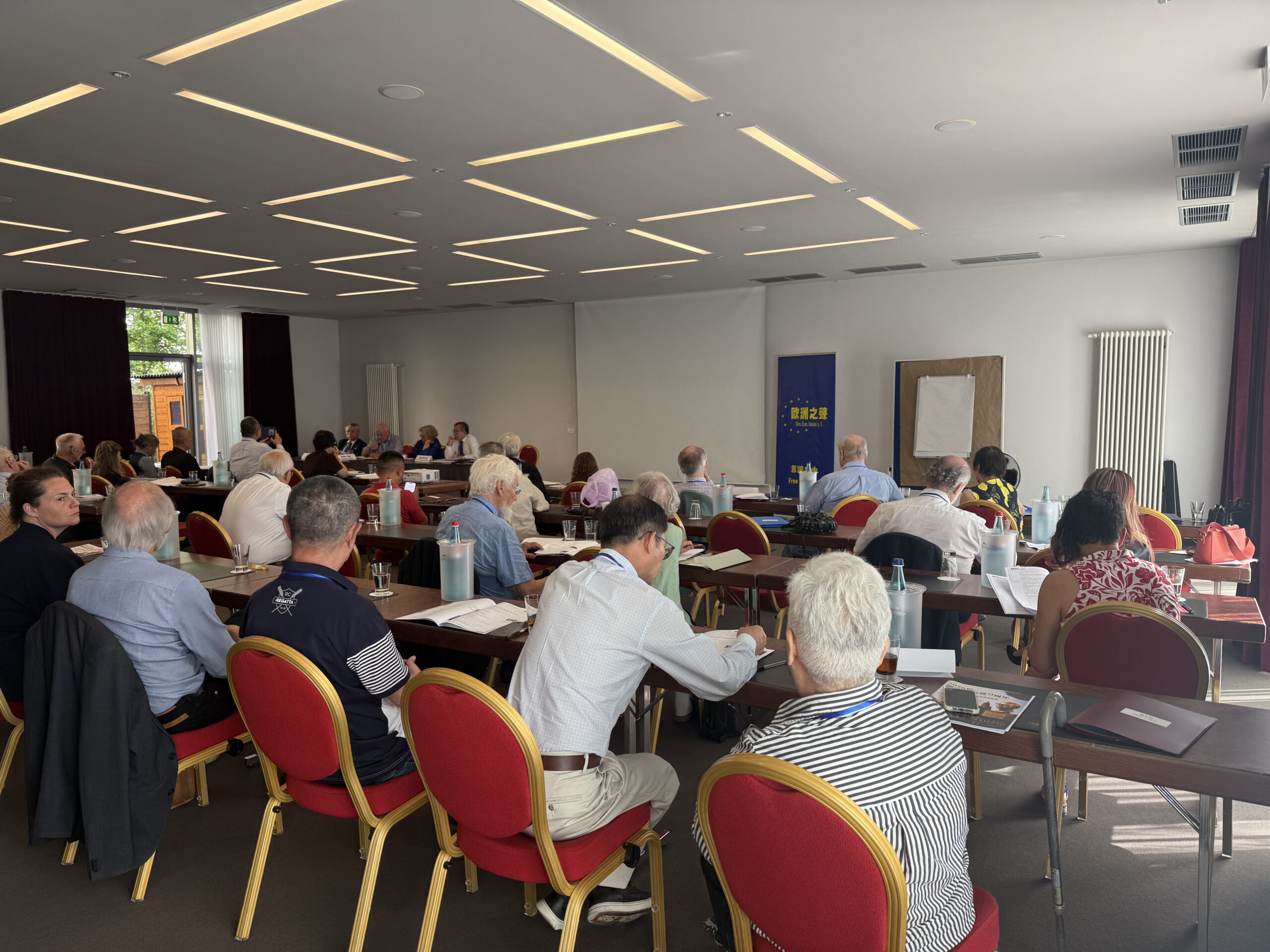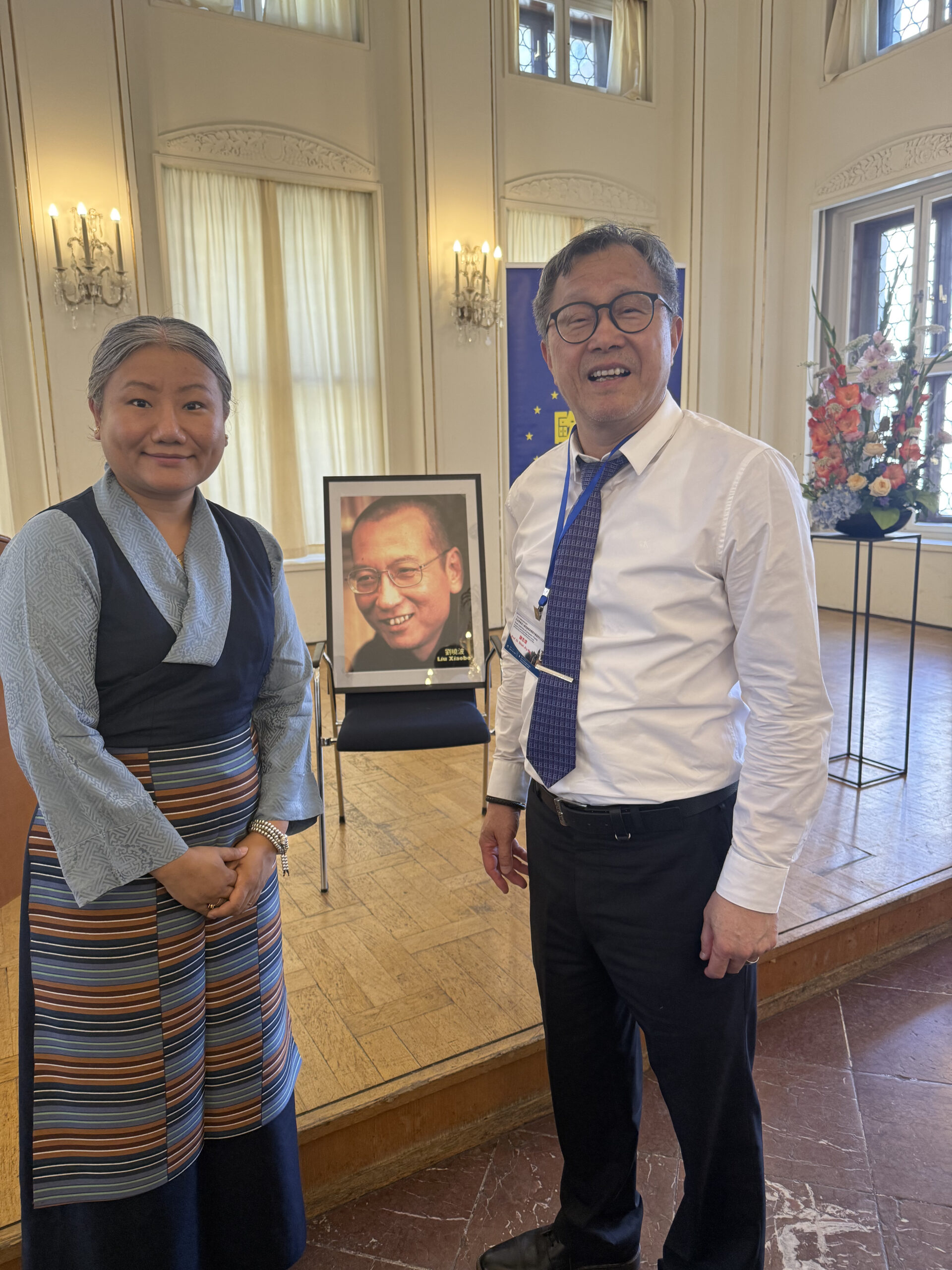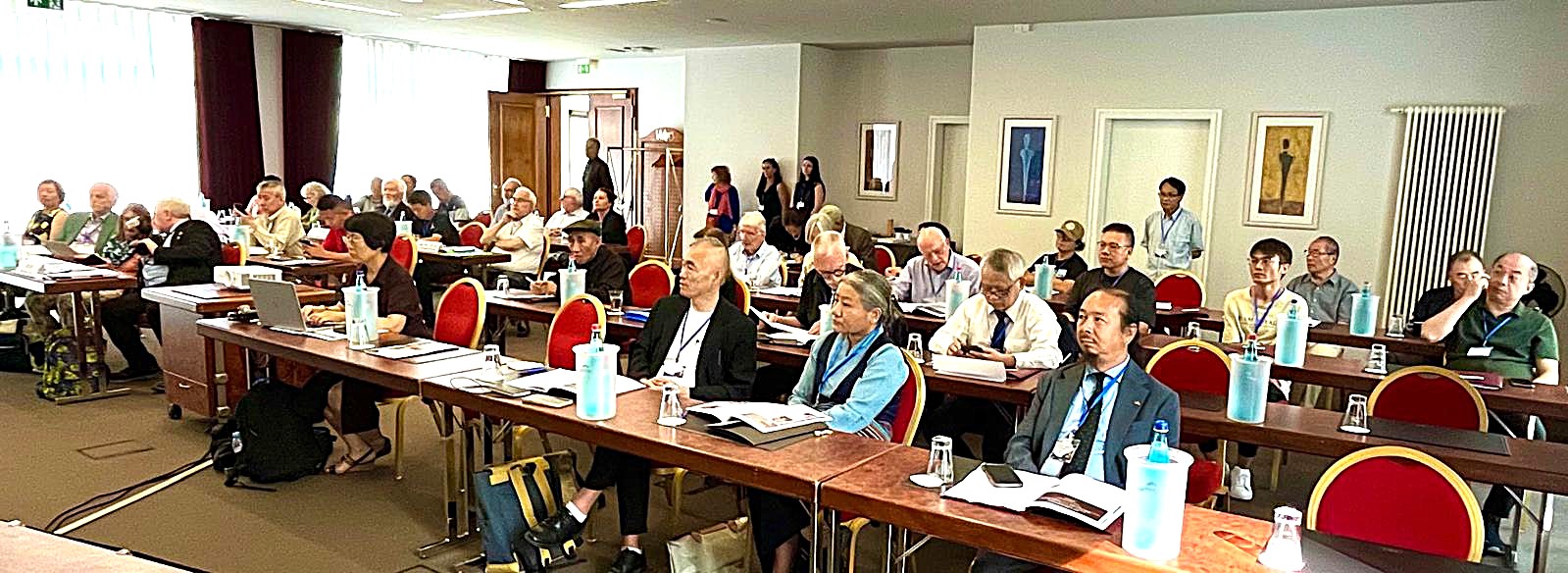
Leipzig, Germany: Representative Thinlay Chukki, accompanied by Chinese Liaison Officer for European Countries Sangay Kyab, from the Tibet Bureau (Office of Tibet) in Geneva attended the inaugural of Liu Xiaobo Human Rights Award Ceremony and Symposium on Constitutional Democracy in China in Leipzig, Germany, on 13 an 14 July 2026.
The Tibetan delegation spoke about the Central Tibetan Administration’s official policy of Middle Way Approach during the event jointly organised by two Chinese pro-democracy advocacy groups based in Europe, namely Sino Euro Voice (aka Voice of Europe) and China Studies.
In the morning of the first day, Chinese scholars researchers, and friends of Liu Xiaobo delivered talks reflecting on Nobel Laureate Liu Xiaobo’s life, ideas, and legacy. In the afternoon, at 2:00 PM, the first Liu Xiaobo Human Rights Award Ceremony was held at Leipzig Town Hall.
On the morning of 14 July, during a session focusing on Tibet, East Turkestan, and Southern Mongolia, Representative Thinlay Chukki delivered a presentation highlighting His Holiness the Dalai Lama’s Middle Way Policy as the Foundation for Resolving the Tibet-China Conflict. She expressed her appreciation for being invited to the commemoration marking the 9th anniversary of Liu Xiaobo’s passing, noting that His Holiness the Dalai Lama had consistently supported and cared for Liu Xiaobo, who himself was a follower of His Holiness’ philosophy of non-violence.
She explained that the Middle Way Policy, proposed by His Holiness in the 1970s, is a path that avoids two extremes and is fundamentally rooted in the philosophy of non-violence. She said the policy neither advocates Tibetan independence nor accepts the current situation in Tibet. Instead, it calls for meaningful changes in Tibet and seeks to bring all traditional Tibetan areas under a single administrative entity without challenging the unity and stability of the PRC, thereby improving efficiency and effectiveness in preserving and promoting unique Tibetan characteristics.
Representative Thinlay Chukki also referred to a book by Chinese scholar Lau Han Shiang, who, through years of research and the use of credible Chinese historical documents, argued that Tibet was not part of China’s territory during the Ming and Qing dynasties. She said that despite many historical changes, Tibet had remained an independent nation, citing the Shimla Accord and other historical records as evidence. She further noted that during the time of the 13th Dalai Lama, Chinese officials and soldiers were expelled from Tibet, adding that Tibet’s historical independence is well documented. However, echoing the words of His Holiness the 14th Dalai Lama, she emphasised that “history should be researched by historians; we must focus on the future,” underscoring that the priority should be resolving the issue through a forward-looking approach rather than debating historical claims.
Her presentation was followed by a question-and-answer session, during which participants raised various questions that were addressed.
The conference was attended by representatives from the United States, Australia, New Zealand, the Netherlands, the United Kingdom, Taiwan, Poland, and France, along with Chinese, Mongolian, Tibetan, and other international participants. Taiwan’s Representative to the EU and Belgium, Ambassador Shieh Jhy-Wey, also attended the conference and delivered a speech.
– Report filed by Office of Tibet, Geneva