
-By The Hans India, 30 June 2025
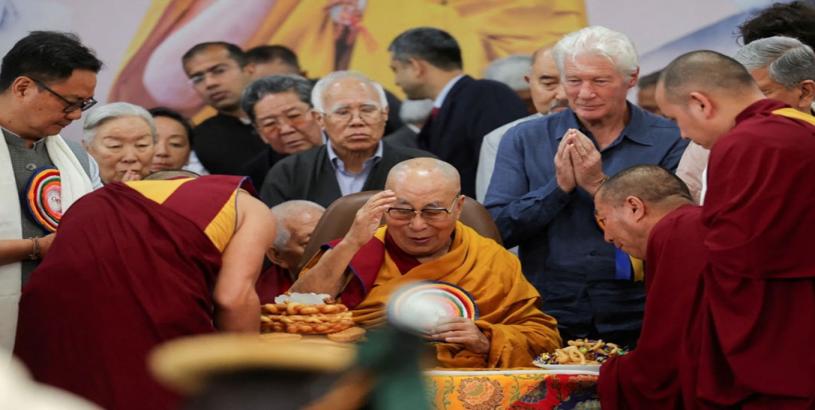
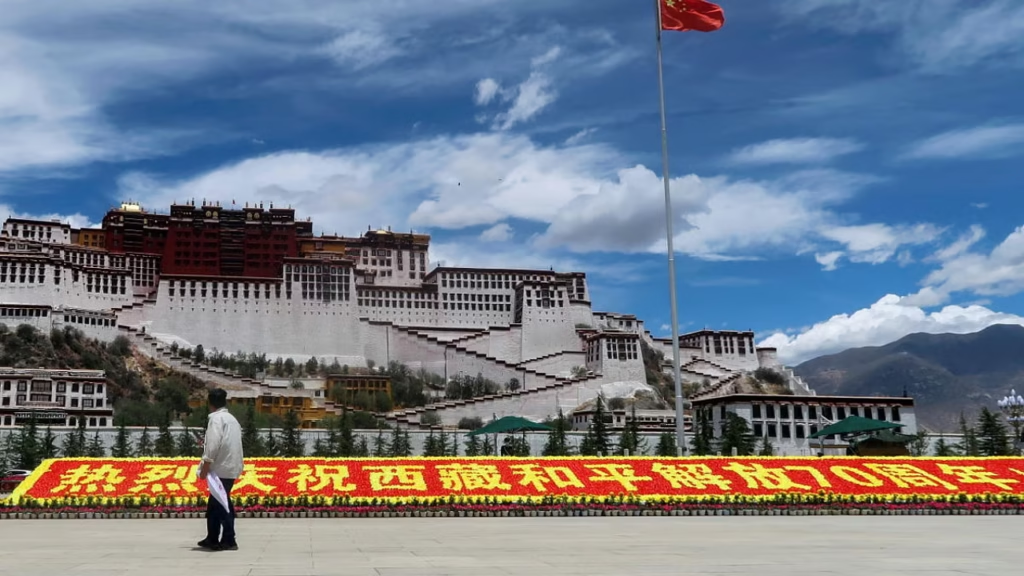
Sixty-six years ago, the 14th Dalai Lama, disguised as a soldier, left Norbulingka Palace in Tibet, a Third Pole, and escaped into exile in India after his challenging 14-day journey. Since then the longest most respectable staying guest of the Indian government, who often says he is enjoying every possible liberty, has been toeing a path of promoting human values, religious harmony, besides preserving Tibetan language and culture, the heritage received from the masters of India’s Nalanda University.
Tenzin Gyatso, 14th Dalai Lama, with a retinue of soldiers and Cabinet Ministers escaped into exile on March 17, 1959, after China crushed an uprising in Tibet. He is turning 90 on July 6. Globetrotting the Dalai Lama, who is considered a living Buddha of compassion, in his latest book, ‘In Voice for the Voiceless’, offers insights into his decades-long dealings with China. In the book the Dalai Lama, a reincarnation of past Dalai Lamas, reminds the world of Tibet’s unresolved struggle for freedom and the hardship his people continue to face in their homeland. The book captures his extraordinary life, uncovering what it means to lose your home to a repressive invader and build a life in exile; dealing with the existential crisis of a nation, its people, and its culture and religion; and envisioning the path forward.
He was 16-years-old when Communist China invaded Tibet in 1950, only 19 when he had his first meeting with Chairman Mao Zedong in Beijing, and 25 when he was forced to escape to India and became a leader in exile. On reaching India after treacherous journey, the Dalai Lama first took up residence for about a year in Mussoorie in Uttarakhand. On March 10, 1960, just before moving to Dharamsala, a town perched on the upper reaches of north India’s Kangra Valley, the Dalai Lama had said: “For those of us in exile, I said that our priority must be resettlement and the continuity of our cultural traditions. We, Tibetans, would eventually prevail in regaining freedom for Tibet.”
At present, India is home to around 100,000 Tibetans and the government-in-exile.
The Commandant of the Assam Rifles presented a guard of honour to the 14th Dalai Lama in Tawang on setting his foot on the Indian soil in 1959. In an emotional reunion, the Dalai Lama in April 2017 met and embraced Havildar (retired) Naren Chandra Das of the Assam Rifles, the lone survivor of Indian personnel who were the first to receive him 58 years ago. Click here to read more.