A permanently assimilated Tibet would consolidate China’s military advantage, secure water and mineral resources, eliminate perceived resistance, and embolden Beijing to assert greater authority beyond its borders.
– By Brahma Chellaney for Deccan Herald, 13 July 2026
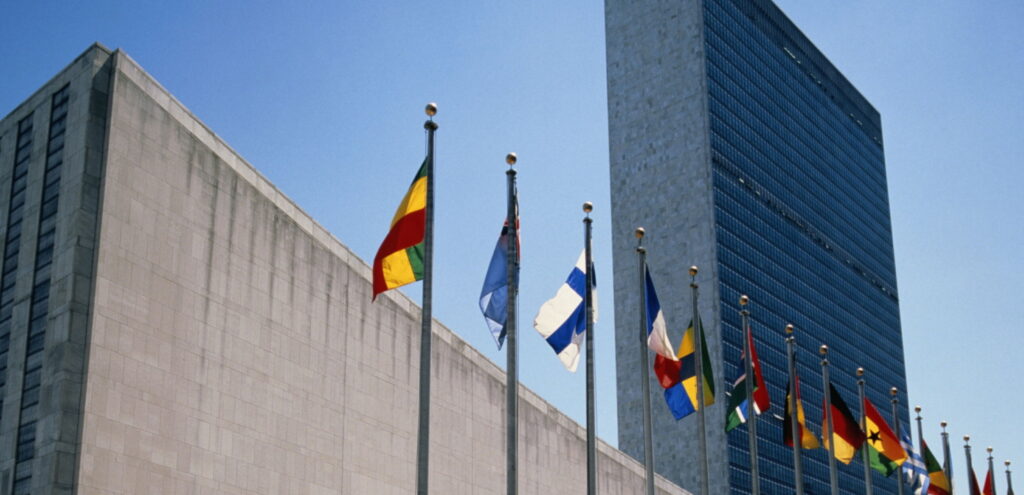
The self-immolation of exiled Tibetan activist Lobga Rangzen outside the United Nations’ headquarters in New York on July 2 was not an expression of personal despair. It was a desperate attempt to jolt the world out of its growing indifference to one of the most important international issues of our time: Tibet’s systematic erasure.
China occupied then-autonomous Tibet shortly after the founding of the People’s Republic. The occupation is often viewed primarily through the prism of human rights, and for good reason. But it should also be understood as an effort to lay claim to one of Asia’s most valuable geopolitical assets: the vast, resource-rich Tibetan Plateau dominates the Himalayas, contains the headwaters of Asia’s great rivers, and overlooks South, Central, and Southeast Asia.
In recent decades, China has invested heavily in the Plateau — building extensive military infrastructure, constructing mega-dams on Asia’s great rivers, and expanding extraction of strategic minerals — while relying on surveillance, coercion, and security forces to suppress resistance. But physical control of Tibet is not enough for Chinese President Xi Jinping. He wants complete and lasting control over the entire Tibetan Plateau.
The best way to achieve that, Xi has concluded, is by erasing the identity of the people who inhabit it. The Tibetan people are a distinct ethnicity, with their own language, traditions, cuisine, and dress. Stripping Tibetans of their identity — ensuring that they no longer think of themselves as Tibetan — has one goal: to extinguish resistance to permanent Chinese rule over the ‘Roof of the World’.
To this end, China has steadily expanded its system of State-run boarding schools, channelling Tibetan children there at younger and younger ages. China portrays these ‘residential schools’ as engines of development. In fact, the curriculum is designed to erase children’s Tibetan identity and replace it with allegiance to the Chinese State.
United Nations experts report that more than one million Tibetan children aged 6-18 — about 78 of the total — attend these schools. They are separated from their families and cultures for most of each year, taught in Mandarin, exposed only to Han culture and experiences, and conditioned to view their own culture, religion, and language as inferior. In other words, China is raising a generation of Tibetans to assimilate to Chinese culture — and lose their own.
China has also taken other steps to erase Tibet. Since late 2023, China has systematically replaced ‘Tibet’ with ‘Xizang’ as the official English-language designation in its government documents, diplomatic communications, and State media. The name derives from the Manchu Qing dynasty’s imperial terminology for Tibet. Its adoption is intended to buttress China’s claim that Tibet is not a distinct historical entity, but merely an appendage of China.
The international community is making this erasure all too easy. Some museums, universities, and research institutions outside China have accepted this imperial renaming. The Musée du Quai Branly in Paris has labelled Tibetan artifacts as coming from ‘Xizang’. The British Museum has referred to ‘Tibet or the Xizang Autonomous Region’ in an exhibit on the Silk Road. Now, China is taking this effort to the next level. On July 1, a sweeping new ‘Promoting Ethnic Unity and Progress’ law took effect, codifying Xi’s drive to force the assimilation of Tibetans and other ethnic minorities to a single State-defined Chinese identity centred on loyalty to the Communist Party. By criminalising broadly defined threats to ‘ethnic unity’, the legislation amounts to yet another weapon with which China can intimidate Tibetan activists, scholars, and diaspora communities. Families in Tibet already face retaliation for the activities of relatives overseas.
The timing of the new law is not a coincidence. The Tibet question has gradually faded from the global agenda in recent years. This partly reflects the international community’s preoccupation with the wars in Ukraine and West Asia, tensions over Taiwan, and acute global economic uncertainty. But many governments are also reluctant to jeopardise their relations with China. So, while they rightly condemn cultural destruction elsewhere, they largely ignore the destruction of Tibetan identity.
But this calculation overlooks an inescapable reality: China’s assault on Tibetan identity is inseparable from its great-power ambitions. A permanently assimilated Tibet would consolidate China’s military advantage over the Himalayan piedmont, strengthen its control over Asia’s water resources, secure immense deposits of strategic minerals, and remove what China perceives as the last potential source of political resistance in the region. Click here to continue reading the original article on Deccan Herald.