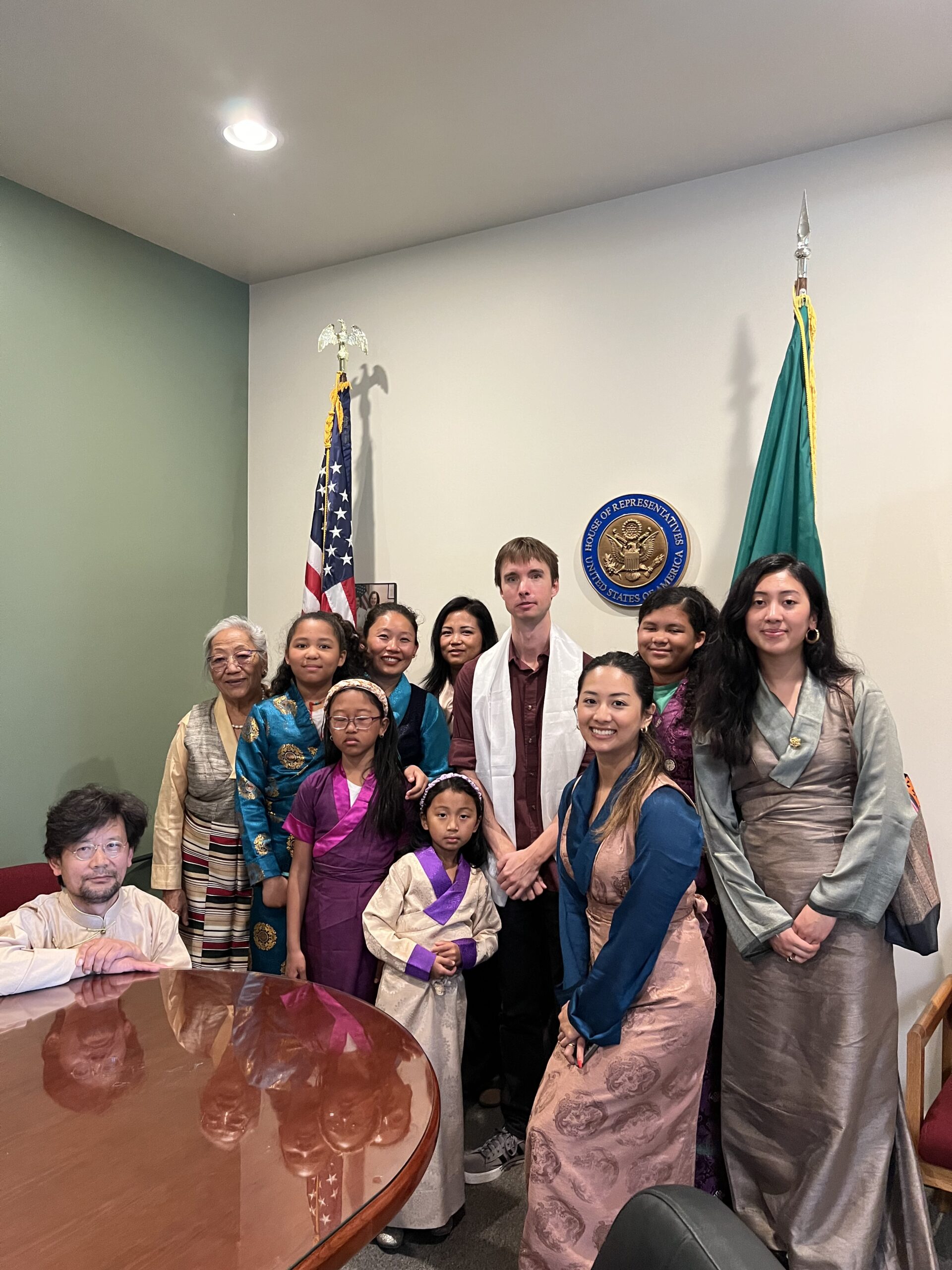
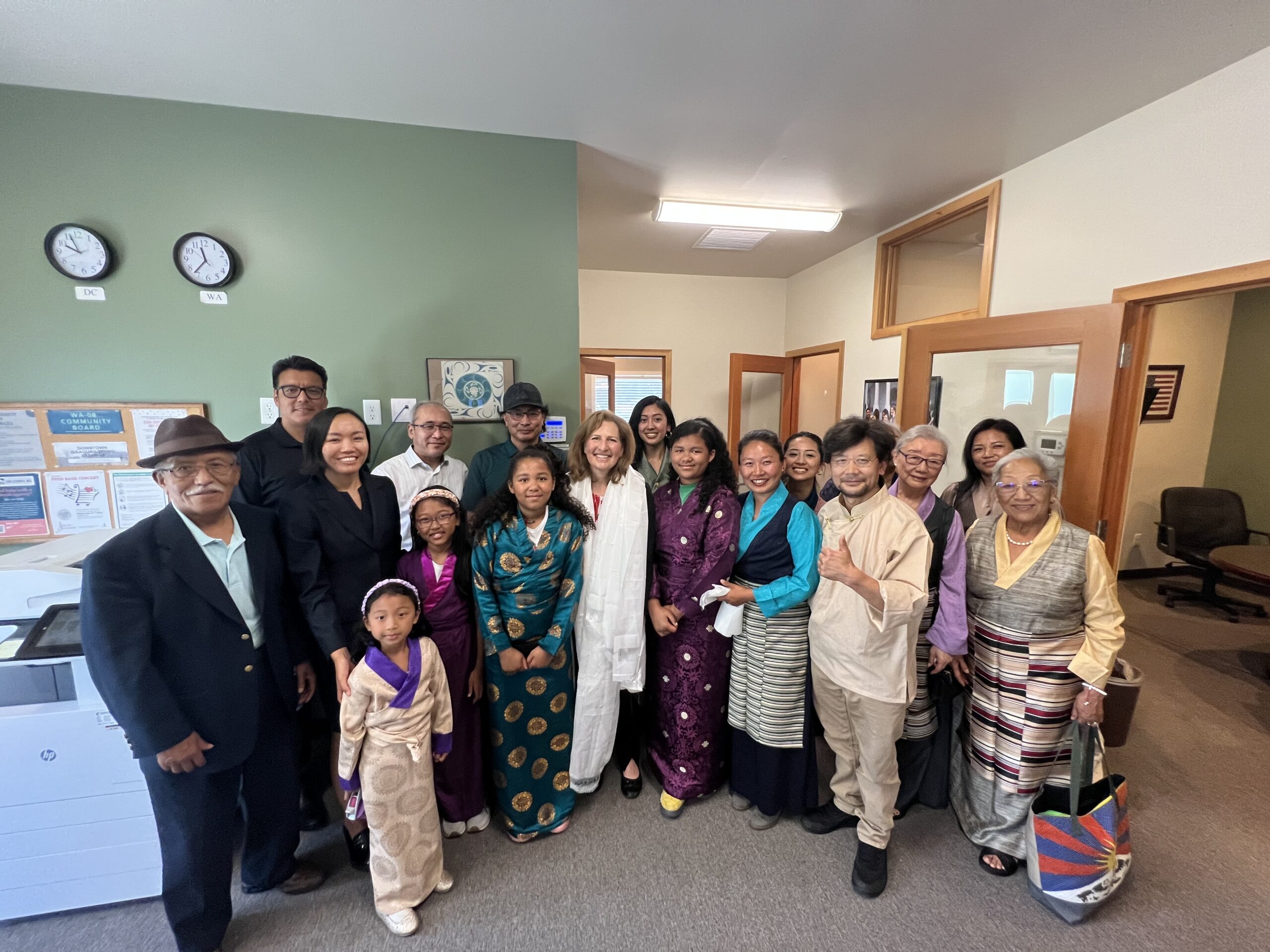
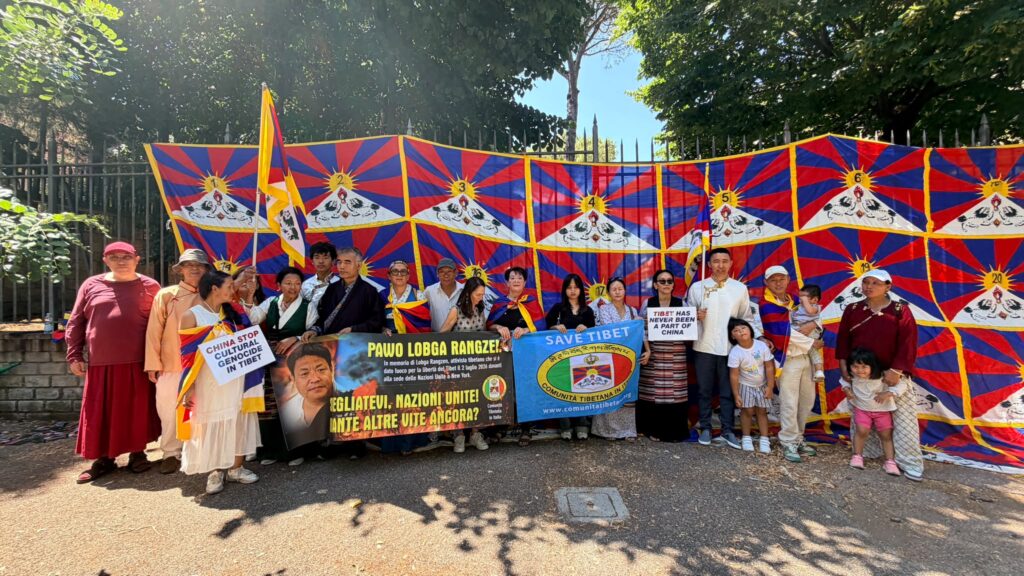
Seattle, Washington: Tibetan community members from Seattle, Washington, met with Congresswoman Kim Schrier on 1 July 2023 and urged her to support the Bipartisan US-Tibet Bill in the House, as well as inform her about Tibet’s worsening human rights situation. The group also included several members of the Voluntary Tibet Advocacy Group (V-TAG), which was led by Passang Bhuti, Advocacy Coordinator for the Tibetan Association of Washington and a V-TAG member. Congresswoman Kim Schrier spent approximately 30 minutes with the group, followed by a meeting with Cody Olsen, a staffer of the Representative’s office.
One of the many purposes of the meeting was to discuss the plight of the Tibetan people in Tibet under Chinese rule and the need for the United States government to take action on their behalf. They discussed the recent human rights violations in Tibet and China’s harsh language policy, environmental destruction, a ban on international media and cultural preservation in exile. The Representative and staffer were briefed on the group’s activities and encouraged to support their cause. Moreover, the group was able to establish a great relationship with another key Washington leader and further its goals of lobbying Bill HR 533 – Promoting a Resolution to the Tibet-China Conflict Act, which was introduced into Congress on 26 January 2023. The Representative was particularly interested in understanding the group’s work and the challenges they face in their advocacy work in and around Washington and was genuinely interested in learning more about the political situation in Tibet.
Congresswoman Kim Schrier was particularly interested and highly attentive to the group’s concerns about China’s destruction of Tibet’s natural and lush green environment through large-scale mining, deforestation, and logging, as well as the displacement of Tibetan farmers and nomads from their traditional lands and construction of gigantic dams on Tibet’s rivers that flow into neighbouring countries. Tsechu Dolma, an environmental attorney intern, explained in greater detail and emphasized the importance of Tibet’s environment and rivers in maintaining global ecology and climate balance. Tsechu Dolma shared the need to take immediate action to address the effects of the destruction of Tibet’s environment, which has been intensified by China’s occupation, and how this has caused the loss of traditional Tibetan communities, culture, and language. She further said that by standing in solidarity with Tibet, the United States could show its commitment to justice and unification, and help Tibetans fight for their rights and reclaim their homeland.
The group members also highlighted the need for international media to be allowed access to Tibet in order to document the situation and spread awareness to the international community. Moreover, this political control has had a devastating effect on the ability of Tibetan people to practice, learn, and share Buddhism freely. Furthermore, the CCP’s control over Tibetan Buddhism is not only restricting land, education, and people but is posing a threat to the continuation of our traditional beliefs.
They also discussed the need for Tibetans who are living in exile to be able to preserve their culture and pass it on to future generations. The group presented evidence that showed how the Chinese government’s language policy has been detrimental to the preservation of Tibetan culture and how environmental destruction is occurring as a result of the occupation. Finally, discussing the roles of each Tibetan individual in the community, it allowed them to understand the importance of Tibetan identity in the larger context of the Tibetan exile community, and how their individual roles can help shape the narrative of the Tibetan cause in Washington.
-Filed by Tibet Advocacy Section, DIIR