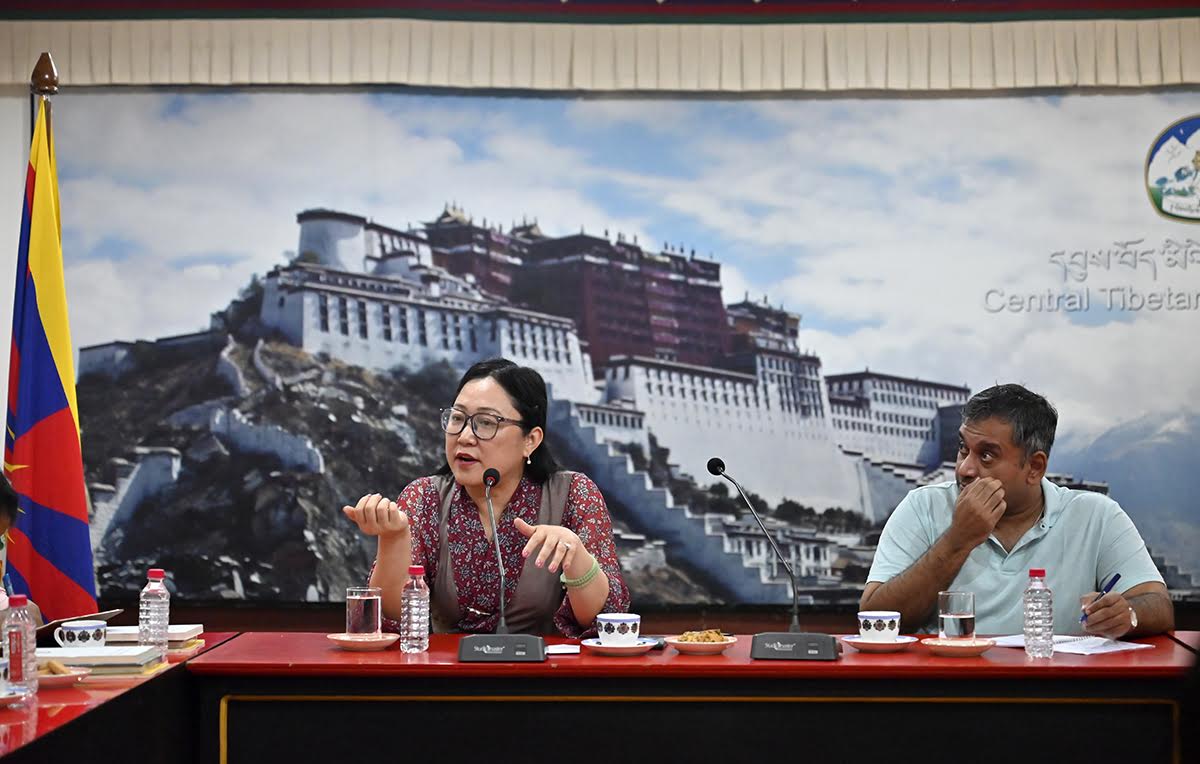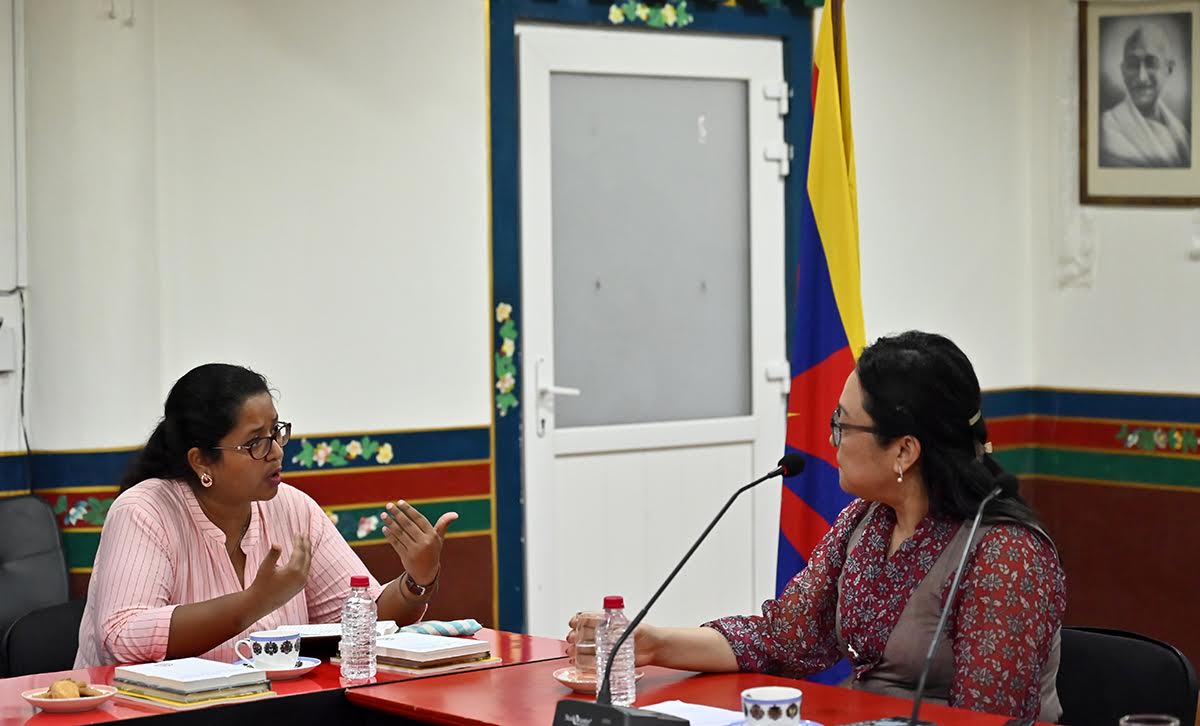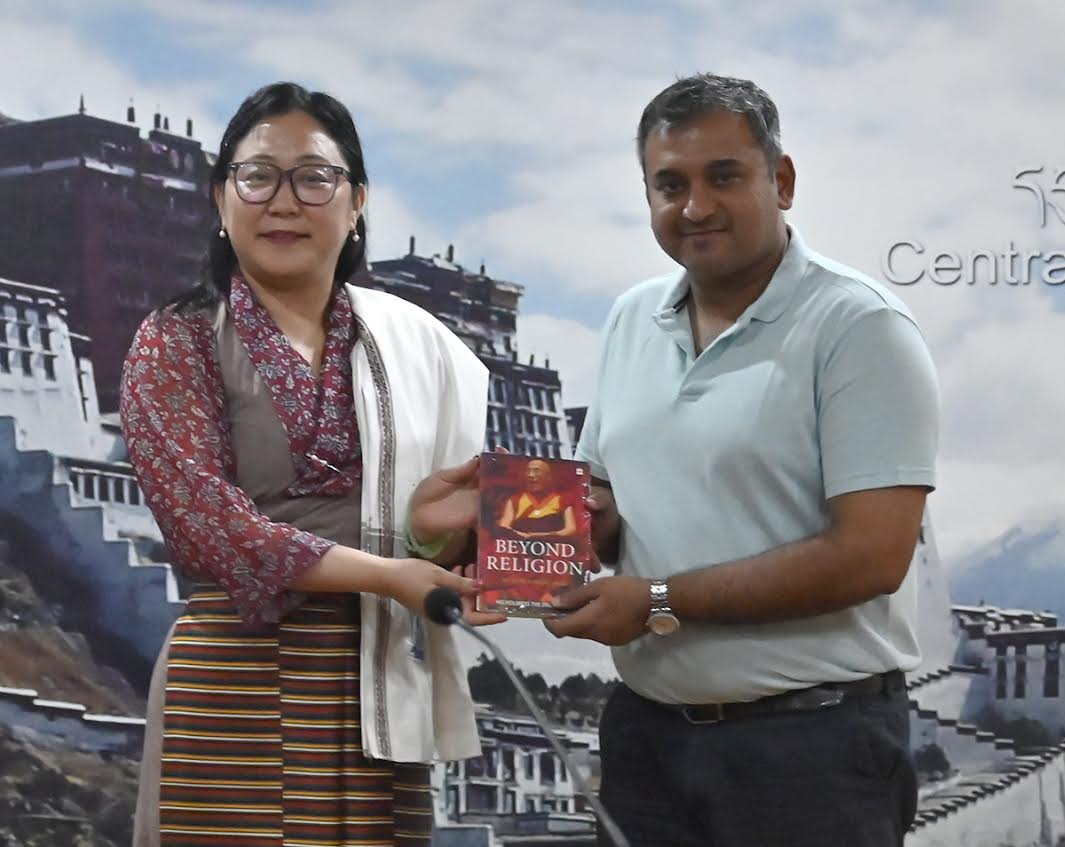

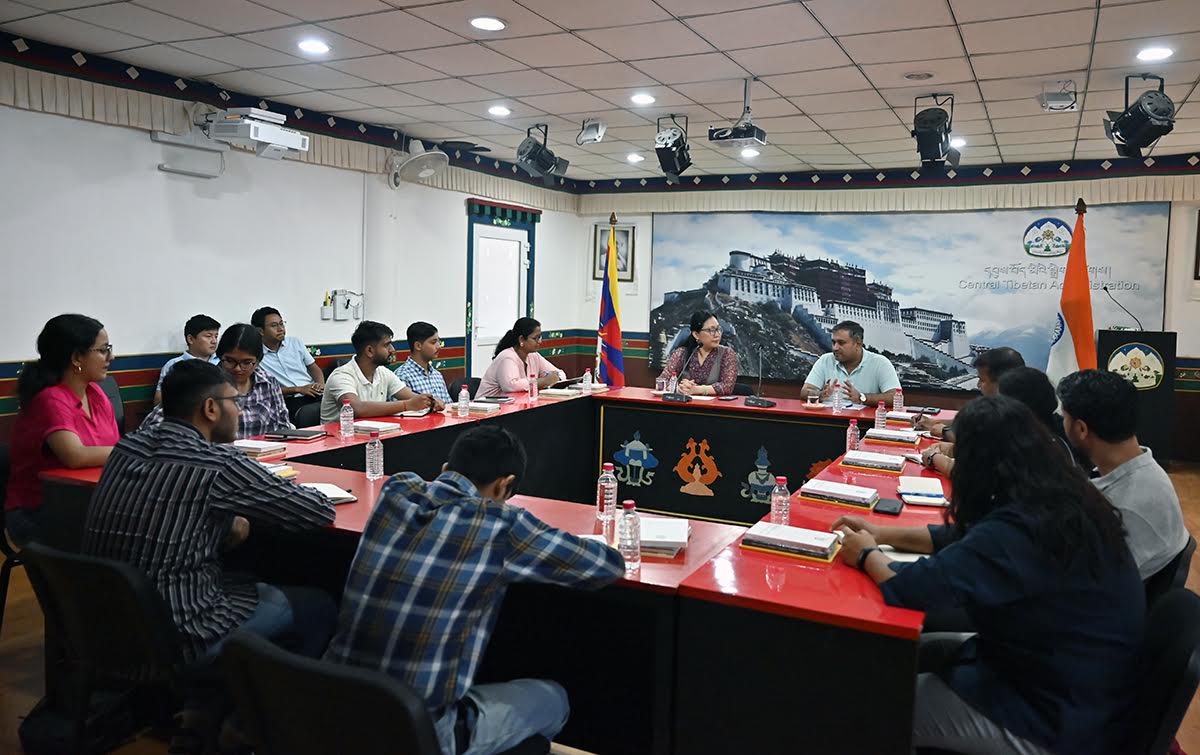
Dharamshala: Kalon Norzin Dolma of the Department of Information and International Relations, CTA addressed a group of visitors from Rashtriya Raksha University, School of International Cooperation, Security and Strategic Languages (SICSSL) on Tibet’s historical status and current situation, and the Central Tibetan Administration’s strive for the resolution of long-standing Tibet-China conflict earlier today at the department’s Lhakpa Tsering auditorium.
The group consists of Dr L. Venkateswaran, the Director of SICSSL, Assistant Professor Naresh Kumar BK and ten students pursuing an MA in International Relations and Security Studies.
Beginning with Tibet as an independent state before the invasion and occupation by the People’s Republic of China, which fulfils the Montevideo Convention’s criteria of statehood, Kalon Norzin Dolma said, “PRC’s invasion of Tibet is an act of aggression and current status as an occupied nation” while underlining unequivocal evidences that prove Tibet as a sovereign nation in the past – historically and legally – to assert her statement.
She continued, “The 17th point agreement, the only contemporary treaty between Tibet and China, was forced to sign under duress in 1951. This agreement was signed under the condition when Tibet was militarily invaded in the eastern region and Tibet was under the threat of further military invasion,” which violated international laws. The ensuing China’s implementation of repressive and oppressive policies, which eventually caused His Holiness the Dalai Lama-led Tibetan peoples to exodus into exile, were also presented succinctly during the address.
Kalon credited the astute leadership of His Holiness the Dalai Lama and the generosity and support of India and the US government that resulted in the establishment of a vibrant Tibetan community that is led by the Central Tibetan Administration (CTA). She also accredited the strong democratic system and polity of the CTA, the resilience and firm determination of Tibetans inside Tibet, the dedicated commitments of exile Tibetans, and the unflinching support of the Tibet supporters for this unique and successful refugee community as well as for the sustenance of the Tibetan freedom struggle movement.
Speaking about the CTA, the Department of Information and International Relations’ Kalon presented the overall structure and functioning of its three organs, seven department’s and 13 offices of Tibet in various countries, which all coordinately and collaboratively work for the eventual resolution of Tibet-China conflict through the policy of Middle Way Approach that was envisioned by His Holiness the Dalai Lama and adopted unanimously by the Tibetan Parliament with majority support from the general Tibetan public.
Before concluding her talk, Kalon further stressed the human rights violation inside Tibet, including the communist government’s forcible admission of nearly 1 million Tibetan children into a massive system of colonial boarding schools, coercive collection of DNA samples, intensive surveillance programs, sinicization of Tibetan Buddhist culture, the environmental degradation, and flawed development strategies.