
Leh, Ladakh: As part of its ongoing effort to document Tibet’s enduring cultural and historical footprint beyond its geographic borders, the Tibet Museum undertook a documentation and outreach visit to the Zanskar region of Ladakh from 19 to 25 July 2025. The weeklong fieldwork encompassed a series of visits to some of Zanskar’s most historically significant monasteries, where the team engaged with local monastics, community elders, and tangible cultural heritage that continue to reflect Tibet’s independent and spiritual past.
The visit commenced on 19 July at Tongden Monastery, where Lama Tenzin Jigmet offered valuable insights into the institution’s historical foundations and its ties to pre-occupation Tibet. During the visit, the museum staff were granted rare access to scriptural collections of the Kangyur and Tengyur, which had been safeguarded and preserved by monks who carried them across the border during times of upheaval.
On 20 July, the team traveled to Karsha Monastery, among the region’s oldest and most venerated religious sites. Senior monk Tsering Wangchuk recounted the monastery’s deep-rooted historical connections with independent Tibet. Particularly poignant was an encounter with a 94-year-old monk who had received monastic training in Tibet before 1959, offering vivid recollections of Tibetan life and spiritual education prior to the occupation.
The following day’s journey, on 21 July, led to Sani Monastery. Here, Monk Tenzin Choethar provided historical context on the site’s development and cultural significance. The team documented rare wall paintings, some centuries old, which vividly reflect Tibet’s influence across the trans-Himalayan region. Later that evening, a return visit to Karsha Monastery enabled photographic documentation of sacred ritual artefacts, thangka paintings, and statues transported from Tibet prior to 1959.
The itinerary on 22 July included an extended journey to Phukthar Monastery, a remote and architecturally striking complex built into a cliffside. Warmly received by Monk Lobsang Tenzin, the museum engaged in in-depth discussions on Phukthar’s lineage within the Gelug tradition and its long-standing association with Tashi Lhunpo Monastery in Tibet. A notable highlight was the documentation of a rare letter sent by the Panchen Rinpoche—an extraordinary artefact of living history. On the return leg, the team also visited Barden Monastery, where Treasurer Rigzin Samphel provided access to historical materials and shared insights into the site’s heritage.
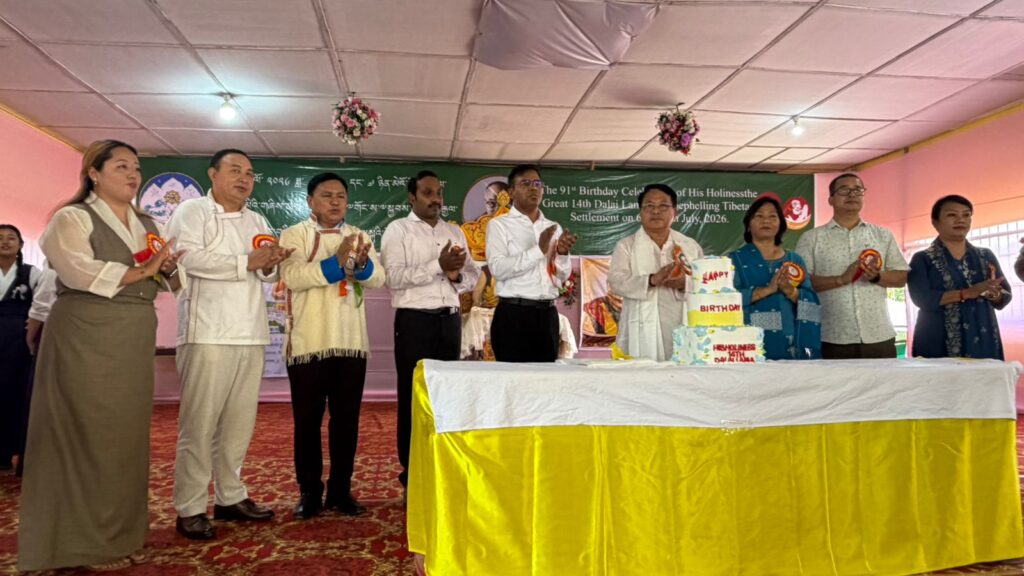
On 23 July, the museum team had the honour of attending a Tenshug ceremony—an offering for the long life of His Holiness the 14th Dalai Lama—held at Duzin Palace in Padum and organised by the people of Zanskar. Later that day, the group visited Zangla Palace, where Gyalse Tenzin Dasang Namgyal recounted the legacy of the Zangla dynasty and its enduring cultural and political ties to Tibet. The day concluded with a visit to Karsha Palace in preparation for the museum’s upcoming exhibition.
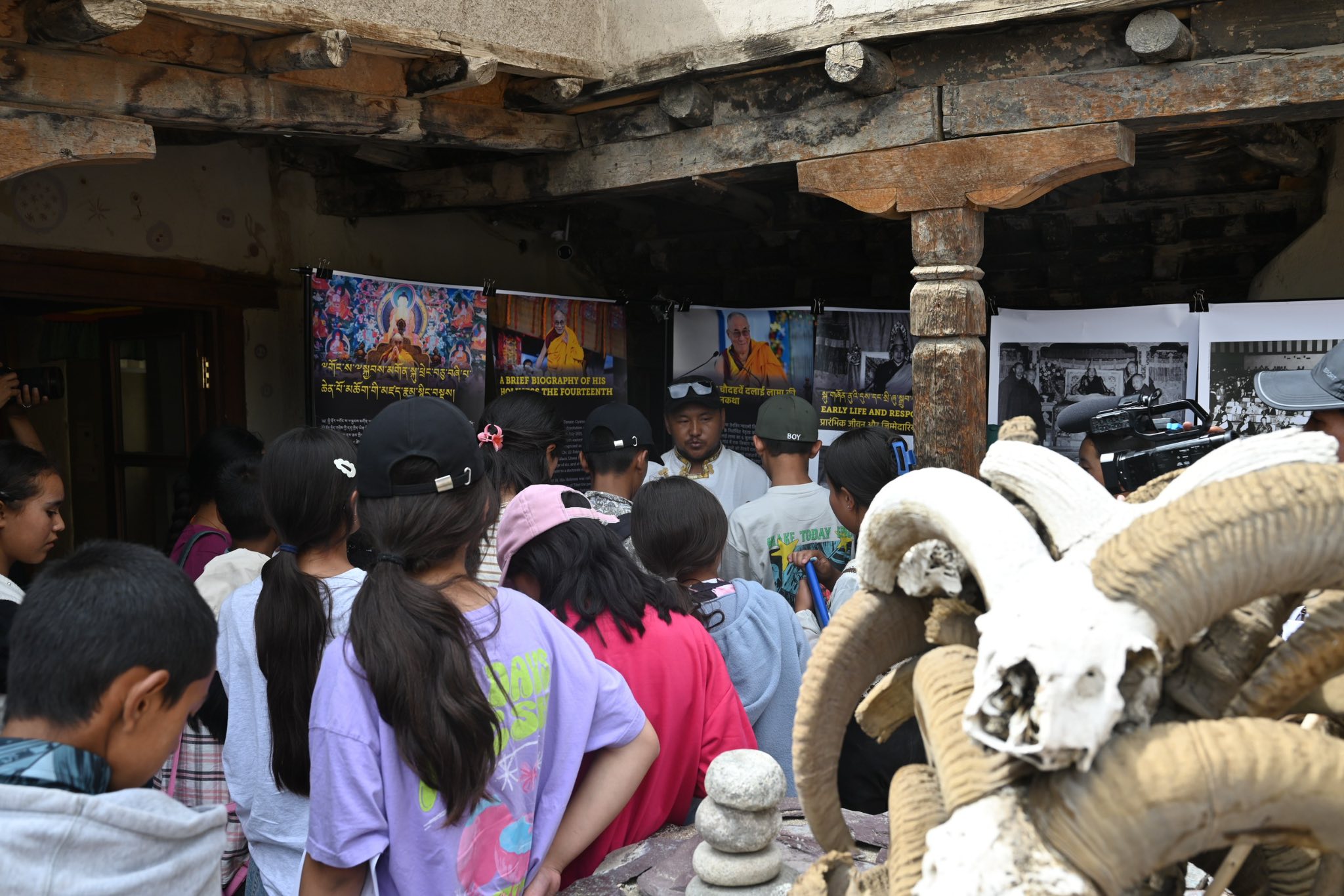
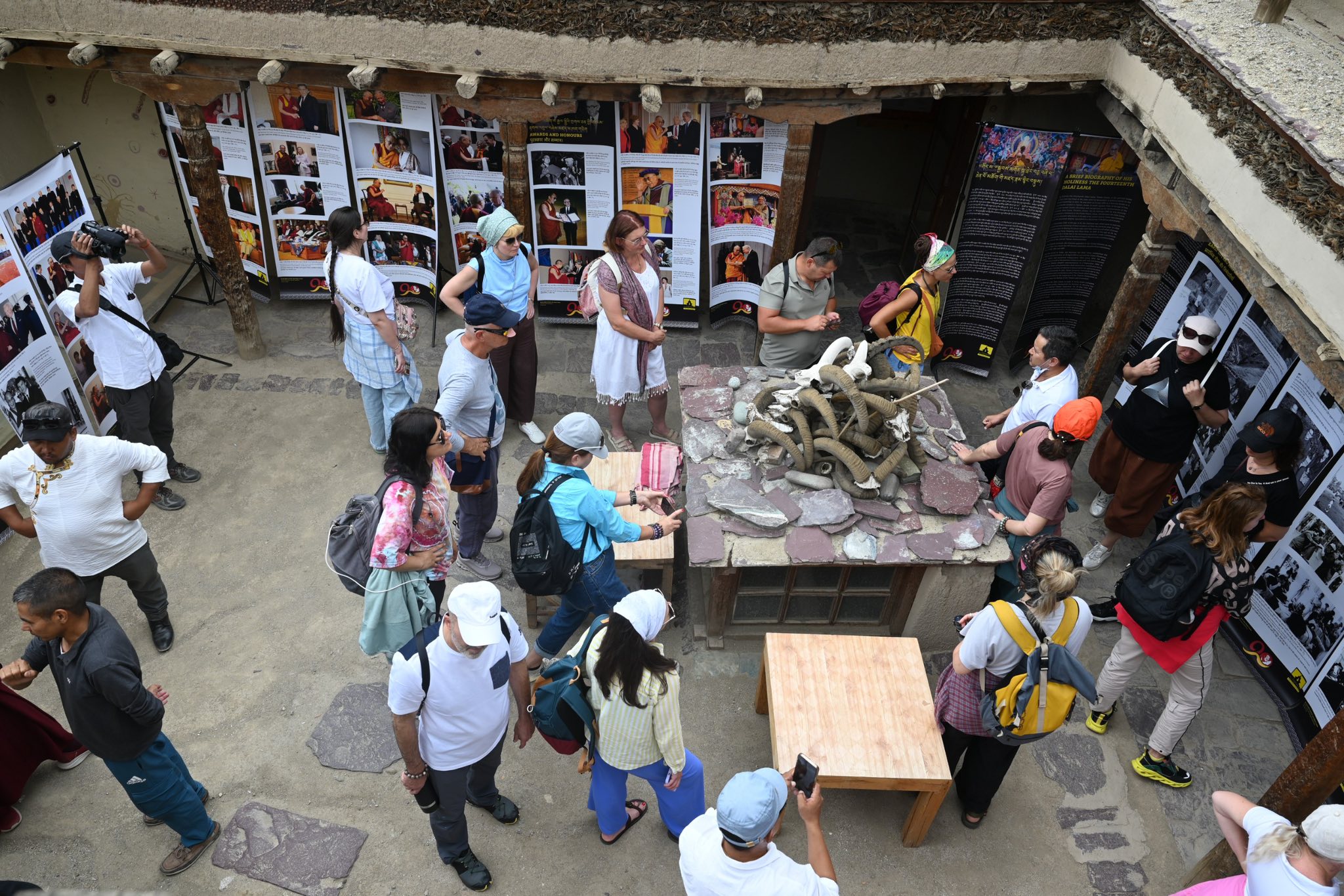
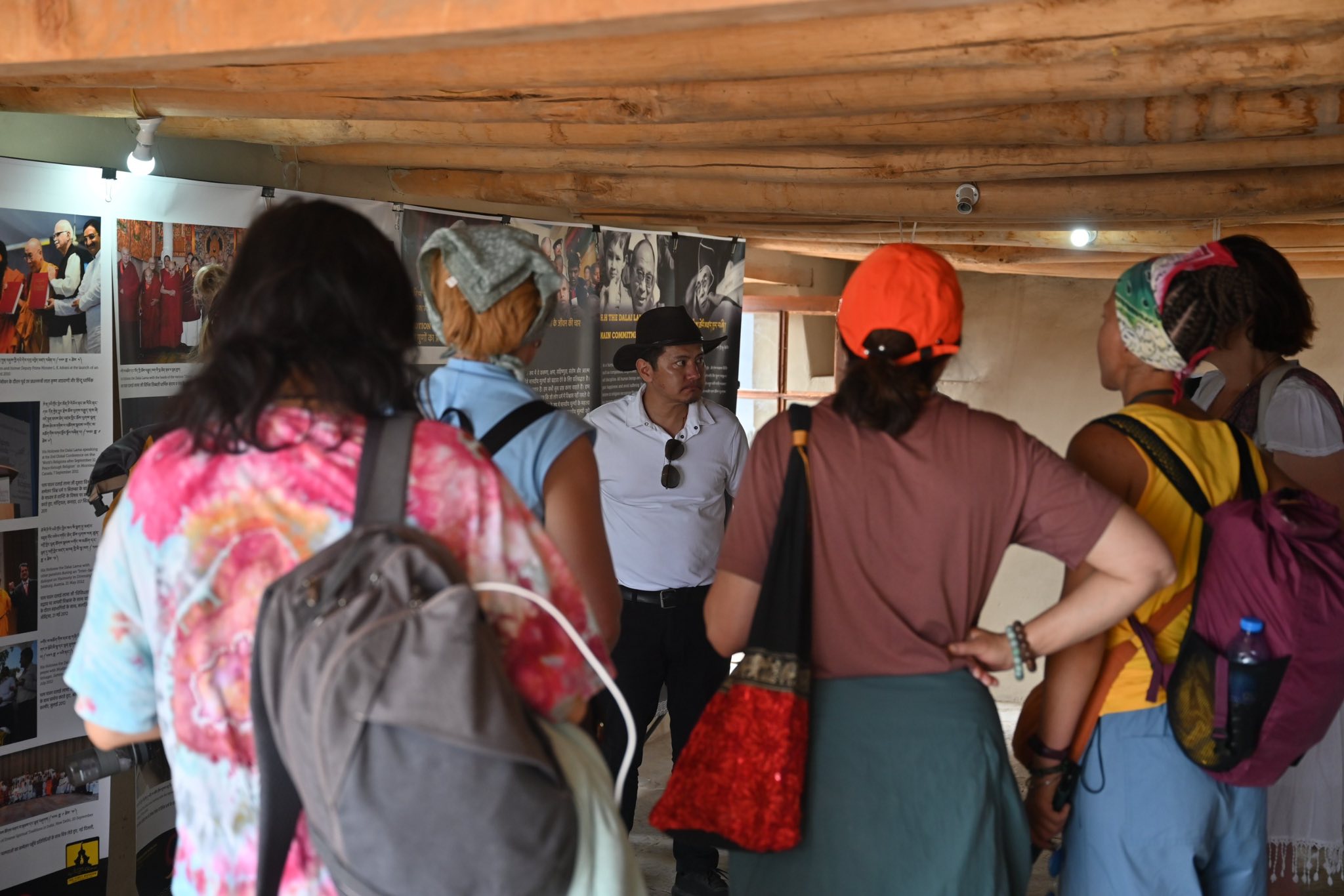
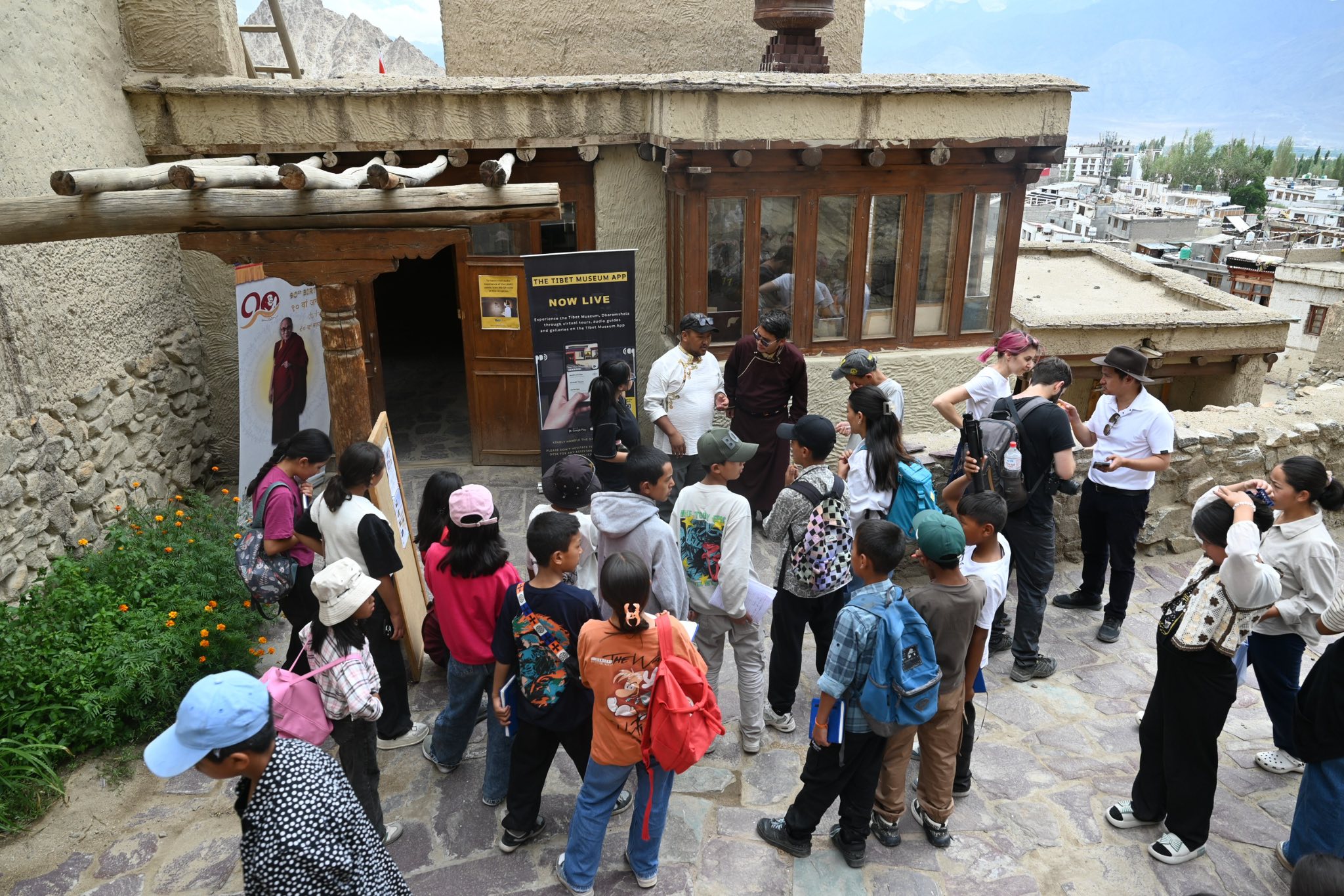
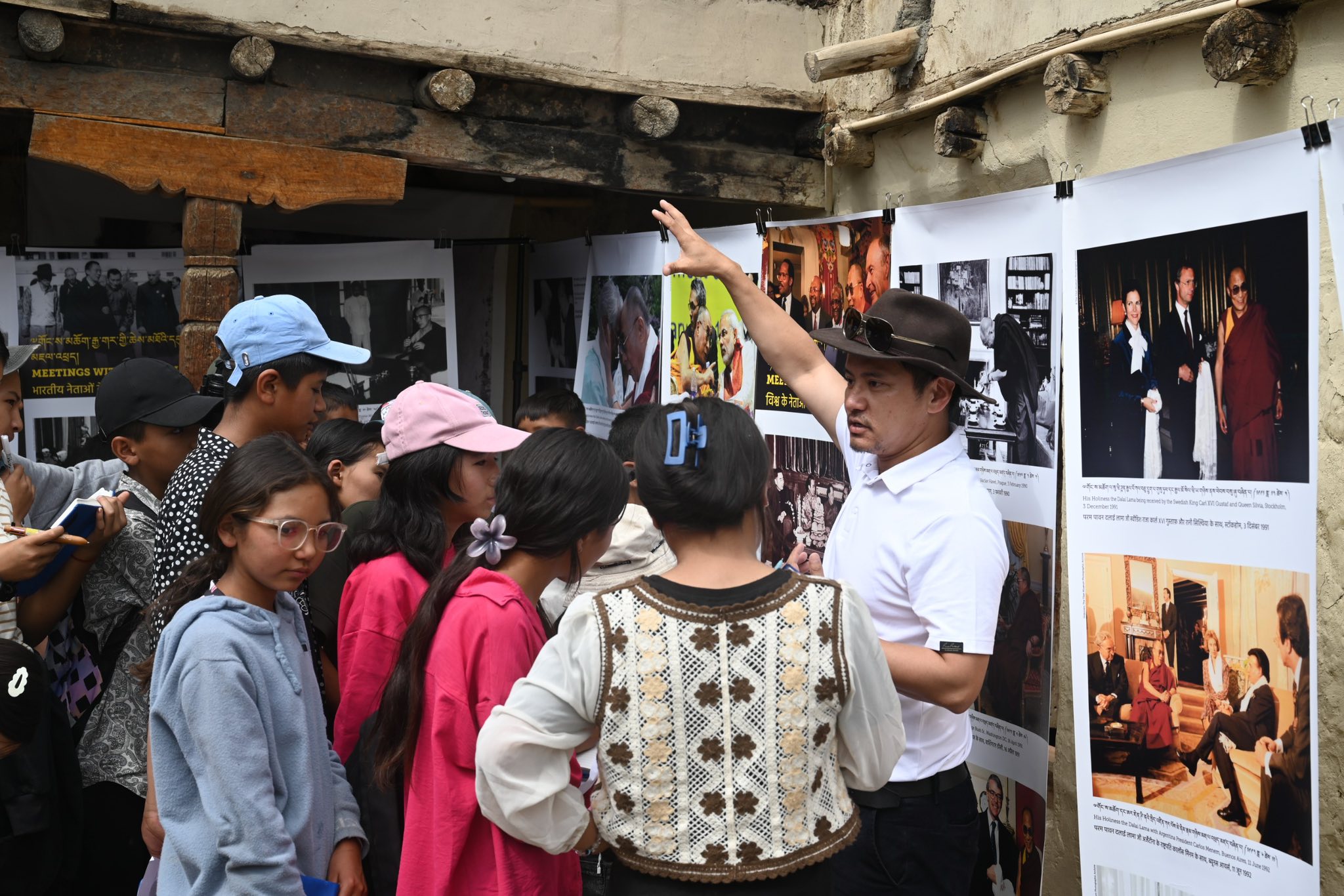
On 24 July, the Tibet Museum, under the Department of Information and International Relations (DIIR), Central Tibetan Administration, inaugurated its traveling photographic exhibition in the courtyard of Karsha Palace. Organised as part of the Year of Compassion (Ghoton) and in tribute to His Holiness the 14th Dalai Lama, the exhibition showcased pivotal moments from His Holiness’s life, message, and global contributions. The presence of Sharpa Choje Rinpoche and the active participation of local residents, monks, nuns, and guests contributed to a memorable and meaningful atmosphere.
The field visit concluded on 25 July, as the team departed Zanskar and returned to Leh, Ladakh. Alongside photographic and oral documentation, they carried back a renewed sense of purpose and commitment to the Museum’s central mission: to preserve, share, and honour the lived histories of the Tibetan people in exile—histories that continue to inspire, instruct, and bear witness to the richness of Tibet’s cultural and spiritual legacy.
-Report filed by The Tibet Museum, DIIR, CTA