Language
བོད་ཡིགहिंदी中文

Subscribe

  • Home
  • News
    • Tibet Today
    • Tibet – From other sources
    • Human Rights & Situation inside Tibet
    • CTA Reports
    • Announcement
    • International Support
    • Situation in Tibet Updates
    • Self-Immolation Fact Sheet
    • Environmental News
    • Press Releases
  • Media
    • Photos
    • Publications
    • Periodicals
    • Videos
    • Site Archive
  • About Tibet
    • His Holiness the Dalai Lama
    • Glimpses on History of Tibet
    • Tibet at a Glance
    • National Flag
    • Map of Tibet
    • National Anthem
    • Global Tibet Movement
  • About CTA
    • Charter
    • Tibet in Exile
    • Leadership
    • Judiciary
    • Legislature
    • Executive
    • Election Commission
    • Public Service Commission
    • Auditor General
    • CTA Virtual Tour
  • Departments
    • Religion & Culture
    • Home
    • Finance
    • Education
    • Security
    • Information & International Relations
    • Health
  • Statements
    • By His Holiness the Dalai Lama
    • By the Kashag
    • By the Tibetan-Parliament in Exile
  • Key Issues
    • Issues facing Tibet
    • Sino-Tibetan Dialogue
    • Environment & Development
    • The Middle Way Approach
    • Dolgyal (Shugden)
  • Contact
  • Websites
    • Pillars of Democracy
      • Tibetan Supreme Justice Commission
      • Tibetan Parliament in Exile
        • Tibetan
        • English
      • Autonomous body
        • Tibetan Election Commission
        • Office of Auditor General
    • Departments
      • Religion
      • Home
      • Education
      • Health
    • OOT
      • OOT, NEW DELHI
      • OOT, GENEVA
      • OOT, DC
      • OOT, TOKYO
      • OOT, BRUSSELS
      • OOT, CANBERRA
      • OOT, PRETORIA
      • OOT, MOSCOW
      • OOT, BRAZIL (LATIN AMERICA)
    • Other CTA offices
      • Sard Fund
      • Tibet Policy Institute
      • Tibet Online TV
      • Tibet Museum
      • ATWS
      • TIBFIN
      • Solidarity with Tibet
      • Middle way Approach
    • More
      • Tibetan Terminology
      • Lamton
      • Secular Ethics
      • Bodyiglobjong
      • Tibetan Teacher
      • Tibet Corps
      • Ngoenga School
      • Tibetan Enterperneurs
      • HHDLCT
  • CTA Virtual Tour
  • Advocacy
    • V-TAG
    • International Tibetan Youth Forum
  • Support
    • Be a Friend of Tibet (Blue Book)
    • Green Book (Chatrel)

China: Tibetan Children Denied Mother-Tongue Classes

6 years ago

Subscribe


Post Views: 1,322
Print Friendly, PDF & Email

Human Rights Watch. Read the original article here.

‘Bilingual’ Policy Threatens Tibetan-Medium Education

(London) – China’s “bilingual education” policy has accelerated the demise of Tibetan-medium instruction in primary schools in Tibetan areas, Human Rights Watch said in a report released today. The policy, carried out over the past decade in the Tibet Autonomous Region (TAR) and other Tibetan areas, has increased Chinese language schooling at all levels except for the study of Tibetan language itself.

The 91-page report, “China’s ‘Bilingual Education’ Policy in Tibet: Tibetan-Medium Schooling Under Threat,” examines the Chinese government’s rollback of minority education rights in Tibet under the guise of improving access to education. It highlights compulsory “bilingual” kindergartens that immerse Tibetan children in Chinese language and state propaganda from age 3, in the name of “strengthening the unity of nationalities.” These developments reflect an assimilationist policy for minorities that has gained momentum under President Xi Jinping’s leadership.

“China’s ‘bilingual education’ policy is motivated by political imperatives rather than educational ones,” said Sophie Richardson, China director. “The Chinese government is violating its international legal obligations to provide Tibetan-language instruction to Tibetans.”
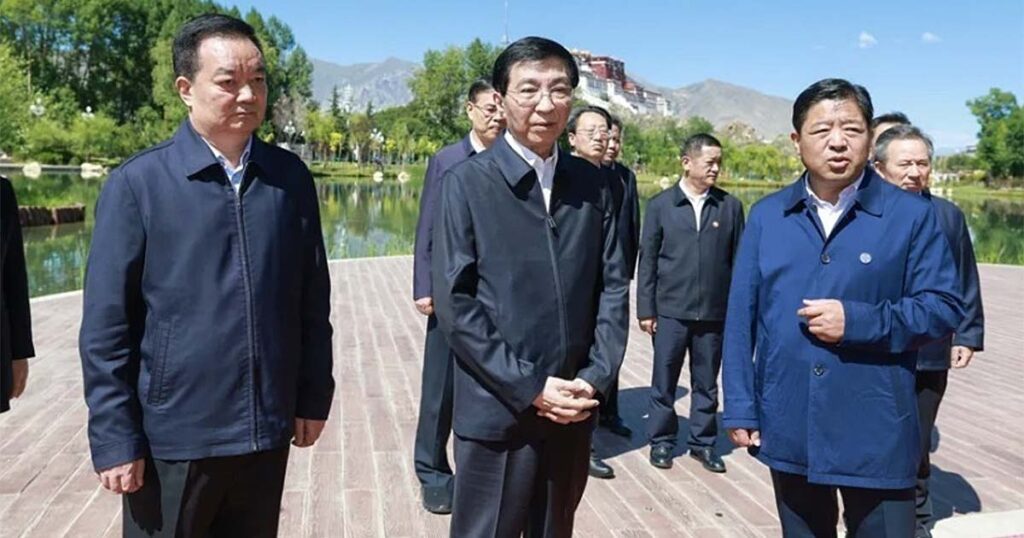

The report features in-depth interviews with Tibetan schoolteachers, academics, and former officials, and includes translations of recent petitions by Tibetans and debates on language rights and education.

China’s constitution guarantees minority language rights, and Tibetan-medium education began to be introduced in schools in the relatively liberal 1980s, although only at the primary level in the TAR. In an increasingly repressive political climate, the authorities now consider even local initiatives for the promotion of Tibetan language as “separatist” activities. Many Tibetans view the primacy and continuity of their language as the fundamental guarantee of their future as a distinct people within the People’s Republic of China (PRC).

In 2010 to 2012, the proposed phasing-out of Tibetan-medium instruction in Tibetan areas of Qinghai province sparked school protests that the authorities crushed, but caused the new policy to be put on hold. In May 2019, however, Golok Prefecture in Qinghai announced that Chinese would be made the medium of instruction at all levels, starting from the September semester.

No such announcement has been made in the TAR, and officials claim that each primary school can decide whether to switch from Tibetan to Chinese-medium teaching. But the Human Rights Watch report presents evidence the authorities there have adopted measures that appear designed to pressure local schools to switch to Chinese-medium. These measures include hiring thousands of non-Tibetan speaking teachers from other parts of China under the “Aid Tibet” program and the promotion of ethnically “mixed classes,” also for the sake of “nationality unity.” These make the adoption of the Chinese language largely inevitable, especially in urban areas, even without direct compulsion.

International observers are denied access to Tibetan areas of China, but in September 2019, Human Rights Watch was able to ask questions regarding the language of instruction to parents and teachers in six rural townships in Nagchu Municipality in northern TAR. All replied that as of March 2019 their local primary schools had switched to using Chinese as the language of instruction.

Tibetans sources told Human Rights Watch that while it is necessary and desirable for children to acquire fluency in Chinese, this was in no way incompatible with Tibetan-medium instruction at the kindergarten and primary level. Some were aware of international academic research showing that children learn faster and better in their own language and are better placed to learn a second language once they have acquired competency in their mother tongue. One expert contributor to an online debate wrote: “[I]t’s surprising that there is a wish to abandon our own advantage of having a mother-tongue education system, and … to consider this ‘transformation’ to be an ‘improvement in quality.’ This is as stupid as scaling a tree to catch a fish.”

China’s version of bilingual education contravenes international human rights law, particularly the United Nations Convention on the Rights of the Child and the International Covenant on Civil and Political Rights (ICCPR). UN committees such as those on the Rights of the Child; Economic, Social and Cultural Rights; and Elimination of Racial Discrimination have all expressed concern over the rights of Tibetans to education in their own language and culture in China. UN member countries should urgently and publicly raise their concerns in bilateral meetings and international forums.

“China’s ‘bilingual education’ policy in Tibet goes against the constitution, international standards, and expert consensus on the importance of mother-tongue instruction, and the basic aspirations of the Tibetan people,” Richardson said. “Forced assimilation is no solution to the governance of ethnic minority regions, nor is national security an acceptable justification for the denial of mother-tongue education rights.”


FEATURED NEWS

UK All-Party Parliamentary Group on Tibet Condemns China’s ‘Ethnic Unity and Progress Law’ as an Instrument of Forced Assimilation

July 1, 2026

German Foreign Ministry Voices ‘Great Concern’ Over China’s Ethnic Unity Law and Risk of Transnational Repression

July 1, 2026

U.S. Senate Introduces Bipartisan Resolution on the “Ethnic Unity and Progress Law”

July 1, 2026

Sikyong Penpa Tsering Issues Urgent Global Appeal Over China’s New “Ethnic Unity and Progress Law”

June 30, 2026

LATEST STORIES

China’s Dystopian “Ethnic Unity” Law Goes into Effect as China Goes Backward in the World Again

June 30, 2026

Rosen, Curtis, Merkley, Banks Introduce Resolution Condemning Chinese Suppression of Ethnic Minorities

June 30, 2026

Rosen, Curtis, Merkley, Banks Introduce Resolution Condemning Chinese Suppression of Ethnic Minorities

June 30, 2026

Senator Curtis, Colleagues Introduce Resolution Condemning Chinese Suppression of Ethnic Minorities

June 30, 2026
About Tibet

Tibet at a Glance

Tibetan National Flag

Global Tibet Movement

About CTA

Constitution

Leadership

Judiciary

Legislature

Executive

Election Commission

Public Service Commission

Auditor General

Contact us

Religion and Culture

Home

Finance

Education

Security

Information & International Relations

Health

Key Issues

Issues Facing Tibet

Sino Tibetan Dialogue

Middle Way Approach

Dolgyal-Shugden

Subscribe

© Central Tibetan Administration • Privacy Policy • Terms of Service

keyboard_arrow_up