
AFP, The Times of India. Read the article here.

BEIJING: The Chinese Communist Party official facing possible US sanctions for allegedly overseeing the mass detention of Muslims in the Xinjiang region is a soldier-turned politician known as a security enforcer.
Chen Quanguo was appointed party chief in the Xinjiang in August 2016, and his tenure has been marked by reports that more than a million ethnic Uighurs and other minorities have been rounded up into a network of internment camps in the far west region.
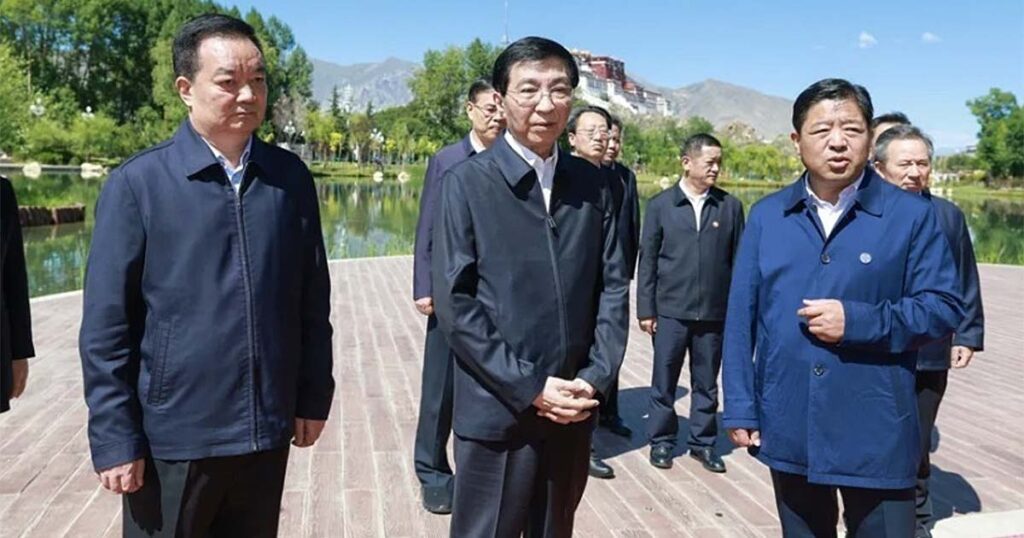
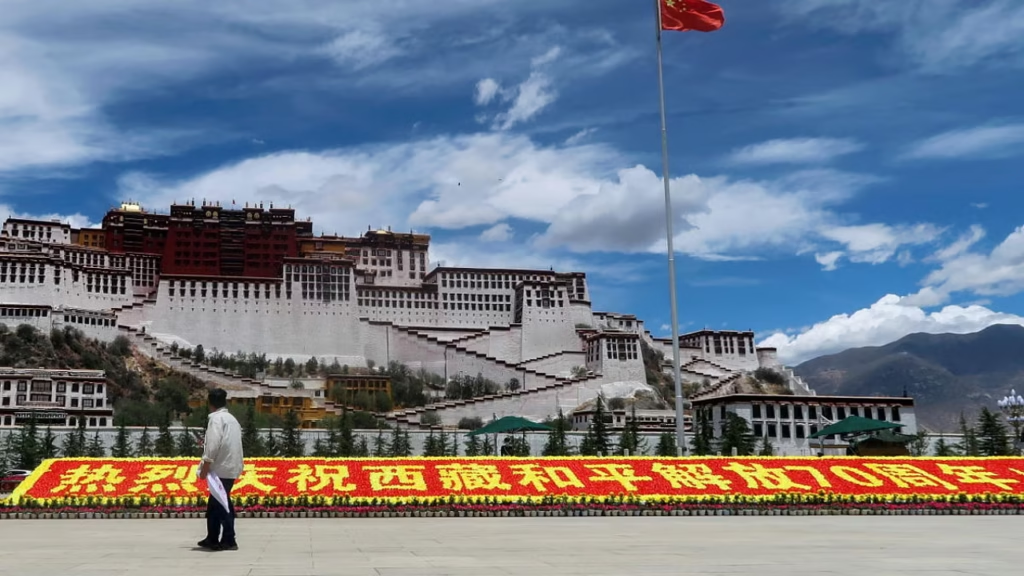
It is not his first assignment in a region with a history of ethnic tensions: Before the Xinjiang, the politician was tasked with pacifying neighbouring Tibet following protests and a string of self-immolations by Buddhist monks.
In 2017, Chen was promoted to the upper echelons of the CCP, becoming one of 25 members of the Politburo.
“Within the party, Chen has gained a reputation as an ‘ethnic policy innovator’ who can make sure that minorities who earlier clamoured for independence n western China will now toe to the party line,
“Adrian Zenz, an independent German researcher specialising in Xinjiang told AFP.
Little known outside China, the 64-year-old is now in the limelight after the US House of Representatives passed a bill calling for sanctions against Chinese officials behind the crackdown in Xinjiang.
The legislation, which must be reconciled with the Senate before its final passage, urges the US secretary of state to impose sanctions on Chen and other officials” credibly alleged to be responsible for human rights abuses in Xinjiang”.
The foreign ministry said the bill “wantonly smears” China’s effort to eradicate extremism in the region endured “several thousand ” attacks from 1990 to the end of 2016.
Chinese officials deny the sprawling facilities that mark Xinjiang are “concentration camps”, describing them instead as “vocational education centres” where “students” learn Mandarin and job skills in an effort to steer them away from religious extremism.
But Chen once said the centres should “teach like a school, be managed like the military, and be defended like a prison”, according to officials documents seen by AFP.
According to separate documents leaked to the New York Times, Chen also urged officials to “round up everyone who should be rounded up” after President Xi Jinping urged officials to show “absolutely no mercy” against extremism following an attack in 2014.
“In terms of extrajudicial and arbitrary detention, Chen is the most aggressive (Xinjiang governor) in the recent 40 years, ” said Shawn Zhang, a researcher at the University of British Columbia, who used satellite imagery to find dozens of internment camps.
Xinjiang imposes stringent restrictions on religious practices, forbidding beards, the wearing of veils and distribution of ‘extremist’ religious content including everything from songs with Arabic lyrics to unofficial editions of the Koran.
Members of the Uighur diaspora have said that relatives have been arrested for seemingly innocuous acts such as sending Ramadan greetings to friends or downloading popular music.
For those living outside the camps, ubiquitous ID checks and tight security are a part of daily life.
In his first 12 months in charge of Xinjiang Chen ‘advertised the same number of security positions per capita that he put out in Ti8bet in five years, “said Zenz.
Born into a poor family in rural Henan province, Chen joined an artillery regiment in the Chinese army at 18. After a four-year stint in the military, he joined an auto-parts factory.
He made his first foray into politics in 1981, as part bo9ss of a small prefectu7re in Henan before becoming governor in Hebei.
Chen’s big break came in 2011 when he was appointed party chief of Tibet.
Tibet served as a testbed for his ‘strongman style of leadership,” said Zenz.
Chen built community police stations every 500 meters in town in Tibet. The same is now seen in Xinjiang.
He also hired locals to keep tabs on their communities, a strategy known as
“grid-style social management.”
“grid-style social management.”
He was then handed the reins of Xinjiang, which sits at the centre of Xi’s signature Belt and Road global infrastructure initiative. Billions of dollars have been pledged to build road and rail routes and oil and gas pipelines in the province, connecting China to Central Asia, the Middle East, and Europe.
“Xi has starked his reputation on Chen Quanguo’s abilities and success,” said Zenz.