Bengaluru, 18–19 December 2025: The Department of Information and International Relations (DIIR) of the Central Tibetan Administration (CTA) successfully conducted a series of Tibet Outreach Programmes in Bengaluru on 18 and 19 December 2025, as part of its ongoing South India Tibet Outreach Programme.
On 18 December 2025, DIIR inaugurated the Tibet Outreach Programme at the Takshashila Institution, Bengaluru. During the session, Tenzin Lekshay, Additional Secretary and Spokesperson of the DIIR, delivered a comprehensive talk on the reincarnation of His Holiness the 14th Dalai Lama, engaging researchers and scholars of the think tank in an in-depth discussion on the historical, religious, and political dimensions of the subject.
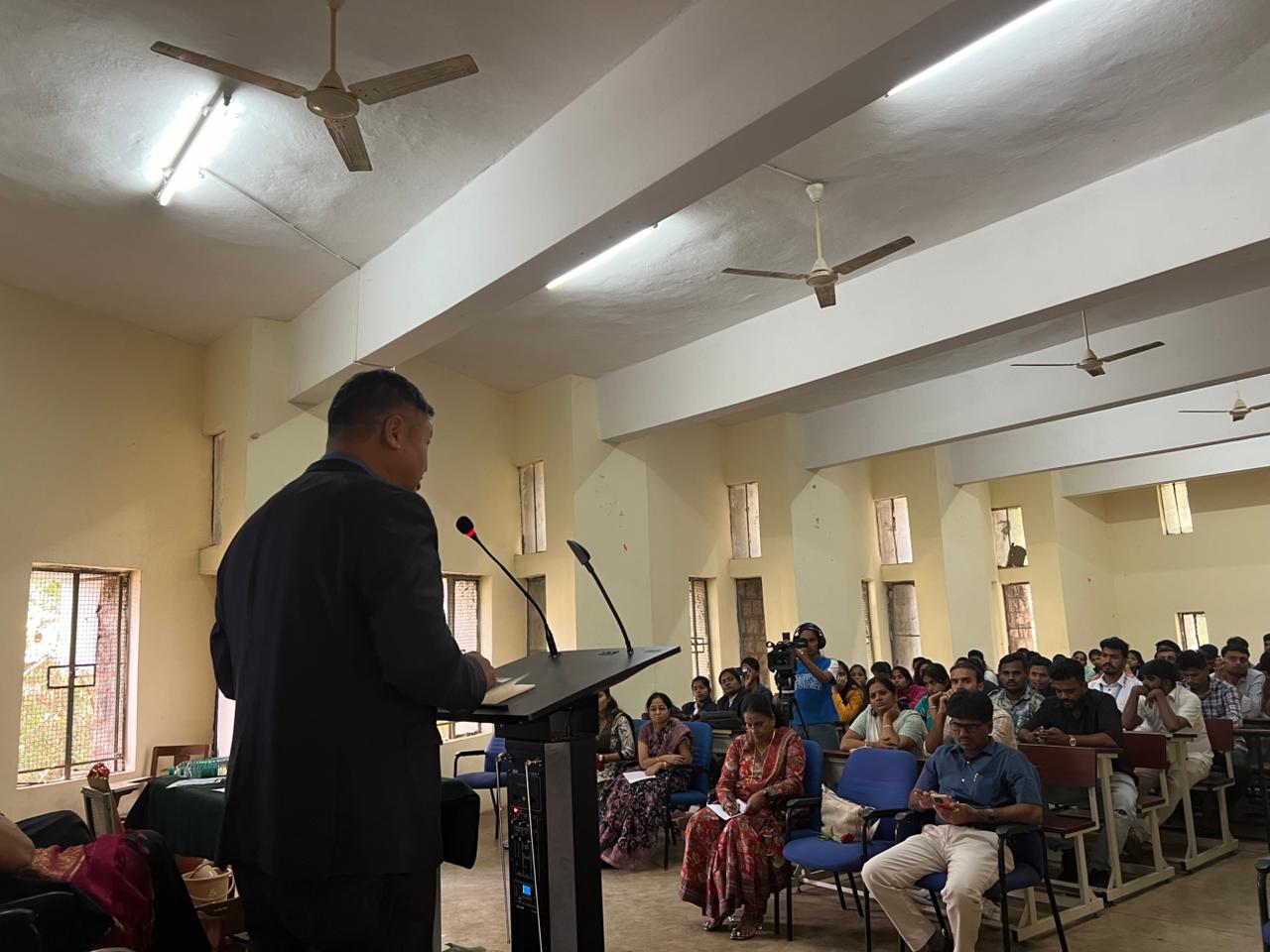
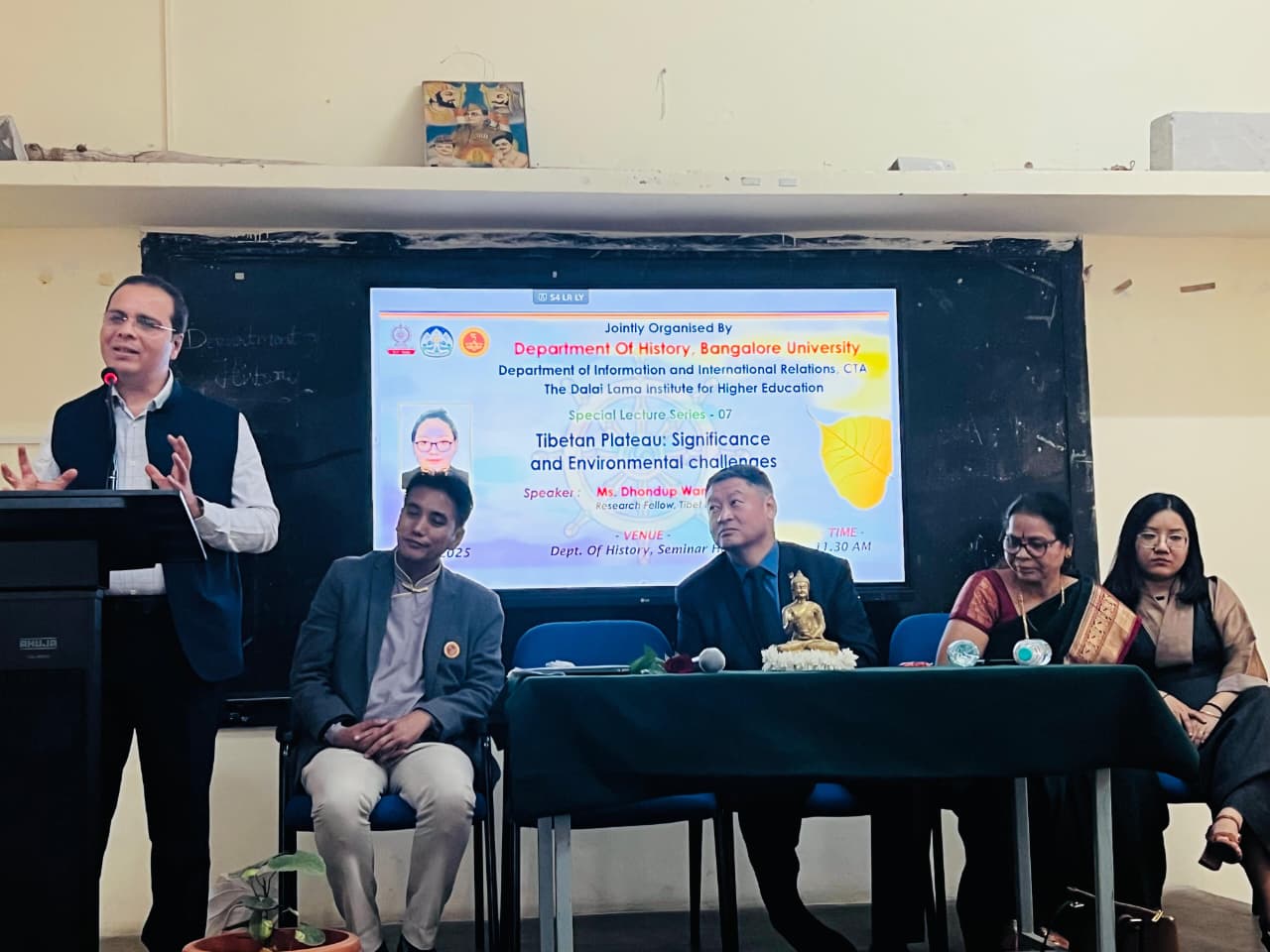
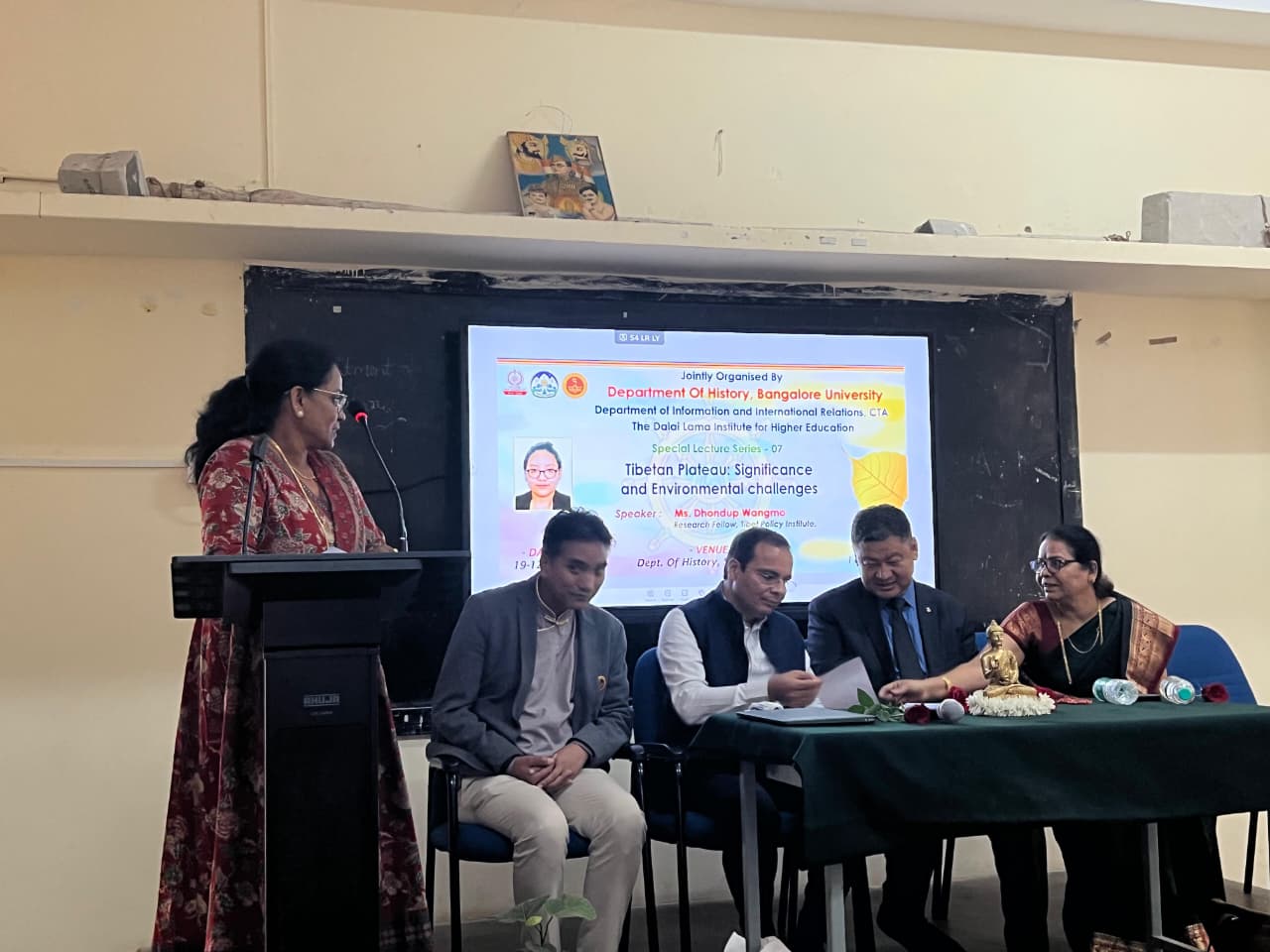
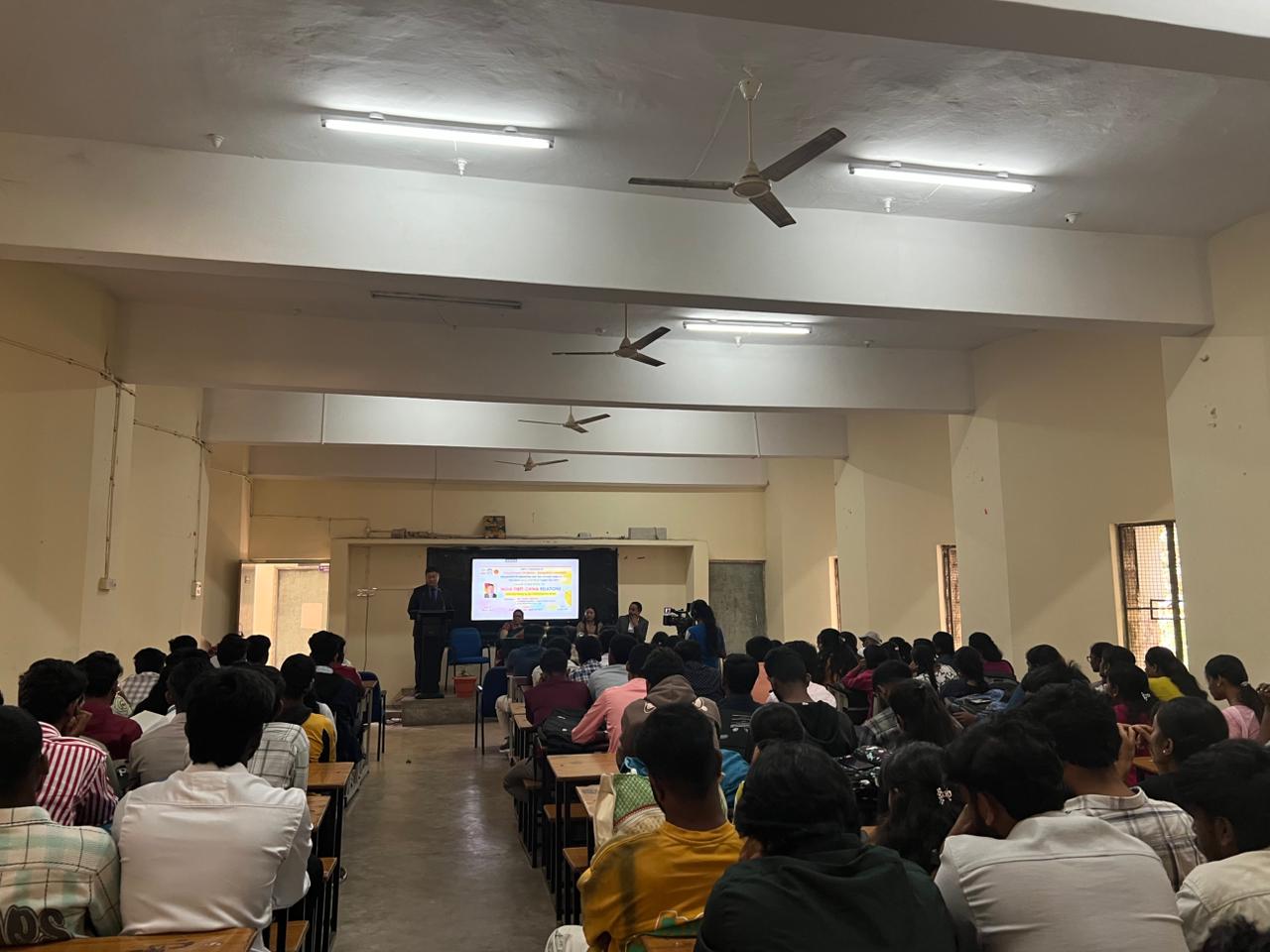
On the morning of 19 December 2025, DIIR conducted a Tibet Outreach Programme at Bengaluru University, organised under the University’s Special Lecture Programme by the Department of History. The programme forms part of a broader hybrid Tibet Advocacy Programme being implemented across South India from 18 to 30 December 2025, which includes the Tibet Awareness Programme, Training and Workshop on the Middle Way Policy, and the V-TAG South India Capacity Building and Advocacy Training.
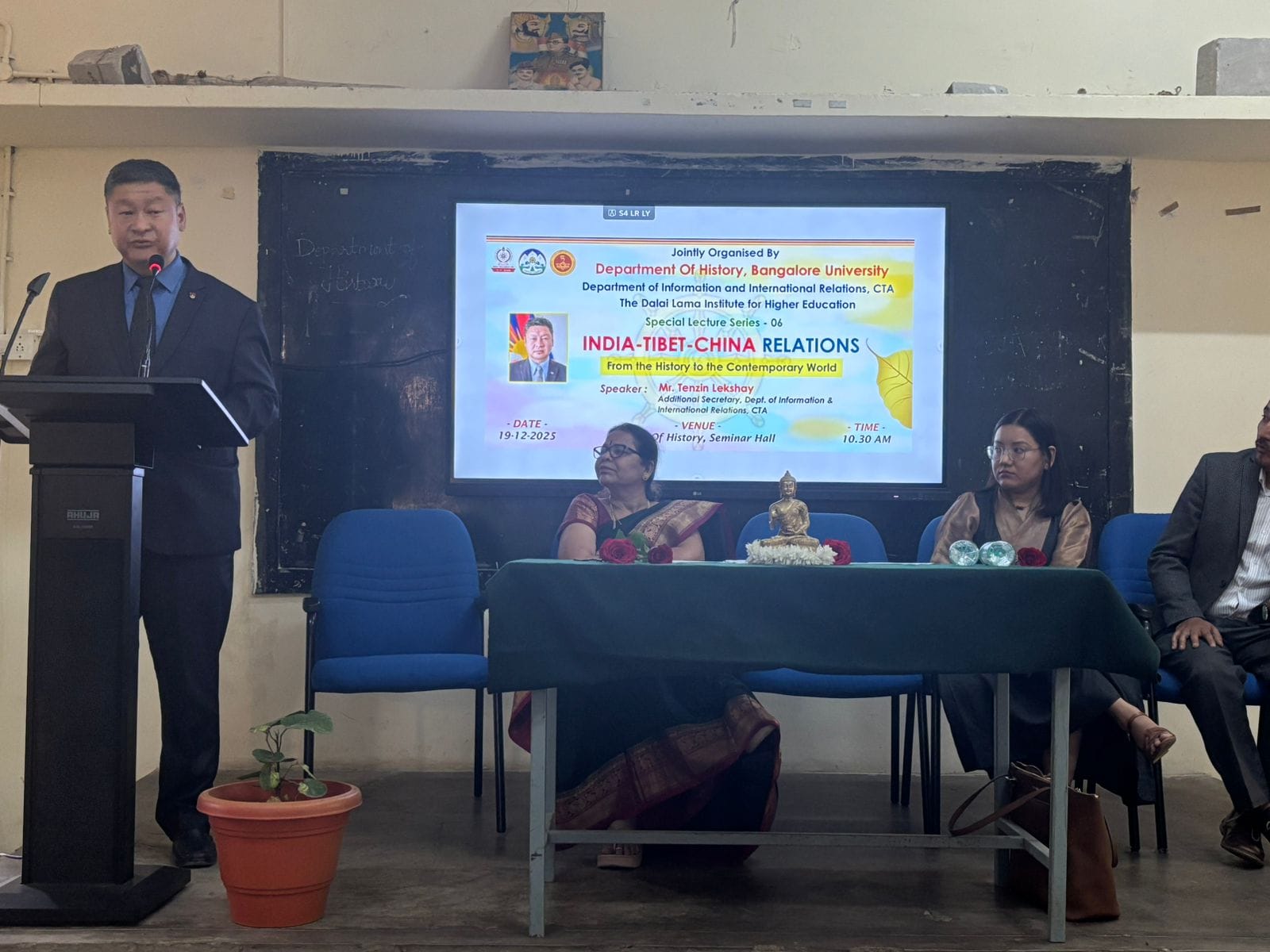
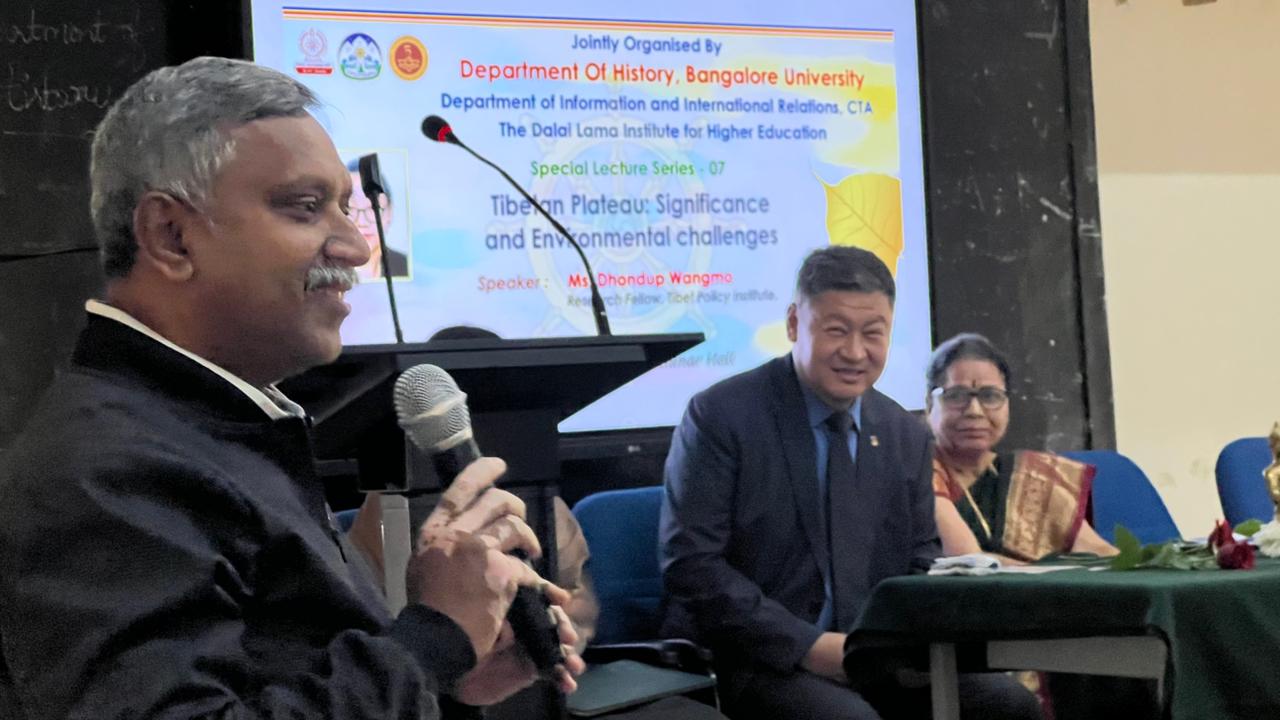
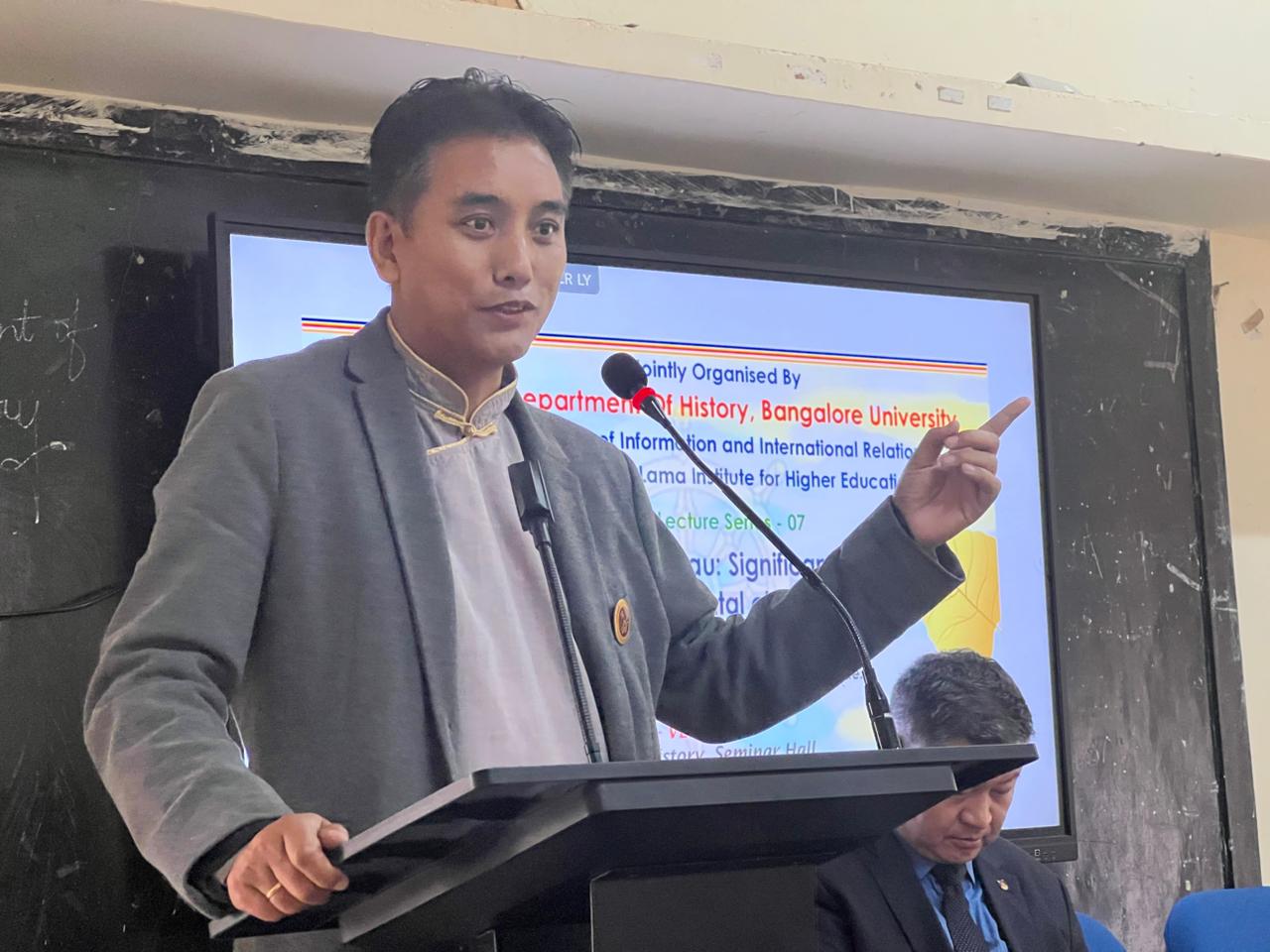
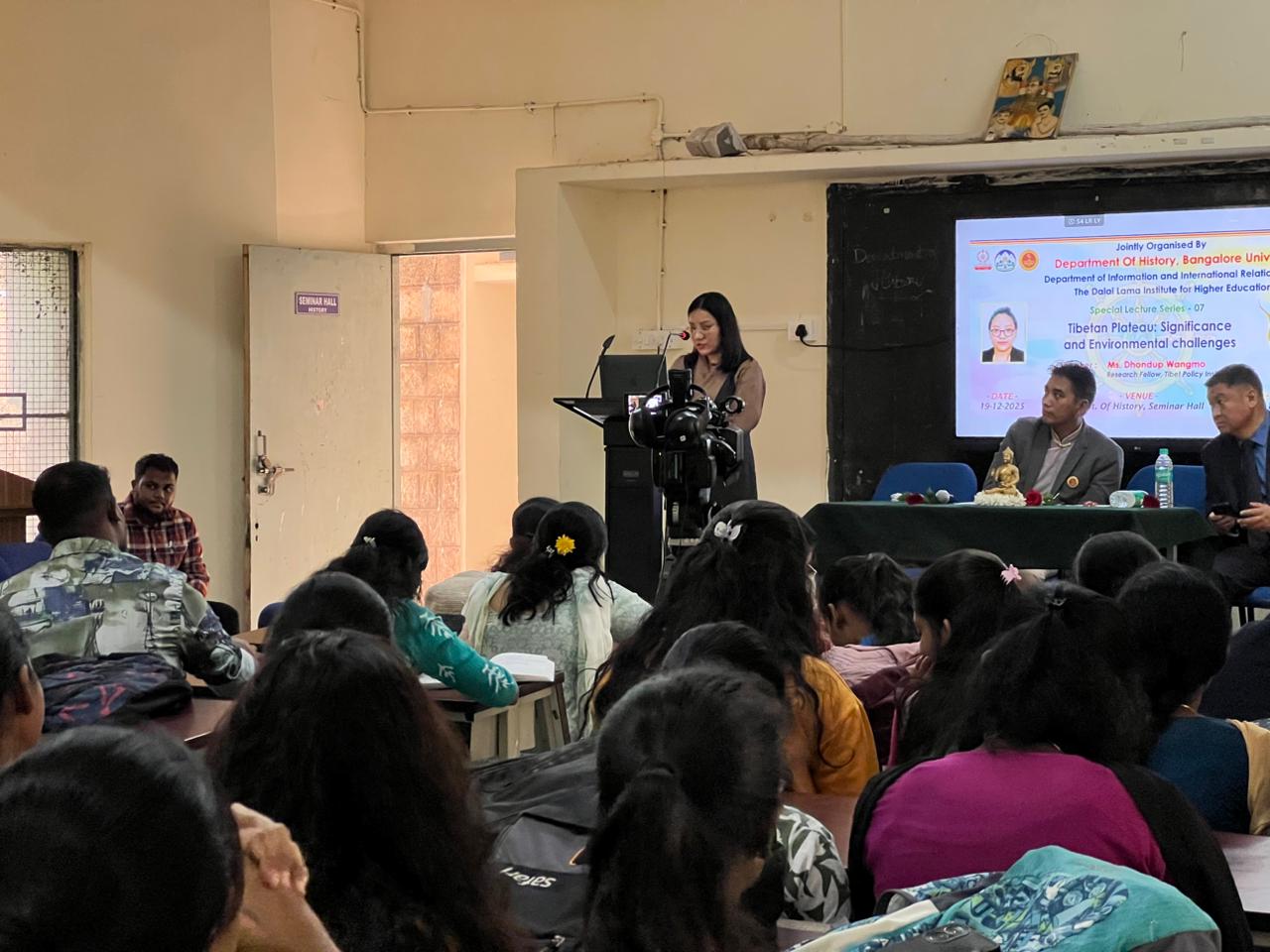
During the Bengaluru University session, Tenzin Lekshay delivered a lecture on “India–Tibet–China Relations: From Ancient History to the Contemporary World,” while Dhondup Wangmo, Research Fellow at the Tibet Policy Institute (TPI), CTA, spoke on “The Tibetan Plateau: Its Significance and Environmental Challenges.” The programme was attended by approximately 100 students and faculty members.
In his address, Tenzin Lekshay elaborated on the ancient civilizational ties between India and Tibet, highlighting Tibet’s historical reverence for India as its “Guru,” particularly in the transmission and preservation of Buddhism, which today forms the core of Tibetan identity and culture. He underscored the strategic and civilizational importance of the Tibetan Plateau, noting that major rivers originating in Tibet gave rise to the Indus Valley Civilization and continue to serve as lifelines for much of Asia, including China.
He further explained that tensions along the India–China border escalated following China’s invasion of Tibet, which effectively dismantled the traditional India–Tibet border and made China India’s immediate neighbour. Emphasising that India historically shared a border with Tibet rather than China, he reflected on the Panchsheel Agreement, noting that it was signed with China despite Tibet’s status being overlooked, thereby contributing to long-term geopolitical tensions.
Highlighting the Middle Way Policy, Lekshay stressed that resolving the Tibet–China conflict through peaceful dialogue is not a sign of weakness but the only viable and sustainable approach in the modern world. Drawing parallels with India’s own freedom struggle, he emphasised that non-violence and dialogue require moral courage and intellectual strength and ultimately serve the long-term interests of all parties involved.
He concluded by urging Indian students and researchers to study Tibet’s history and India–Tibet relations not merely out of solidarity with the Tibetan people, but in India’s own national and strategic interest, particularly in the context of regional security challenges. He emphasised that India has both the authority and responsibility to engage with the Tibet issue for its own security and future stability.
In her presentation, Dhondup Wangmo highlighted the critical environmental significance of the Tibetan Plateau for regional peace and security, particularly for neighbouring countries such as India. She provided an overview of the current ecological situation in Tibet, including climate change, degradation of grasslands, river ecosystems, and biodiversity loss, attributing these challenges to large-scale mining, dam construction, and infrastructure projects undertaken by the Chinese government since its occupation of Tibet in 1959.
She also drew attention to the increasing frequency of floods, landslides, and other disasters, describing them as largely man-made consequences of unsustainable development practices. Wangmo further addressed the displacement of Tibetan communities from their ancestral lands due to hydropower and mining projects carried out without the consent of the Tibetan people. Additionally, she highlighted the persecution and imprisonment of Tibetan environmental activists, including Tsogtsal Tsering, for advocating the protection of Tibet’s fragile ecosystem. She encouraged participants to explore in-depth research on these issues through the publications of the Tibet Policy Institute.
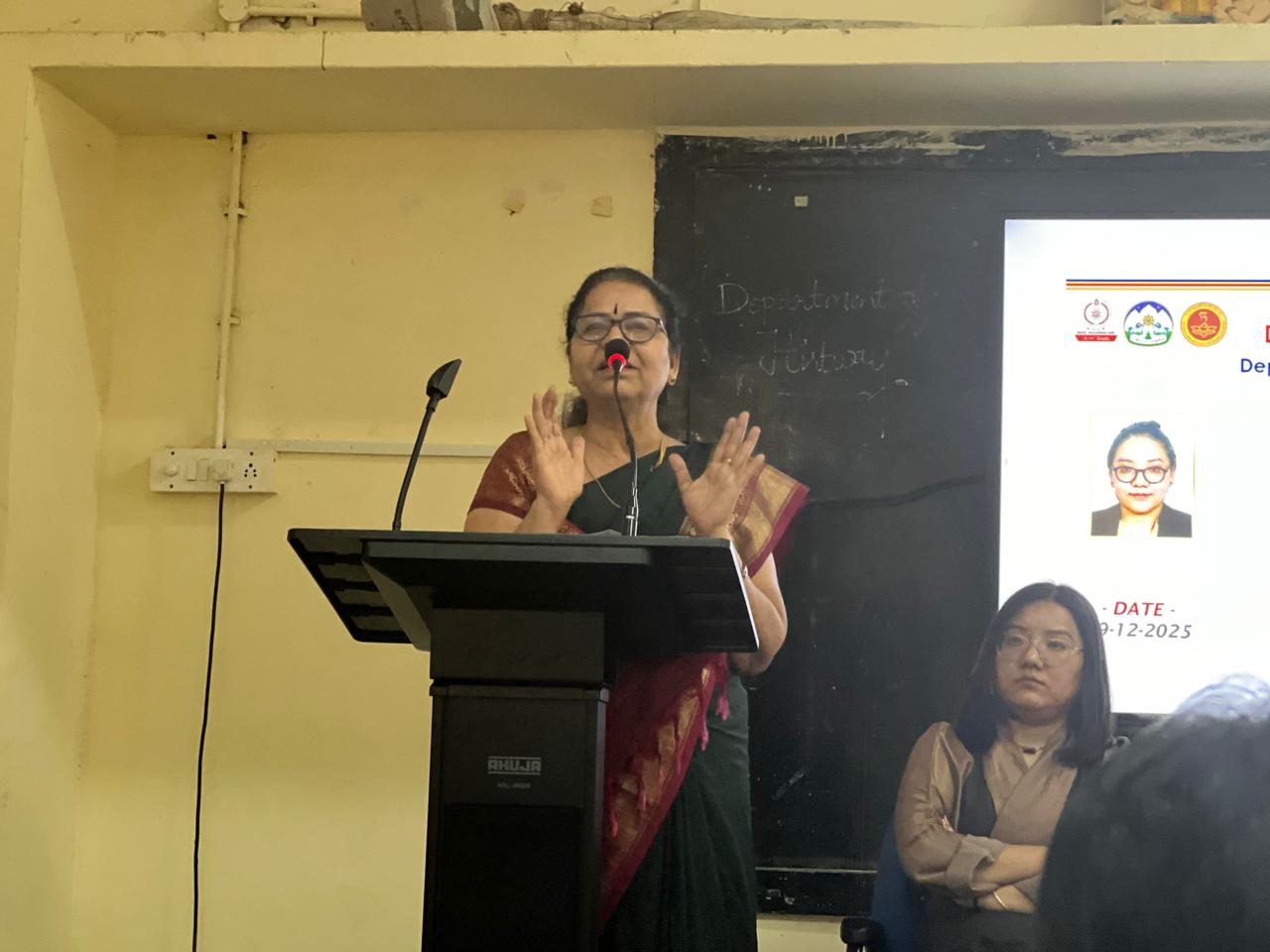
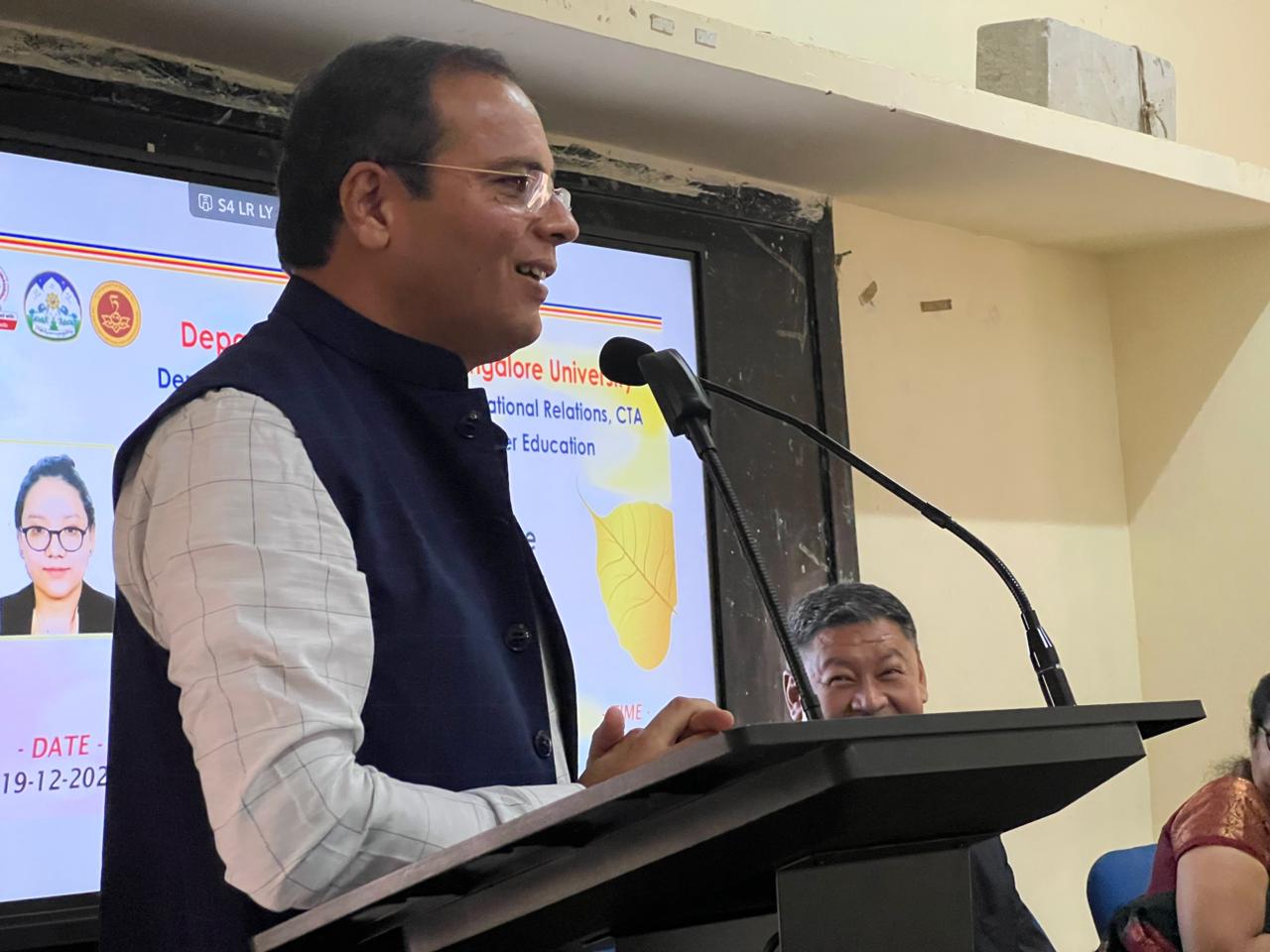
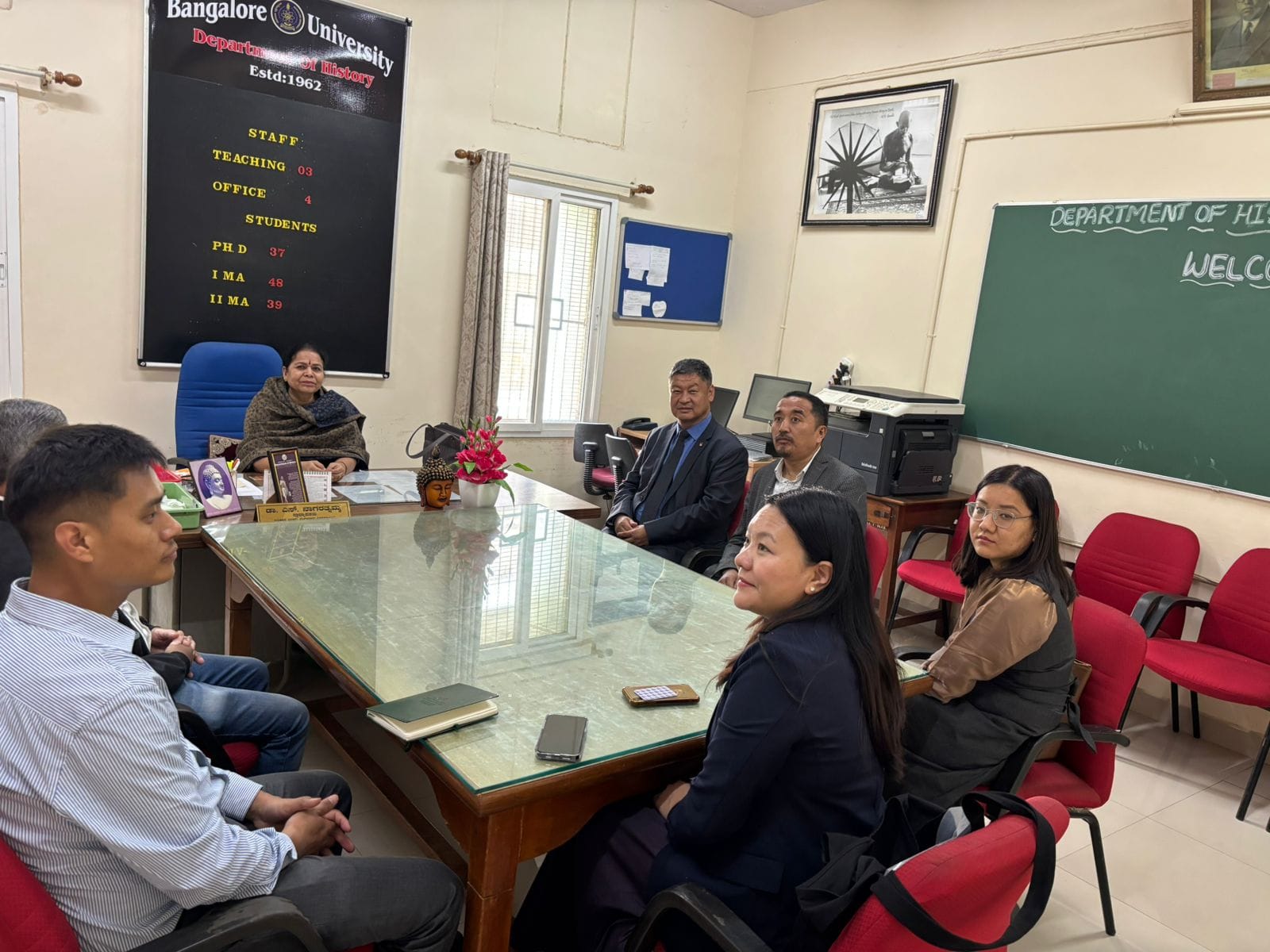
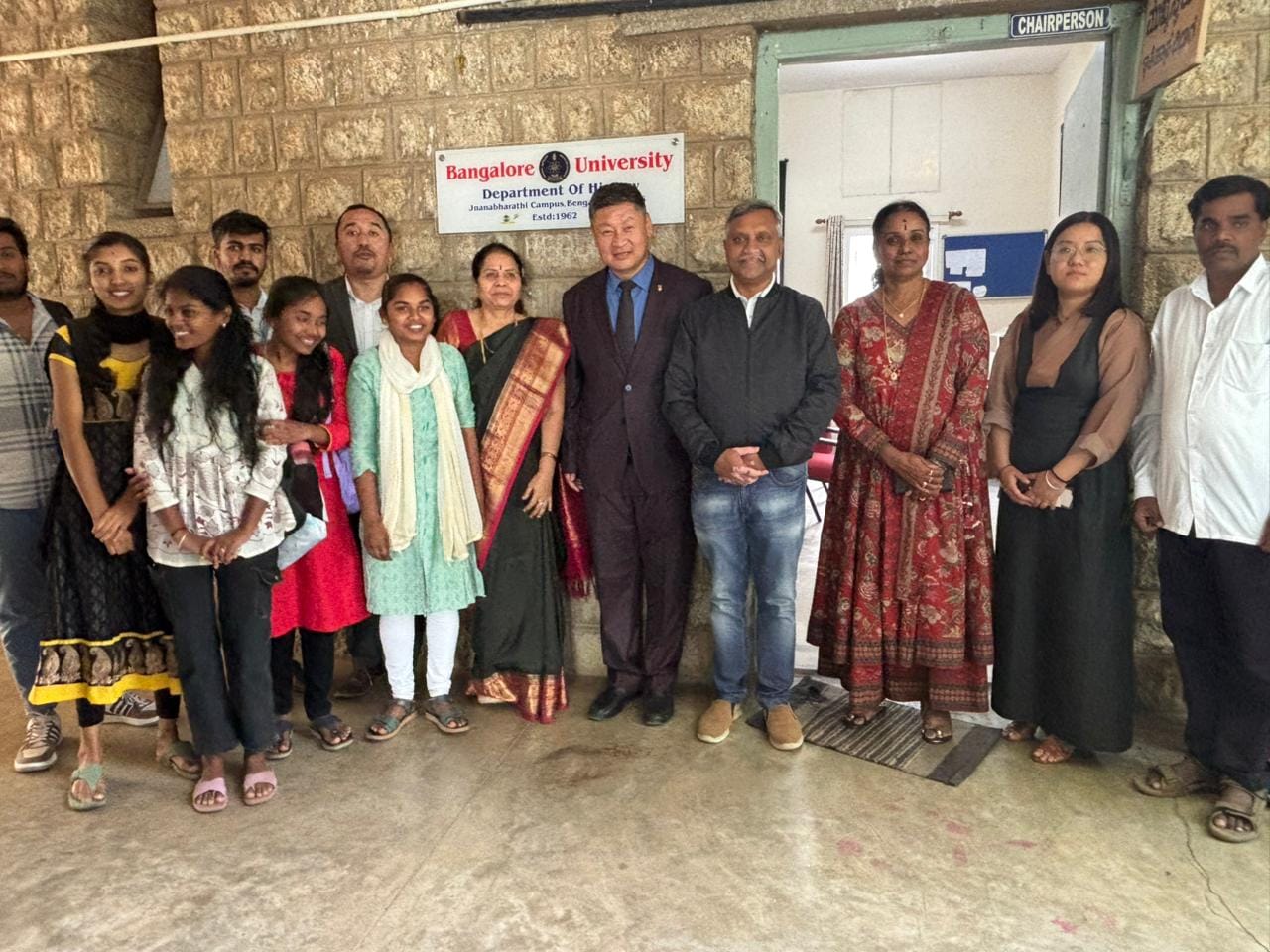
The programme was graced by Dr. Jayakar S. M., Vice Chancellor of Bengaluru University, who acknowledged the academic and strategic importance of the Tibet seminar and formally welcomed the speakers from the Central Tibetan Administration. Other dignitaries present included Dr. S. Nagarathnamma, Senior Professor and Chairperson of the Department of History; Dr. M. Shashidhar, Professor of History, Bengaluru University; Dr. Ravikumar D., Dr. Anitha T., and Dr. Tenzin Passang, Principal of the Dalai Lama Institute for Higher Education.
The Bengaluru University programme was facilitated through the coordination of Ngawang Gyatso, Dean of Regular Studies at the Dalai Lama Institute for Higher Education, who also accompanied the CTA delegation. The DIIR team further included Tenzin Kunkhen and Rinchen, who are participating in the ongoing Tibet Outreach Programme, including the Middle Way Policy Workshop scheduled from 19 to 21 December 2025 at the Dalai Lama Institute for Higher Education, followed by the V-TAG Capacity Building and Advocacy Training to be held next week at Yiga Choeling, Bylakuppe.
Later on 19 December 2025, the Tibet Outreach Programme is scheduled to continue at St. Joseph’s University, Bengaluru. The Tibet Outreach Programme aims to enhance awareness among students, scholars, and academic institutions on Tibetan history, culture, political realities, and the ongoing Tibet–China conflict, while fostering informed academic engagement and dialogue.
– Filed by the Tibet Advocacy Section, Department of Information and International Relations, CTA