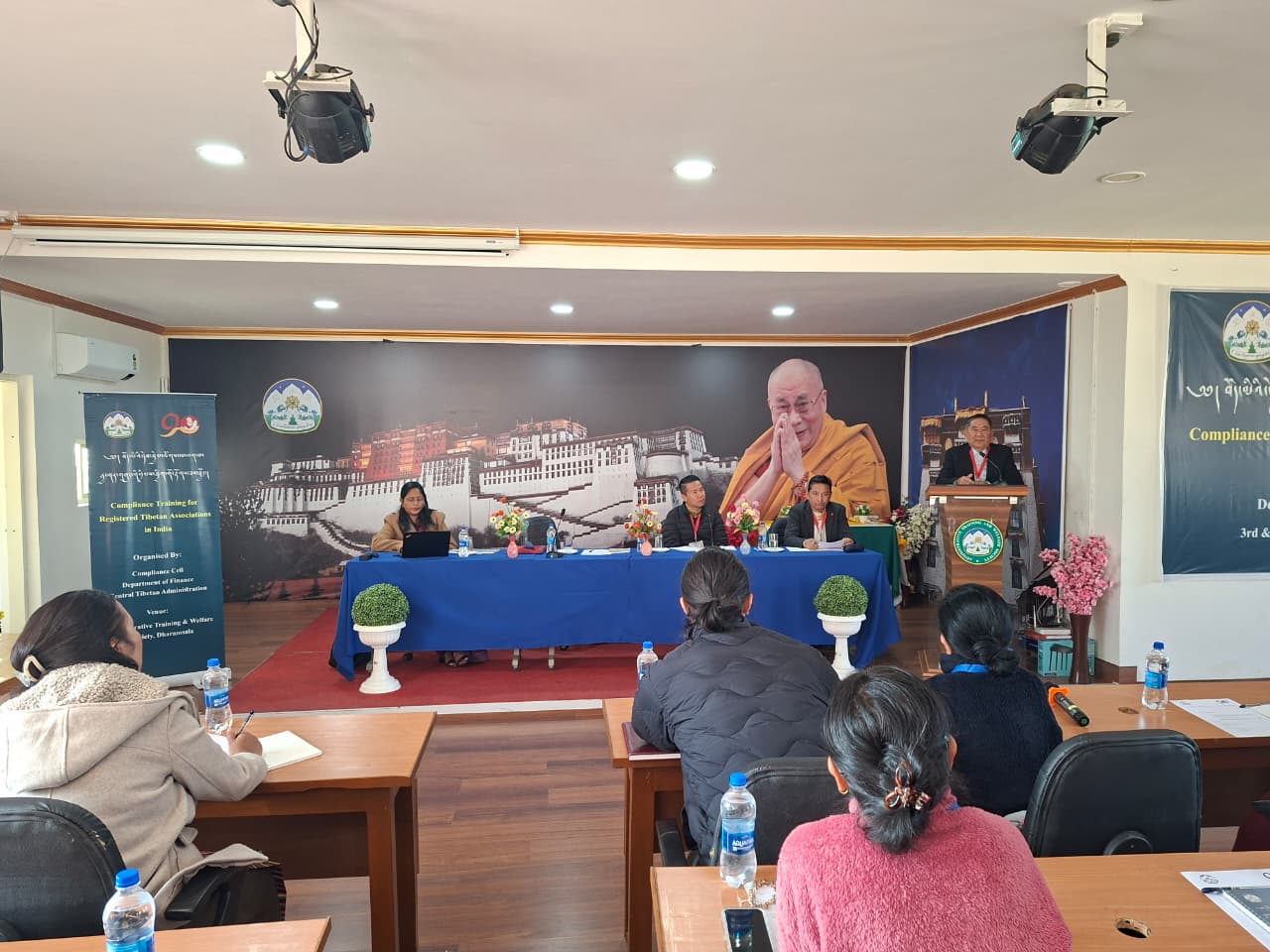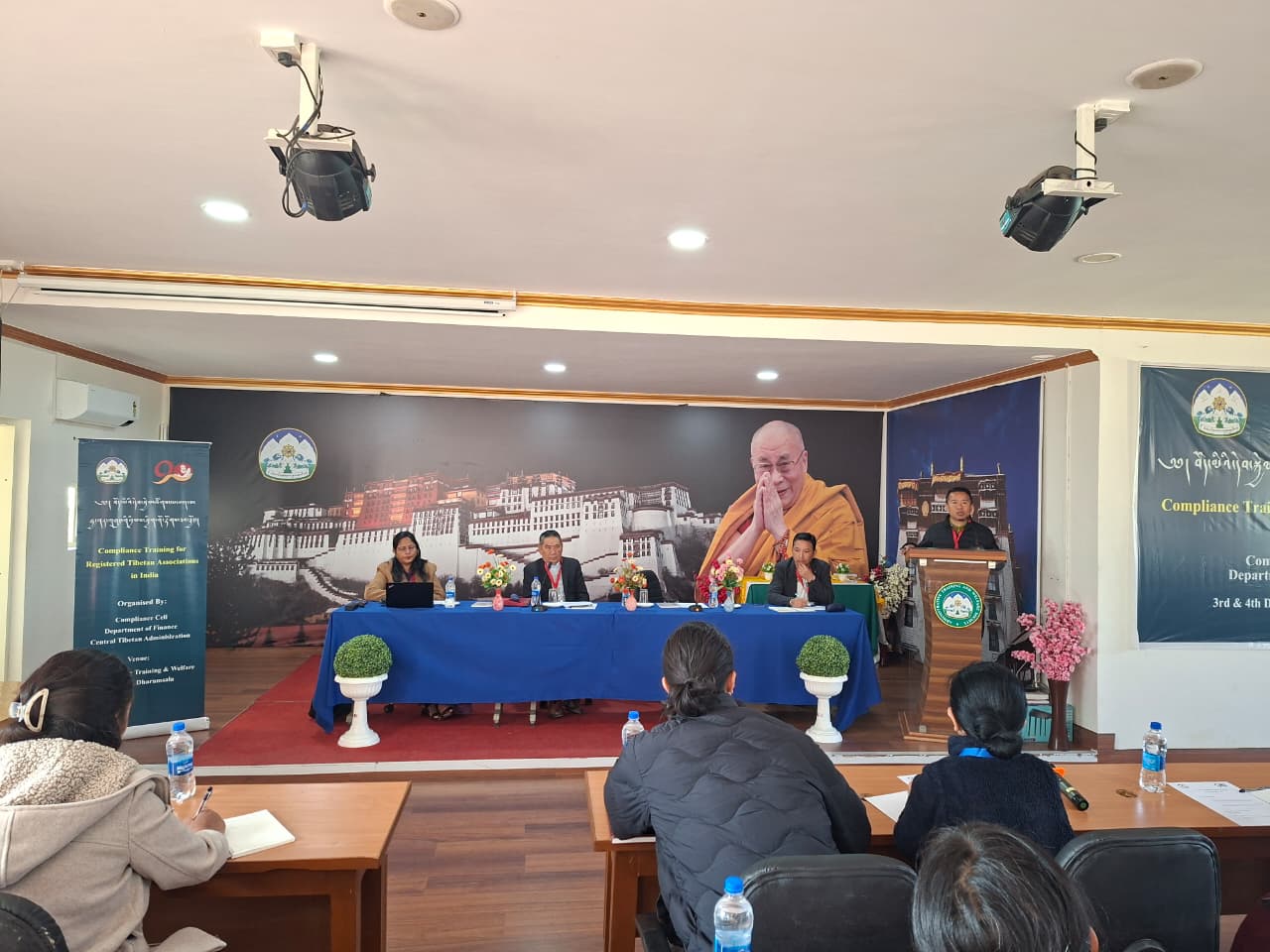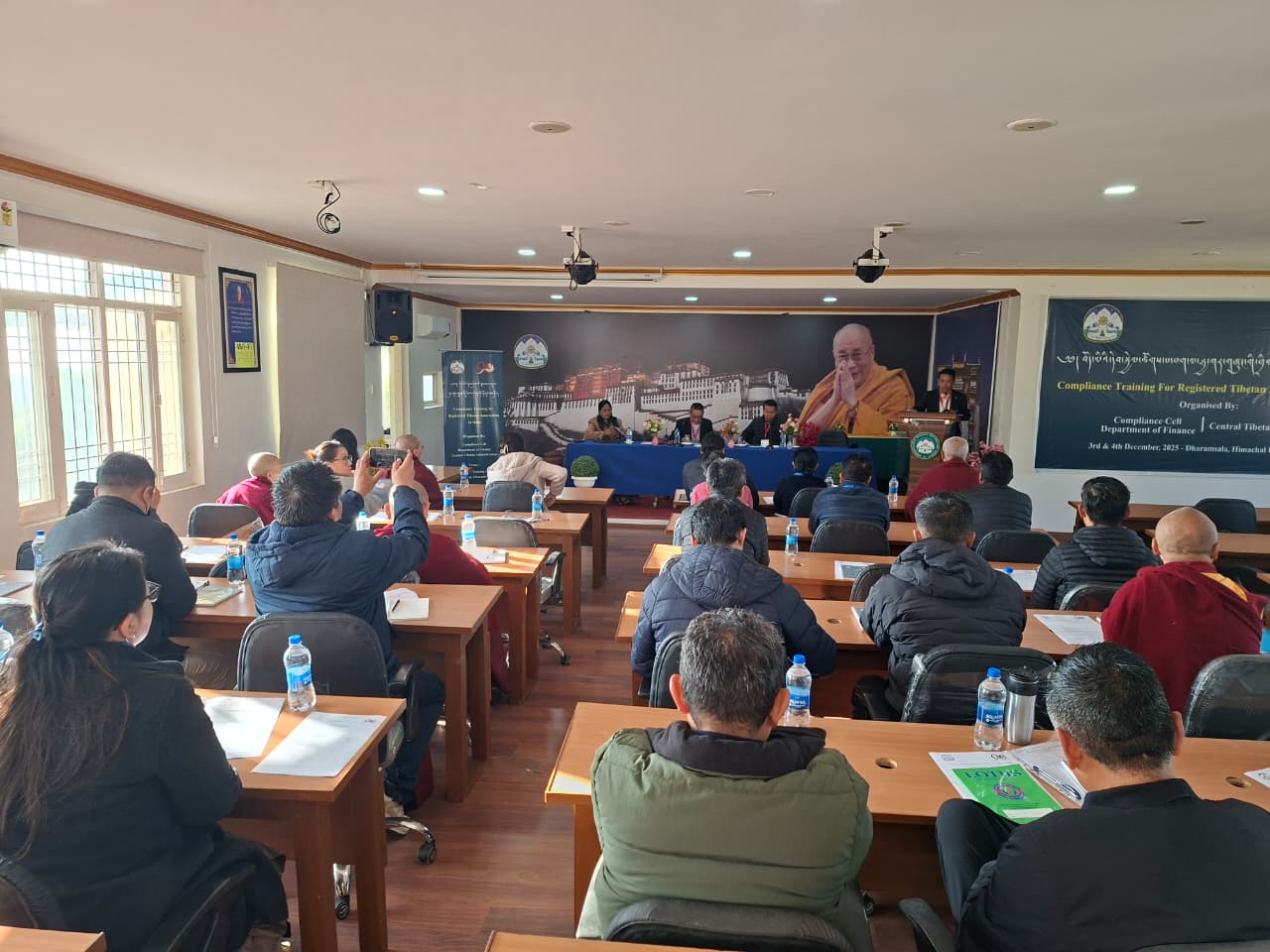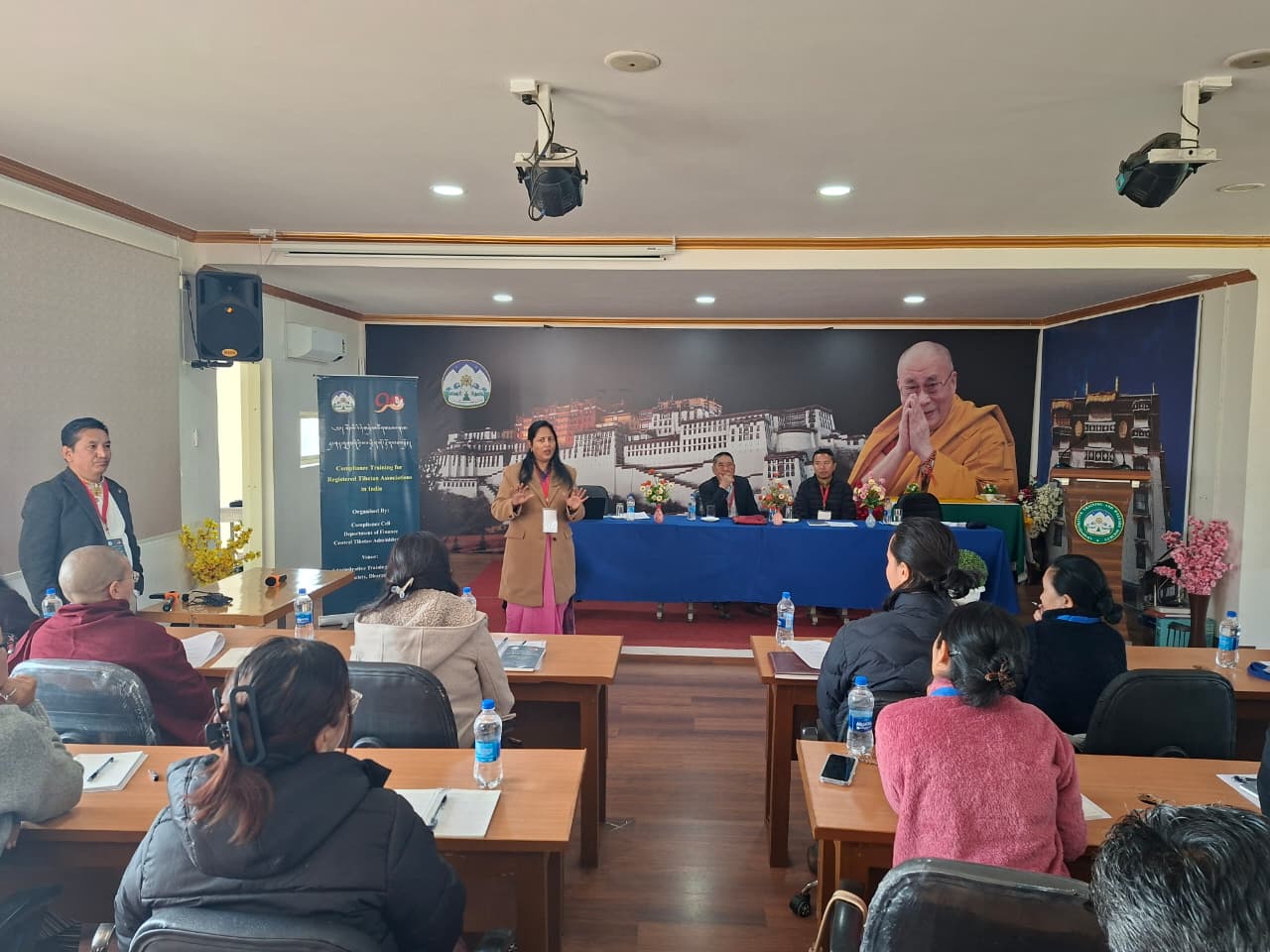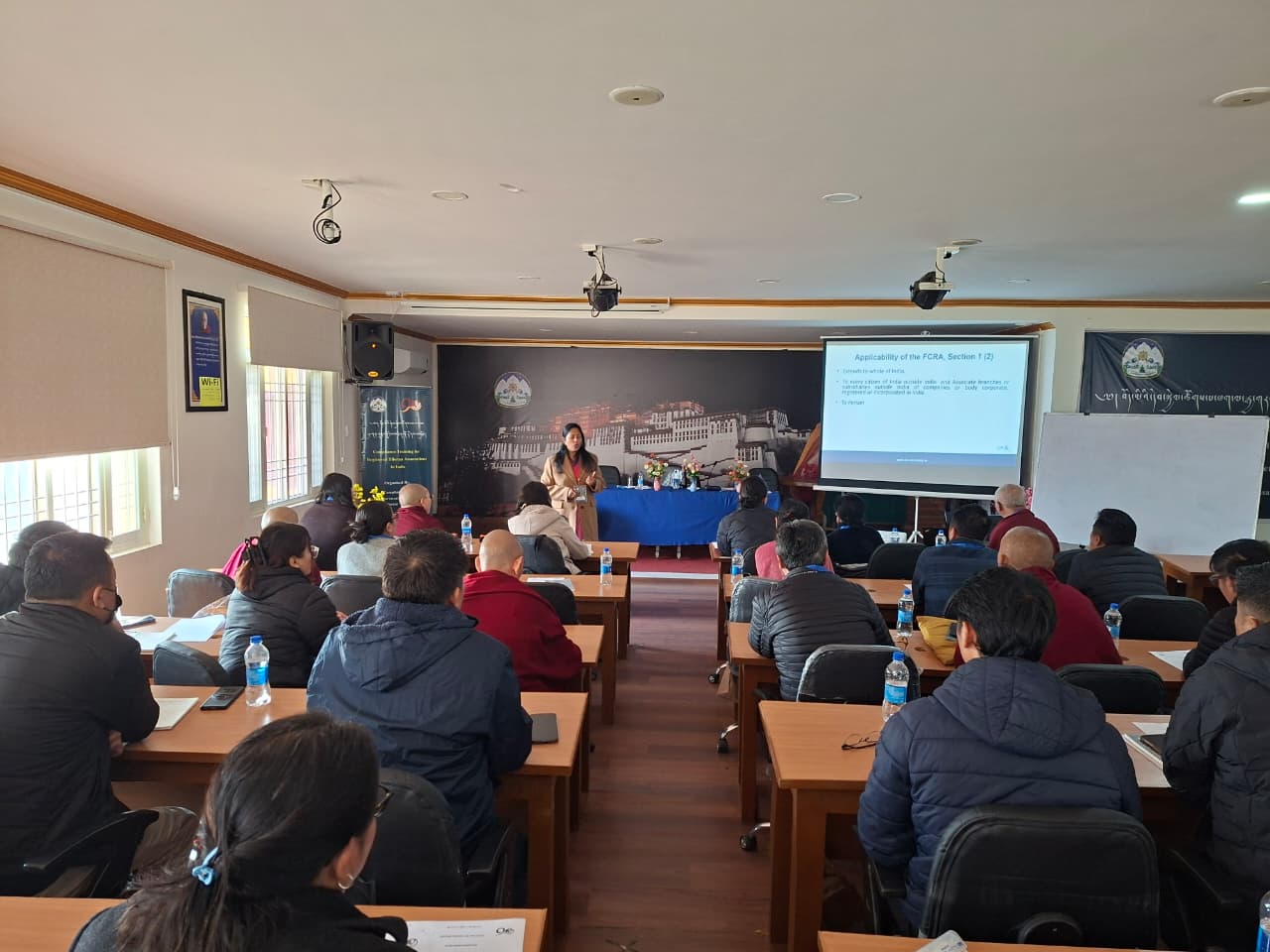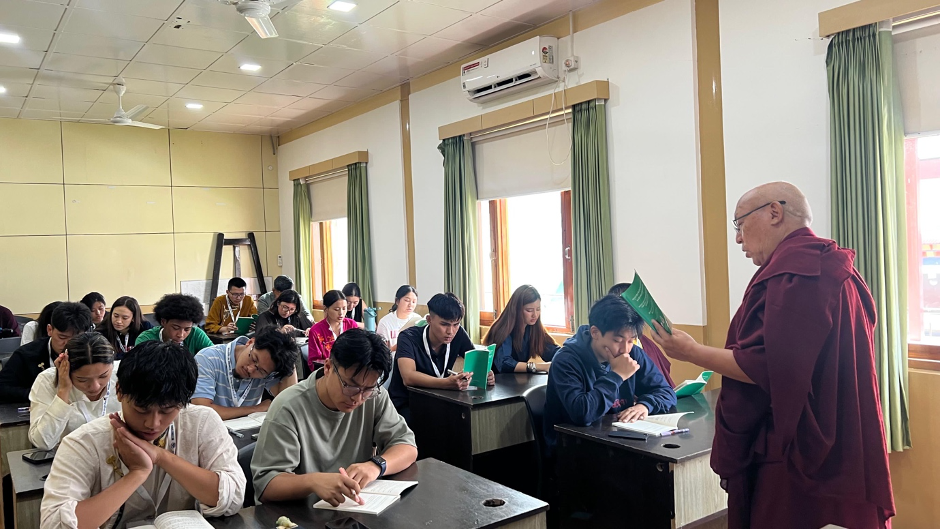

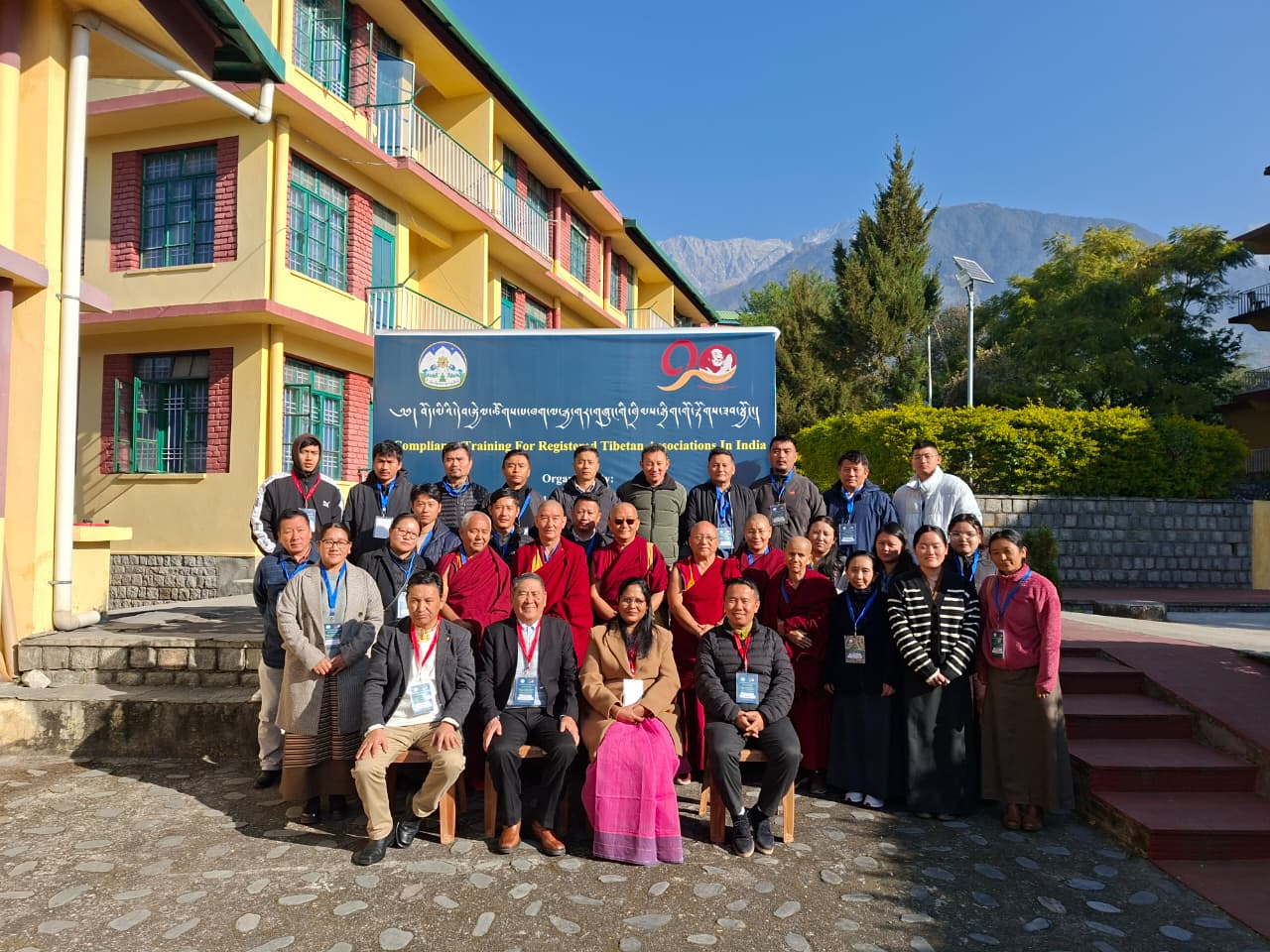
Dharamshala: The Compliance Cell under the Department of Finance, Central Tibetan Administration (CTA), successfully organised its third batch of compliance training for Tibetan Societies registered under the Foreign Contribution Regulation Act (FCRA). The two-day training, which is being held on 3 and 4 December 2025 at the Administrative Training & Welfare Society, ATWS, Dharamsala, is being attended by 30 representatives from Tibetan Societies & Trust based in Dharamsala, Bir & Tashi-Jong Tibetan Settlements in north India.
The training is organised in collaboration with CPA Consultancy Firm and conducted by Sujata Samal, an experienced consultant specialising in FCRA, Income Tax and Societies Registration compliance. The sessions focus on enhancing participants’ understanding of key legal frameworks, including the provisions of the FCRA, Income Tax Act and the Societies Registration Act of the Government of India.
The training programme began with an introductory note by Tenzin Wangyal, Deputy Secretary & Section Head of Compliance Cell under the Department of Finance, CTA. In his speech, he mentioned the objectives behind the establishment of the Compliance Cell under the Department of Finance, CTA and underscored CTA’s vital role in assisting the registered Tibetan societies & trusts across India in maintaining legal compliance. He also mentioned that even when the programme does not have any external funders, the CTA still organises such a programme, recognising the importance of complying with the Government of India (GoI) requirements. He further highlighted that this aligns with the 16th Kashag’s objective of strengthening and ensuring the long-term sustainability of the registered Tibetan Societies & Trust in India. He also shared some of the issues faced by FCRA-registered societies within the Tibetan community and urged the concerned societies to thoroughly review the Chartered Accountant’s filings before submitting them to the MHA. He concluded by outlining the cell’s future initiatives aimed at strengthening financial and administrative accountability within the Tibetan community.
As part of the programme, the Compliance Cell invited Jigme Jugney, Representative of the Bureau of His Holiness the Dalai Lama, New Delhi, to share insights on current FCRA-related challenges and the Bureau’s ongoing efforts to address issues faced by Tibetan societies in India. Jugney explained the rationale behind the formulation of the FCRA by the Government of India and emphasised the importance of strict compliance with its provisions. He highlighted that many Tibetan societies & trusts still lack proper documentation and urged them to maintain essential records such as registration licenses, certificates, and reports related to their organisations. He also cited instances where societies had incurred penalties for non-compliance or had submitted unreasonable appeals under FCRA. Previously, there were only three such cases, but currently, 27 societies & trusts are facing FCRA-related issues however, most of the cases have been resolved. Jugney further reminded participants about key requirements, including disclosure of FCRA members, reporting of foreign contribution (FC) fund transfers, updates on changes in executive members and timely submission of renewal forms. He further informed the participants that he would be arranging an online training session on matters related to FC form submissions, to be conducted by a qualified expert known to him.
The primary objective of CTA in establishing the compliance cell is to support the Registered Tibetan societies & trusts across India by creating greater awareness of the legal requirements under the FCRA and Income Tax Act. The Compliance Cell seeks to enhance the long-term sustainability of these organisations by addressing the growing challenges faced by societies and trusts in meeting statutory compliance obligations. It further aims to strengthen financial governance, accountability and transparency within Tibetan organisations and ensure their continued legal and operational stability.
-Report filed by Department of Finance, CTA