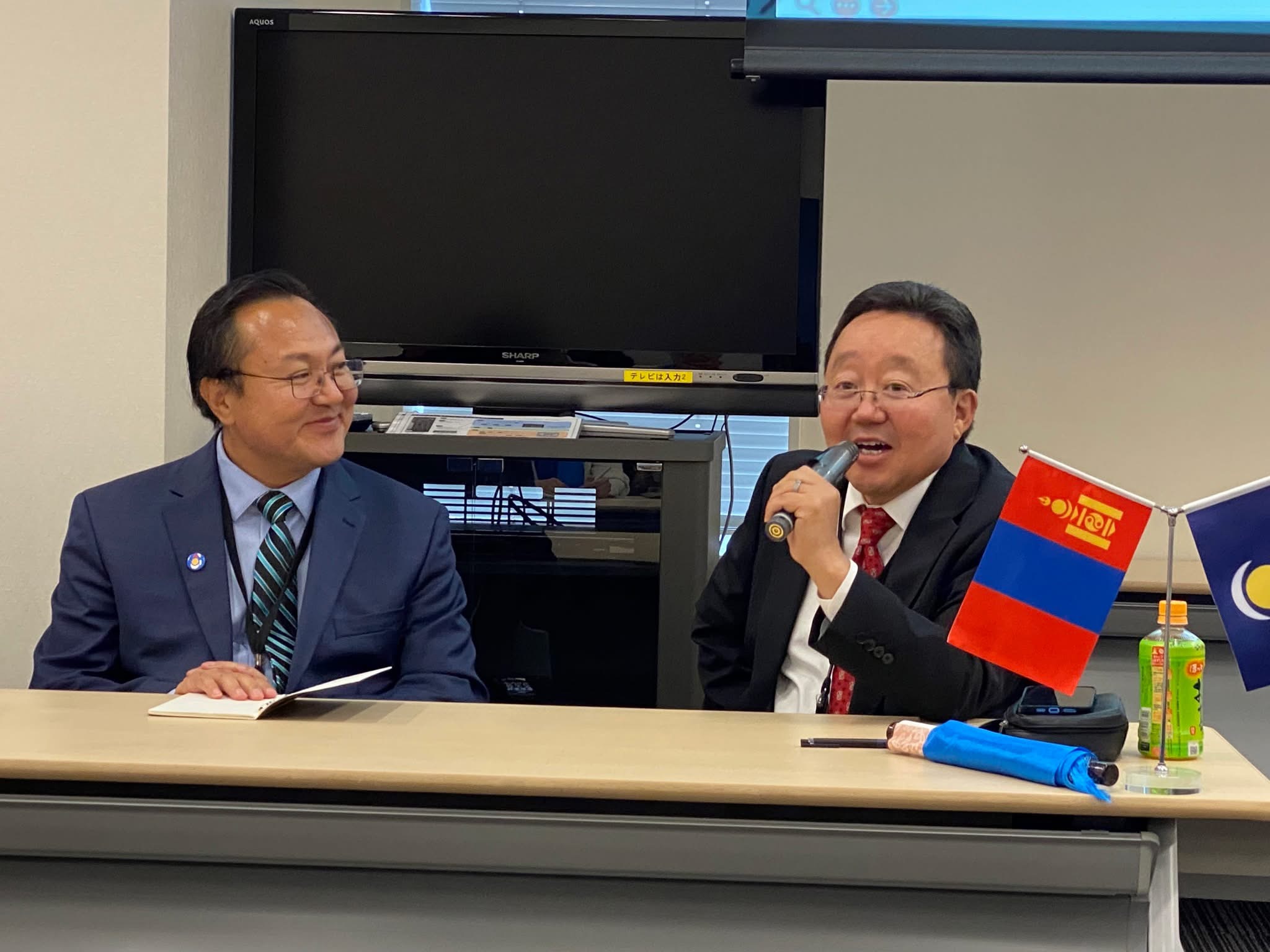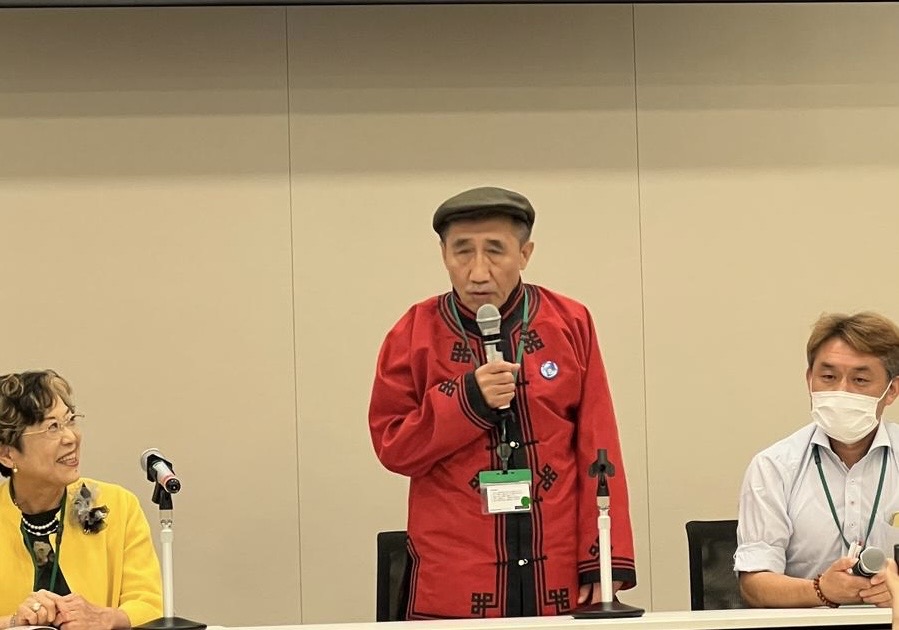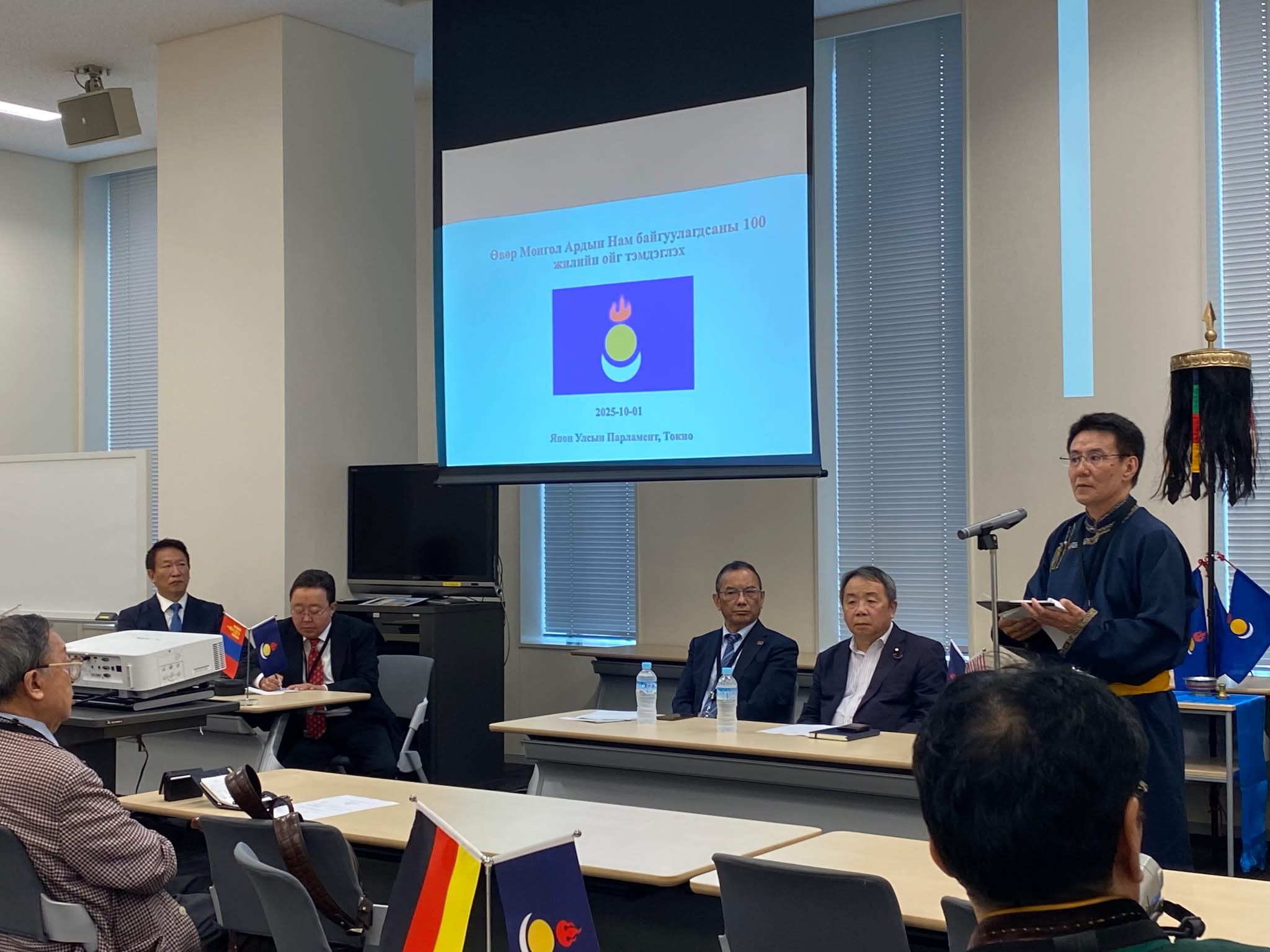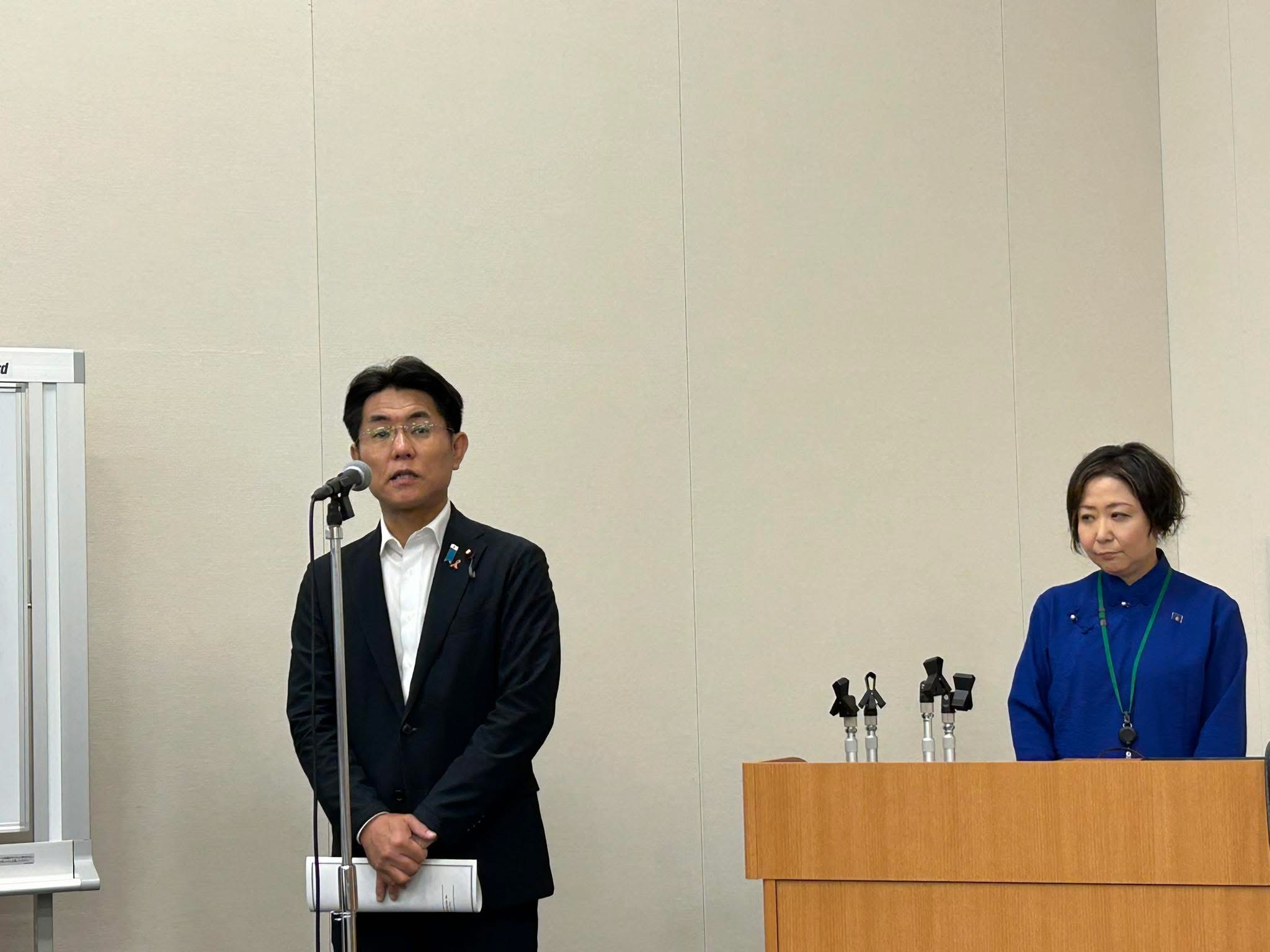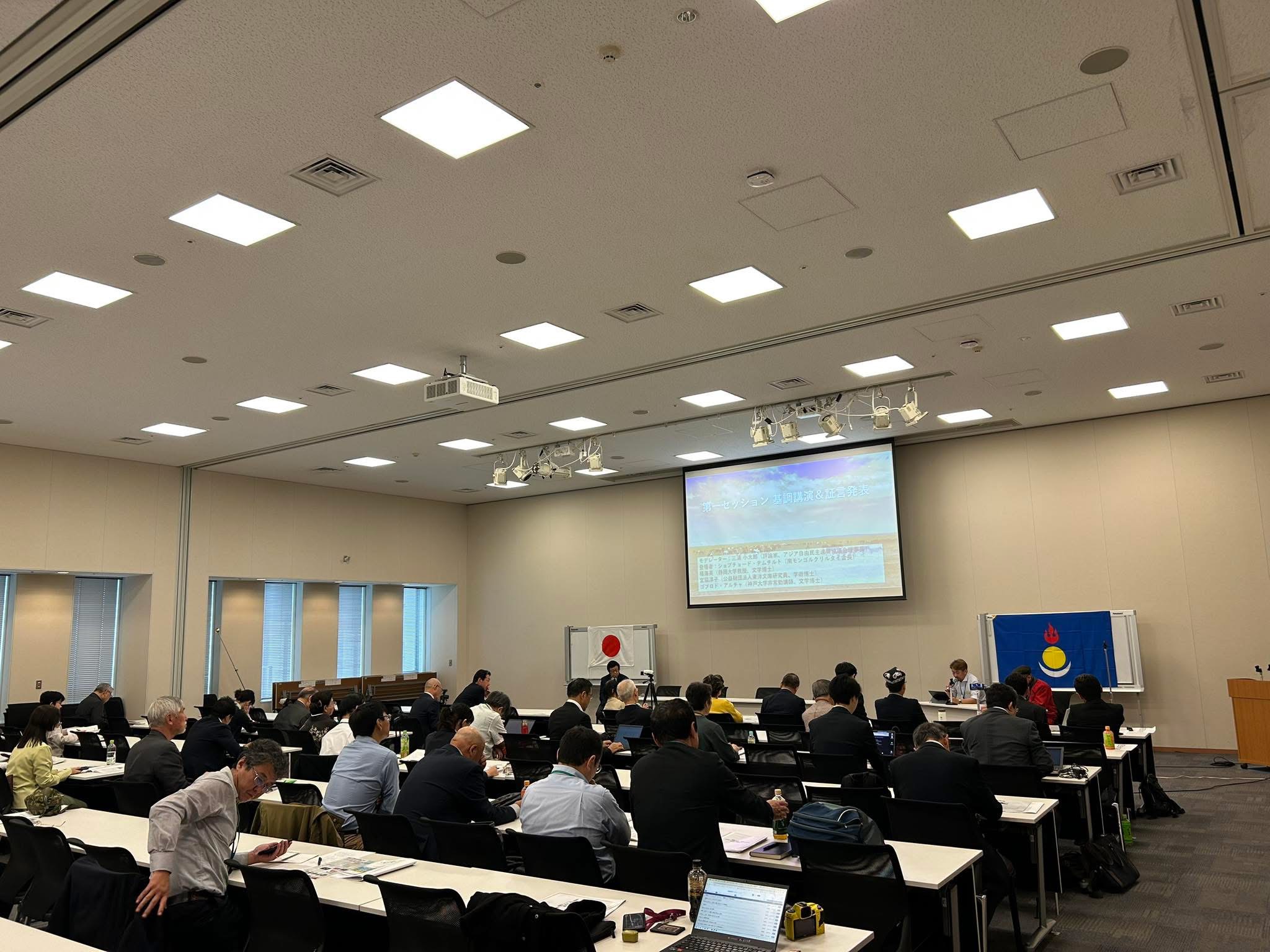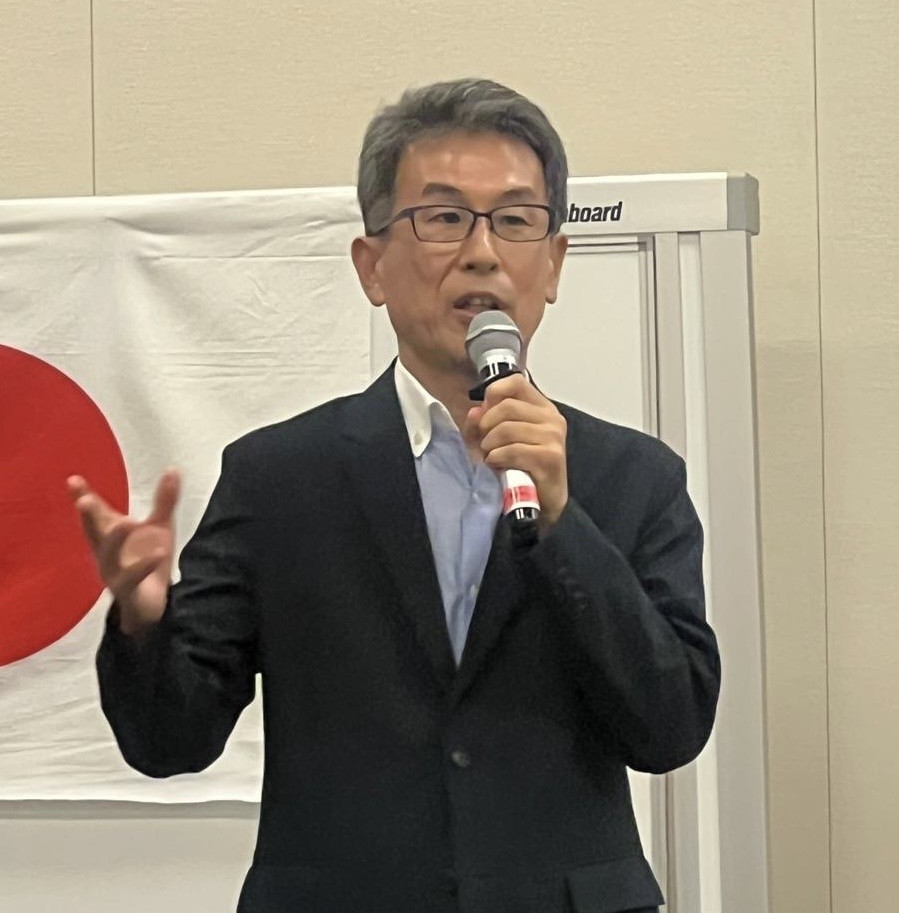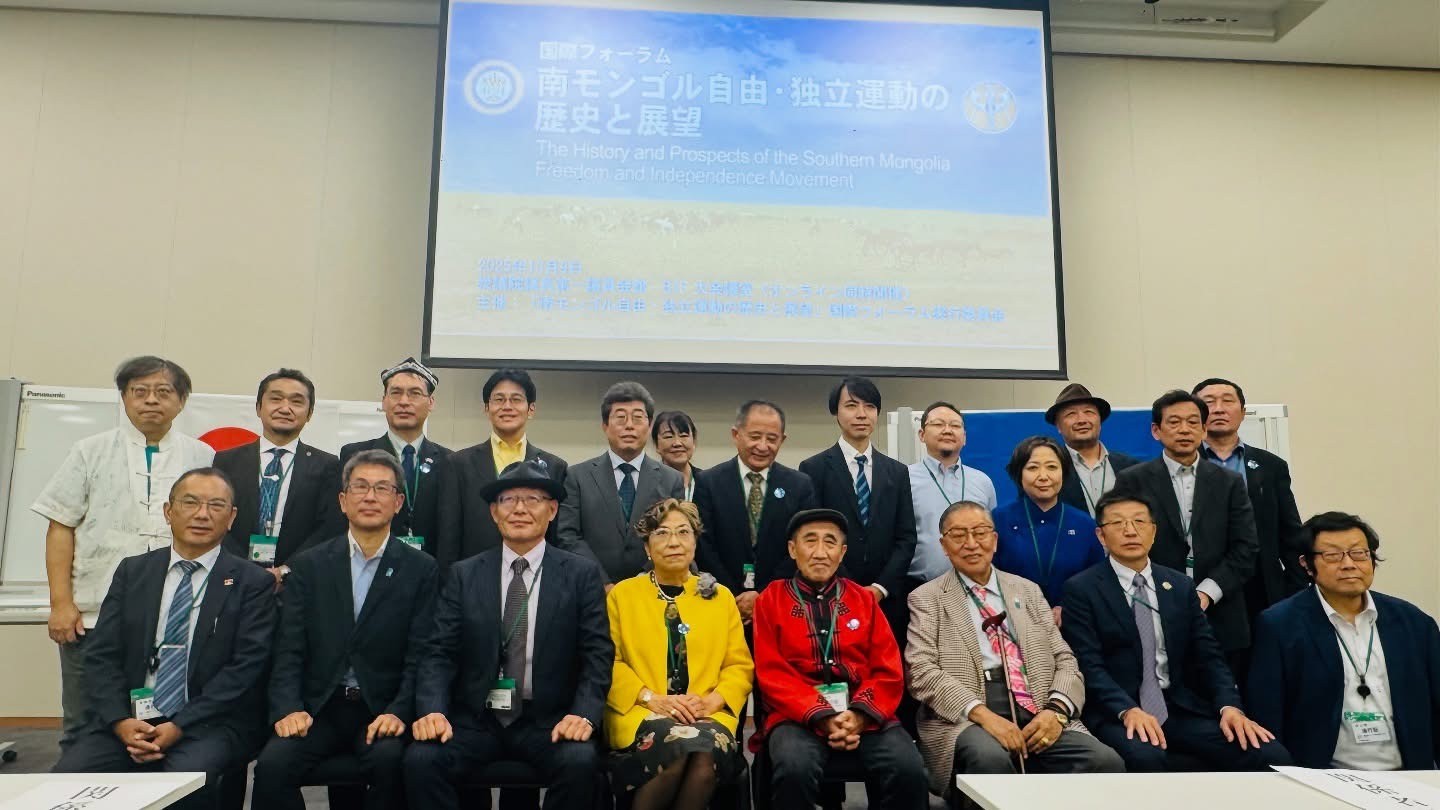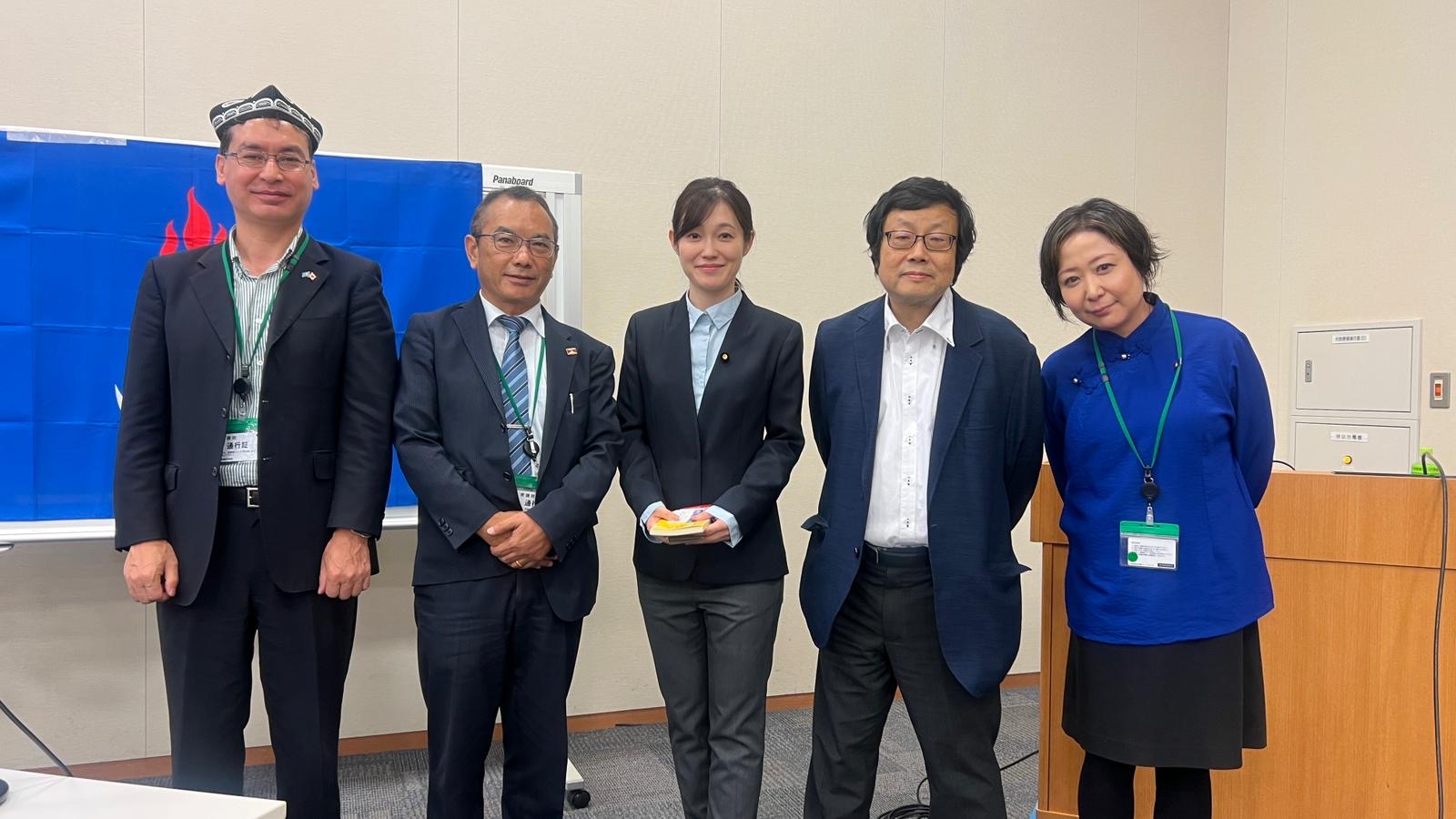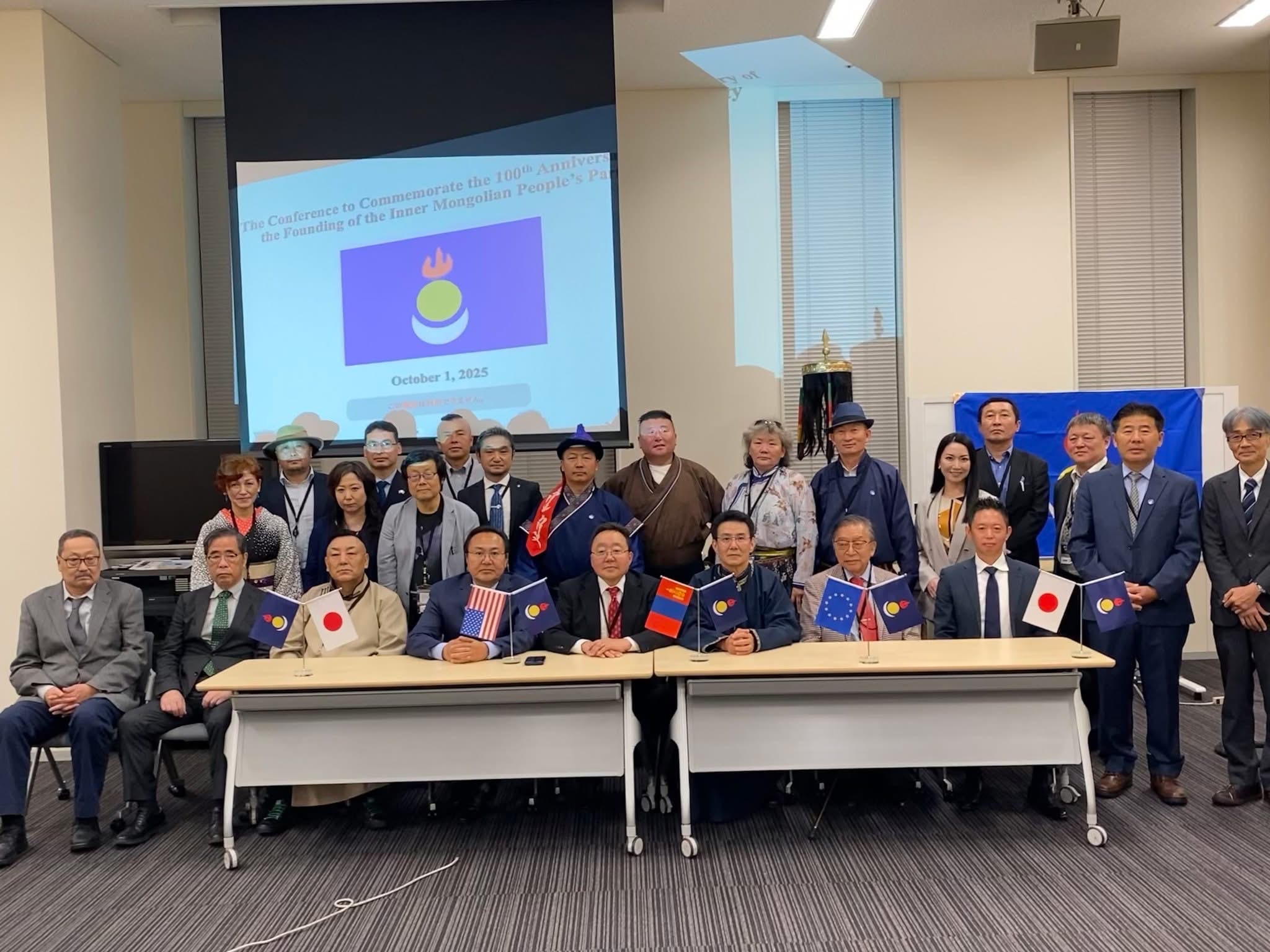

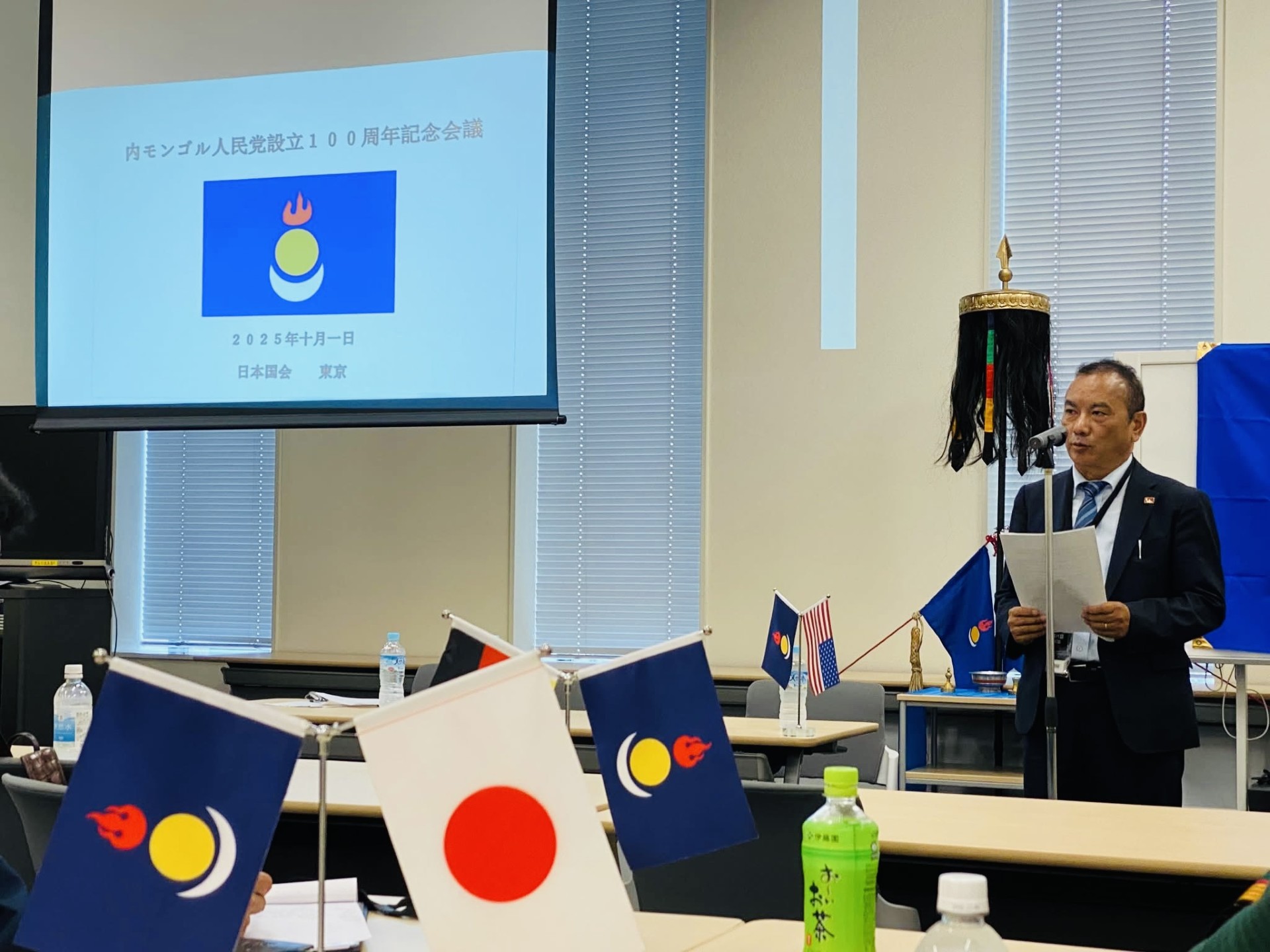
Tokyo: Inner Mongolian People’s Party, Southern Mongolian Congress, and the World Mongol Federation organised international conferences to commemorate the 100th Anniversary of the establishment of the Inner Mongolia People’s Party (IMPP) on 1 October, and hosted an International Forum to discuss “The history and prospects of the Southern Mongolia freedom and independence” on 9 October at Japan Parliament building hall.
The purpose of the conferences was to protest the Chinese occupation of their homeland on the 76th Anniversary of the establishment of the People’s Republic of China (PRC) and to assert the Southern Mongolian people’s rights to freedom and independence.
The conferences drew members of the Japanese Parliamentary Support Group for Southern Mongolia, international supporters, scholars, human rights advocates, and Japanese supporters. Mongolian tribes in Japan and abroad came in their traditional dress to demonstrate unity for the cause and to express their solidarity for the two-day conference. Representatives from Tibetan, Uyghur, Hong Kong, and Taiwanese communities also attended and spoke at the conference.
H.E. Elbergdorj Tsakhia, former President of Mongolia, attended the first conference and briefed the audience on his experience as the head of state, and how both Mongolia and Southern Mongolia are the same people sharing the same history, language, and culture. He said, “Twelve million Mongolians around the world are twelve million Genghis Khans,” and that they all should take pride in their history and religious culture.
Honourable Madam Takaichi Sanae, who is poised to become the first female Prime Minister of Japan, has sent messages supporting the aspirations of the Southern Mongolian people. In her message, she said, “Wishing that the path to freedom and happiness for all the people of Southern Mongolia will open and will lead to a bright future, the member of our parliamentary league will continue to work with you.”
Several members of the Japanese Parliament from different political parties participated in the conferences and delivered speeches expressing their solidarity and support for the Southern Mongolian people’s struggle for freedom and justice.
Shobchuud Temtselt, President of the Southern Mongolian Congress, and Khuvisgalt Kheried, President of the Inner Mongolia People’s Party, delivered keynote addresses at the respective conferences, in which both leaders recounted the long history and struggle of the Southern Mongolian people and their firm determination to achieve independence of Southern Mongolia. They requested the Japanese and international communities to support their cause.
Representative Dr. Tsewang Gyalpo Arya of the Liaison Office of H.H. the Dalai Lama, who was invited to speak at the two conferences, spoke on how Mongolia and Tibet share a deep historical, religious, and cultural relationship since the early days of Godan Khan in 1247 and his meeting with the Tibetan Lama, Sakya Pandita, and the metamorphosis of “Priest-Patron” relationship. He warned about the CCP’s attempts to rewrite history to legitimise their occupation of Tibet, Southern Mongolia, and East-Turkistan. He explained the importance and need to ensure proper spiritual education of the 10 years old Jetsundhampa Hutuktu for the future of Mongolia, Asia, and world peace.
The second day conference had a panel discussion where scholars, human rights advocates and representatives from Mongolia, Tibet, Uyghur, Hong Kong, and Taiwan discussed the history and prospects of the Southern Mongolian freedom and independence.
-Report filed by Office of Tibet, Japan