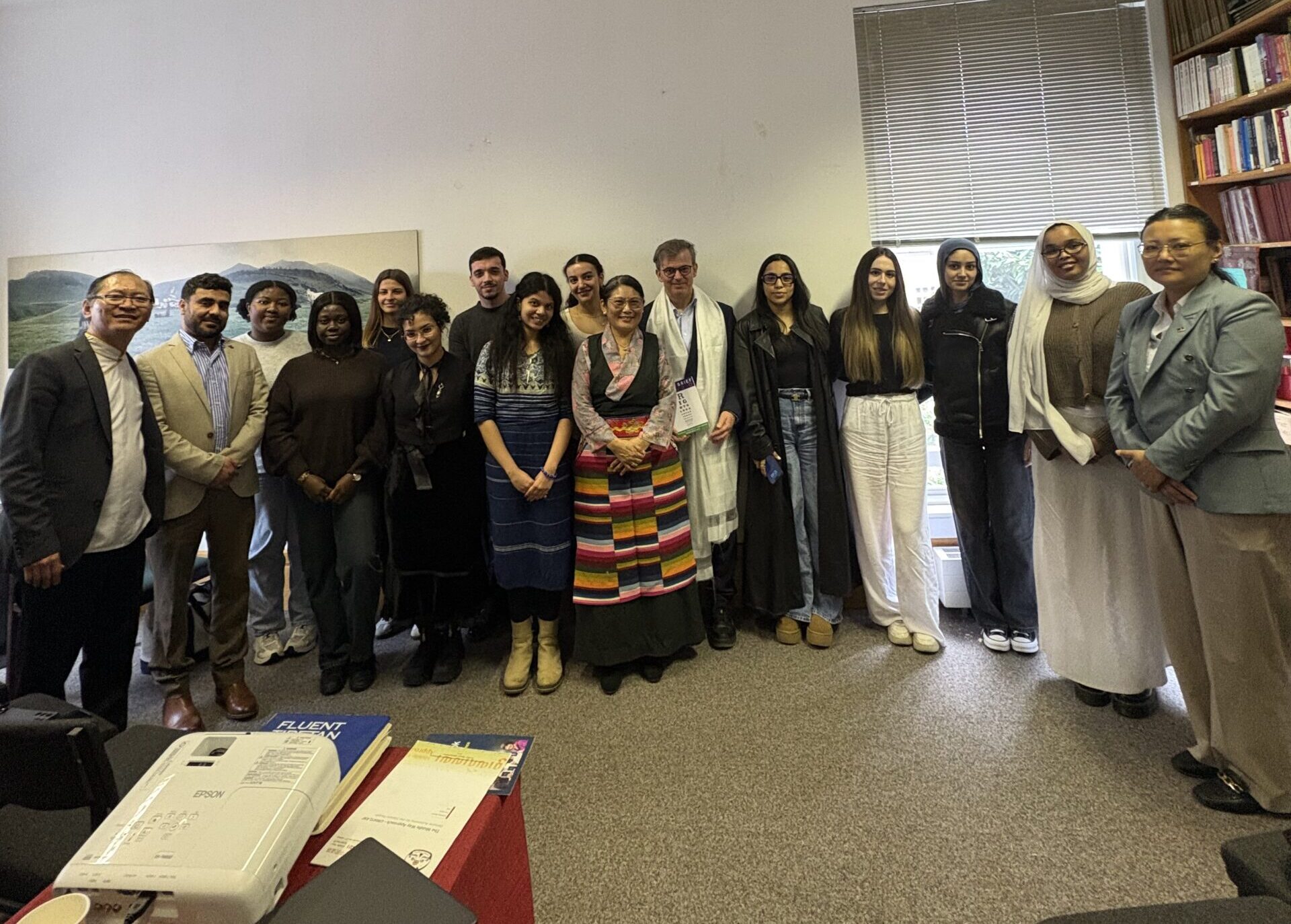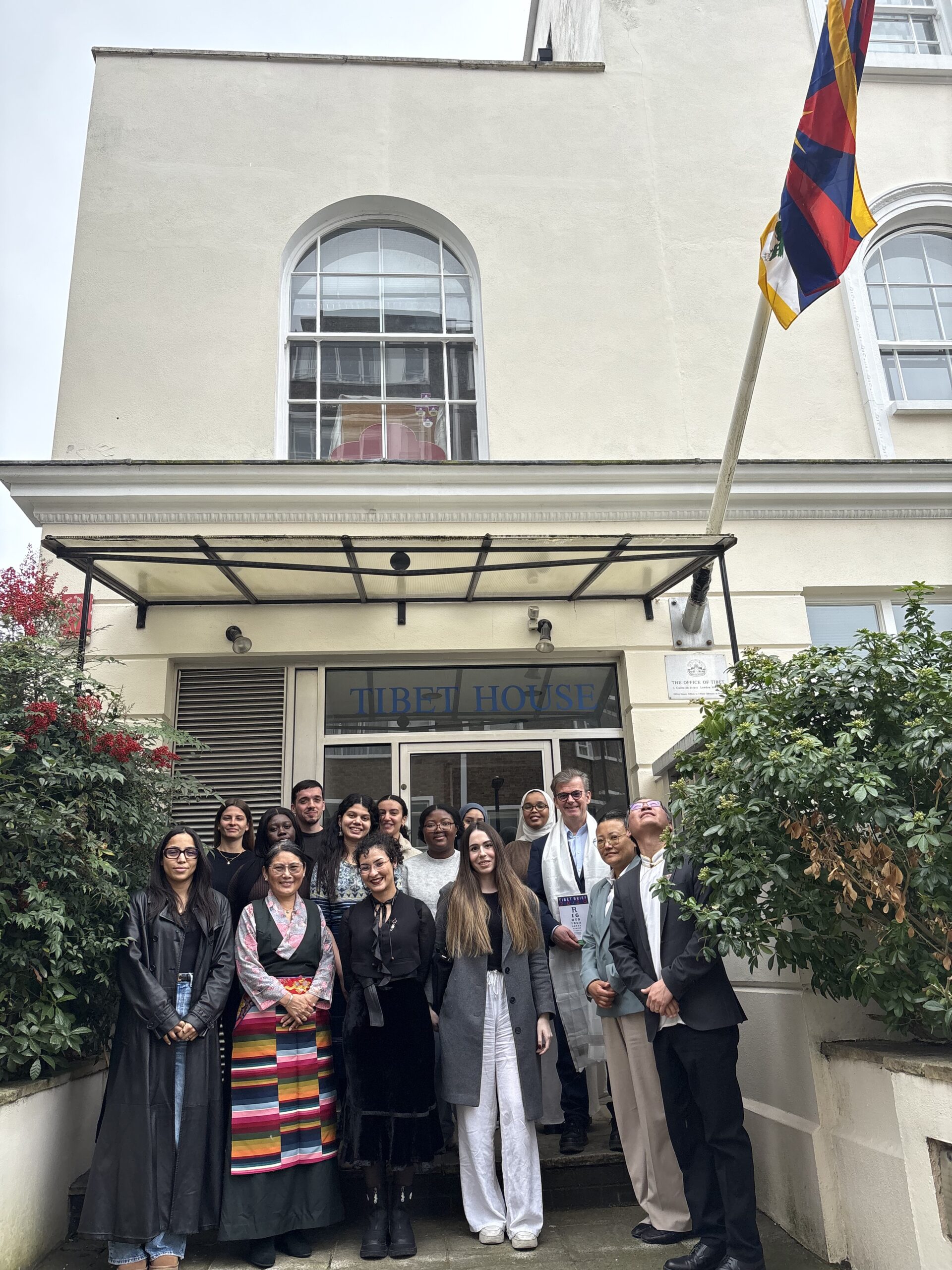


London, 25 March 2025: The Office of Tibet, London, welcomed a group of 15 Master’s students from the University of Westminster for an insightful 90-minute session on Tibet. The visit, coordinated by Dr. Frands Pedersen, Course Leader of the MA Diplomacy and Global Politics program, aimed to deepen students’ understanding of non-state actors and paradiplomacy, core aspects of the Office of Tibet’s work.
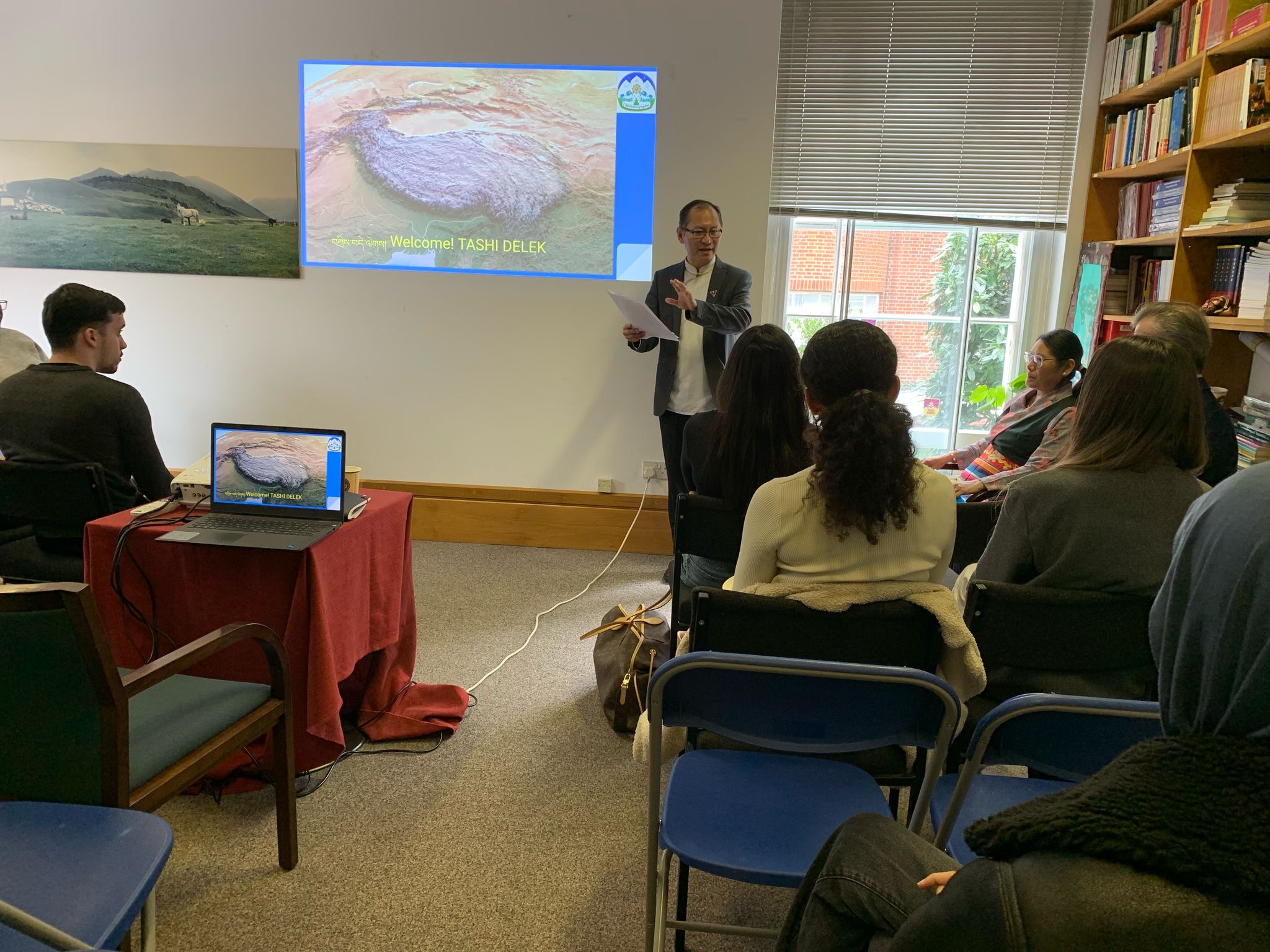
Secretary Tenzin Kunga set the stage with an engaging presentation, offering a historical and geopolitical overview of Tibet. Using satellite imagery and maps, he underscored the strategic importance of the Tibetan Plateau, detailed the democratic structure of the Central Tibetan Administration (CTA), and explained the extensive diplomacy and advocacy efforts carried out by Offices of Tibet worldwide, including London.
Representative Tsering Yangkey provided a firsthand account of governance within the Tibetan civil service, encouraging students to practice values-based diplomacy that prioritises ethical considerations over power dynamics. She emphasised the importance of understanding realities on the ground rather than being swayed by geopolitical might.
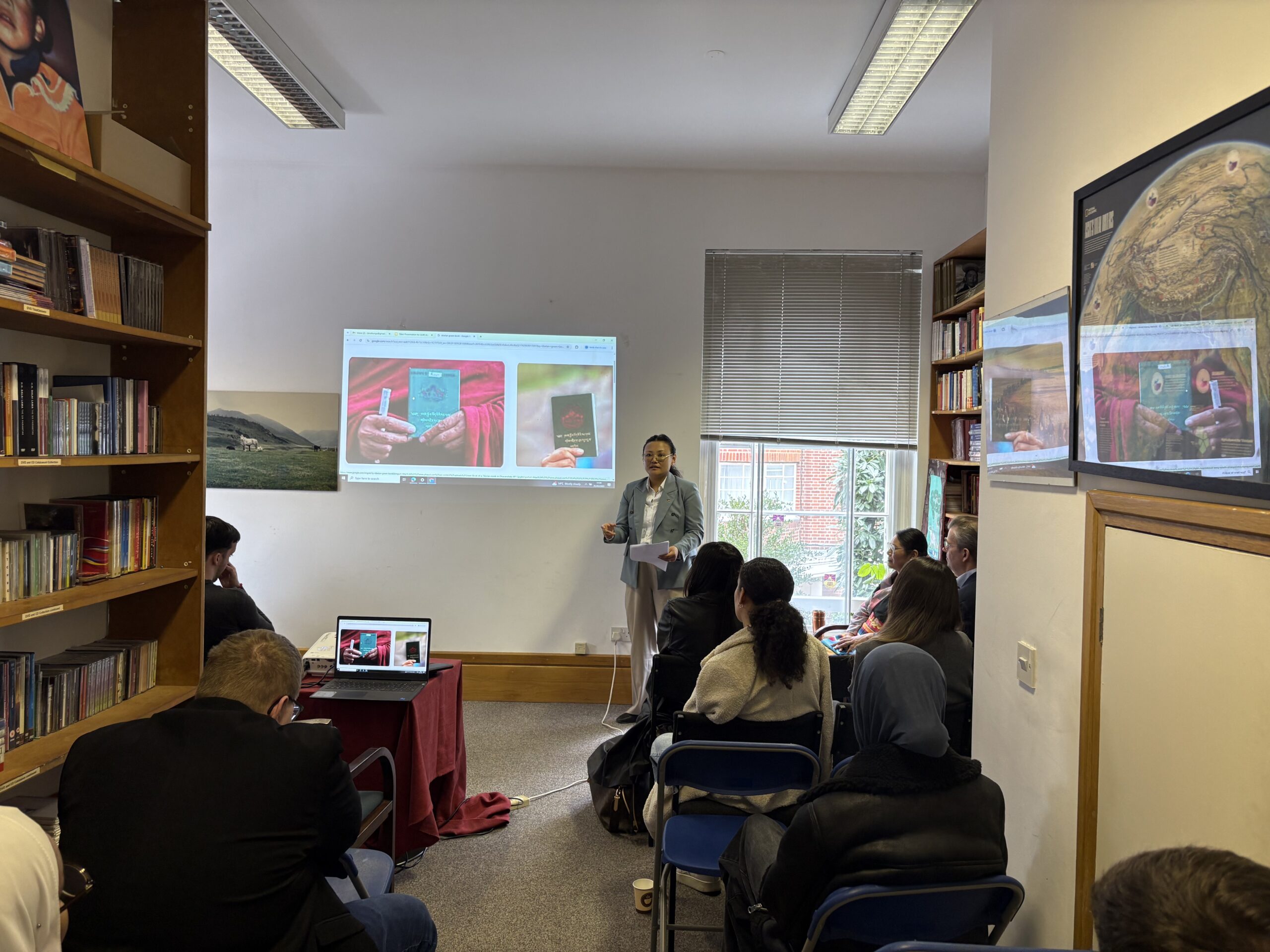
Accountant Tenzin Zeydhan introduced the Tibetan Green Book initiative, highlighting its role in fostering unity among Tibetans in exile through voluntary contributions. She also introduced the Blue Book project – the Tibet Solidarity Alliance – explaining how non-Tibetans can express their support for Tibet’s cause through voluntary contributions.
The session’s interactive Q&A segment saw students posing a range of thought-provoking questions, reflecting their deep curiosity about Tibet’s political status and advocacy efforts. Topics included China’s motivations in controlling Tibet, the legitimacy of the Tibetan government-in-exile, the distinction of Tibetan Buddhism from other Buddhist traditions, and the broader geopolitical implications of Tibet’s struggle. Students also inquired about China’s policies in East Turkestan, the evolution of the Tibetan language post-occupation, and the potential impact of a renewed Trump administration in the U.S. on Tibet’s advocacy.
In response, Representative Tsering Yangkey and Secretary Tenzin Kunga provided comprehensive insights, addressing China’s erasure of Tibet’s identity in favour of ‘Xizang,’ the assimilationist policies imposed through colonial boarding schools, and the continued relevance of His Holiness the Dalai Lama’s succession. They emphasised the Tibetan diaspora’s resilience and strategic advocacy to keep the resistance movement alive on the global stage.
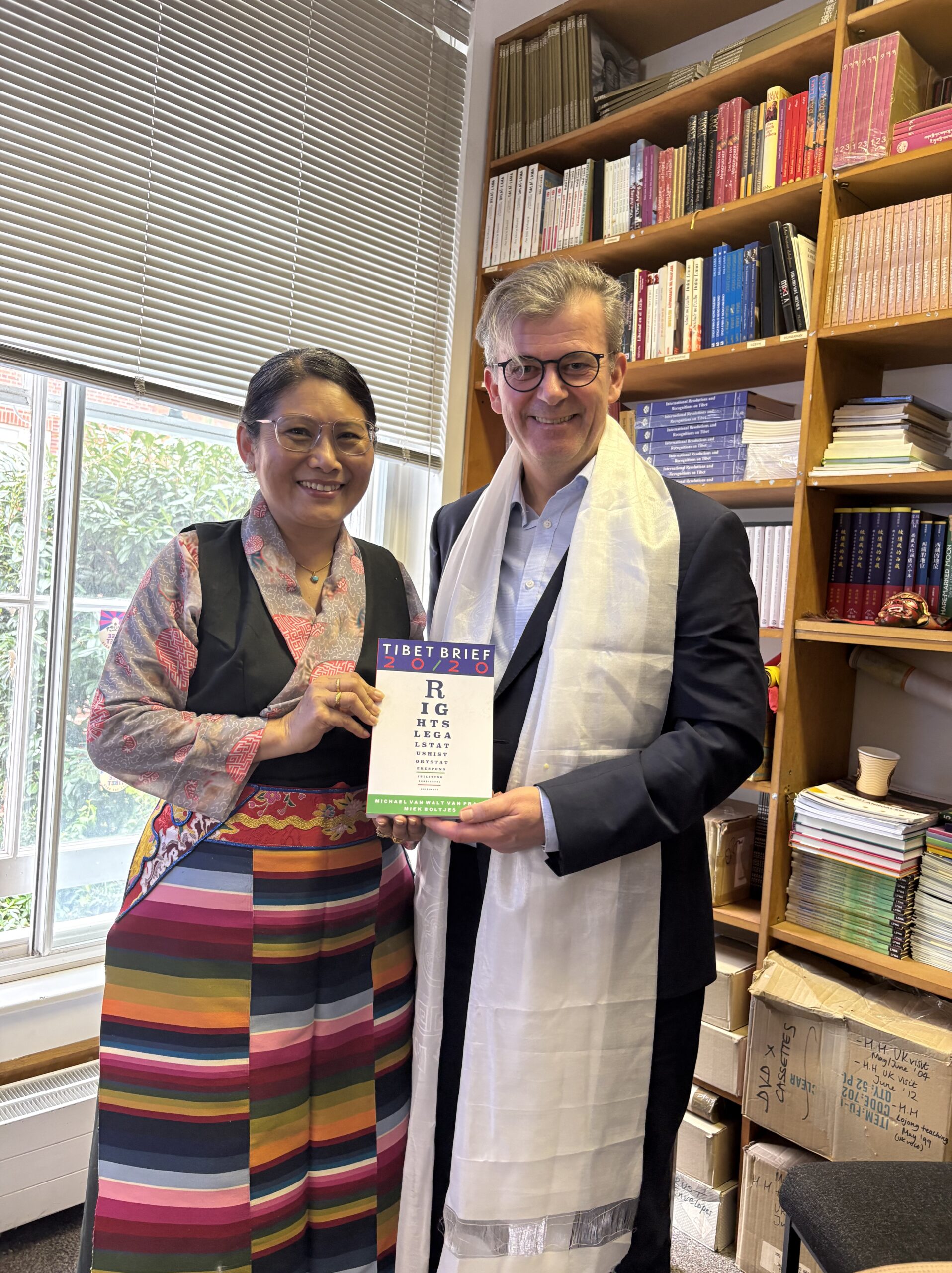
Concluding the session, Secretary Tenzin Kunga urged students to further their engagement with Tibet by reading, discussing, and advocating for its cause within academic circles. As a token of appreciation, Representative Tsering Yangkey presented a ceremonial Khatag and a copy of Tibet Brief 2020 to Dr. Frands Pedersen.
Reflecting on the event, Representative Tsering Yangkey stated, “Engaging with university students is a vital part of our outreach at the Office of Tibet. Today’s session allowed us to provide deeper insights into Tibet’s situation and its global significance. The students’ keen interest and critical questions were encouraging, and we look forward to conducting similar engagements with other universities in the coming months.”
-Report filed by Office of Tibet, London