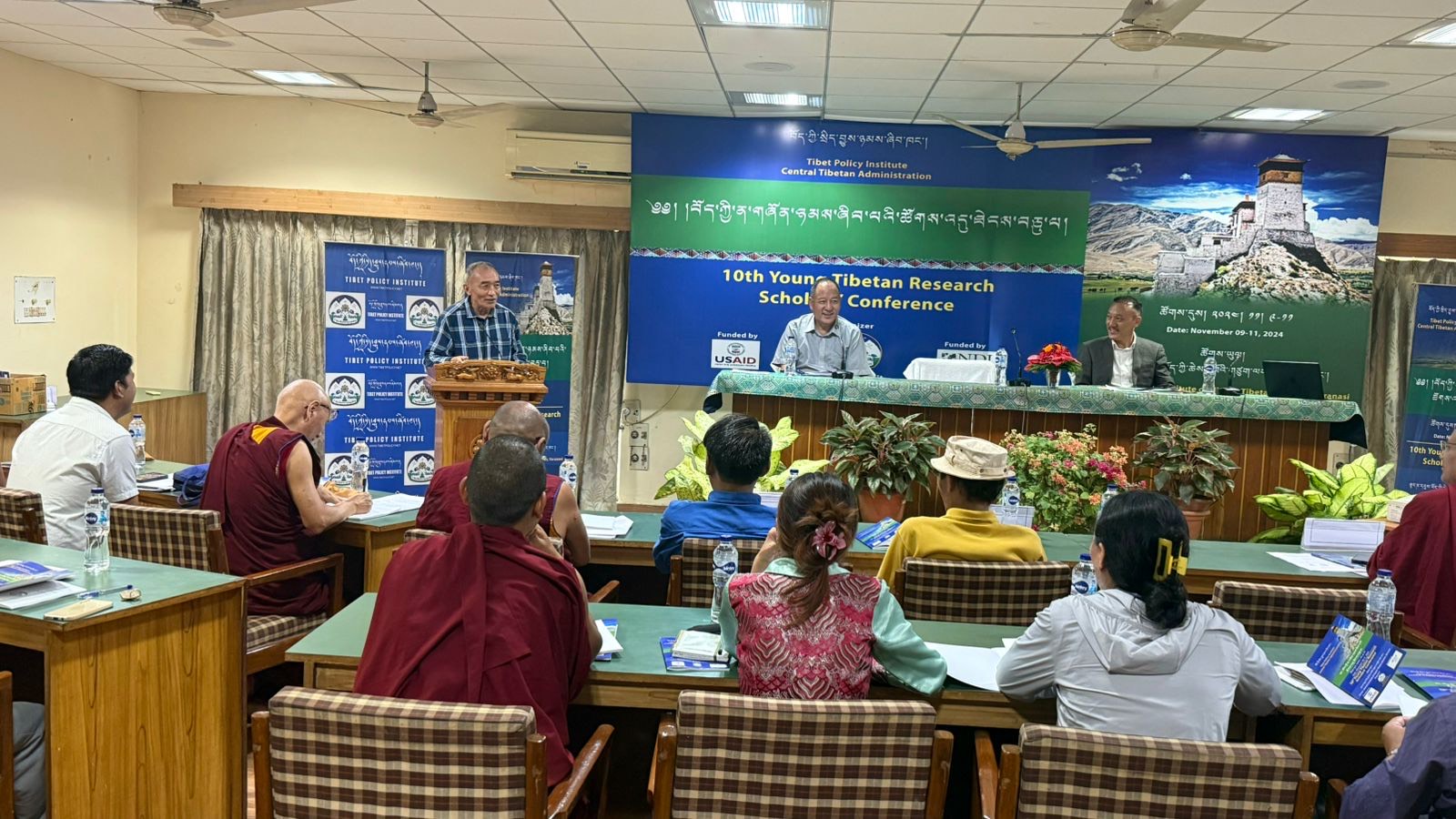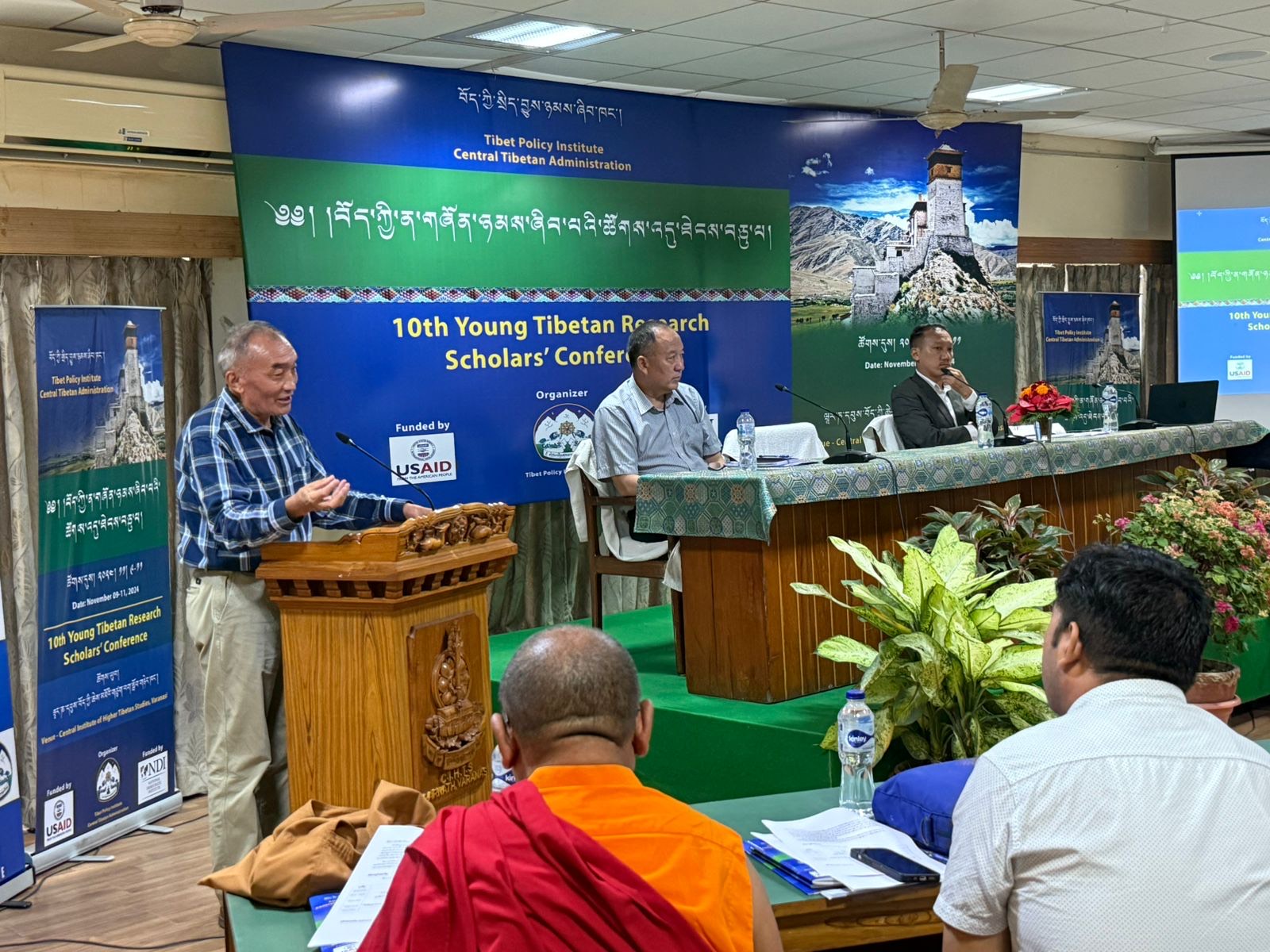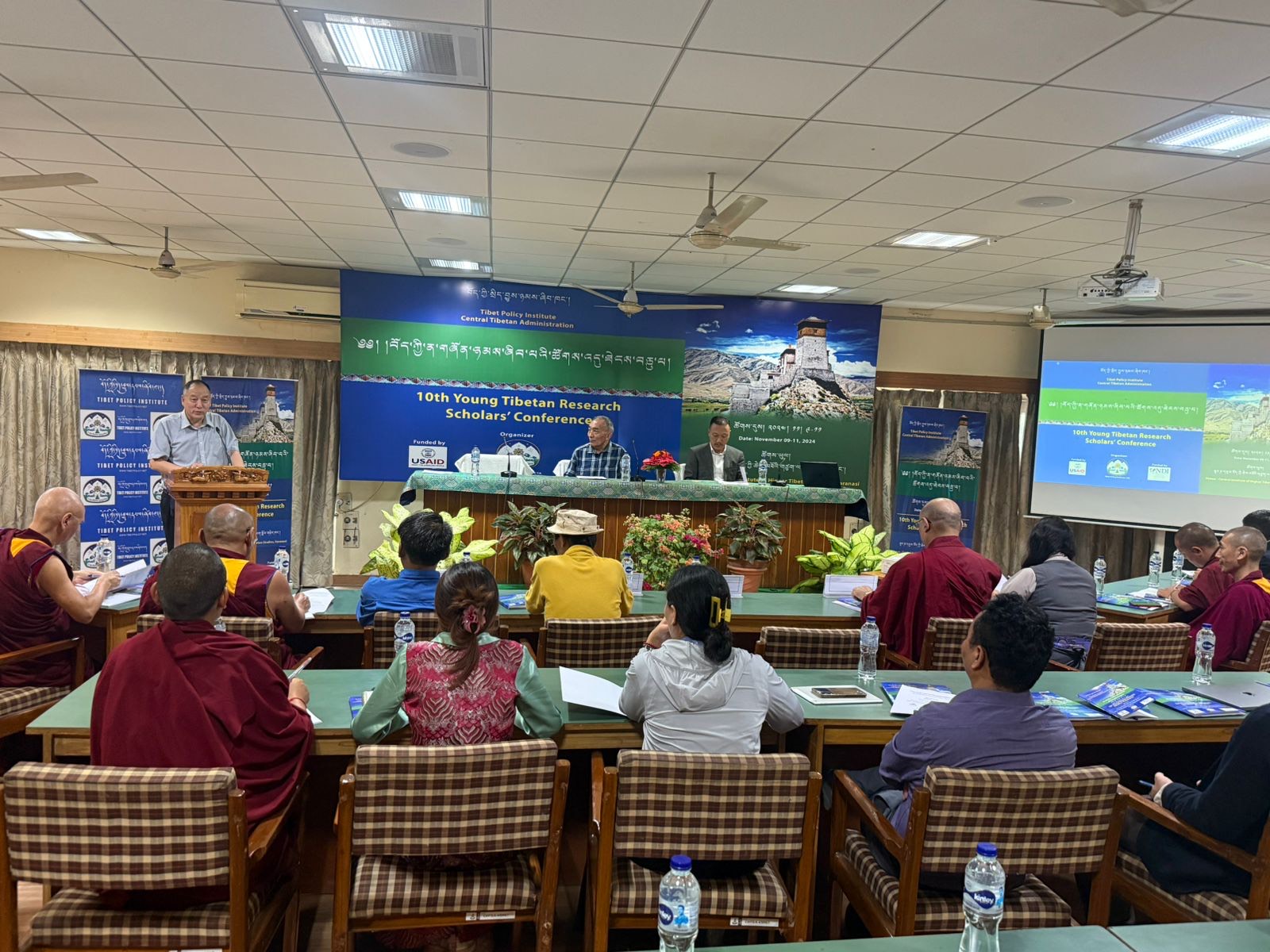


Dharamshala: The 10th Young Tibetan Researchers Conference was held for three days from November 9-11, 2024, at the Central Institute of Higher Tibetan Studies (CIHTS) in Varanasi, organised by the Tibet Policy Institute. This marks the first time the Tibet Policy Institute has organised the Young Tibetan Researchers Conference at CIHTS Varanasi. Over thirty young researchers are presenting and discussing their findings on topics spanning from Tibetan religion, ancient and modern history, anthropology and epigraphy, politics and society, grammar and literature, education and development, environment, and the exile community, showcasing diverse facets of Tibetan culture.
The chief guest at the inaugural ceremony was Prof. Lobsang Tenzin Raktoe, representing the Vice-Chancellor of CIHTS, along with Secretary Dawa Tsering, Director of the Tibet Policy Institute; Joint Secretary Tempa Gyaltsen Zamlha, Deputy Director; Prof. Jampa Samten of CIHTS; Prof. Tsewang Topla of Sarah College; Assistant Professor Lhakpa Tsering of CIHTS Tibetan Language Department; Geshe Lobsang Ngodrup, Head of Tibetan Studies Department at Dalai Lama Institute for Higher Education, Bangalore; Assistant Professor Lhamo Tso from Dalai Lama Institute for Higher Education, Bangalore; and over thirty other researchers and observers.
In his welcome speech, Tibet Policy Institute Director Dawa Tsering highlighted that the conference’s primary goal was to address the limited participation of exiled Tibetans in international discussions on Tibet, in contrast to China’s active presence at Tibetan studies conferences. He noted that China employs over 2,000 so-called Tibetan studies experts, who misinterpret history to claim Tibet as part of China and assert that Tibetan religion and culture originated in China. Secretary Dawa emphasised the need for meaningful discussions and scholarly publications on these critical topics.
The chief guest commended the Tibet Policy Institute for organising a conference that gathered many young Tibetan researchers, emphasising the importance of studying not only Tibet’s past but also its future direction—examining Tibet’s past, present, and future as a whole. He remarked on Tibet’s precarious current situation compared to its history, noting that Tibet’s continued existence and its religion and culture’s relevance in academia are largely due to collective resilience.
During his opening remarks, Deputy Director Zamlha Tempa Gyaltsen noted that the 25 researchers presenting at the three-day conference represented institutions including CIHTS Varanasi, Sarah College of Higher Tibetan Studies, Dalai Lama Institute for Higher Education in Bangalore, Tibet Policy Institute, and Nepal. Additionally, four invited experts were present to provide guidance: Dawa Tsering, Director of Tibet Policy Institute, Prof. Jampa Samten, Prof. Tsewang Topla, and Assistant Professor Lhakpa Tsering. He announced that the conference would feature a special session on developing unified research methodologies for both traditional and modern Tibetan studies, along with a dedicated session addressing China’s use of the term “Xizang” for Tibet. The event will conclude with guided tours of some historical sites in the area.
-Report filed by Tibet Policy Institute, CTA