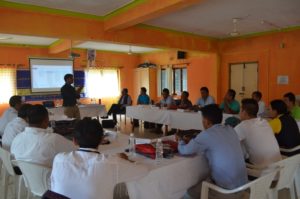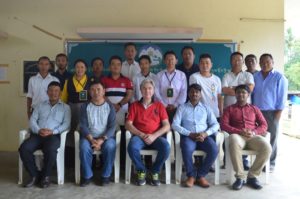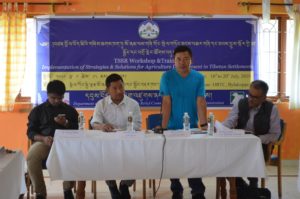
Bylakuppe, Bangalore: A three-day intensive Workshop and Training was organized for the Agriculture Extension Officers (AEO’s) from the important Agriculture Settlements from across the country in ORTC, Bylakuppe from 18 to 20 July 2019.
The Department of Home – CTA as part of TSRR program funded by USAID organized it with the help of Mr. Kishore Rao, of Ingenus Strategy and Agriculture Strategy Consultant to CTA. He invited senior and eminent
domain experts with the immense experience to talk to the AEO’s.
Officers of the of Department of Home– CTA, Mr. Dhondup Tsering, Deputy Secretary, Head of Agriculture and Cooperatives division, accompanied by Mr. Tenzin Duejuem, Section organized and coordinated the program.
Mr. Dhondup Tsering stressed on the need for continuing training unceasingly upgrading knowledge on modern agriculture practices to deliver more efficient extension services to the farmers. He emphasized that
future work will focus on generating more revenue and profits to make agriculture a profession of choice besides overcoming farmers problems to guarantee resilience. The highlights of the different sessions were:
Establishing Demonstrations of High-Value Crops: Implementing a model demonstration plot in each settlement that demonstrates and promotes high-value market-driven crops was discussed in detail. The
AEO’s, many of them with international training in high-value crop agriculture in Israel, Japan, and other countries will establish them so that farmers, especially younger ones can see these crops first hand and adopt
and replicate these practices.
Watershed management-soil and water conservation: Mr. Nanjundaswamy, Mysore Myrada a veteran in watershed management gave a refresher course on watershed management concepts, rainwater, and runoff
water harvest and use, types of treatment on soil and water conservation techniques.
Implementing ICT in the Tibetan System: Mr. Akshay Jadhav of Ingenus Strategy focused on the progress of the ICT- smartphone-based App system implementation and practical issues in configuring and using the Smart Farm App enabling monitoring farms and agriculture extension in real-time.
Jatropha Cultivation: Dr. Sudheer Shetty, Chairman Labland Biotech, Mysore focused his talk on Jatropha cultivation, the package of practices and the establishment of a captive bio-diesel plant for the plantation. Also covered were strategies and practical tips on farming issues/ challenges and fabulous scope for Jatropha and the bio-fuel markets available for immediate exploitation by the Tibetan Settlements.
Modernizing and reviving Agri- Mechanization: People Side Consulting’s from Pune Mr. Nitin and Mr. Karale presented the finding and recommendations of a detailed assessment study carried out of the tractor and
workshops in the agriculture cooperatives in 12 major settlements across the country. They discussed the mechanization requirements for the Tibetan system and the way forward. The financial health of cooperatives
can be rejuvenated and the farmer’s use of farm implements can be easily transformed with optimal and
judicious investments.
Dairy Development in Southern settlements: Dr. Ramachandra( formerly of Planning Commission- Niti Ayog, Karnataka Milk Federation & National head by land authority) and Dr. Kulkarni (Former head NDDB- South India), very senior nationally renowned dairy technologists presented their assessment report on dairy situation and potential in each of the settlements and practical strategies to implement dairy farming businesses development there in small-medium- large farm sizes and settlement level business for value the addition needed and conceivable.
Quality Protein Maize (QPM) Introduction: Dr. Sain Dass, a legend and former National Director Maize, ICAR and breeder of QPM shared his vast experience on maize and QPM cultivation practices and practical tips on improving maize cultivation and economy. Changing the maize economy is possible by replacing normal maize by higher value QPM maize. It can also transform Tibetan children’s nutrition by providing naturally occurring rare proteins/proteins through their staple maize diet. A medium-term plan to harness this higher value potential is required. Possibility of developing high-value sweet corn and baby corn introduction by
developing sweet corn and baby corn villages with integrated value-added facilities are also possible and simple to implement.
High-Value Citrus Introduction: Mr. Ken, a Citrus expert and British national having his cutting-edge germplasm nursery in Coorg shared his deep knowledge on introducing International premium citrus varieties,
a package of practices and business prospects. The AEO’s saw the potential for converting low paying labour intensive field crops to labour saving and high-value citrus farming and also value addition possibilities by
establishing Tibetan JV/ business enterprises.
Farmer Producer Organization (FPO) & Vegetable Cultivation: Swikar Badhe, Chief Project officer from vegetable growers association of India (NHB) discussed practical tips and a package of practices of vegetables and pest and disease control. He also presented the formation and working of FPO’s by farmers and how it can change farmer economics dramatically.
The AEO’s participated actively and interacted extensively with the experts. The assessment studies findings and recommendation sessions in Farm Mechanization, Dairy Development, and QPM maize were also attended by the Settlement officers, President, and Secretaries of Tibetan cooperatives societies of the Southern Settlements.
-Filed by the Department of Home