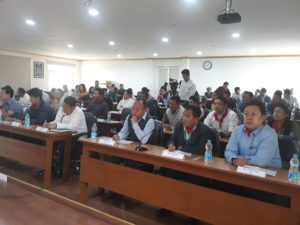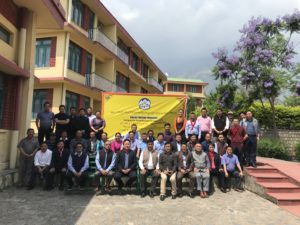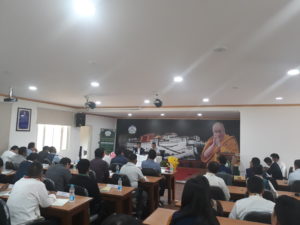
Dharamshala: The Agriculture Division of the Department of Home, CTA organized its first ever meeting on developing a new Tibetan Agriculture strategy guideline from 17th after lunch session to 18th morning session at the Tibetan Administrative Training Center, Khanyara Dharamsala. Forty One Tibetan settlement officers participated in the meeting.
The first day meeting was presided by Home Kalon Sonam Topgyal Khorlatsang and Secretary Wangdu Tsering. Home Kalon in his inaugural address informed the participants that majority of the Tibetans are based on Agriculture livelihood and the gracious Government of India has allotted many acres of land.
Kalon mentioned that at present we are facing some serious issues with regard to agricultural practices and the declining farming community. He asked the settlement officers to discuss with the stakeholders and come up with concrete inputs for formation of new agricultural development strategies and guidelines that are required for each of these pressing problems of the Tibetan farming situation.
Home Secretary Wangdu Tsering further elaborated on the current trends on the agricultural practices, since he recently visited the south Tibetan settlements and there was visible signs on positive developments within the youth pursuing agriculture given the necessary technical and resources to make agriculture a lucrative occupation. Secretary specifically mentions on value addition of the agriculture products to get premium price and building on a brand value to reach to a maximum customers.
Dhondup Tsering, head of the Agriculture Division gave an the overall overview of the agriculture development in Tibetan settlements, though the organic policy in 2002 laid the foundation for the much needed focus on developing a sustainable agriculture system and it being a great noble initiative to meet the current global action towards caring mother earth. We fully dedicated our time, resources and financial towards making it a worthwhile initiative.However, due to the lack of marketing strategy and technical resources we could not meet up the challenge.
So, looking back at our past experience and the present need of the hour, it was decided to come up with solutions with a guidelines towards development for Modern Tibetan Agriculture. To make changes and requirements for the future with a long term vision for sustainable agriculture practice meeting to the needs of our farming community and should look at the agriculture sector in a multi-dimensional manner, focusing on developing a vision for agriculture for the coming years with the scope of attracting more investment towards the agricultural sector and making it a more lucrative economic sector, attracting young farmers to take up agriculture.
Also, it was discussed on how to bring in agribusiness model into Tibetan agriculture economy and what directions are needed in order to implement this growth strategy.