
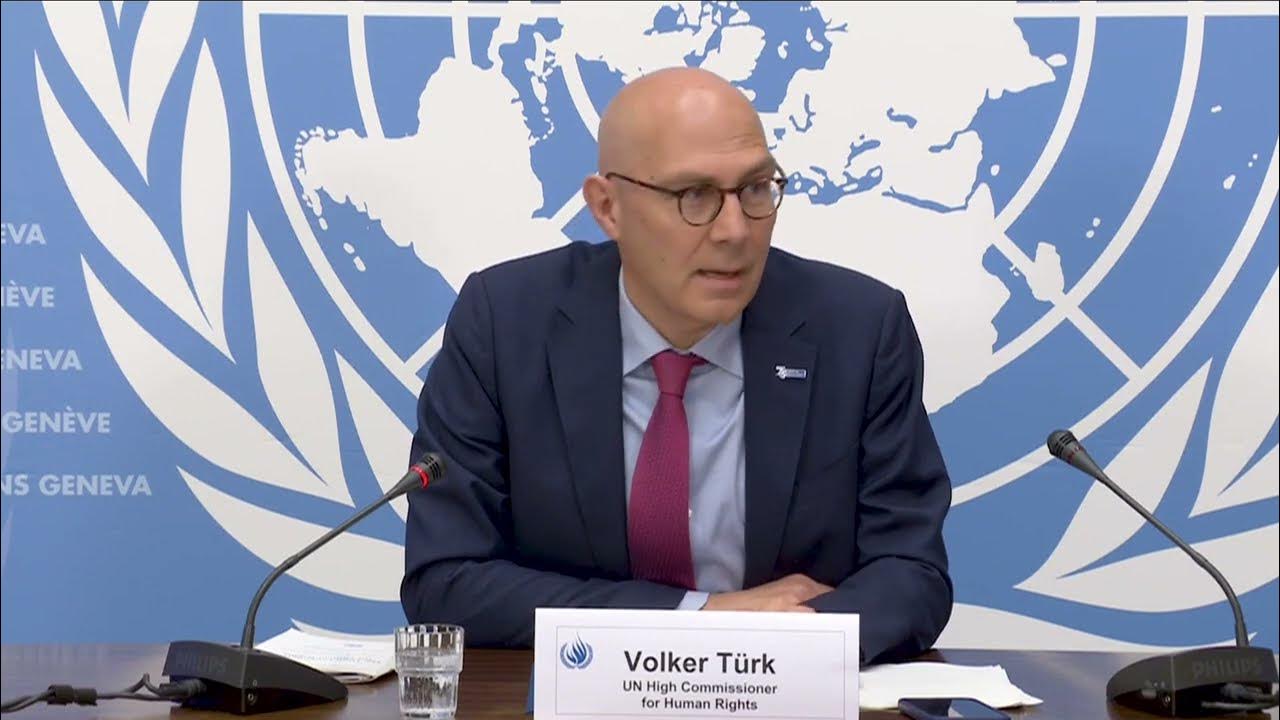
Geneva: UN High Commissioner for Human Rights Volker Türk voiced concerns over “ongoing infringements on cultural and other rights” in Tibet and called for the “release of all individuals detained for exercising their rights, and to align legislation and policies with international human rights law” on 17 June 2025, as part of his lengthy address detailing a grave assessment of the current global landscape. He emphasised the convergence of escalating armed conflicts, climate instability, economic uncertainty, and unregulated technological development.
He expressed deep concern over the “military escalation between Israel and Iran,” urging de-escalation and “urgent diplomatic negotiations,” while underscoring the need for “full respect of international law… in particular the protection of civilians in densely populated areas.”
The UN High Commissioner reminded the Council that “behind each crisis, people are suffering” and cautioned that today’s growing disregard for international agreements threatens global peace and justice. He recalled the United Nations’ founding mission: “to end war, reaffirm faith in fundamental human rights, and promote justice and international law.” Despite past challenges, he noted, international cooperation had brought tangible progress, including higher life expectancy, expanded education, and stronger legal frameworks for human rights and disarmament.
However, he warned that today, these achievements are under threat: “We see dramatic steps to weaken them, creating a more dangerous world for us all.” He posed a series of critical questions challenging complacency, including: “Can we risk massive conflict based on leaders’ personal assessments and agendas?”
He condemned the current global trajectory marked by “escalating conflict and blatant disregard for international human rights and humanitarian law” as indefensible. Highlighting the brutal realities on the ground, he stated: “Civilians are deliberately attacked. Parties to conflict starve and rape as weapons of war. Life-saving humanitarian aid is obstructed, and humanitarian aid workers are targeted.”
The UN High Commissioner concluded with a call to action: to uphold international law, defend human rights, and resist the erosion of the foundational principles of the UN.
Regarding the human rights violations inside the PRC, he stated, “I continue to engage directly with China on a wide range of issues. I am concerned about lack of progress on much-needed legal reform to ensure compliance with international human rights law. I also regret that there has not yet been a resolution to the individual cases we have raised. My Office continues to receive worrying reports of violations in Xinjiang, including undue prison sentences, incommunicado detention, and restrictions on fundamental rights. In Hong Kong, the continued application of national security laws raises serious concerns about the shrinking of civic space. In Tibet, there are ongoing infringements on cultural and other rights. I call for the release of all individuals detained for exercising their rights, and to align legislation and policies with international human rights law.”
-Report filed by Tibet Bureau Geneva