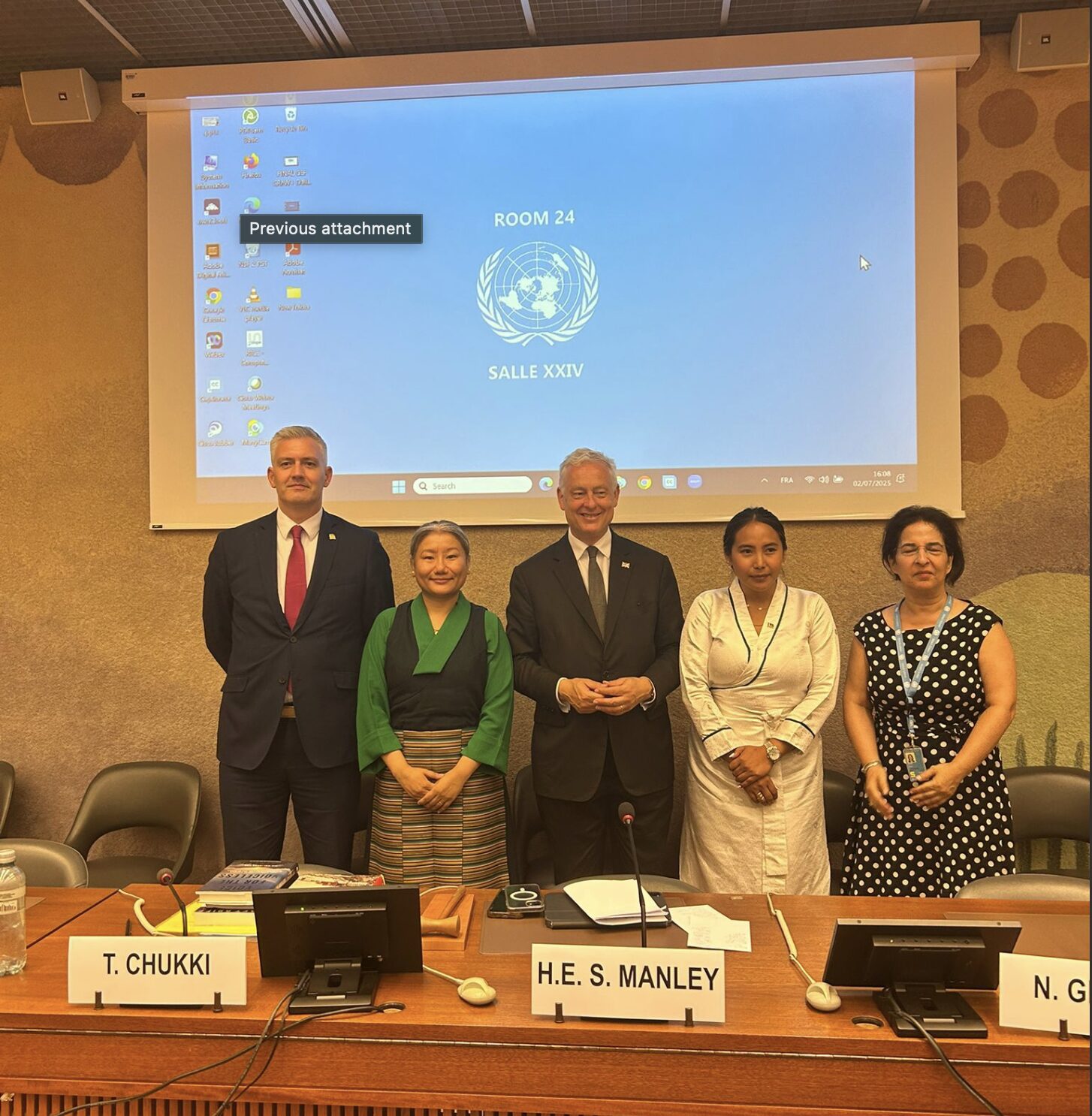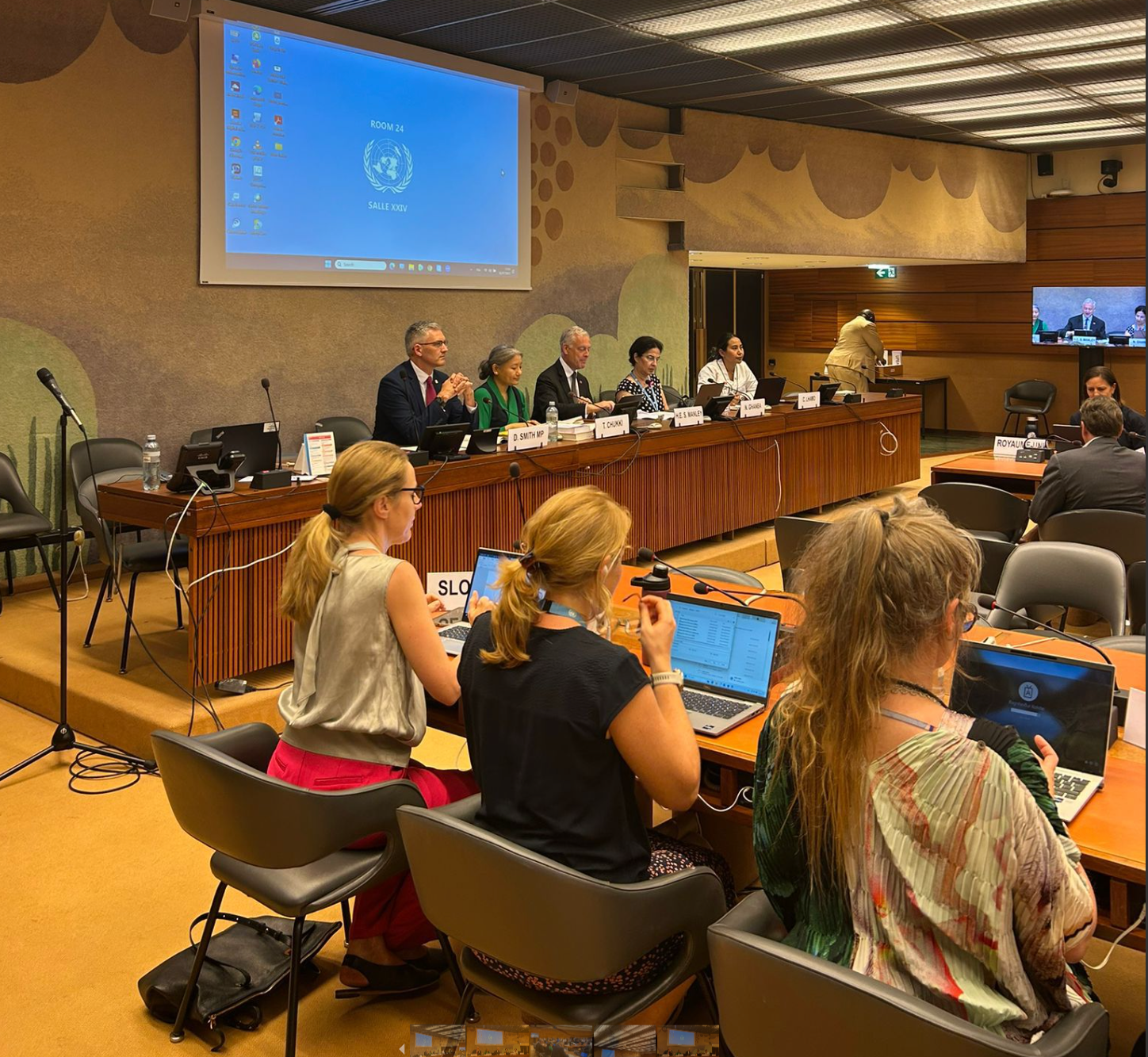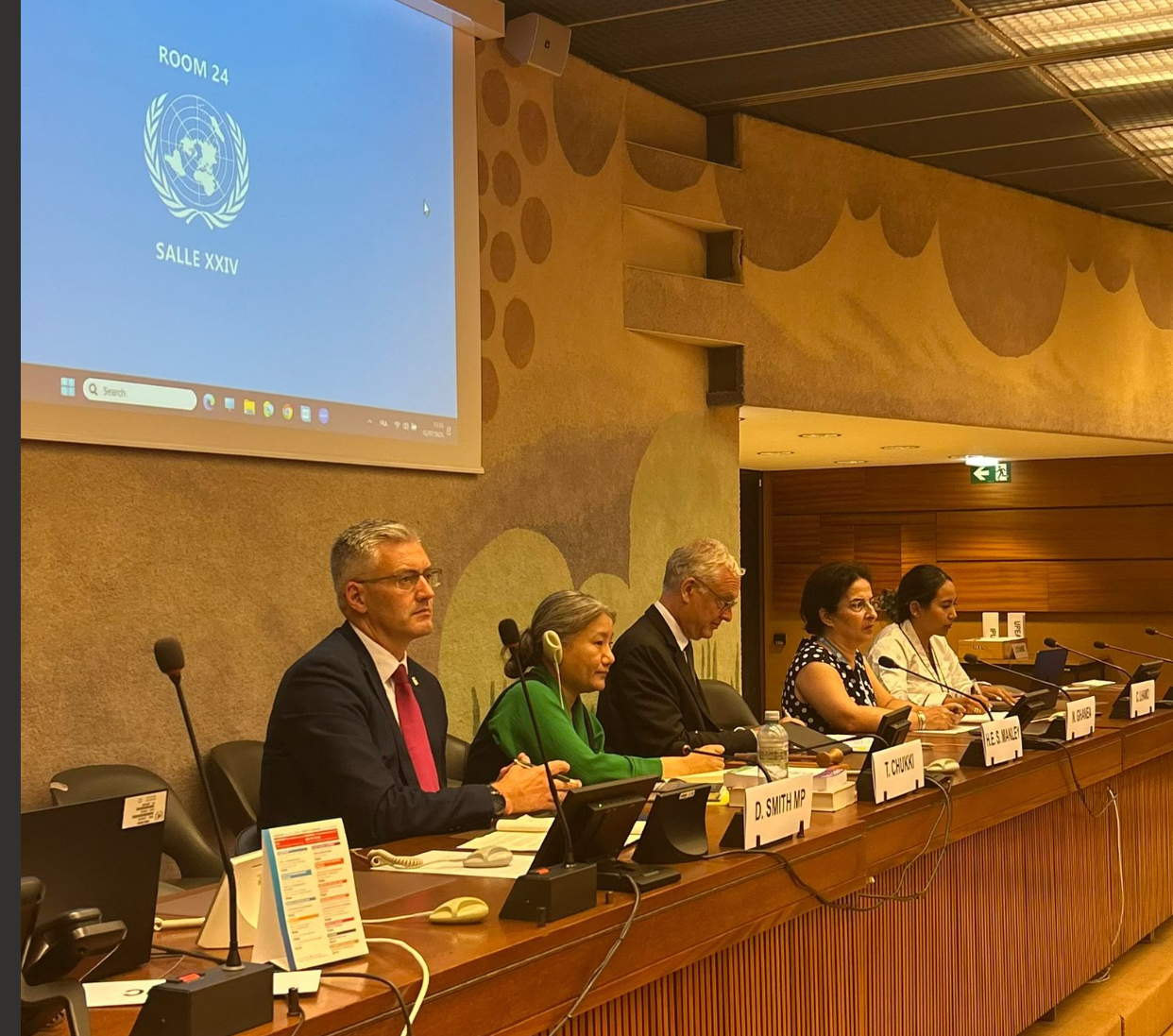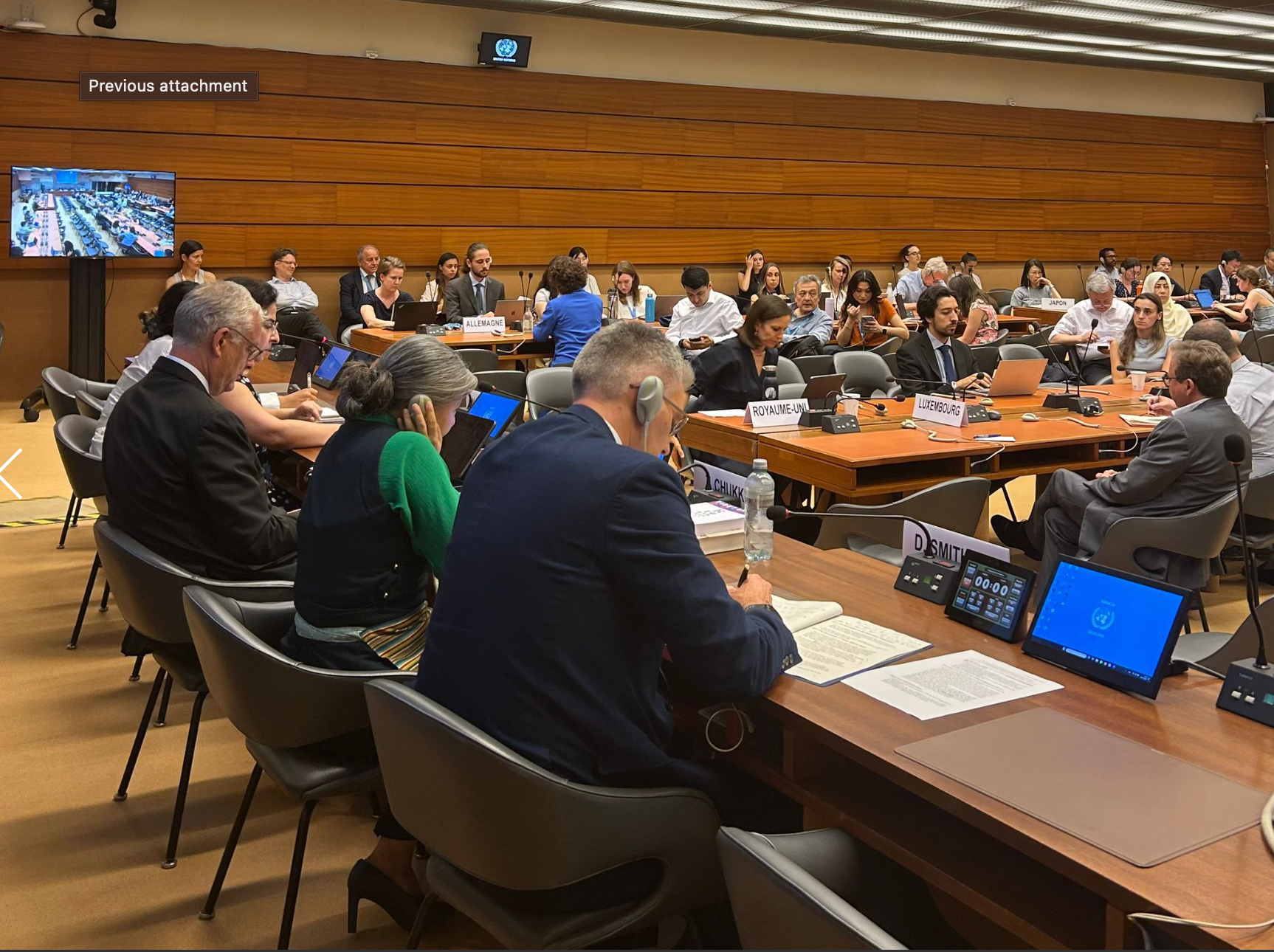

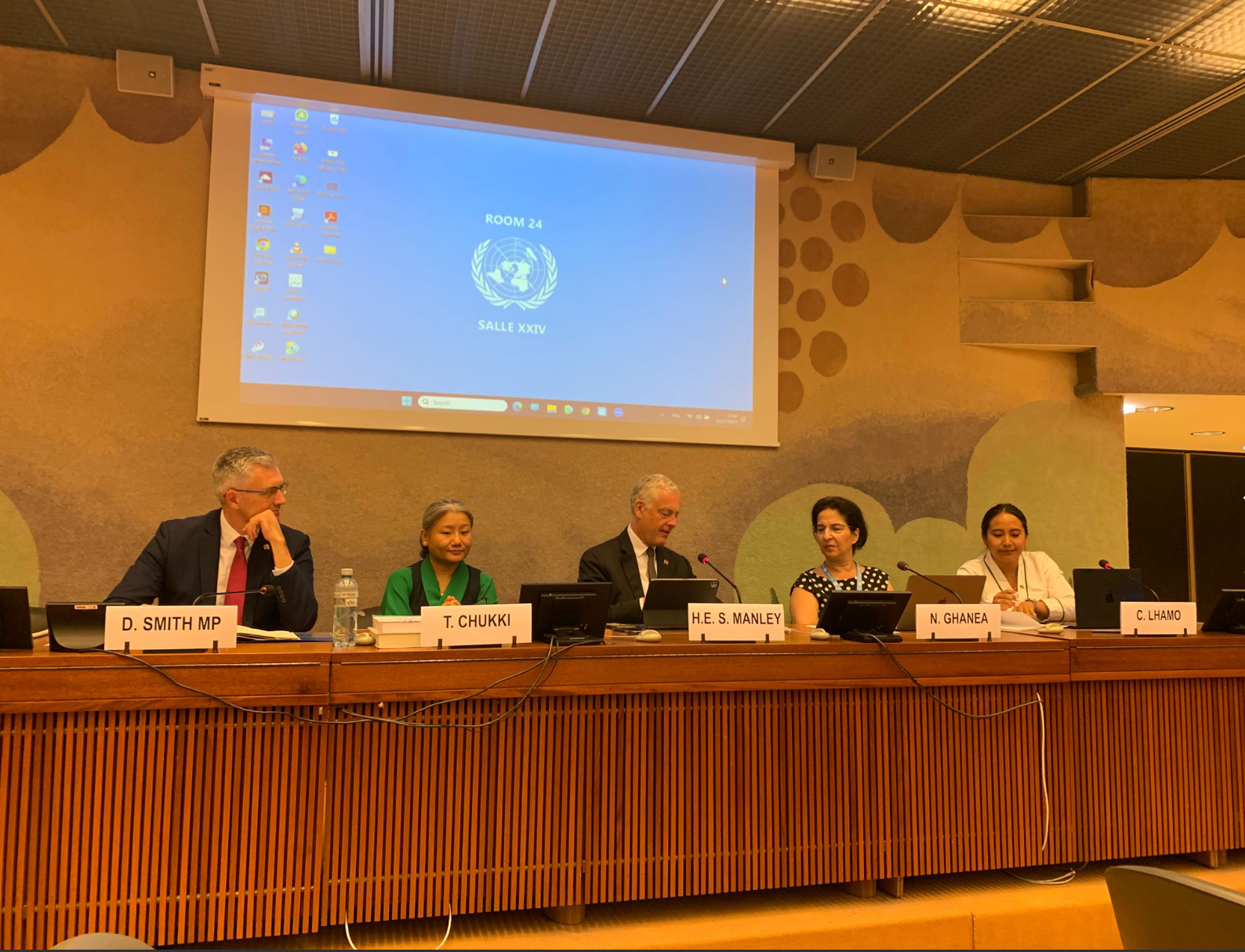
Geneva: Representative Thinley Chukki of the Tibet Bureau in Geneva attended a vital side event during the 59th session of the United Nations Human Rights Council at the Palais des Nations. She addressed the topic of Tibetan Buddhism and the freedom of religious belief.
The event was hosted by the UK Permanent Mission in Geneva and sponsored by sixteen countries: Australia, Canada, the Czech Republic, Denmark, Estonia, Finland, Germany, Iceland, Latvia, Liechtenstein, Lithuania, the Netherlands, Norway, Sweden, Ukraine, and the United Kingdom.
The event brought together leading human rights and religious freedom experts, along with Tibetan leaders, to discuss the challenges faced by Tibetan Buddhists in preserving long-standing practices and exercising their right to freedom of religion or belief. A total of 27 countries — including Albania, Belgium, Lithuania, Germany, Australia, the Netherlands, Slovenia, Liechtenstein, Finland, New Zealand, Canada, Iceland, Sweden, Estonia, Ukraine, Japan, Norway, Denmark, the European Union, the Czech Republic, Switzerland, the UK, China, Luxembourg, France, Austria, and Sierra Leone — participated in this event. Many other countries that are not official members of the United Nations also participated and expressed support for the issue.
The international delegates included UK Ambassador and Special Envoy Simon Manley, who moderated the event, along with UK MP David Smith, who is also the Special Envoy for Freedom of Religion or Belief, and UN Special Rapporteur on Freedom of Religion or Belief, Nazila Ghanea. The Tibetan delegation comprised Representative Thinley Chukki of the Tibet Bureau in Geneva, 17th Tibetan Parliament-in-Exile Member Dorjee Tseten, and Tibetan-Canadian human rights activist Chimi Lhamo, who actively engaged in the discussions.
Representative Thinley Chukki was a panellist at the event, where she spoke in detail about Tibetan Buddhism, founded in the 7th century during the reign of King Songtsen Gampo, which laid the foundation for Tibetan religious traditions. She explained that Tibetan Buddhism flourished from the 8th century onwards, including during the reign of the religious monarch Tri Relpachen. She highlighted the tradition of recognising reincarnated lamas in Tibet, which began with the first Pal Gyalwa Karmapa Rinpoche. She emphasised the Tibetan Buddhist belief in reincarnation and the community’s right to recognise their own religious leaders without external interference. She stated that the recognition of the reincarnation of His Holiness the Dalai Lama through traditional religious methods is a core aspect of Tibetan Buddhism and its social identity. Her remarks coincided with His Holiness the Fourteenth Dalai Lama’s public announcement and official declaration on reincarnation, issued on 2 July 2025.
The UN delegates, member states, and speakers at the event expressed heartfelt tributes to His Holiness for his lifelong efforts in promoting compassion and inter-religious harmony. They also voiced concern about the increasing pressure on Tibetan religion and religious practitioners. Speakers urged governments and organisations to stand firmly in support of the religious freedom of Tibetan Buddhists.
The event also sent a clear message to the Chinese delegates in attendance: the succession and reincarnation of the next Dalai Lama is solely the responsibility of His Holiness’s Office — the Ganden Phodrang Trust.
-Report filed by Tibet Bureau, Geneva