

Dharamshala: The Tibet Museum team recently completed a week-long educational museum excursion to Kolkata, aimed at enhancing professional knowledge and gaining practical exposure to diverse museum practices across India.
The excursion, designed as an important learning initiative, provided an opportunity for museum professionals to study curatorial methods, exhibition techniques, and visitor engagement strategies through direct observation and interaction with leading institutions.
The journey began on 11 April with an overnight bus trip to New Delhi. Upon arrival on 12 April, the team visited the National Museum, where they explored exhibits spanning from the Indus Valley Civilisation to later historical periods. The Harappan Gallery and Buddhist art section offered valuable insights into ancient cultural and spiritual traditions.
On 13 April, the team flew to Kolkata to begin the main phase of the excursion. The following day included visits to the Birla Industrial and Technological Museum and the Indian Museum. Interactive exhibits at the Birla Museum, particularly the Coal Mine show, provided an immersive learning experience. The Indian Museum impressed the team with its extensive collection of sculptures, fossils, and historical artefacts. The group also visited the iconic Howrah Bridge, a major architectural landmark symbolising the city’s vibrancy.
On 15 April, the team explored the Postal Museum and Philatelic Library at the General Post Office, gaining insights into the evolution of communication systems. Later, they visited the Academy of Fine Arts, where they experienced a wide range of artistic expressions.
The excursion continued on 16 April with a visit to the Mother Teresa House, where the peaceful atmosphere left a profound impact on the team. This was followed by a visit to the RBI Museum, offering insights into India’s economic history and currency evolution. At the Victoria Memorial, the team engaged with conservation and collection management professionals, learning about restoration techniques, preventive care, and systematic acquisition processes.
A highlight of the visit was a presentation delivered by the Director of the Tibet Museum titled “25 Years of the Tibet Museum and Tibet,” which outlined the institution’s journey, achievements, and future vision.
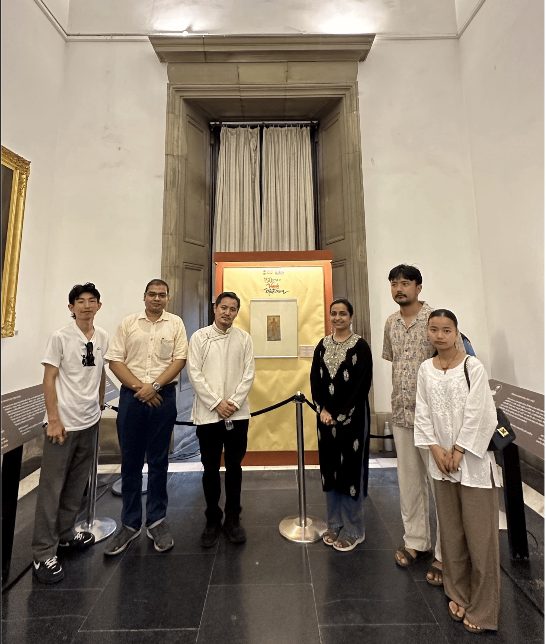
On 17 April, the team visited Science City, where interactive exhibits provided an engaging blend of education and entertainment. The team returned to Delhi later that evening, arriving on 18 April. On the same day, they visited the Piprahwa relics exhibition of Lord Buddha, recently brought back to India in 2025. The exhibition, featuring relics and associated artefacts, offered a meaningful conclusion to the journey.
The excursion proved to be highly enriching, providing the Tibet Museum team with valuable exposure to innovative exhibition design, storytelling techniques, and audience engagement strategies. It also strengthened teamwork and collaboration among members, fostering a shared vision for enhancing museum practices.
Overall, the experience is expected to contribute significantly to the Tibet Museum’s future initiatives, inspiring greater creativity, innovation, and impact in its work.
– Report filed by The Tibet Museum, DIIR, CTA