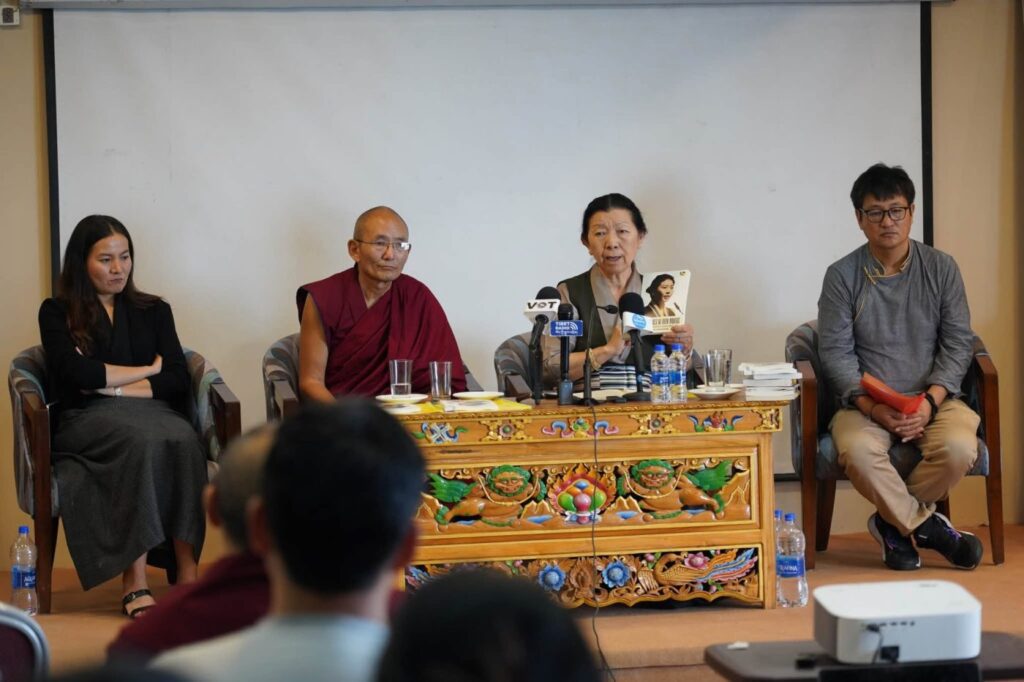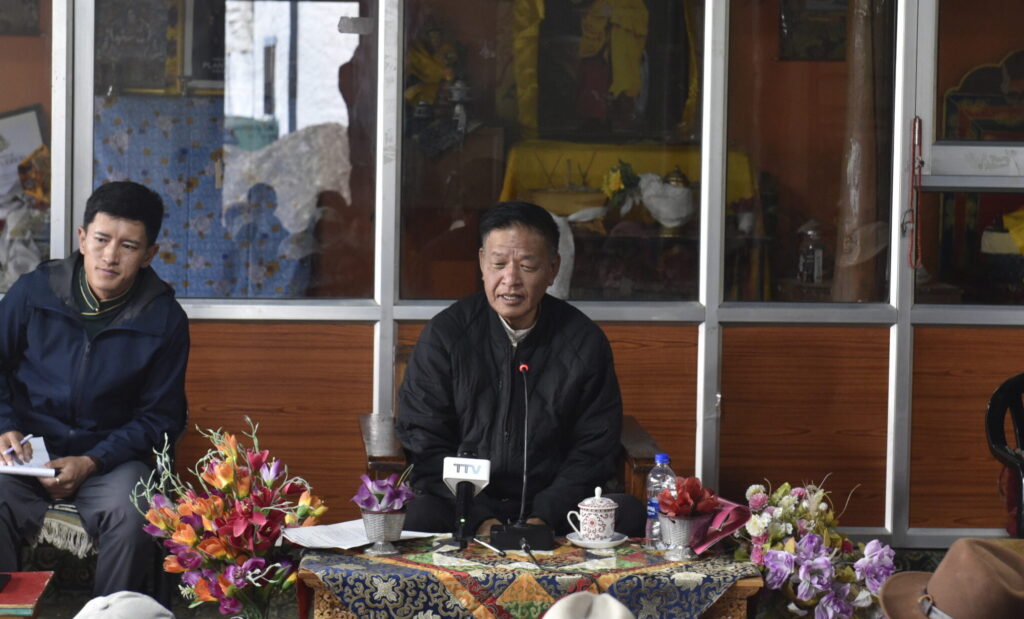


Dharamshala: Speaker Khenpo Sonam Tenphel of the Tibetan Parliament-in-Exile addressed the closing session of the 8th All India Tibet Support Groups Conference on 13 March 2026. The conference, which commenced on 12 March 2026 at the Tibetan Institute of Performing Arts (TIPA), brought together key advocates and supporters from across the subcontinent. The convention was convened by the Core Group for the Tibetan Cause – India and facilitated by the India Tibet Coordination Office (ITCO).
The event was also attended by Kalon Norzin Dolma, Minister of Information and International Relations; Shri R.K. Khrimey, National Convener of the Core Group for the Tibetan Cause – India; Prof. Anand Kumar, Patron, India Tibet Friendship Society (ITFS); Shri Surendra Kumar, National Vice President, India Tibet Friendship Society (ITFS); dedicated Tibet supporters from across India; and other distinguished guests.
In his address, the Speaker expressed his profound honour at joining the closing ceremony of the 8th All-India Tibet Support Groups Conference and conveyed his deep appreciation and admiration for the Tibet supporters’ selfless commitment and steadfast support for the Tibetan cause.
“We, the Tibetan people, deeply value your support and recognise your contributions as truly invaluable—something that will never be forgotten,” the Speaker said.
He further remarked that Tibet and India are neighbouring nations bound by deep-rooted ties of religion, culture, and tradition spanning thousands of years. “As the source of our spiritual and cultural heritage lies in the profound wisdom of the Nalanda masters, we hold India in the highest esteem, referring to it as Aryabhumi (The Noble Land),” he added.
Recalling historical developments, the Speaker noted that in 1959, following the illegal occupation of Tibet by the People’s Republic of China (PRC), His Holiness the 14th Dalai Lama and thousands of Tibetans were forced to seek refuge in India. He emphasised that the exceptional hospitality and generous support extended by the government and people of India have been instrumental in preserving Tibetan identity.
Today, the Tibetan issue has garnered significant international attention and support from governments, parliaments, and people around the world. The Speaker attributed this largely to India’s recognition of Tibet’s importance, the visionary leadership of His Holiness the Dalai Lama in pursuing a non-violent struggle grounded in truth, and the world’s growing awareness of the tragic reality of human rights violations under China’s repressive policies inside Tibet, where Tibetans continue to demonstrate immense courage and resilience.
“We have now lived in exile for more than sixty years. During this time, the influence and message of His Holiness the Dalai Lama have reached every corner of the globe. This stands as a testament not only to his wisdom but also to the profound values of Tibetan Buddhist culture,” he said. He further noted that in today’s modern era, His Holiness’s guidance on global peace, compassion, altruism, and secular ethics is increasingly recognised as essential for the well-being of humanity.
The Speaker also expressed special gratitude to those who recently offered a Long-Life Prayer (Tenshug) for His Holiness, sincerely praying for his continued health and long life. He noted that His Holiness continues to promote the revival of ancient Indian knowledge while introducing India to the world as a beacon of democracy, religious harmony, and a unique model of peaceful coexistence among diverse cultures and languages.
Referring to current global developments, the Speaker observed that the world is undergoing rapid political and economic shifts, and changes are also taking place within China. In such times of uncertainty and transition, he noted that Tibet supporters remain among the most vital allies in the struggle for truth. He thanked the Tibet Support Groups across India for their tireless efforts, noting that their work has helped the Indian public better understand that Tibet was historically an independent nation and that the security of Tibet is closely connected to the security of India.
Furthermore, the Speaker highlighted the importance of informing the Indian public about the critical situation currently unfolding in Tibet, including the Chinese government’s systematic policies aimed at eradicating Tibetan identity and the destruction of Tibet’s fragile ecosystem. Tibet is often referred to as the “Water Tower of Asia,” as it is the source of major rivers that sustain millions of people across Asia, including in India. Protecting this environment, he emphasised, is therefore not only a concern for Tibetans but a shared responsibility.
The Speaker also commended the discussions held over the past few days regarding future action plans and strategies. He urged participants to ensure that the resolutions adopted during the conference do not remain merely on paper but are actively implemented in the days ahead. In particular, he emphasised the importance of introducing the Tibetan cause to the younger generation of Indians so that they may better understand the historical truth of Tibet and the shared interests that bind the Tibetan and Indian peoples.
In conclusion, the Speaker thanked the members of the Core Group for the Tibetan Cause – India (CGTC-I) for organising the important conference and expressed appreciation to all participants who had travelled long distances to attend the gathering in Dharamshala.
More than 200 participants, including presidents and members of various Tibet Support Groups from across India, gathered for the conference to discuss and strengthen the Indian grassroots movement in support of the Tibetan cause.
-Report filed by the Tibetan Parliamentarian Secretariat