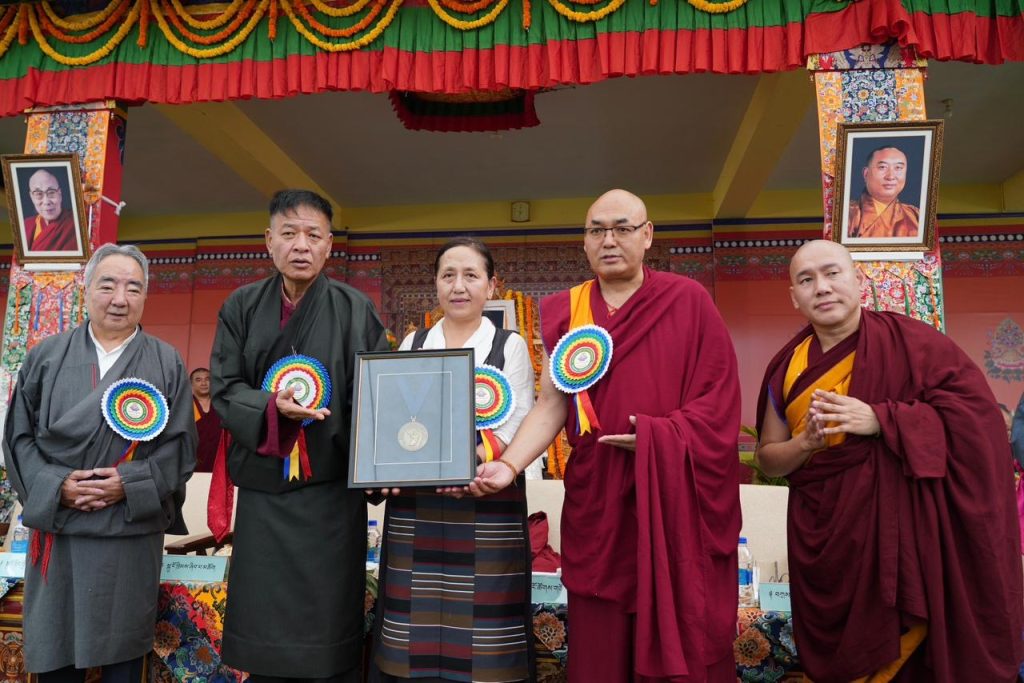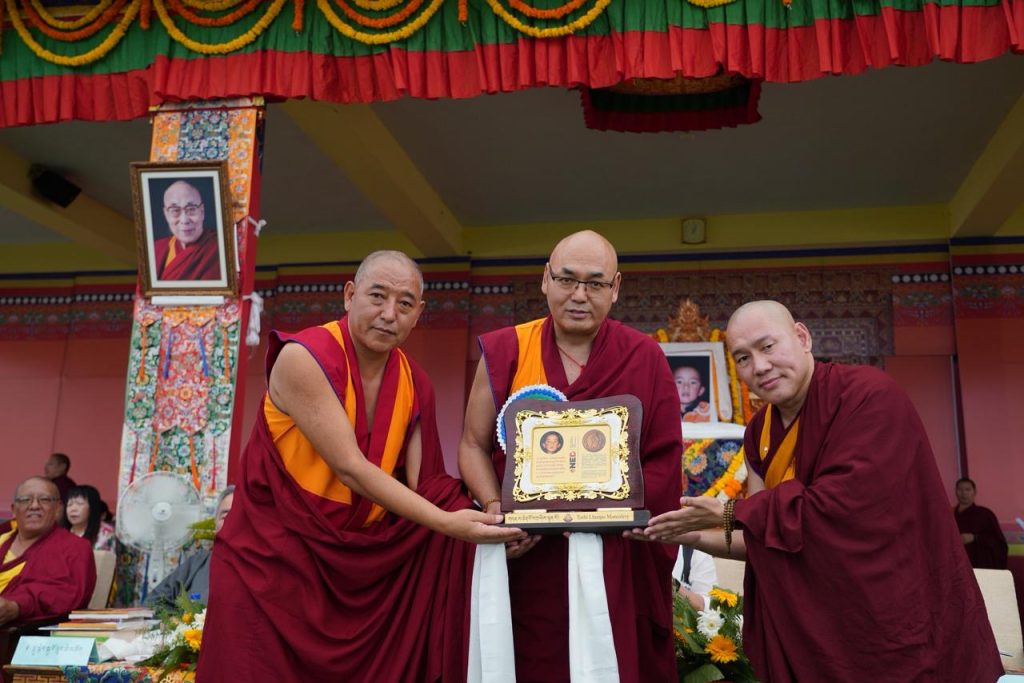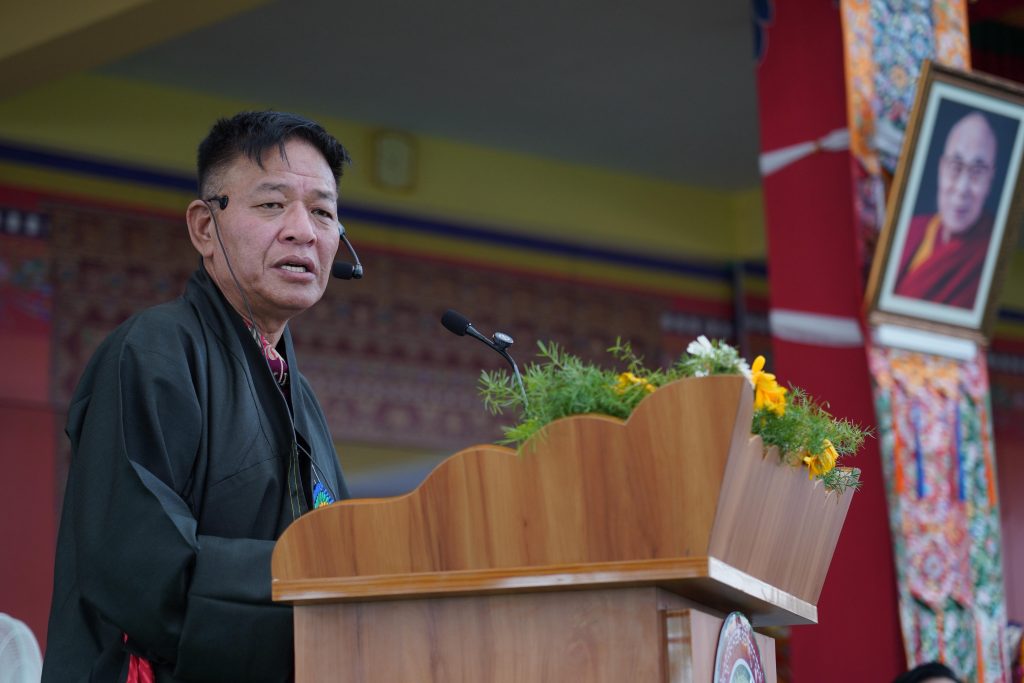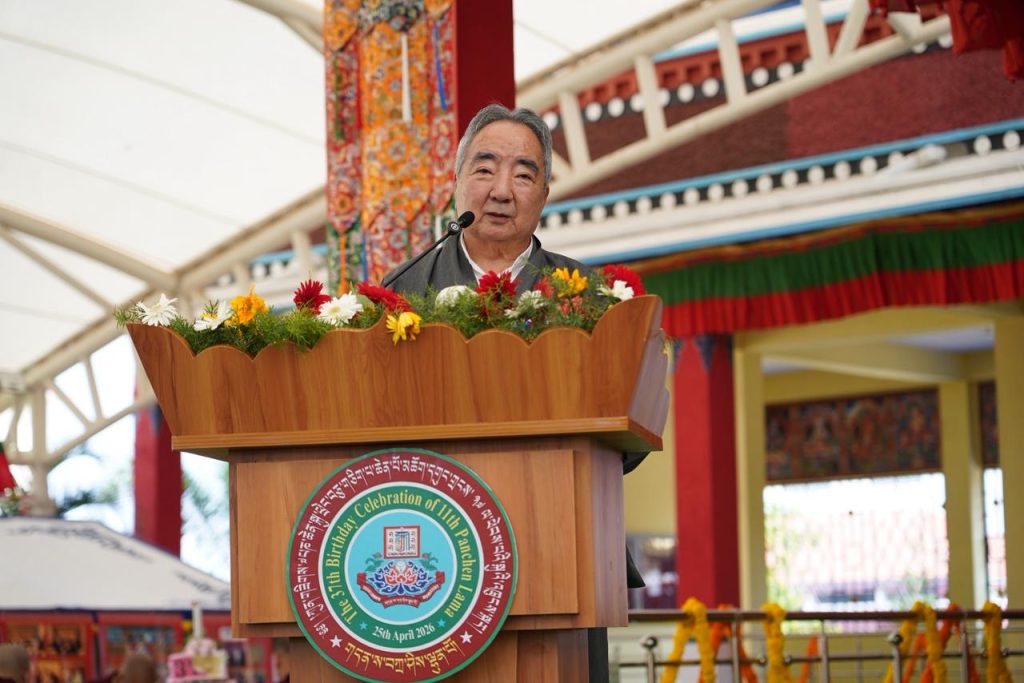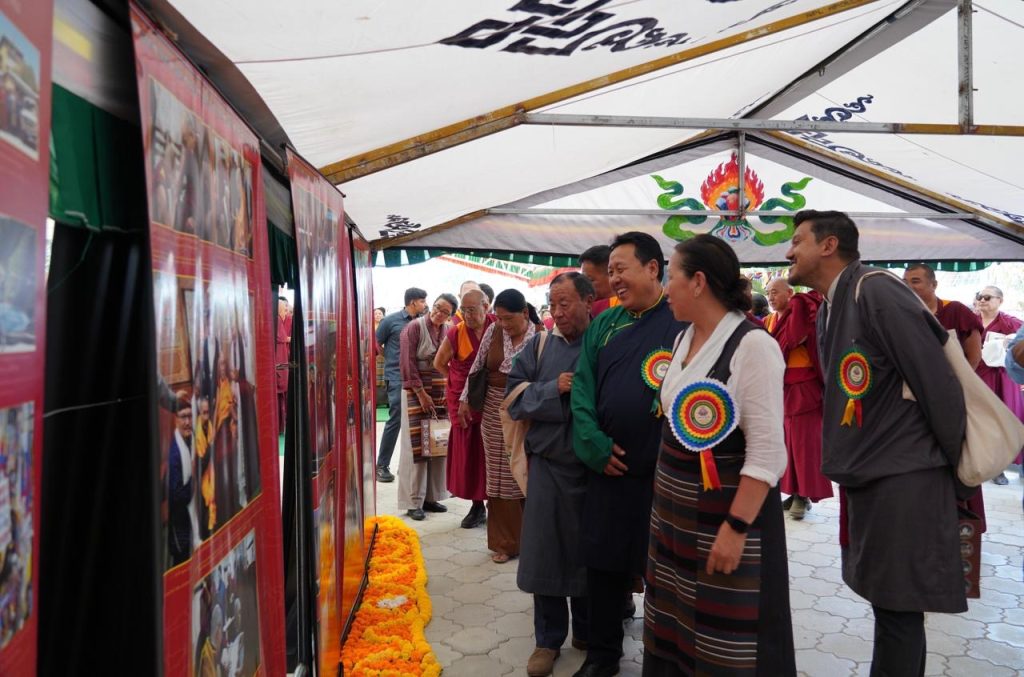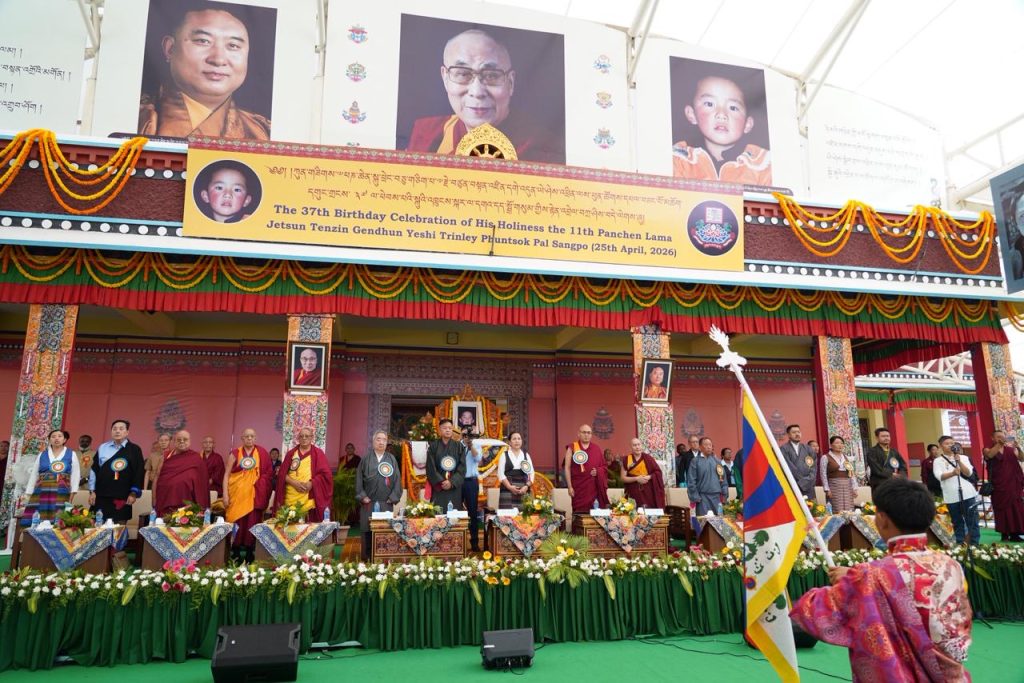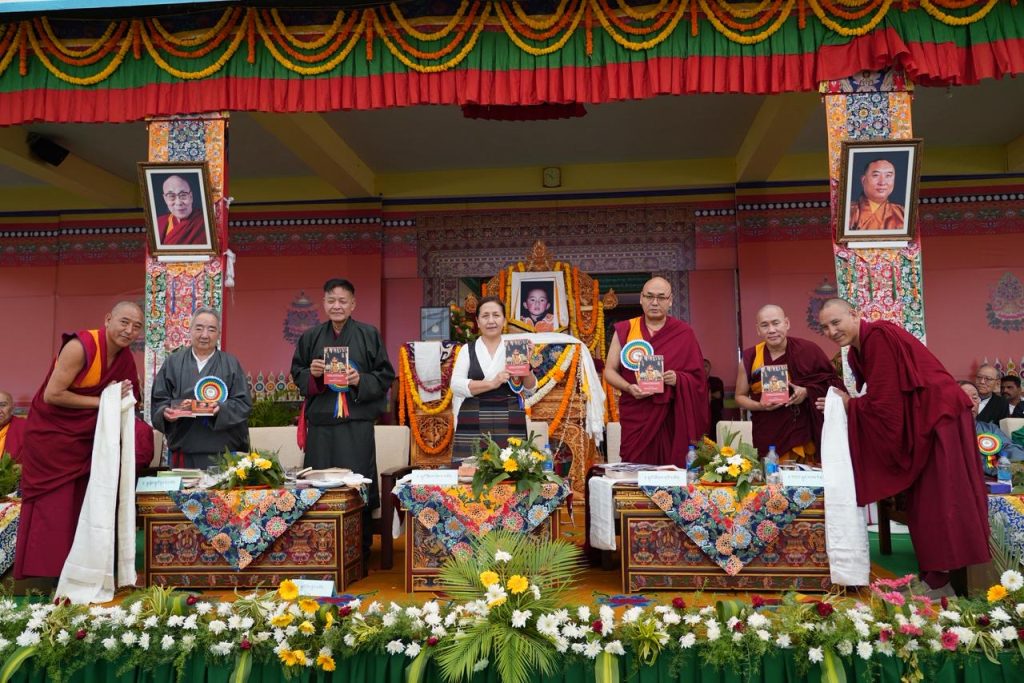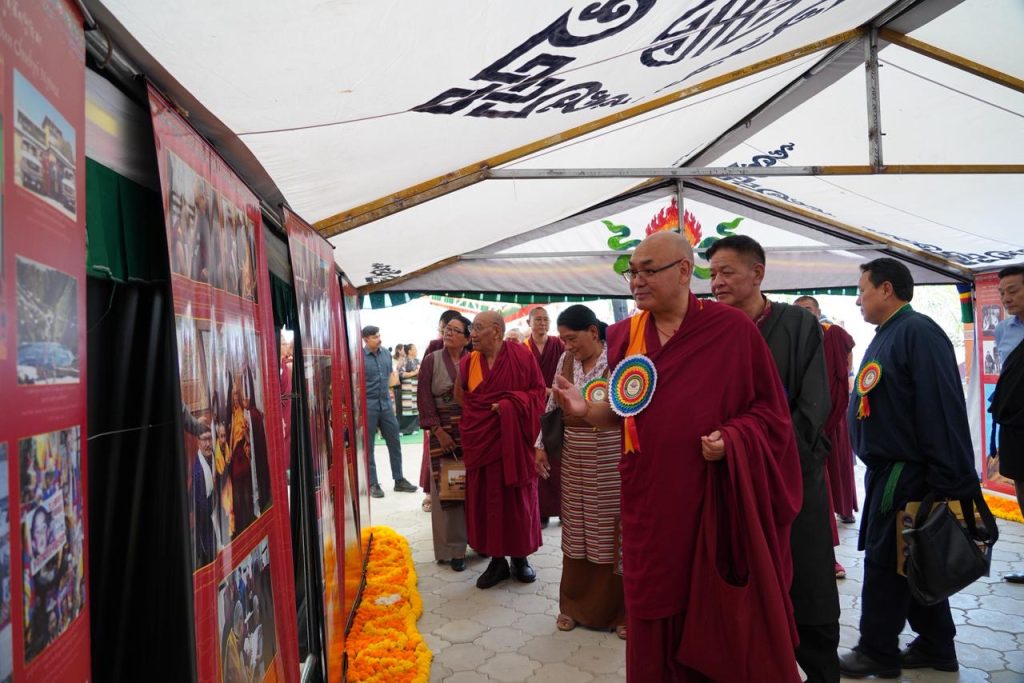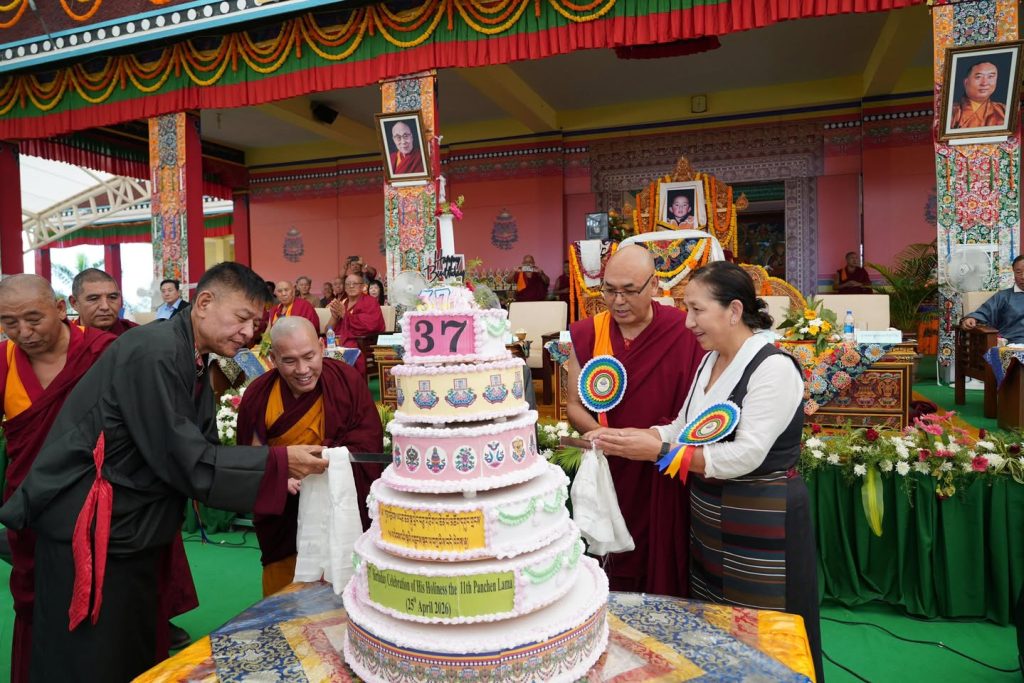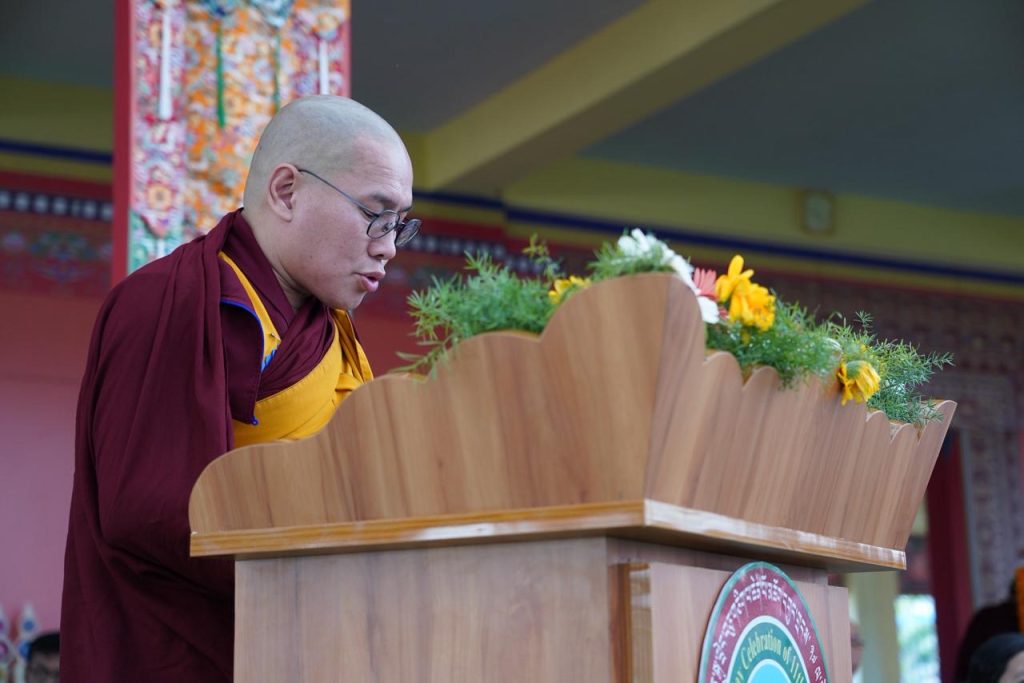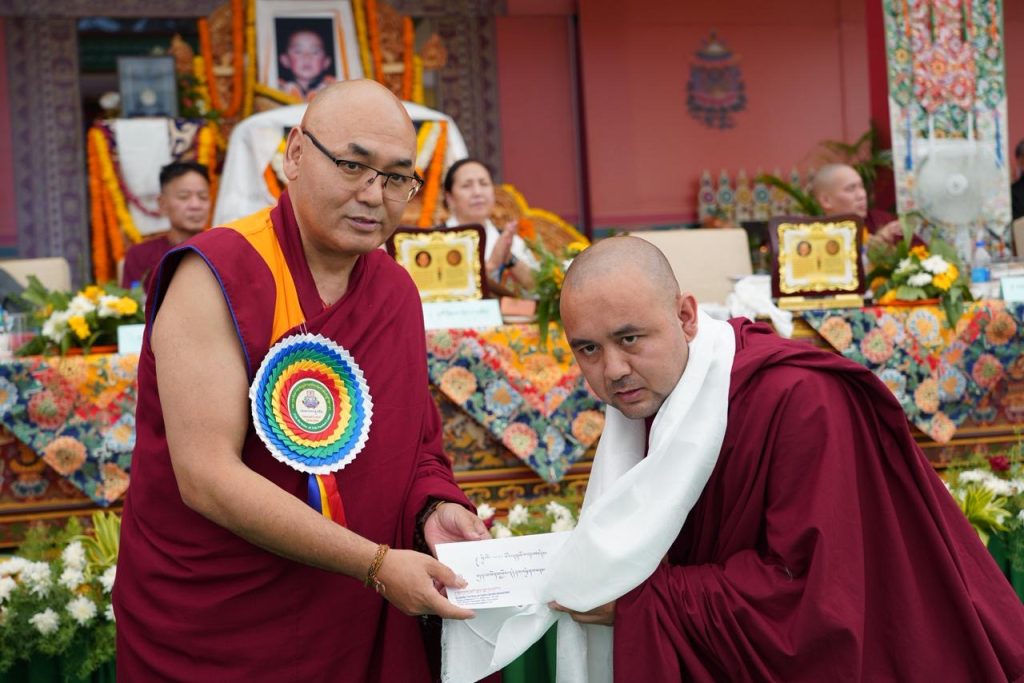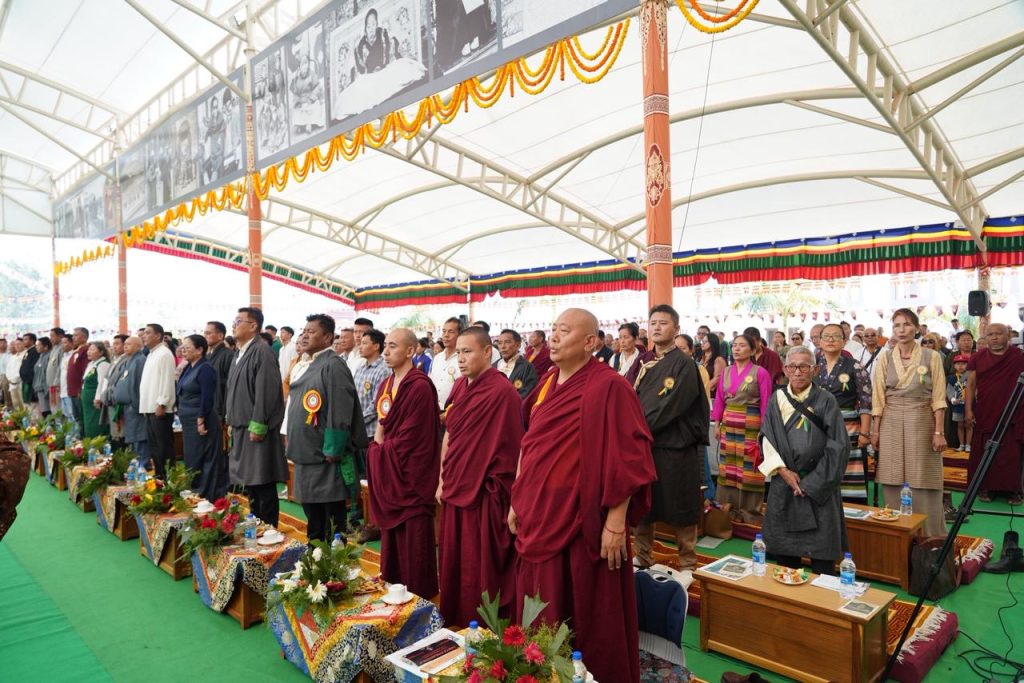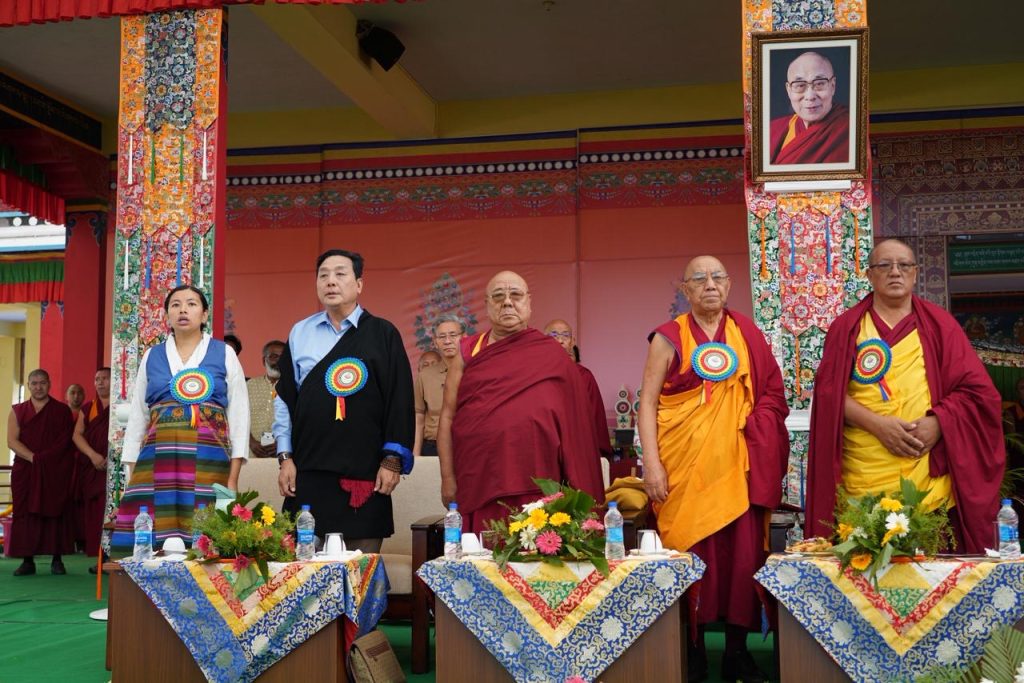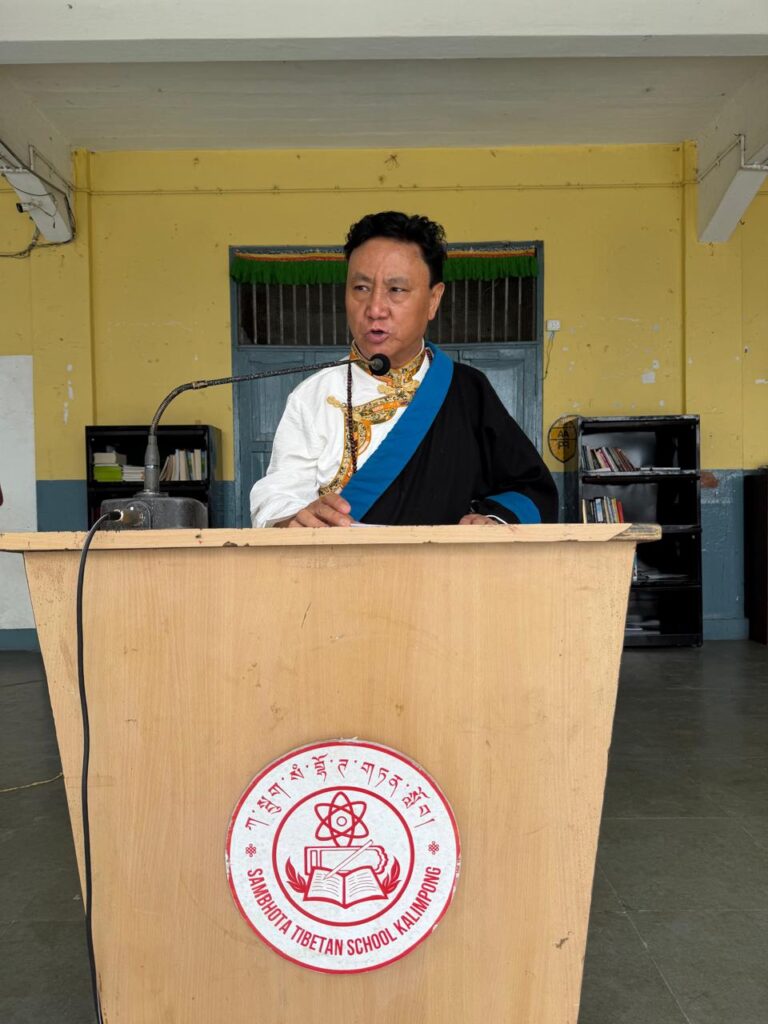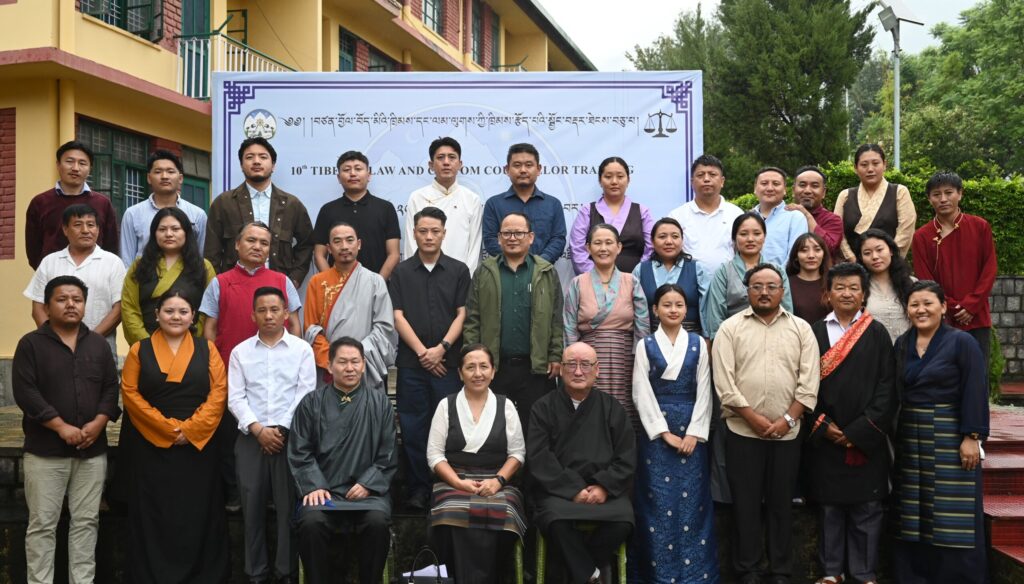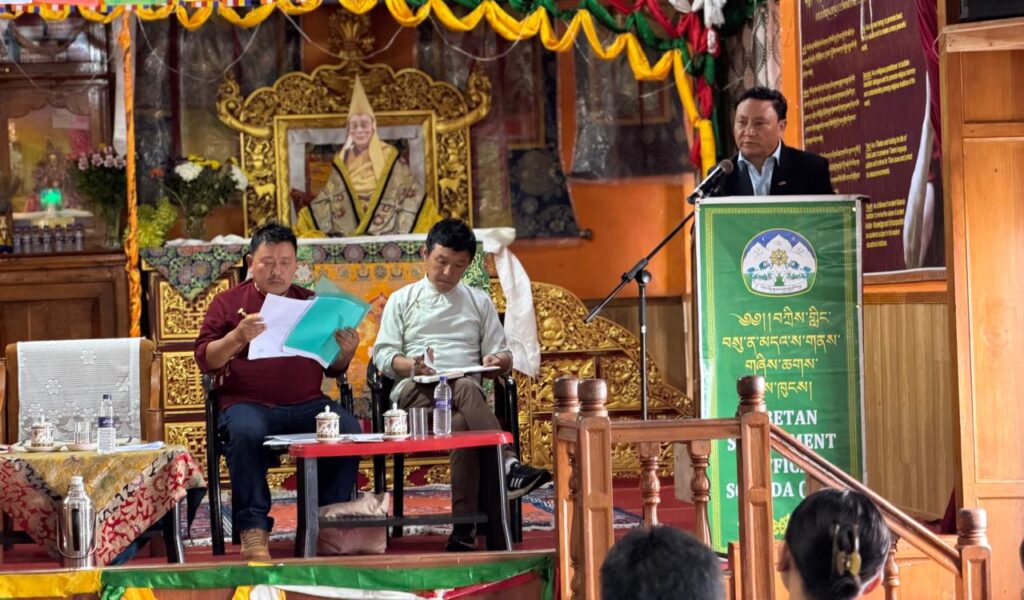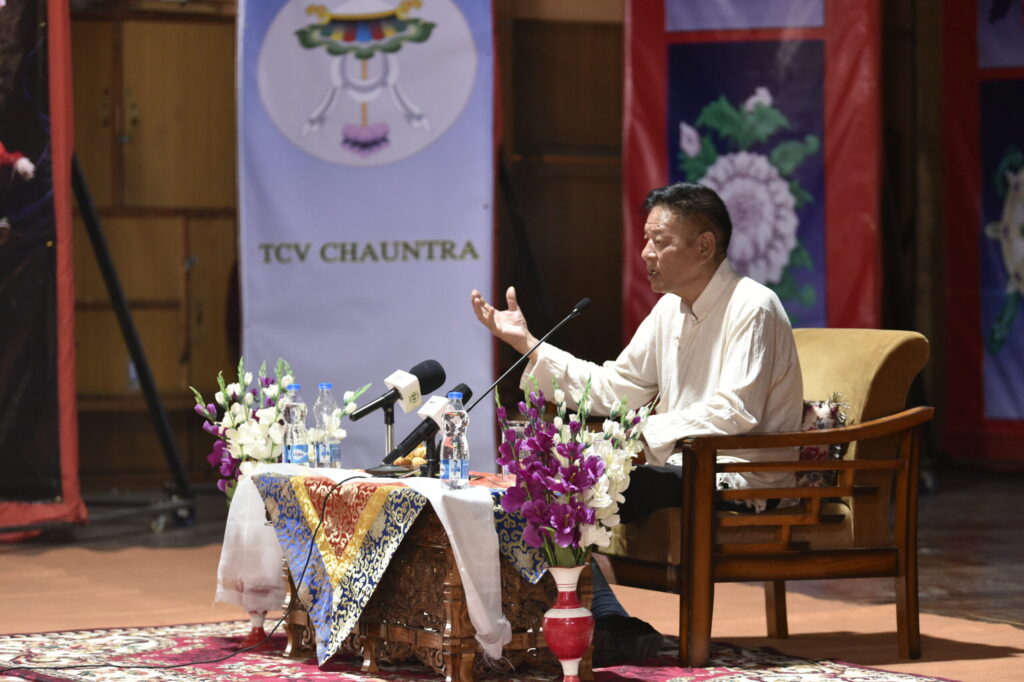


Dharamshala: Khenpo Sonam Tenphel, Speaker of the 17th Tibetan Parliament-in-Exile, attended as special guest at the 37th birth anniversary of the 11th Panchen Lama, Jetsun Tenzin Gedhun Yeshi Trinley Phuntsok Pal Sangpo (Gedhun Choekyi Nyima), held at Tashi Lhunpo Monastery in Bylakuppe, Karnataka, on 25 April 2026. Chief Guest Sikyong Penpa Tsering, alongside special guests Chief Justice Commissioner Yeshi Wangmo, Secretary Lobsang Jinpa of the Office of His Holiness the Dalai Lama, as well as Tashi Lhunpo Abbot Zeegyab Rinpoche, MP Samten Choedon, MP Ngodup Dorjee, MP Lobsang Gyatso Sither, MP Choephel Thupten, and other dignitaries were also present.
The Speaker described his participation as a meaningful occasion honouring both the 11th Panchen Lama and the legacy of previous Panchen Lamas. He highlighted the longstanding tradition, established since the recognition of the 5th Dalai Lama by the 4th Panchen Lama, of mutual recognition between Dalai Lamas and Panchen Lamas, reflecting their enduring spiritual relationship and shared religious responsibilities.
He emphasised the complementary roles of His Holiness the 14th Dalai Lama, who internationalised the Tibetan cause and preserved Tibetan identity in exile, and the 10th Panchen Lama, who worked with in Tibet to protect Tibetan religion, culture, and language during a difficult period. The Speaker noted that the 10th Panchen Lama’s “70,000 Character Petition” detailing Tibetan suffering under Chinese rule led to over nine years of imprisonment. Despite this, he continued his efforts until his sudden and suspicious death in 1989, after which Tibet remained under severe pressure from PRC policies.
Detailing the recognition of the 11th Panchen Lama, the Speaker outlined the traditional process led by His Holiness the Dalai Lama, including prayers, coordination with Jadrel Rinpoche, and adherence to authentic religious procedures. Following the official announcement on 14 May 1995, the recognised Panchen Lama was widely accepted by Buddhists worldwide. However, three days later, Chinese authorities abducted the six-year-old Panchen Lama, along with his family, and placed them in secret detention. For 31 years, no verifiable information about his whereabouts has been made public, leading to global concern and his designation as the world’s youngest political prisoner.
The Speaker further stated that the Chinese government, despite its atheist stance, installed another candidate through the Golden Urn process. Eyewitness testimony from Arjia Rinpoche described the procedure as staged and politically orchestrated. He also cited Drokmi Jampa Lodroe, who later revealed that the process aimed to create a political counterweight rather than serve religious purposes.
Quoting a 1995 statement by His Holiness the Dalai Lama, the Speaker reiterated concerns over the Panchen Lama’s safety and education and recalled appeals made to governments, religious bodies, and human rights organisations. Despite sustained advocacy by the Tibetan Parliament-in-Exile, the United Nations, and others, no progress has been achieved.
The Speaker noted inconsistencies in Chinese government statements over time regarding the Panchen Lama’s status, ranging from claims of secrecy for protection (2000) to assertions of normal schooling (2010) and later of higher education and employment (2015 and 2020), all without verifiable evidence. He referenced Voice for the Voiceless, in which His Holiness the Dalai Lama cites sources indicating the Panchen Lama is under house arrest at a military base in mainland China, and urged transparency regarding his condition and whereabouts.
He also highlighted the preservation of Tibetan religion and culture in exile, particularly in settlements like Bylakuppe, made possible through His Holiness the Dalai Lama’s leadership and the support of India. He called on the Tibetan community to remain committed to safeguarding their heritage. Appreciation was expressed to Zeekyab Rinpoche, abbot of Tashi Lhunpo Monastery in exile, and emphasis was placed on the continued responsibility of monastic institutions to sustain religious study and practice.
The Speaker concluded with prayers for the release of the 11th Panchen Lama, his return to Tashi Lhunpo Monastery, and his reunion with His Holiness the Dalai Lama for the benefit of Tibetan Buddhism and all beings.
– Filed by Tibetan Parliamentary Secretariat