Lucknow, Uttar Pradesh: On the morning of 25 November 2025, following a meeting with Shri Prabhunarayan Yadav, Member of the Legislative Assembly for the Sakaldiha constituency in Chandauli, Uttar Pradesh, Sikyong Penpa Tsering attended a breakfast reception hosted in his honour by Smt. Sushma Kharkwal, Mayor of the Lucknow Municipal Corporation, at the Mayor’s office.
Thereafter, coordinated by Dr. Sanjay Shukla, Regional Convenor of CGTC and President of Bharat Tibbat Samvad Manch (BTSM), Sikyong proceeded to the S R Group of Institutions, where he was invited as the chief guest for a programme aimed at raising awareness on the just cause of Tibet.
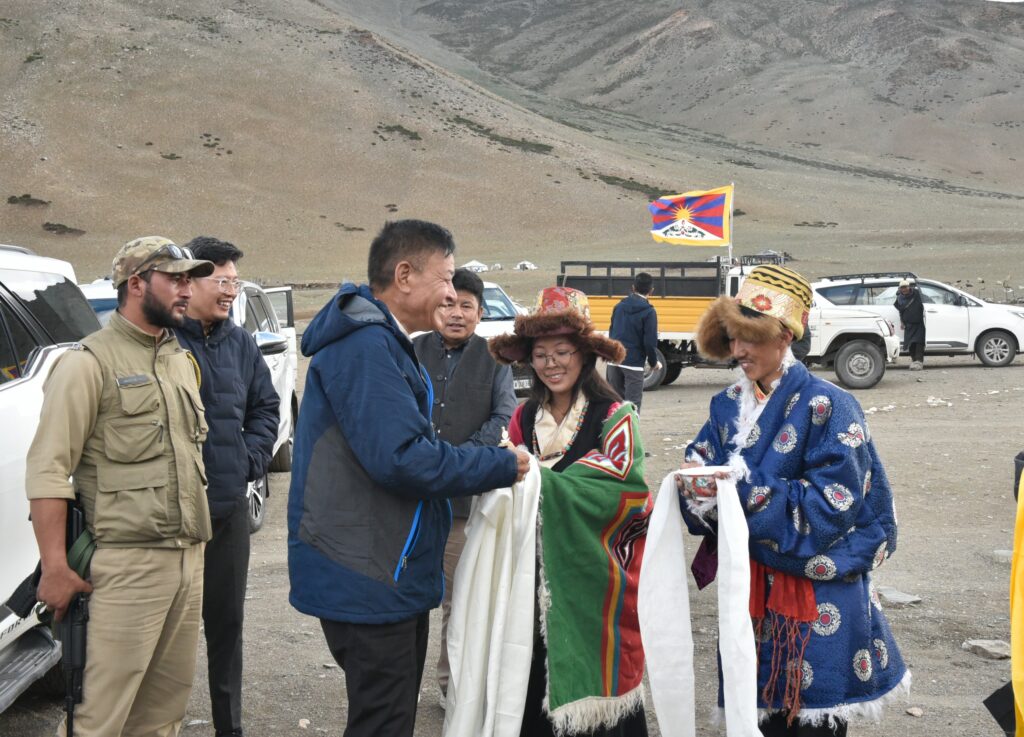
Upon arrival at the Institution, Sikyong was warmly received by Shri Pawan Singh Chauhan, MLC–Sitapur and Chairman of the S R Group; Shri Piyush Singh Chauhan, Vice Chairman; and Smt. Sushmita Chauhan. The programme was attended by over 250 students and faculty members in the college auditorium.
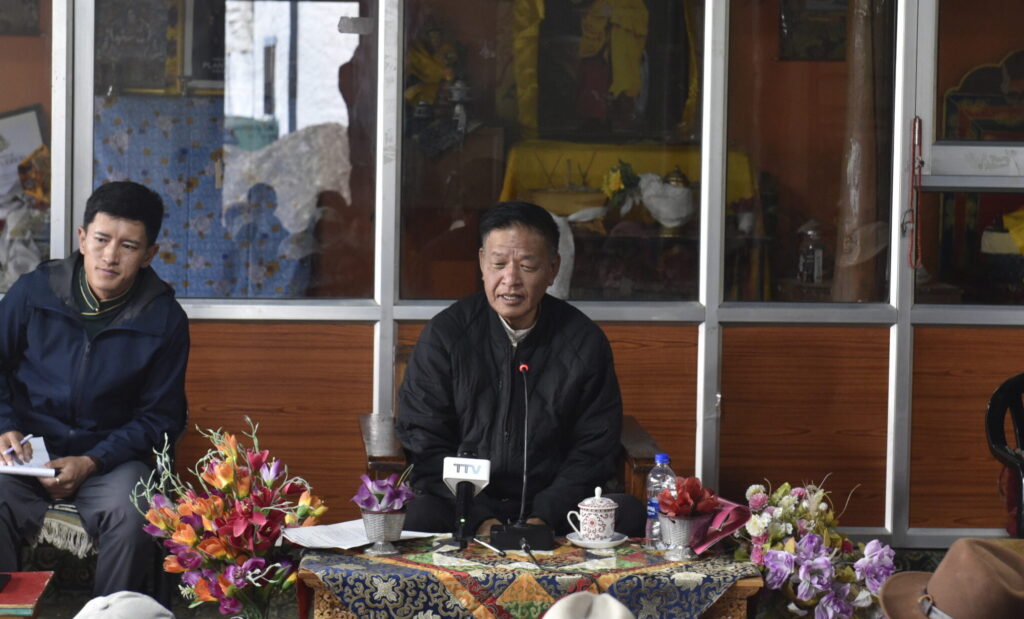
The event commenced with the traditional lamp-lighting ceremony by Sikyong, followed by cultural performances by students, including Tibetan songs and presentations highlighting India’s rich cultural heritage. After a welcome address by Chairman Pawan Singh Chauhan, Sikyong spoke about the longstanding historical, cultural, and spiritual bonds between India and Tibet, and stressed the importance of making young Indians aware of the Tibet cause.
While presenting his slides, Sikyong highlighted three key dimensions of Tibet’s global importance: geopolitical significance arising from Tibet’s strategic location; environmental importance, with Tibet serving as the source of Asia’s major rivers and recognised as the world’s “Third Pole”; and Cultural and spiritual heritage, rooted in the Nalanda Buddhist tradition of compassion and non-violence, which continues to offer invaluable guidance to the modern world.
Sikyong further provided an overview of the evolution of the Central Tibetan Administration under the leadership of His Holiness the Dalai Lama, noting its transition into a fully democratic system with the direct election of its political leadership. He explained the Middle Way Approach, a pragmatic and mutually beneficial policy seeking a peaceful resolution of the Tibet-China conflict through dialogue with the PRC, while acknowledging Tibet’s historical status as an independent nation.
Reflecting on current developments inside Tibet, Sikyong spoke about the PRC’s escalating policies aimed at assimilating Tibetan language, culture, and religion, including attempts to Sinicize the ancient Nalanda Buddhist tradition, which originates from India. He also noted how China’s occupation of Tibet has altered the security landscape for India, compelling significant investment in border infrastructure along the Himalayan frontier.
The programme concluded with a vote of thanks, after which the institution hosted a luncheon in honour of Sikyong. Later in the afternoon, Sikyong departed for New Delhi from Lucknow Airport, successfully concluding his six-day official tour.