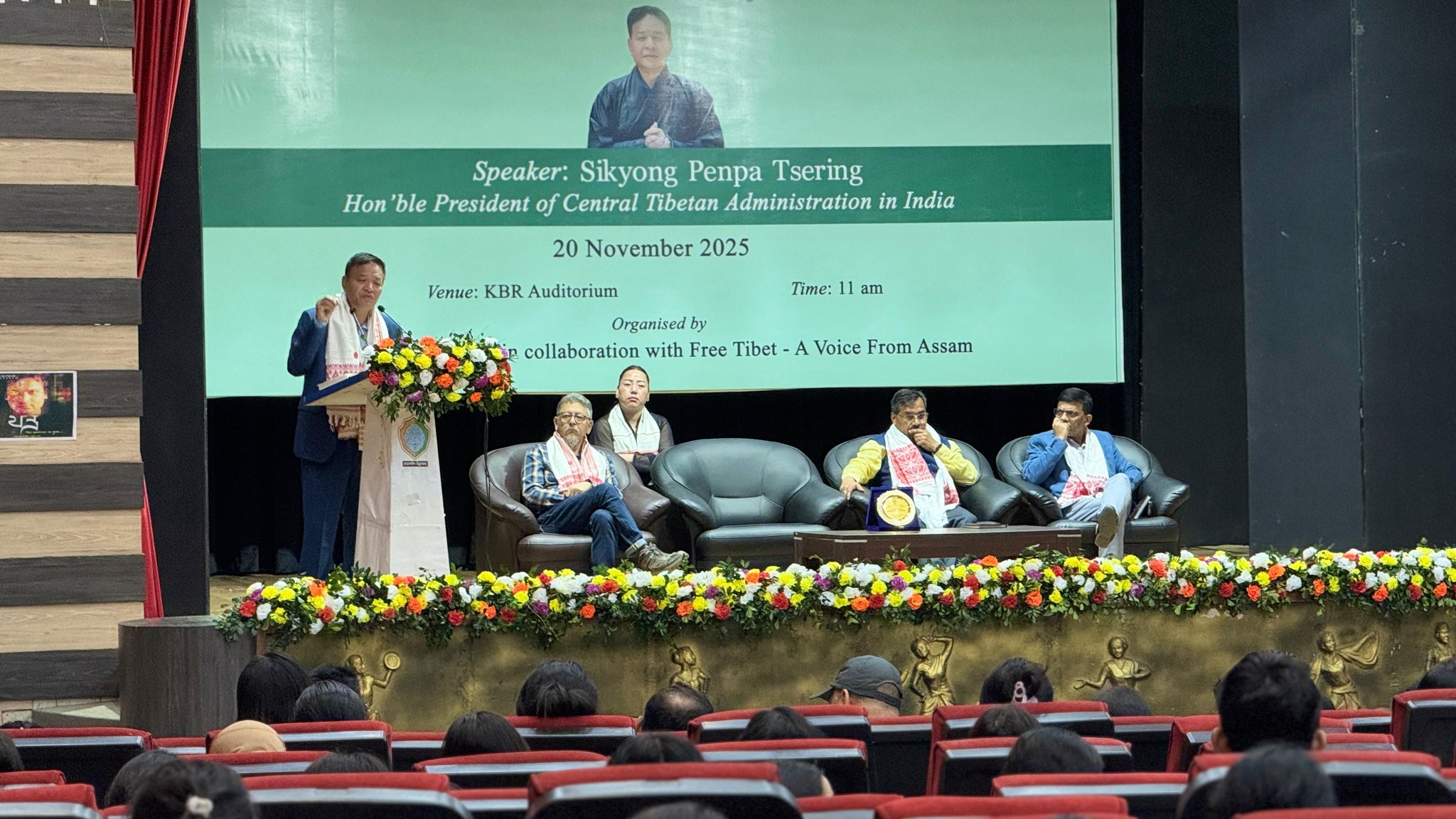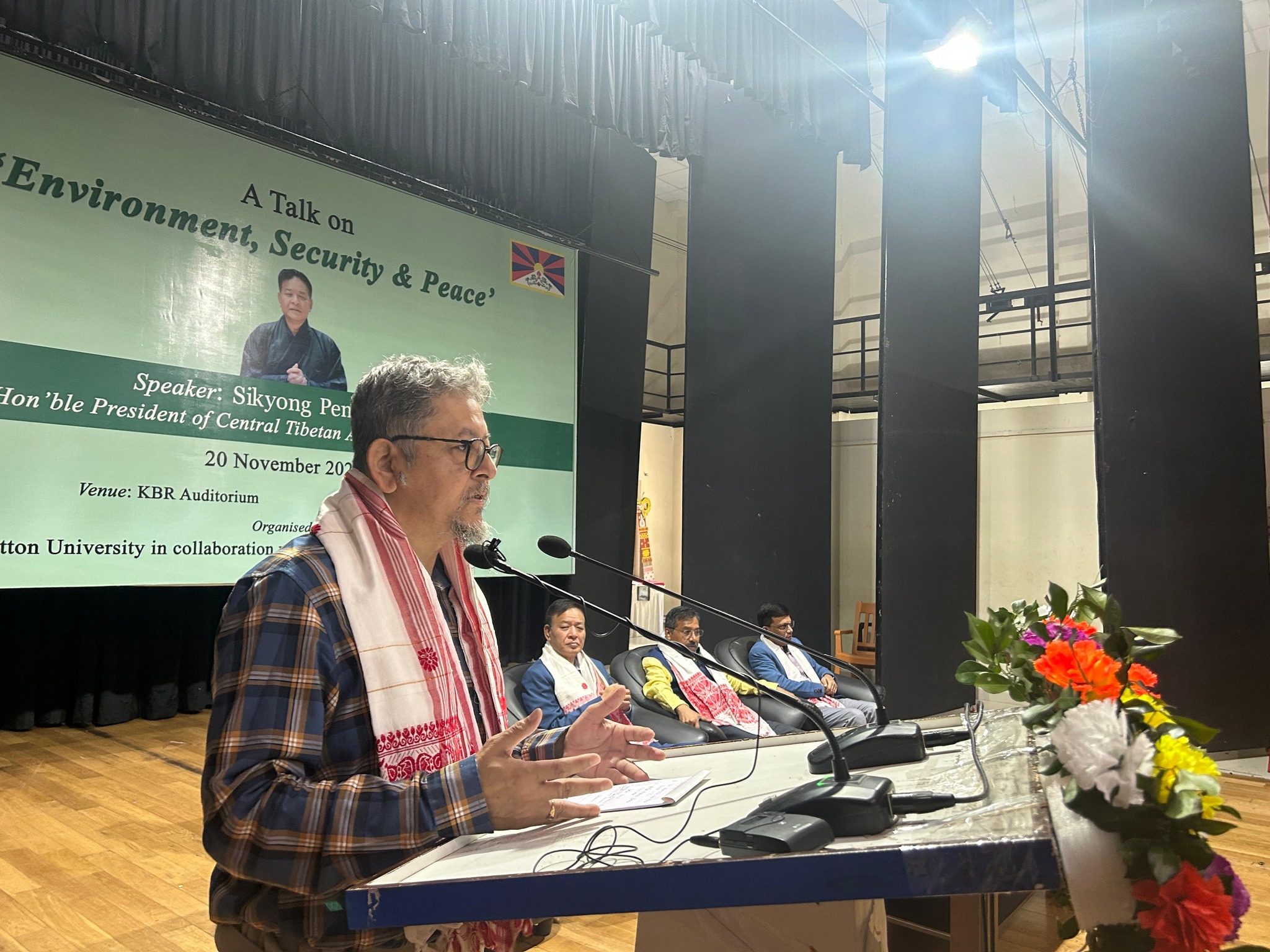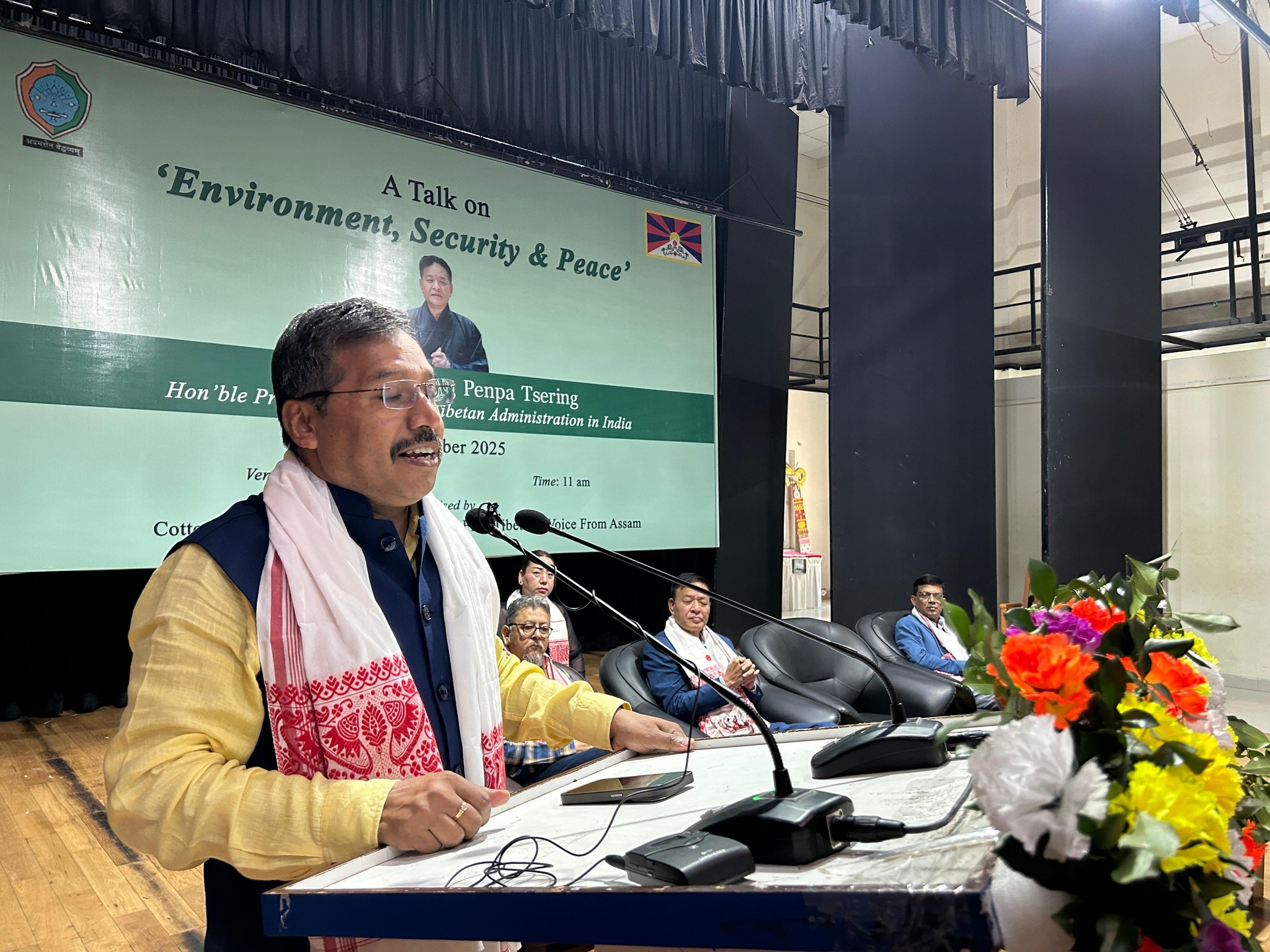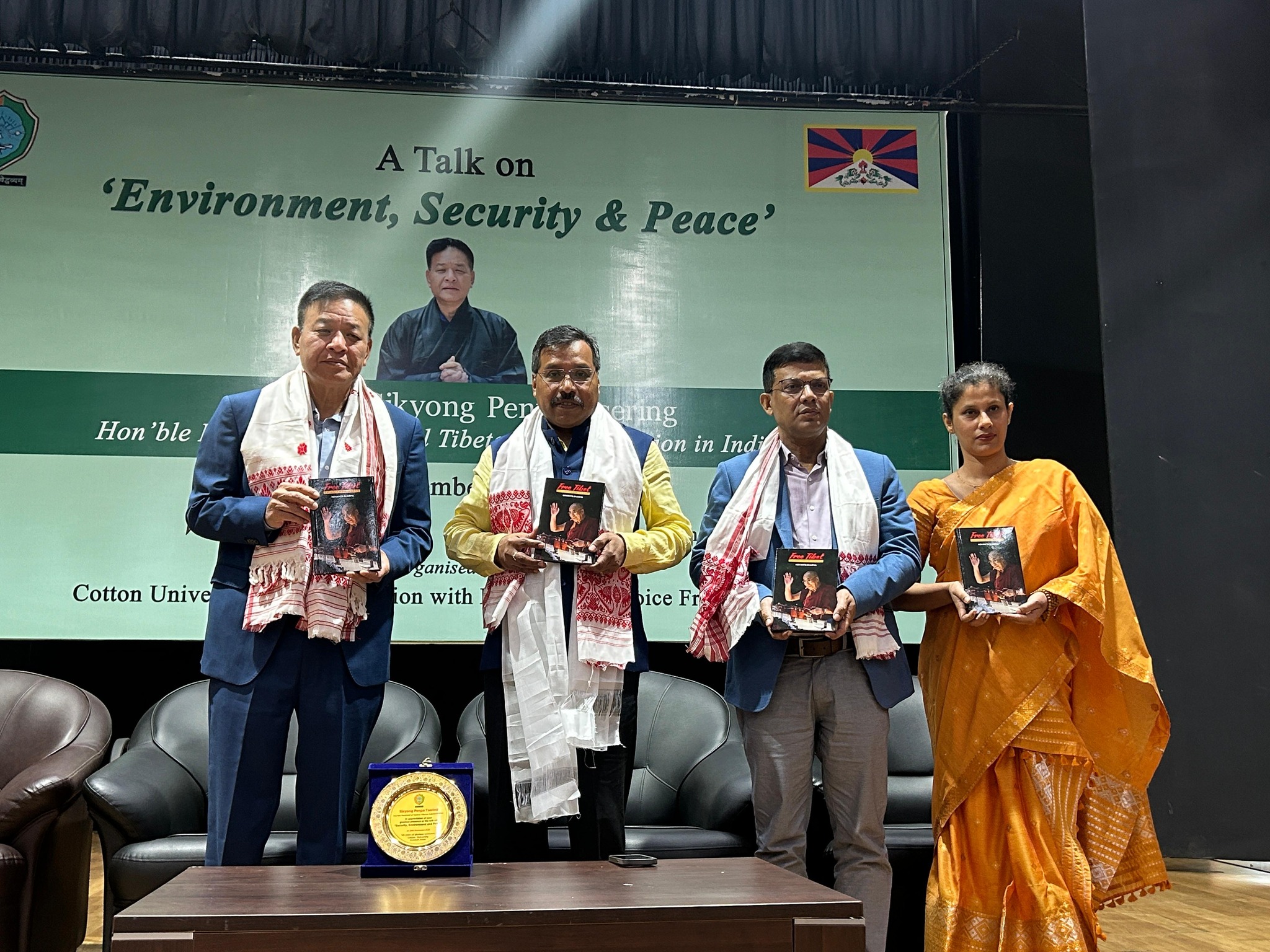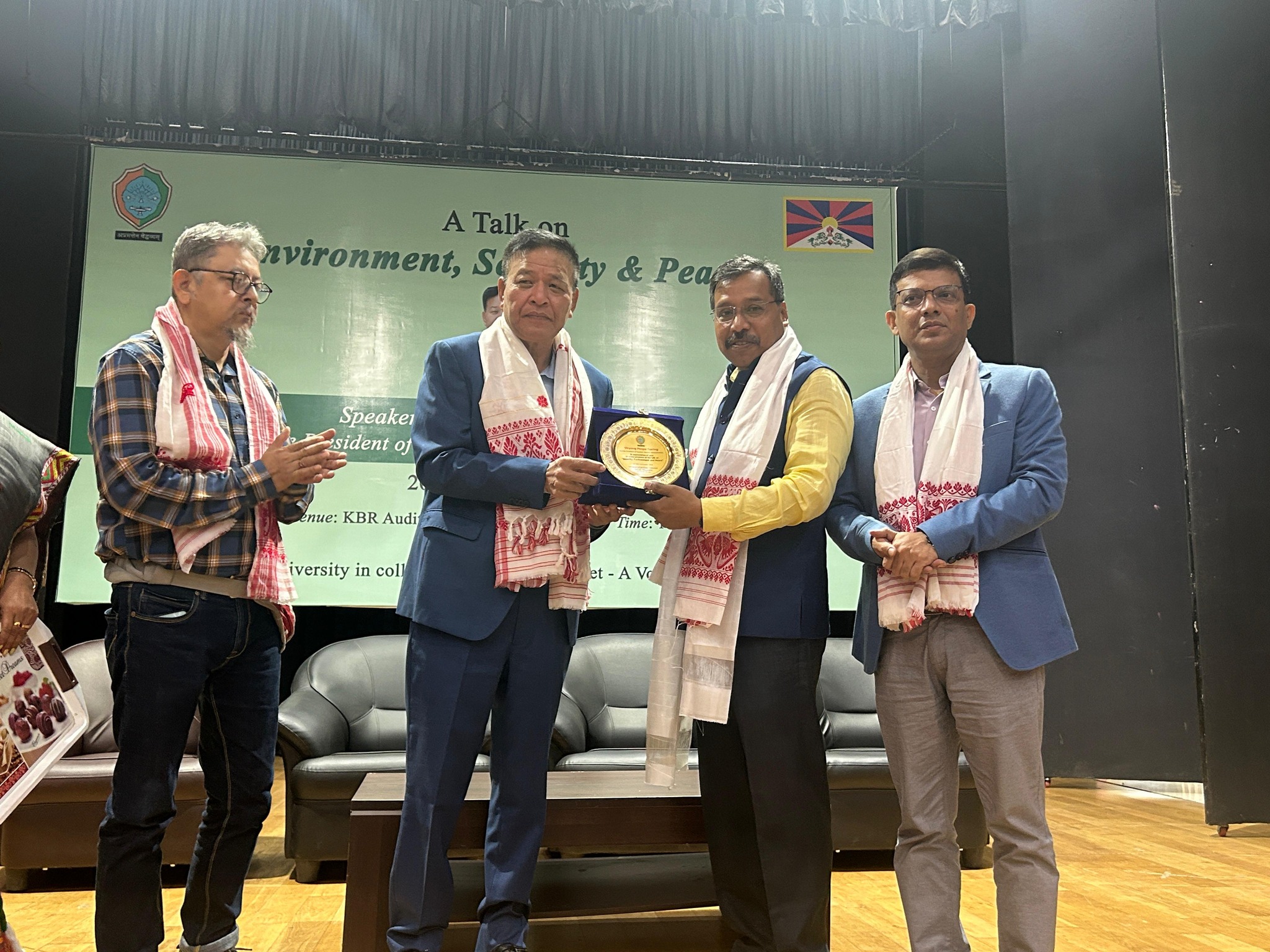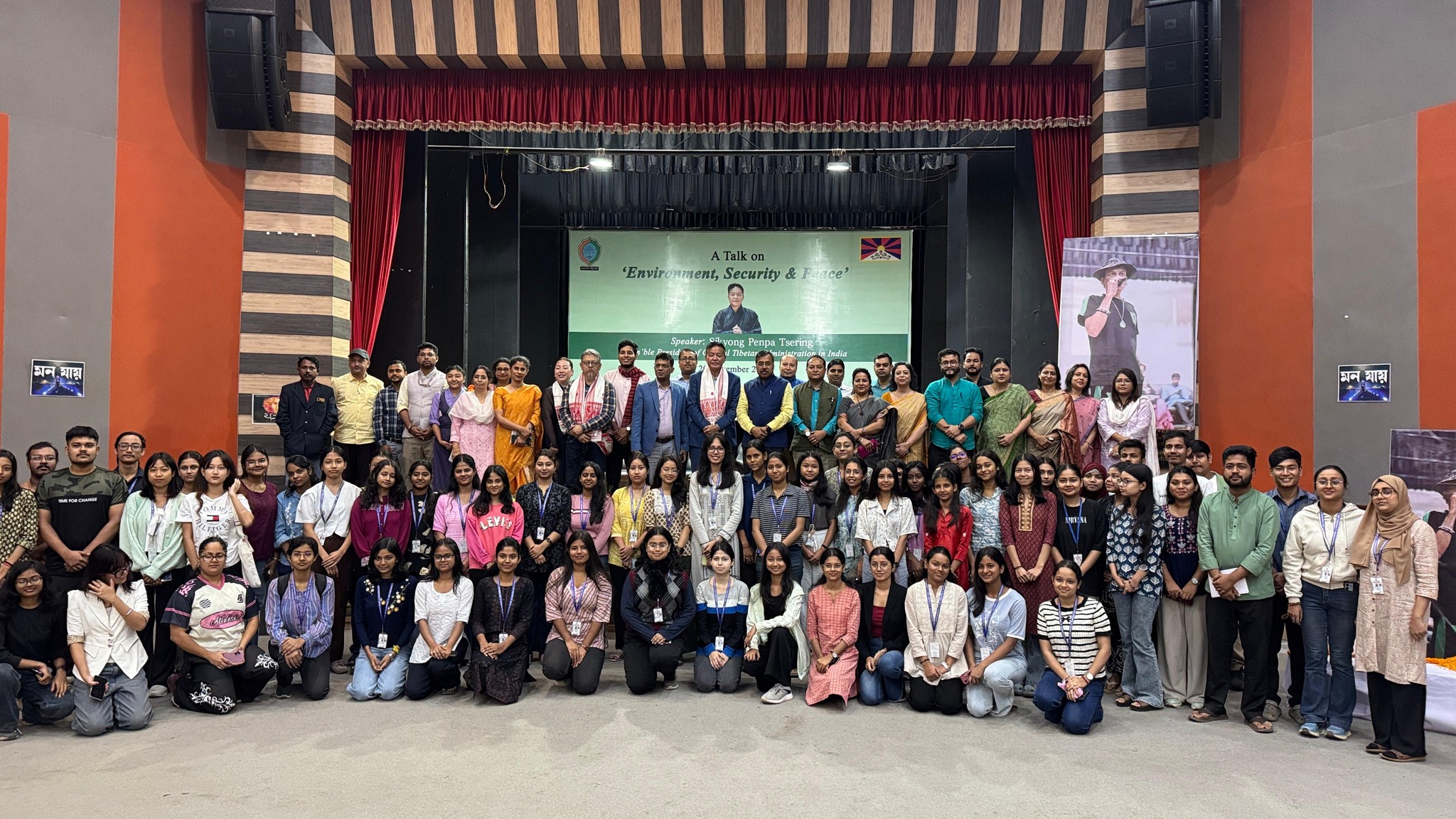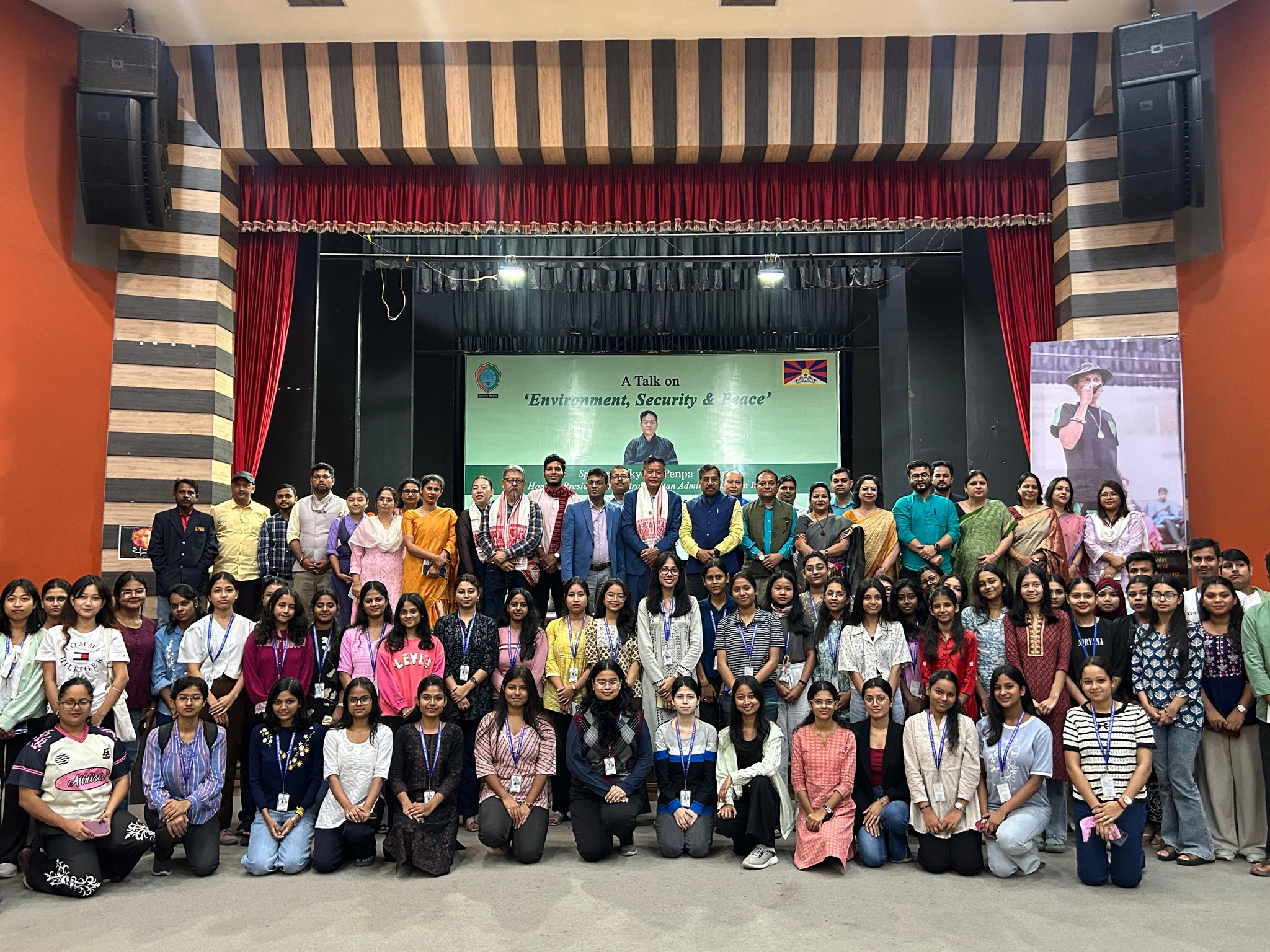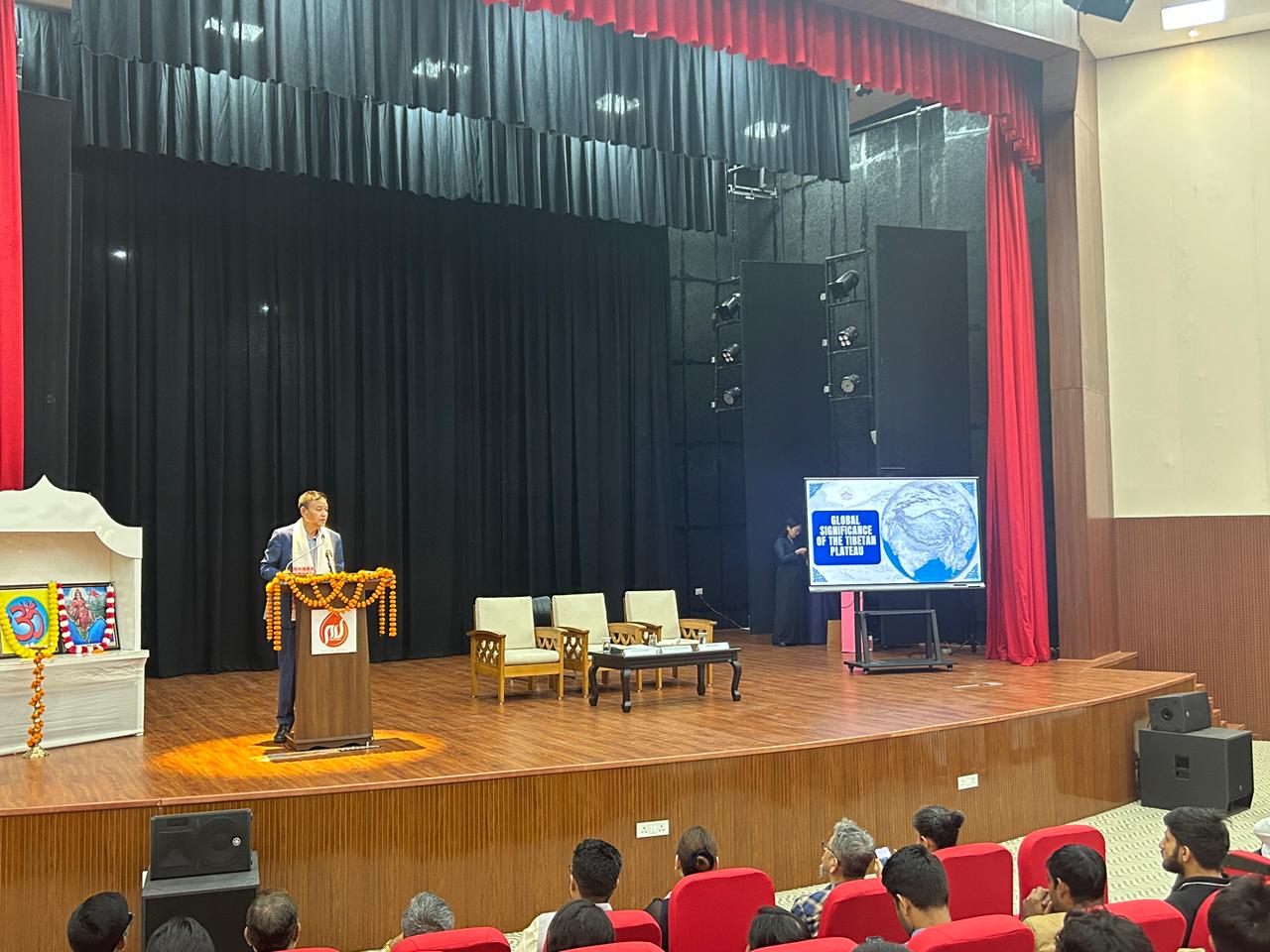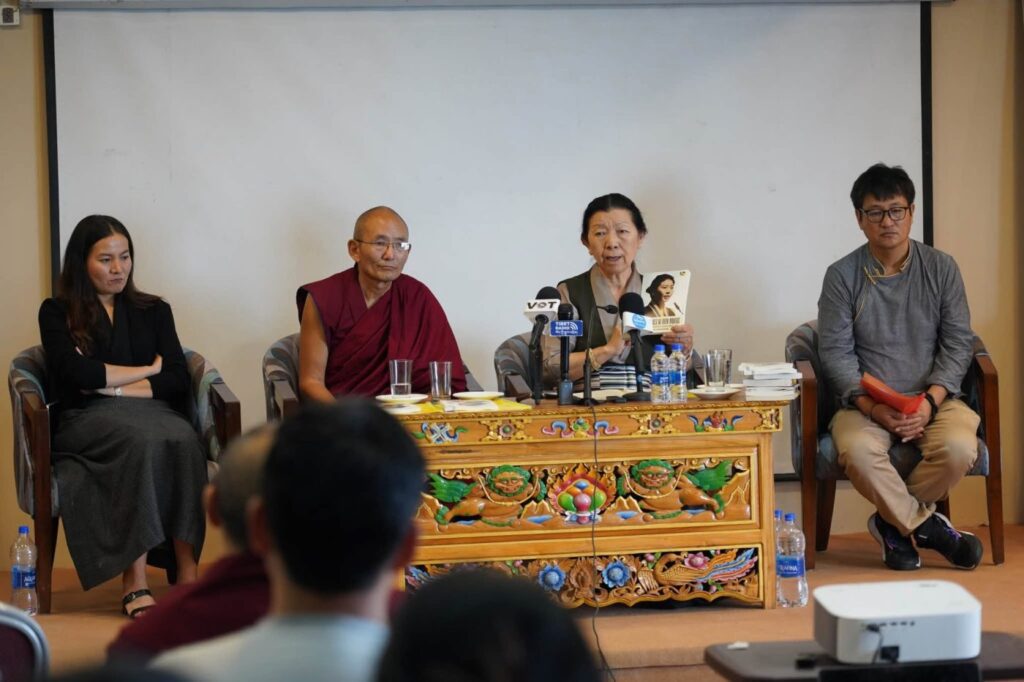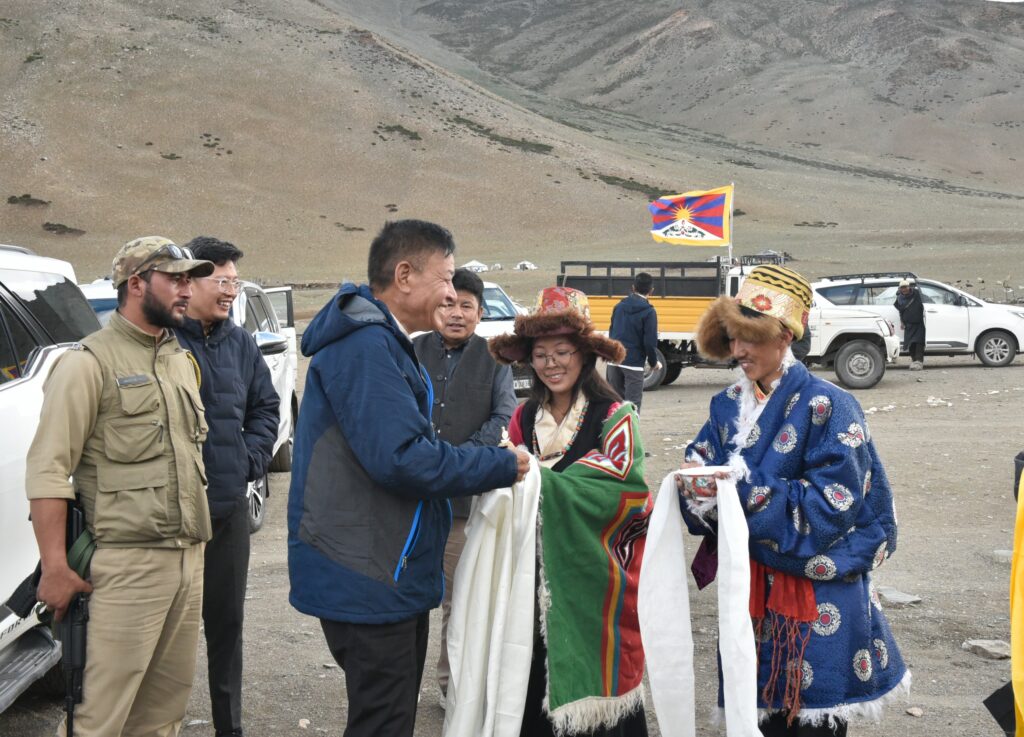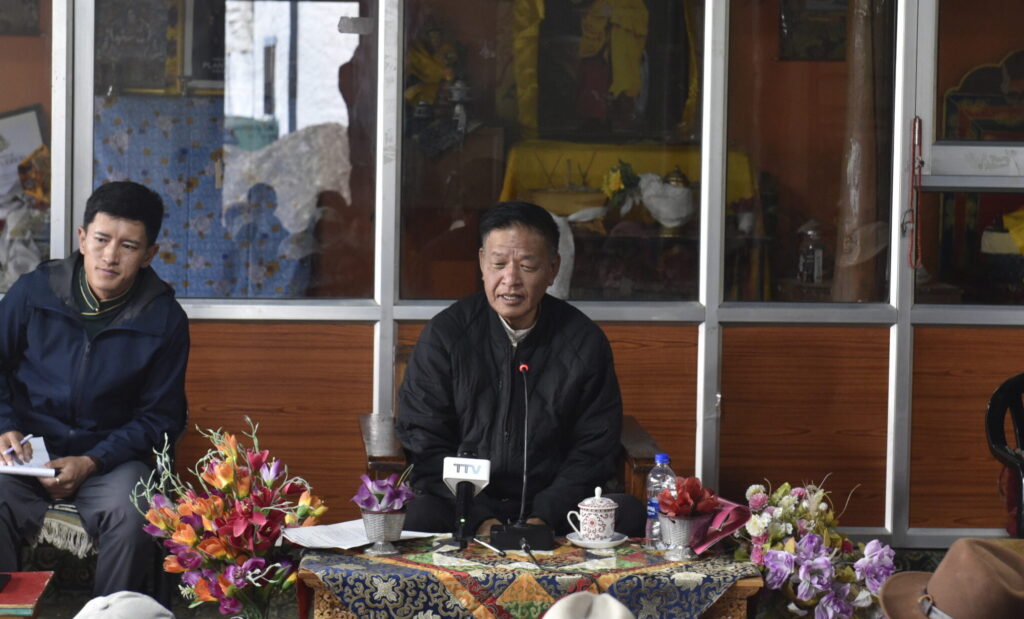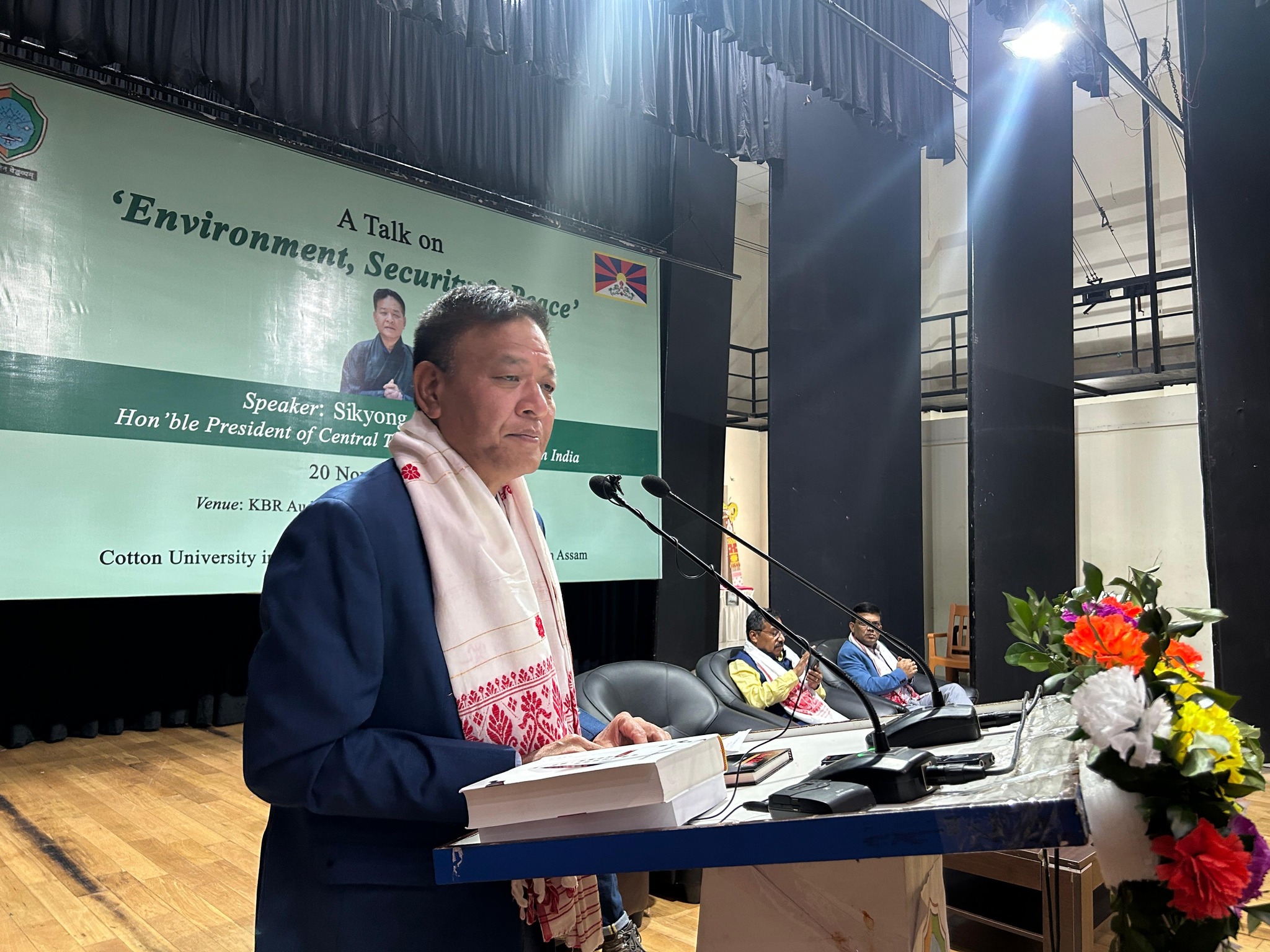
Guwahati, Assam: As part of his ongoing engagements in Assam, Sikyong Penpa Tsering visited the Guwahati-based Cotton University and Pragjyotishpur University on 20 November 2025 and addressed the students and faculty on the geopolitical and strategic significance of the Tibetan Plateau and the ongoing challenges facing Tibetans inside Tibet.
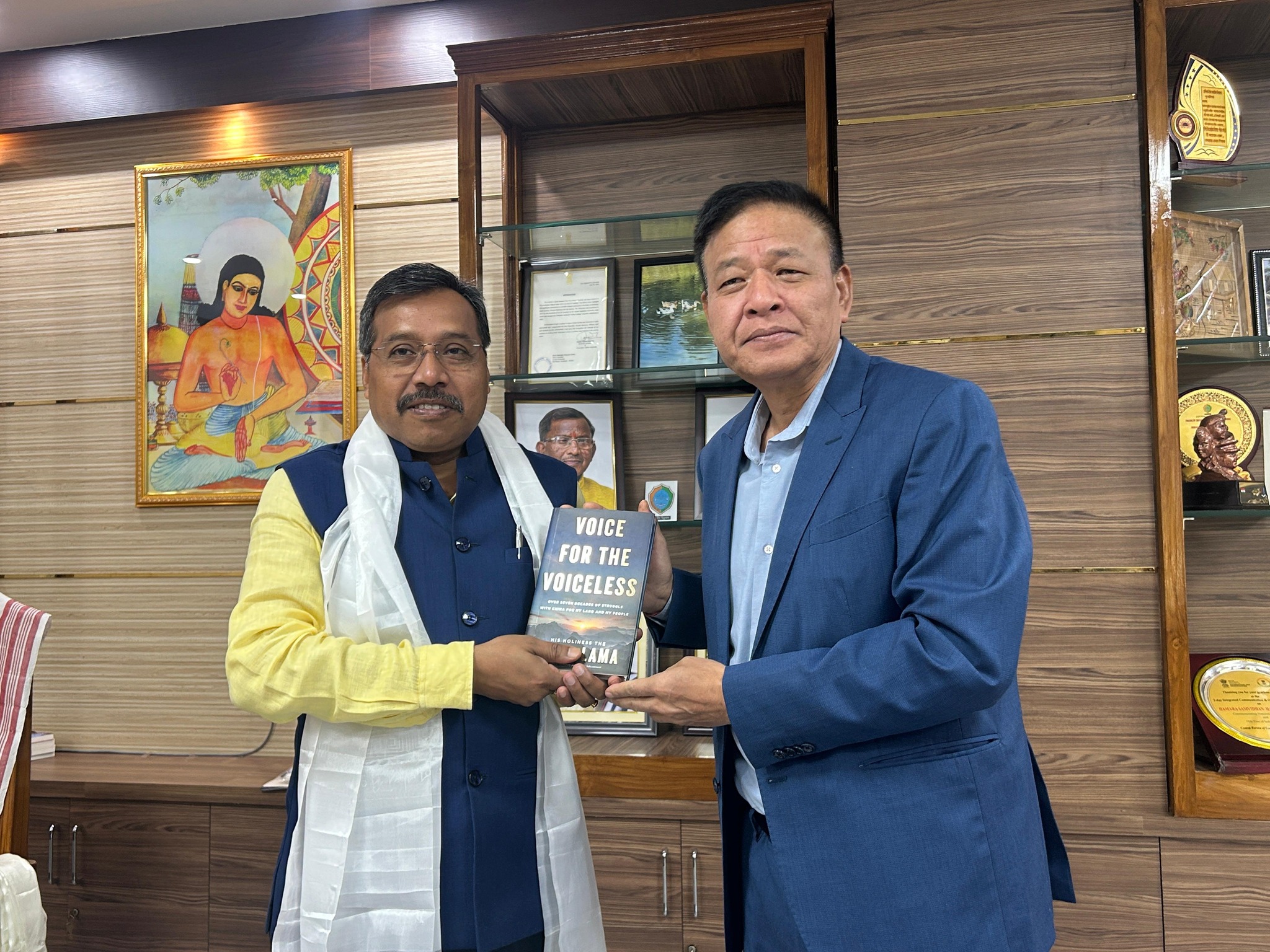
At Cotton University, Sikyong met with the Vice-Chancellor, Dr. Ramesh Ch. Deka, at the latter’s office before attending a gathering with the students and faculty.
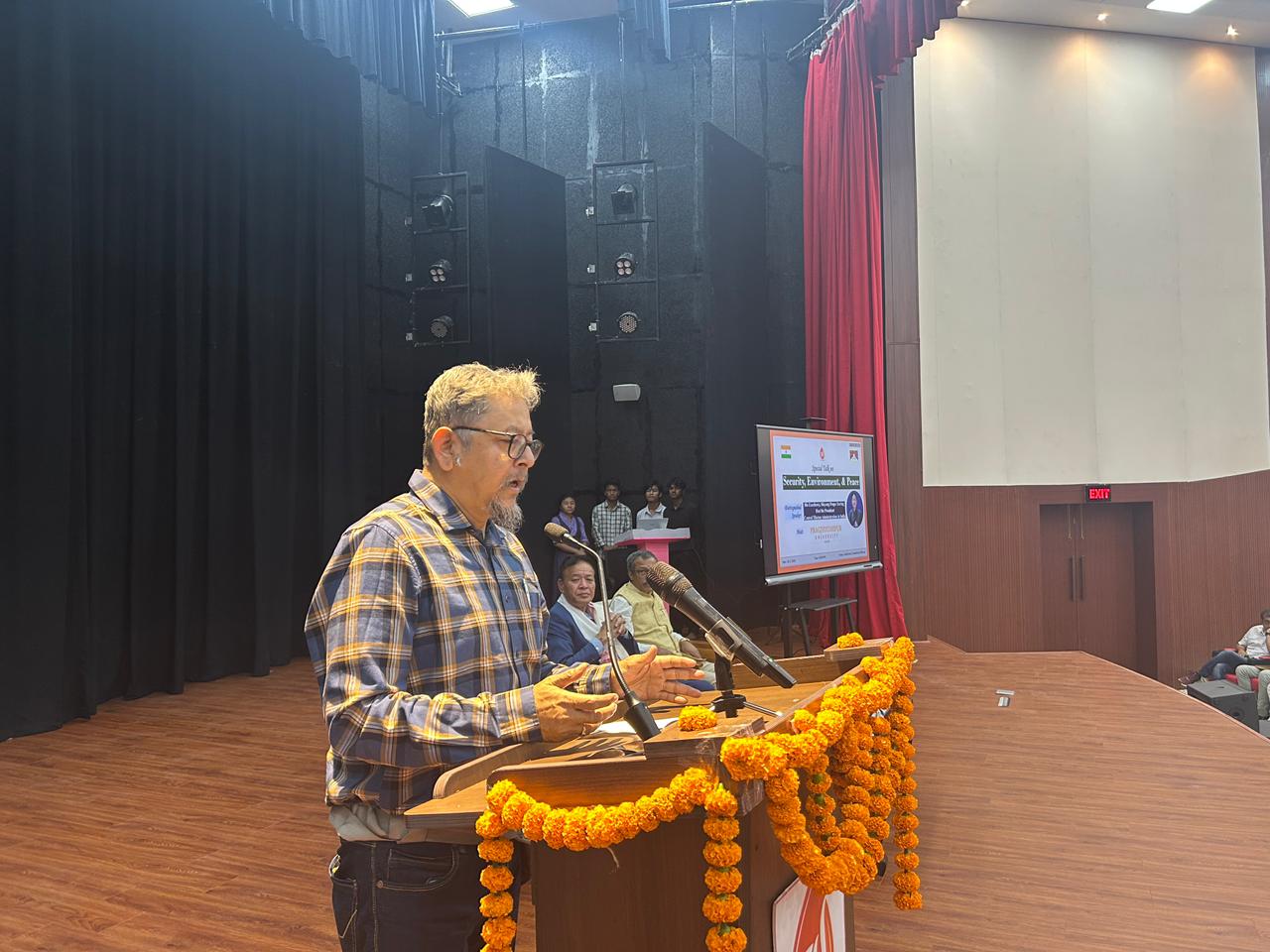
Following welcome remarks by Dr. Hiren Deka, the University’s Registrar, Shri Soumyadeep Datta, Convener of Free Tibet – A Voice from Assam, spoke about the ancient ties between Tibet and India and, in particular, the relations between Tibet and Assam in the past through trade and cultural exchanges. Vice-Chancellor Dr. Ramesh Ch. Deka, in his address, expressed his esteemed admiration for Tibetan astrology.
The event’s keynote address was delivered by Sikyong to an academic congregation of about 200 attendees.
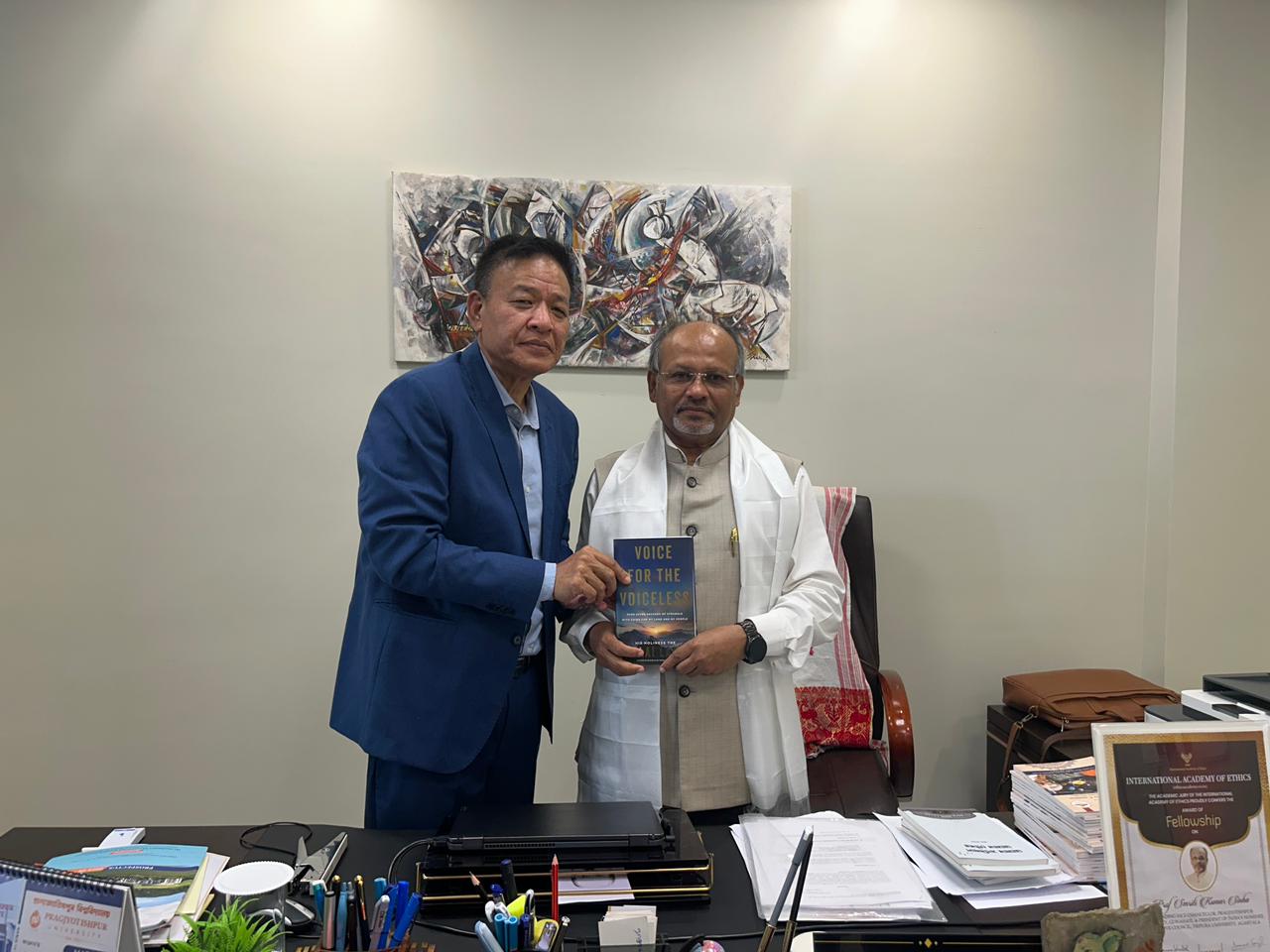
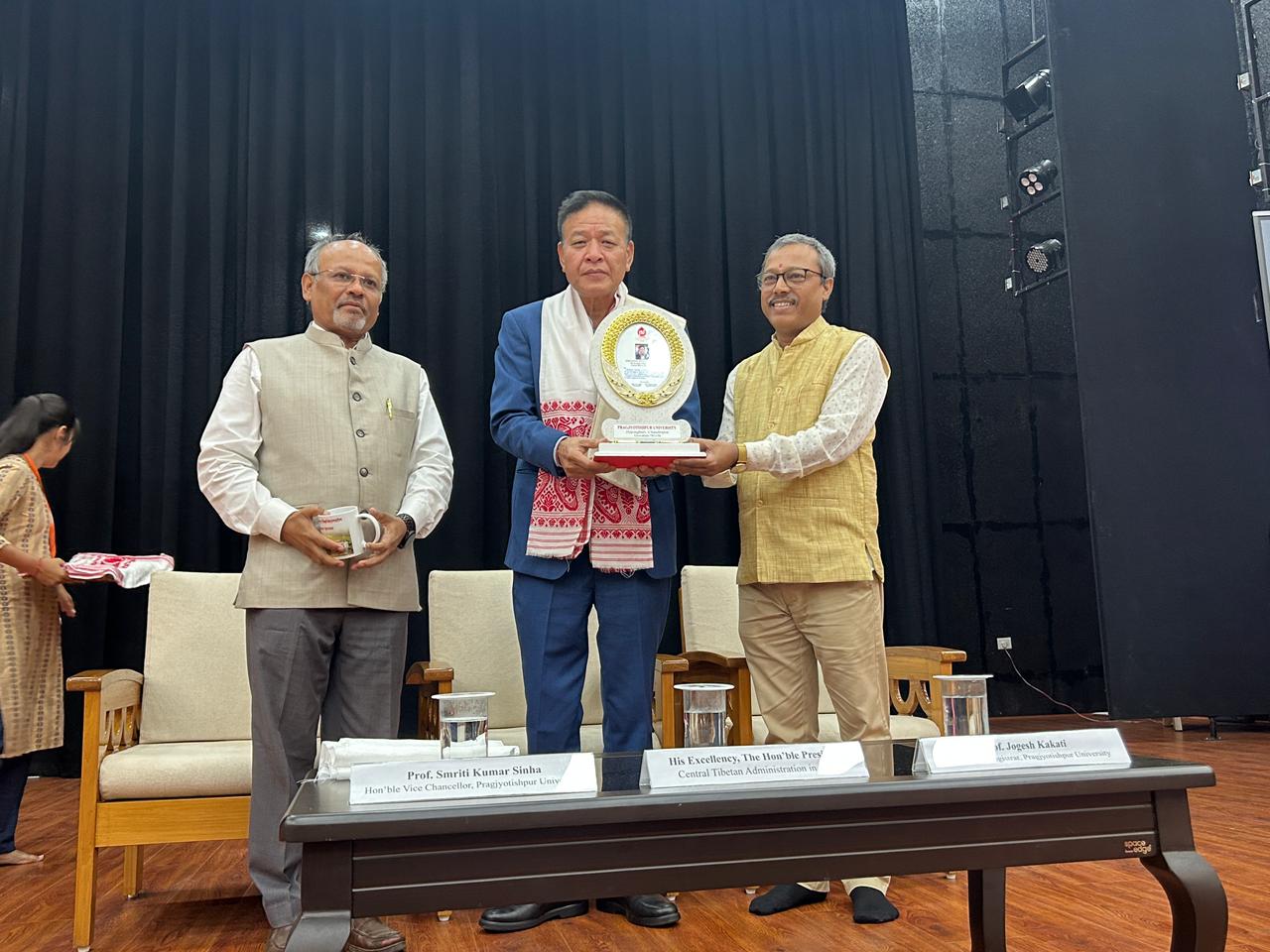
Later that afternoon, Sikyong visited Pragjyotishpur University to a warm welcome accorded by Prof. Smriti Kumar Sinha, the Vice-Chancellor of the University, and Registrar Jogesh Kakati.
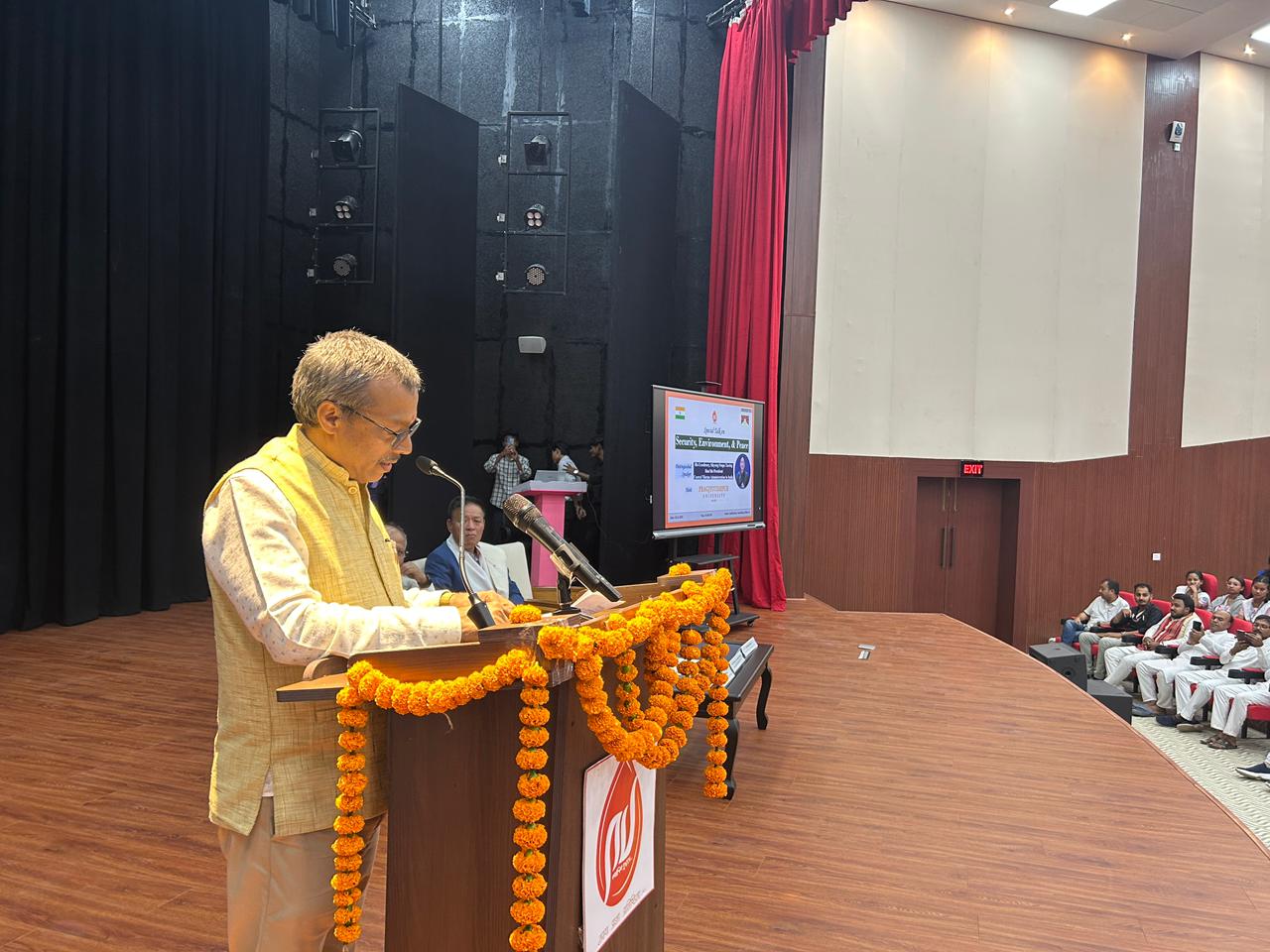
During the talk session with students and faculty, the Vice-Chancellor extended his welcome to Sikyong and spoke about Tibet–Assam relations in history as well as His Holiness the Dalai Lama’s first major stop in Tezpur after his journey into exile, setting the tone for Sikyong’s talk. Registrar Jogesh Kakati presented an introduction to the University and a brief bio of Sikyong Penpa Tsering.
In his addresses at the two universities, Sikyong delivered a comprehensive presentation on Tibetan history, culture, and the current situation in Tibet. He explained that the Tibetan script was developed from the Indian Gupta script and emphasised Tibet’s long-standing role in preserving the Buddhist teachings of India’s ancient Nalanda tradition. These cultural traditions, he noted, continue to serve as an important repository of ancient Indian knowledge.
Sikyong also explained that Tibet is the source of major rivers that sustain roughly two billion people across Asia. In this context, he expressed concern about large-scale dam construction projects in Tibet, warning that these developments may have long-term impacts on downstream countries.
Reviewing key historical events, the Sikyong stated that following the Chinese government’s occupation of Tibet, His Holiness the Dalai Lama assumed spiritual and temporal leadership on 17 November 1950 under emergency circumstances—an anniversary that marks 75 years this year. He discussed the Seventeen-Point Agreement, His Holiness the Dalai Lama’s efforts to negotiate peacefully with the Chinese government, and the eventual flight of His Holiness and tens of thousands of Tibetans into exile in India. Sikyong then briefly described the formation of the Tibetan exile administration, the development of Tibetan democratic institutions under the guidance of His Holiness, and the establishment of Tibetan settlements. He expressed gratitude to the Government and people of India for their long-standing support, noting that it has been vital to the Tibetan community’s survival.
Sikyong emphasised that the Tibetan struggle is grounded in non-violence and peaceful solutions. He also noted the self-immolations carried out by Tibetans as acts they view as protests against Chinese policies affecting Tibetan religion, culture, and identity.
Discussing current conditions inside Tibet, Sikyong stated that Tibetan children are increasingly placed in government-run boarding schools where the primary language of instruction is Chinese, which he stressed threatens the preservation of Tibetan language and culture. He added that Tibetan Buddhist institutions face growing pressure under policies aimed at sinicization, and that the Chinese government’s illegitimate attempts to interfere in the process of identifying His Holiness the 14th Dalai Lama’s reincarnation are widely viewed as politically motivated.
Sikyong further added that the PRC’s broader political and economic influence globally, noting how the Chinese government’s trade ties and expanding international reach shape geopolitical dynamics.
Following the presentations, Sikyong answered questions from attending students and staff.
During the visits, Sikyong was accompanied by Shri Soumyadeep Datta, Smt. Novanita Sharma, Guwahati Coordinator of Free Tibet: A Voice from Assam, and Tashi Dikyi, Coordinator of the India-Tibet Coordination Office.