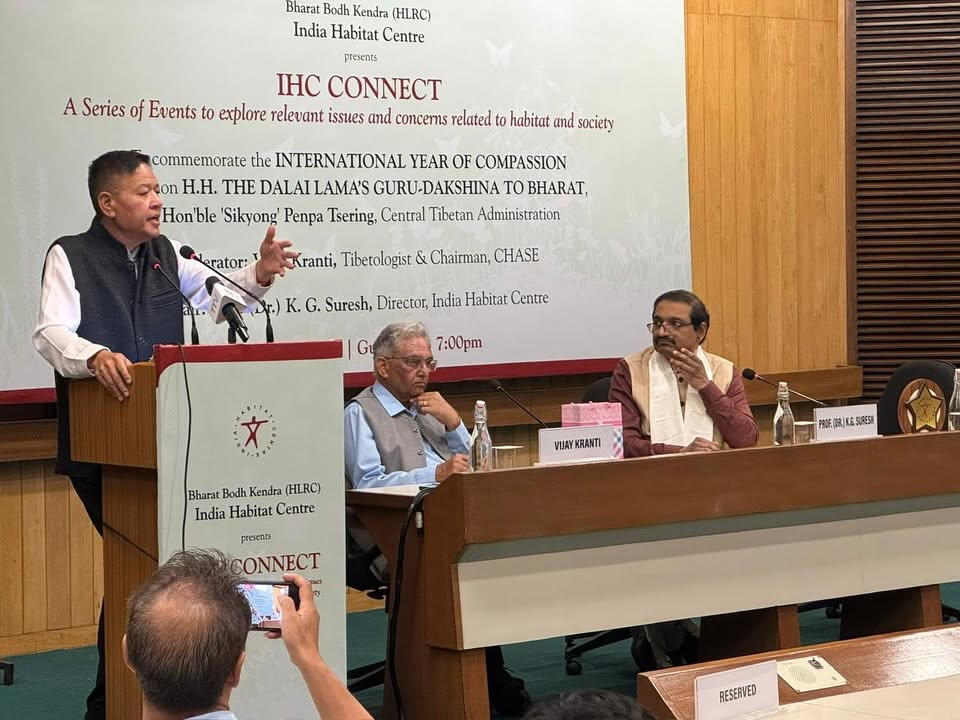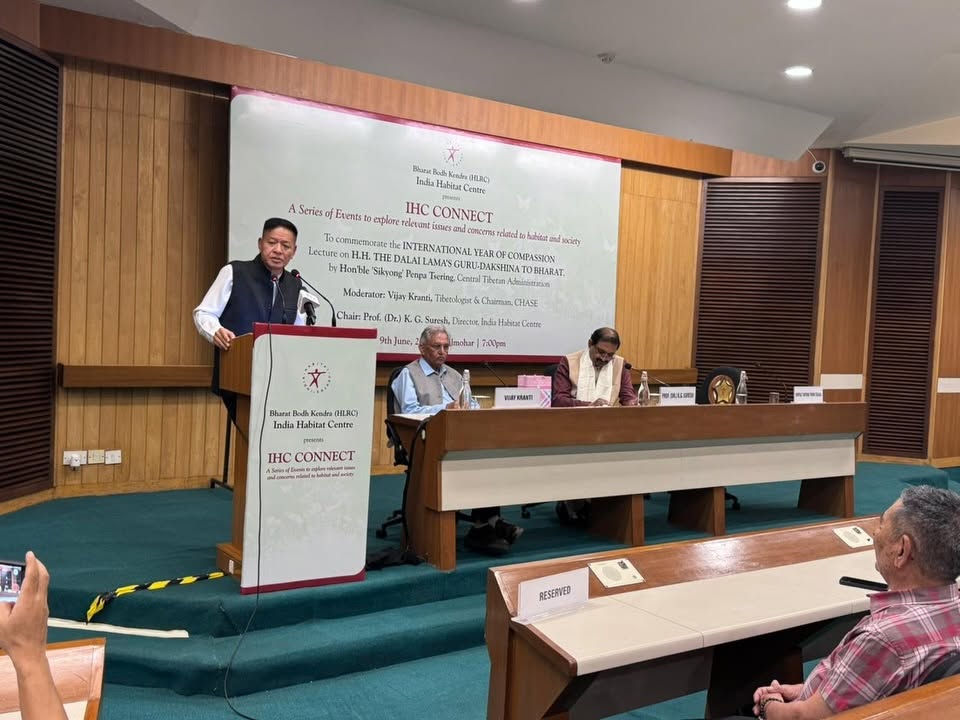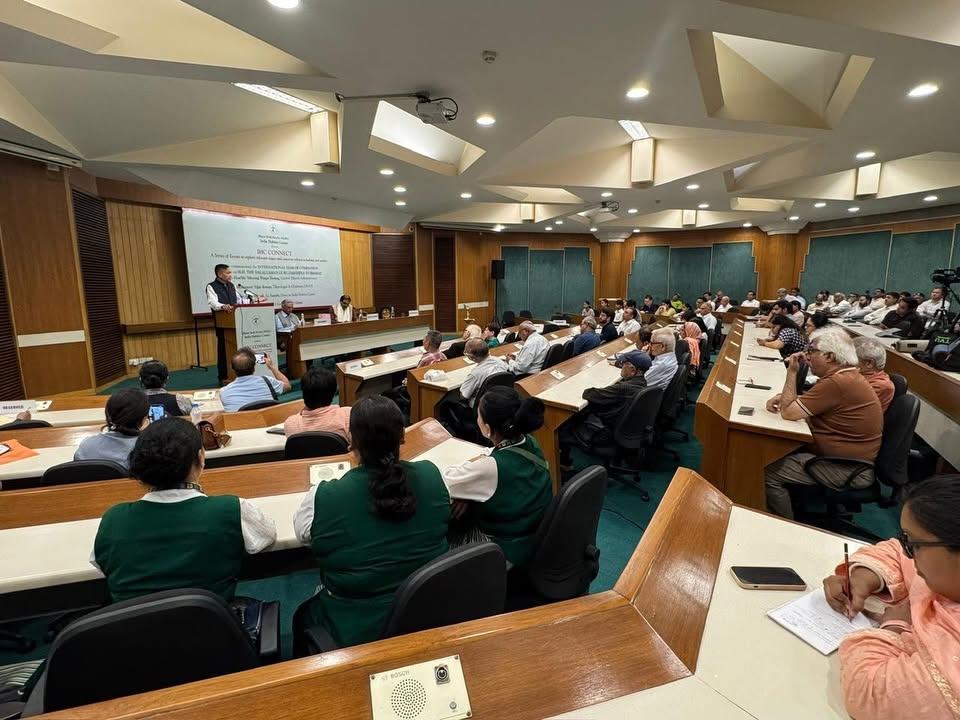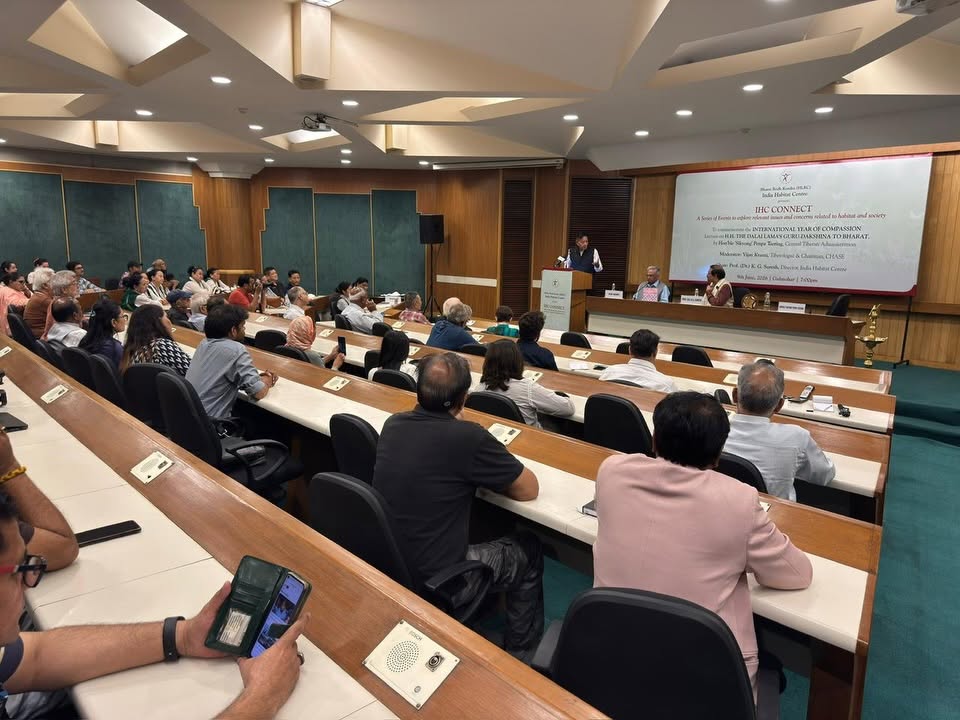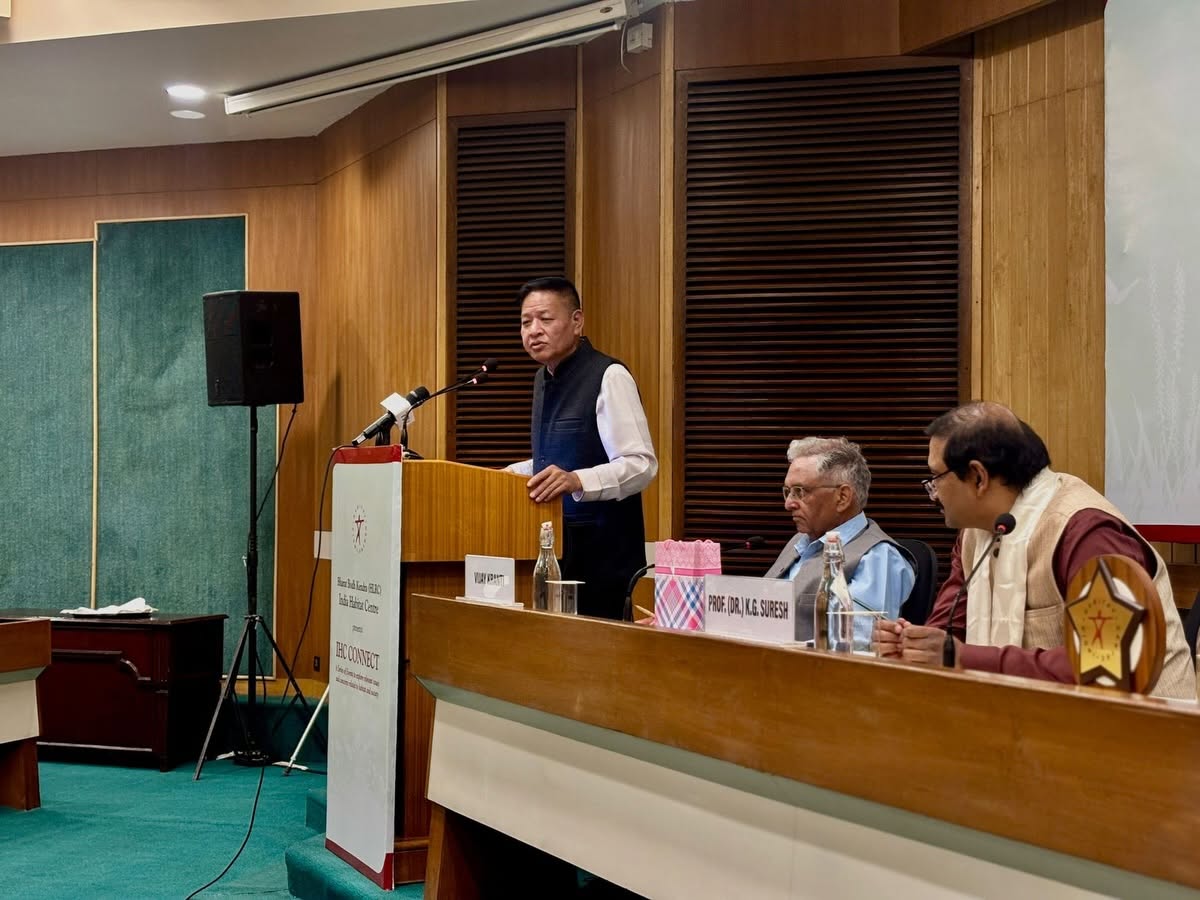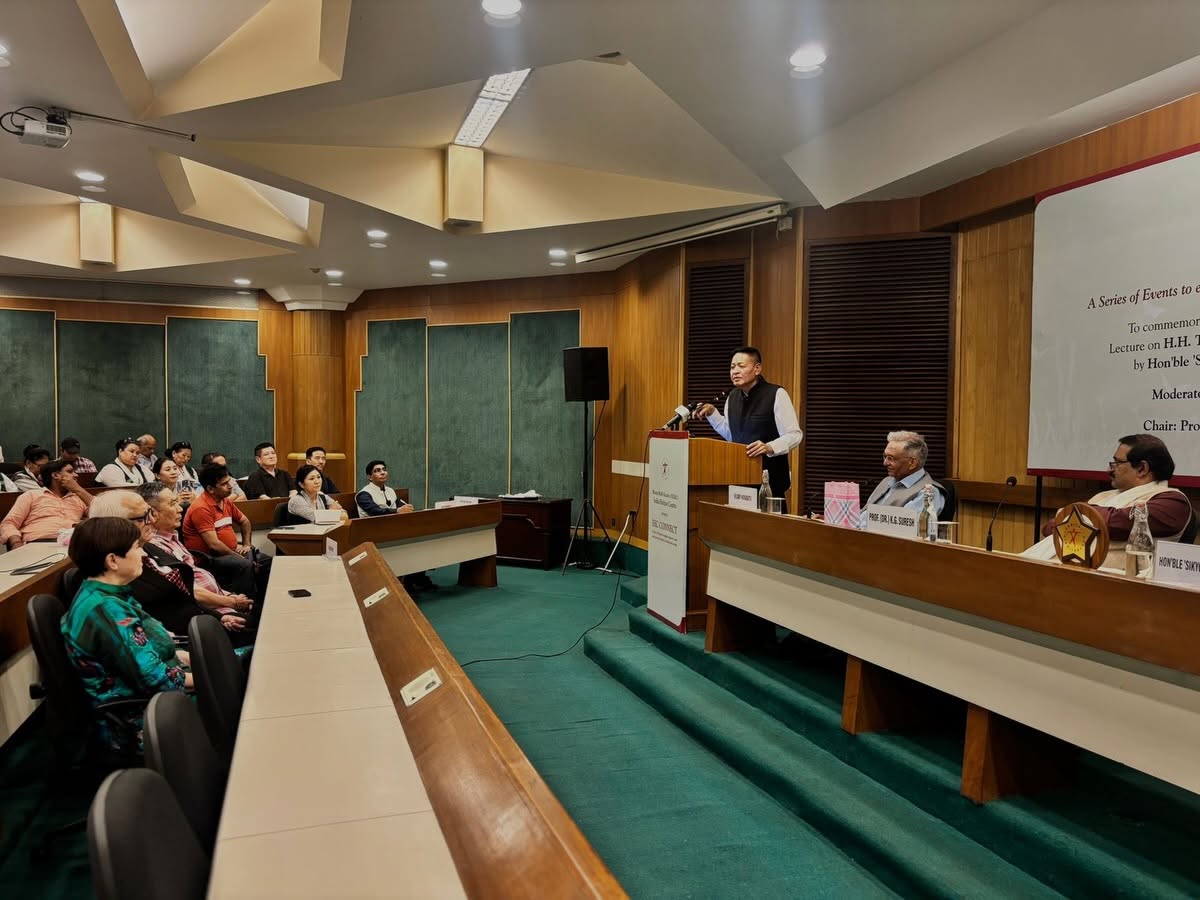

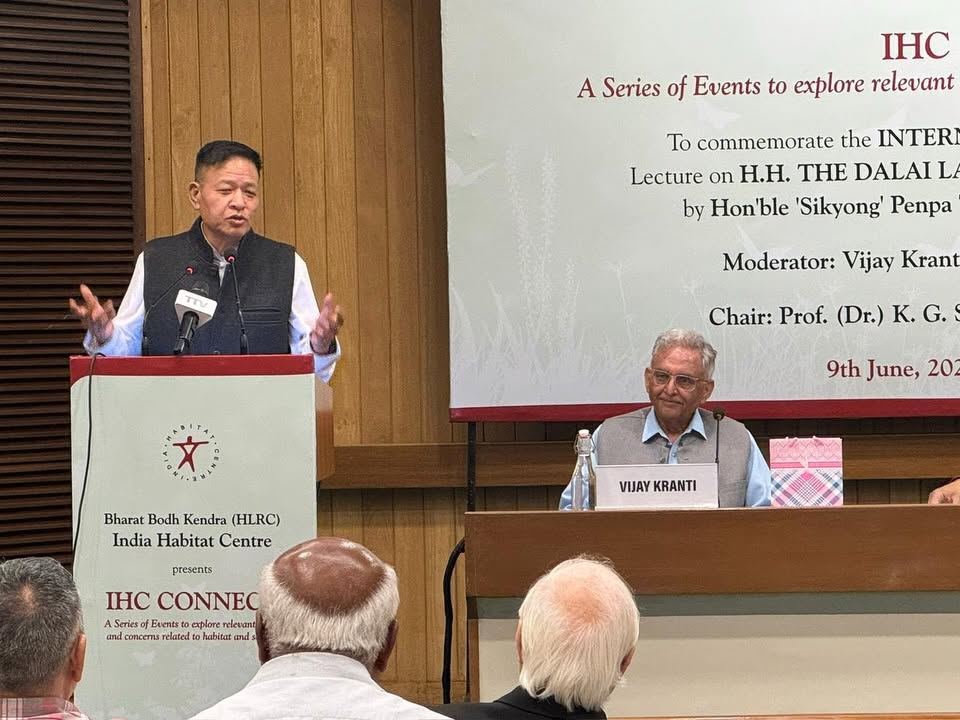
New Delhi: Commemorating the “International Year of Compassion,” Sikyong Penpa Tsering of the Central Tibetan Administration participated in a discussion on “His Holiness the Dalai Lama’s Guru Dakshina to Bharat” at the India Habitat Centre in New Delhi on 9 June 2026. The session, part of a lecture series organised by the Habitat Library and Research Centre, was moderated by Vijay Kranti, noted Tibetologist and Chairman of the Centre for Himalayan Asia Studies and Engagement (CHASE), and chaired by Prof. Dr. K.G. Suresh, Director of the India Habitat Centre.
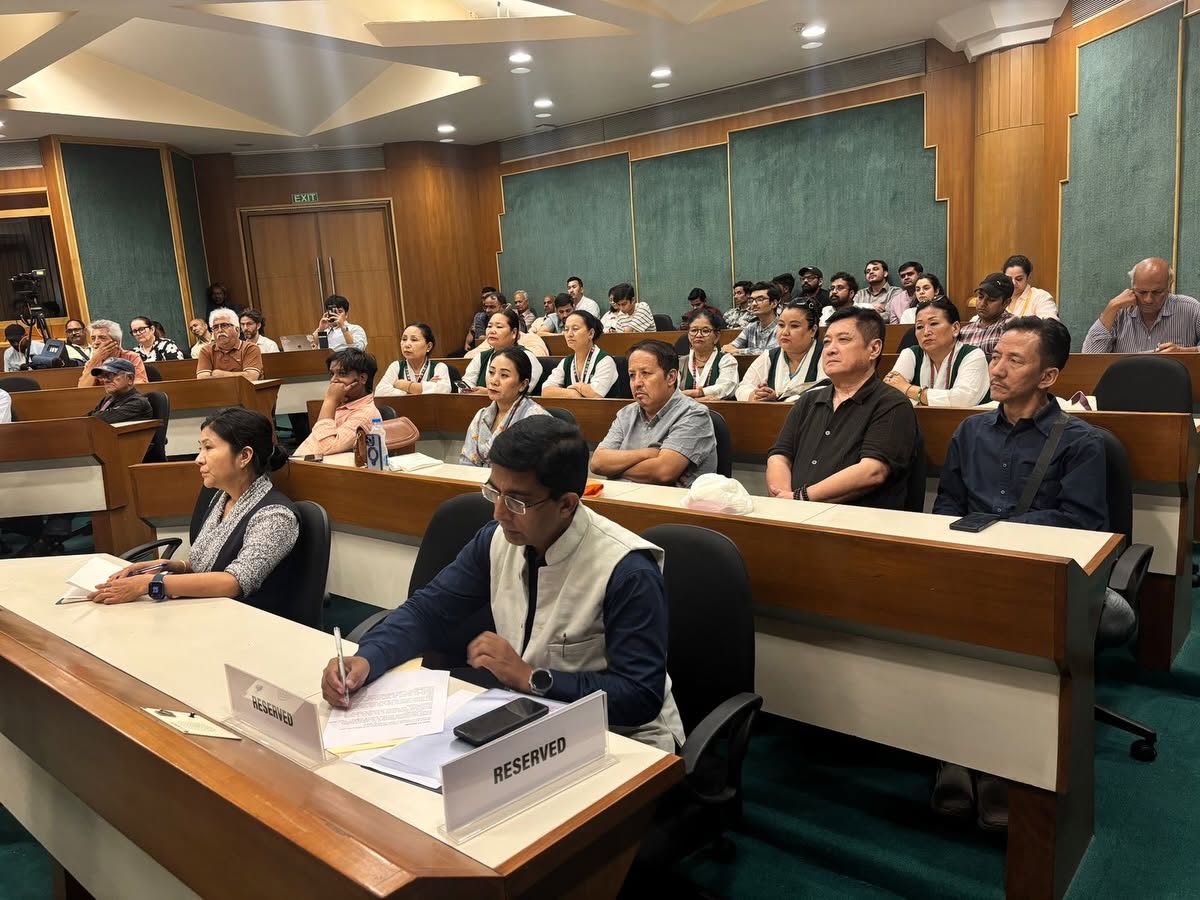
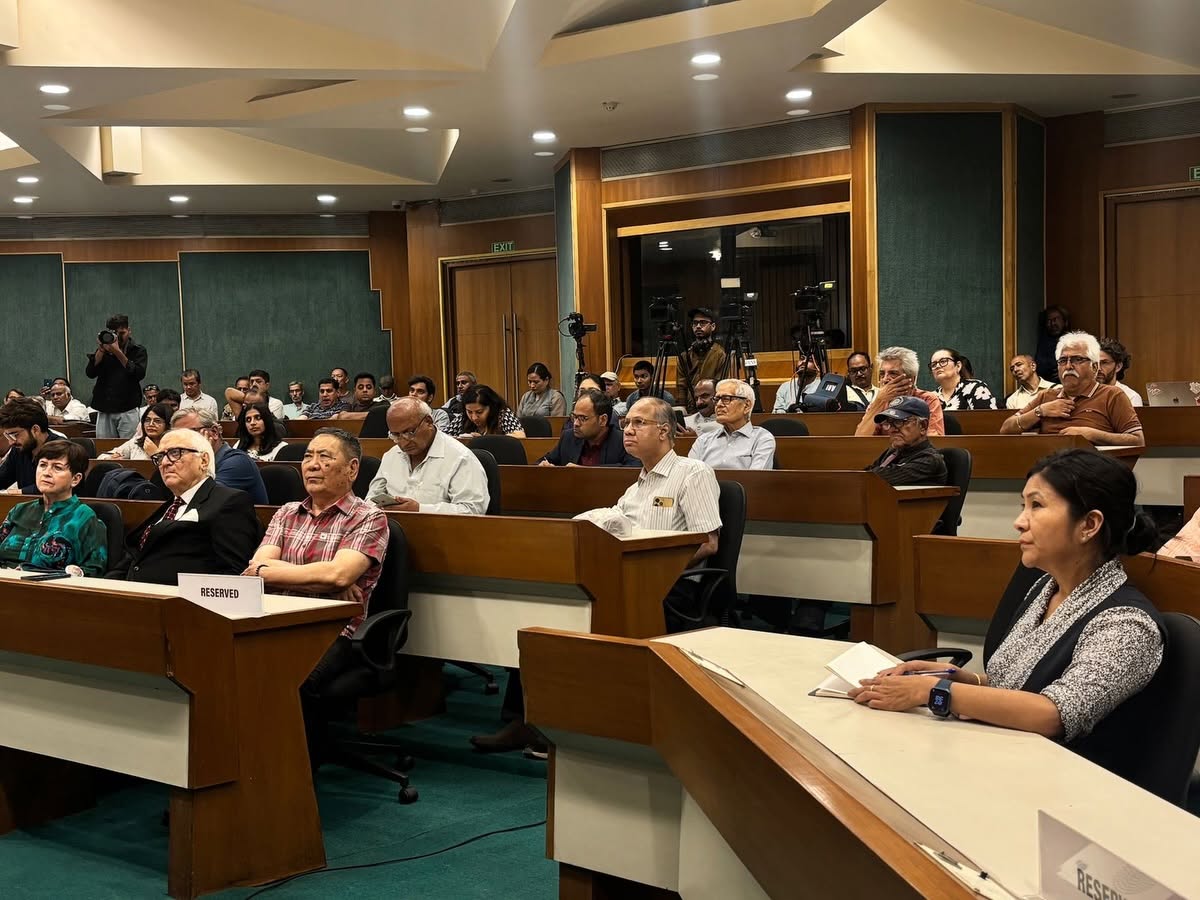
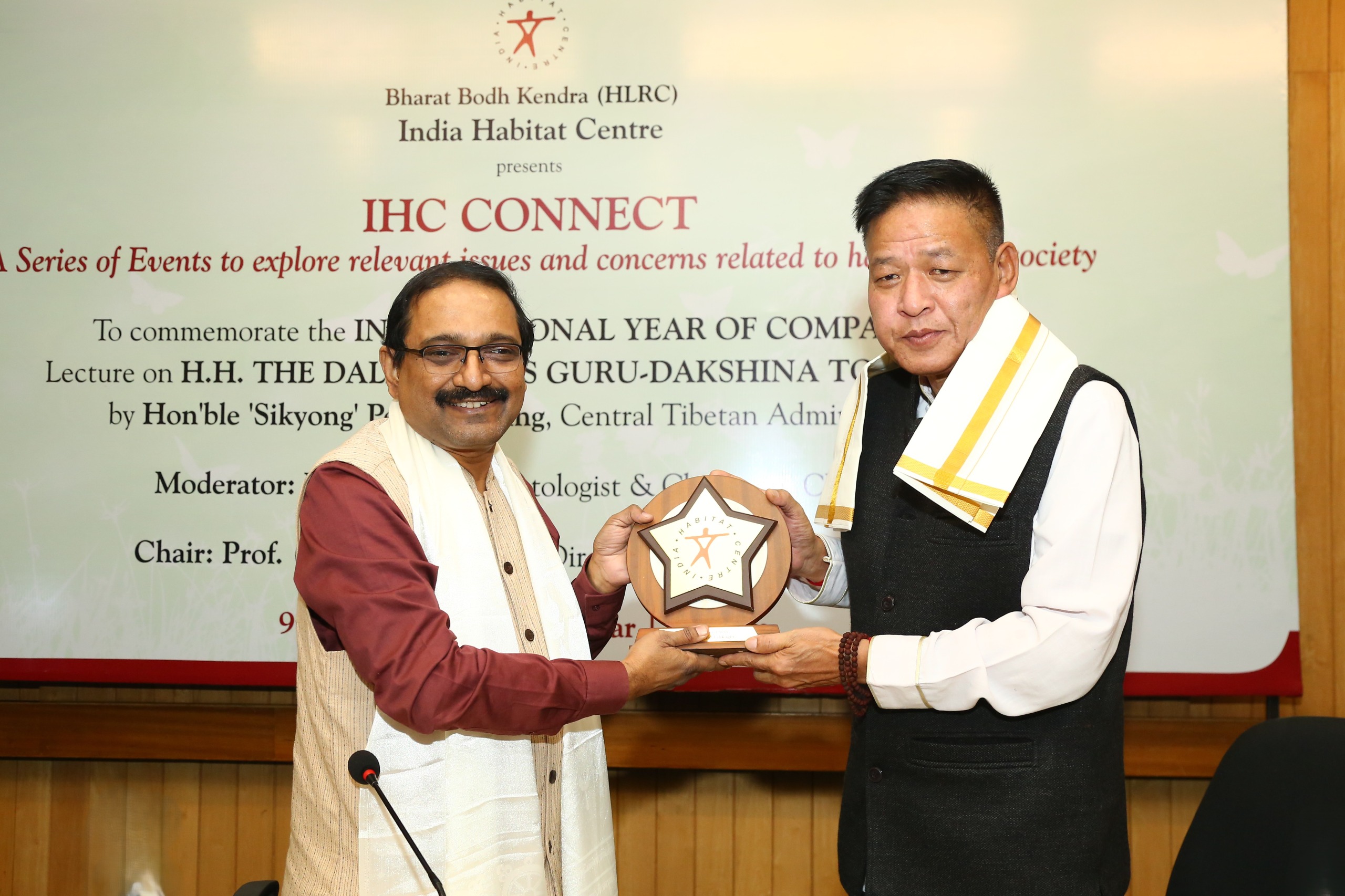
The lecture drew an enthusiastic audience of more than 120 participants from diverse backgrounds who gathered to hear the Sikyong speak on the enduring contributions of His Holiness the Dalai Lama to India and the world. Among those in attendance were Jigme Jugney, Representative of the Bureau of His Holiness the Dalai Lama, Secretary Tashi Dickey, and Dr. Eliška Žigova, the Ambassador of the Czech Republic to India. The programme commenced with the ceremonial lighting of a diya, followed by the presentation of a memento to the chief guest, Sikyong Penpa Tsering, by Prof. Dr. K.G. Suresh.
In his introductory remarks, Prof. Dr. K.G. Suresh, Director of the India Habitat Centre, welcomed Sikyong Penpa Tsering and congratulated him on his second term of leadership under the guidance and vision of His Holiness the Dalai Lama. Recognising the Tibetan community in India as a peaceful community and noted their contributions to India’s economy while successfully preserving their distinct cultural identity. Referring to the Centre’s observance of the International Year of Compassion, he said, “We don’t look at compassion just as a spiritual value but as a fundamental principle of building harmonious society and sustainable habitats.” Reflecting on the theme of the lecture, he added, “His Holiness has always looked at India as a guru, and we celebrate Guru Purnima, and we give our guru dakshina (token of gratitude) to our guru,” while noting that many Indians remain unaware of the significant contributions Tibetans have made to India despite their decades-long presence in the country.
Introducing the lecture, Vijay Kranti reflected on his long association with Tibet, recalling his first interview with His Holiness the Dalai Lama in 1972. He described the Tibetan community as “one of the most successful refugee communities in the world,” noting that despite its relatively small population dispersed across the globe, it has continued to make a significant impact while steadfastly advocating for its cause, freedom, and homeland. He attributed this resilience to the community’s unity, discipline, and the visionary leadership of His Holiness the Dalai Lama. Kranti said he particularly admired how Tibetans, after losing their homeland and enduring immense hardships in exile, rebuilt their community and revived their religious, cultural, and political institutions from scratch.
Speaking about the Central Tibetan Administration, Kranti remarked that “except rail, mail and jail,” CTA has all the other government pillars and departments and a successful electoral mechanism and procedures of the system with discipline. He cited the Tibetan democratic process as an example of the community’s institutional strength, noting that Sikyong Penpa Tsering had secured a decisive victory in the recent elections through a secret-ballot system, earning a strong mandate for his second term in office.
Addressing the theme of the lecture, Sikyong Penpa Tsering explained that guru dakshina signifies an expression of gratitude to one’s teacher for the knowledge and wisdom imparted. He said that any discussion of Tibetans’ contributions to India must first be understood through the lens of the deep historical and civilisational relationship between India and Tibet. Tracing the spread of Buddhism and the development of Tibetan script from Indian sources, he highlighted how Tibetan Buddhism emerged from ancient Indian wisdom, philosophy, and scholarship. He paid tribute to revered Indian masters including Śāntarakṣita, Atisha, Nagarjuna, and the other seventeen great Indian panditas whose teachings shaped Tibetan Buddhist traditions. Describing Tibet as a custodian of India’s ancient knowledge systems, he noted that Tibetans had preserved invaluable traditions relating to psychology, ethics, compassion, and Buddhist philosophy. “For Tibetans, we have preserved one part of ancient Indian wisdom. Today, if anyone wants to study Buddhism in its entirety, Tibetan is the only language in which all of it can be studied,” he said, adding that efforts are underway to digitise these ancient texts. “All these happen because of India.”
Reflecting on the Tibetan exile experience, Sikyong expressed profound gratitude to India and its leaders for providing refuge to Tibetans following their displacement from their homeland. “Without the help of the Indian government, we don’t exist,” he said, crediting Prime Minister Jawaharlal Nehru and the people of India for enabling Tibetans to preserve their religion, culture, and identity in exile. He observed that while Tibet’s loss of independence to Communist China was a historic tragedy, exile also created an opportunity for His Holiness the Dalai Lama to share the values of ahimsa, karuna, compassion, and nonviolence with the world. “In the form of gratitude, we can say that we brought Buddhism back to India since we came into exile,” he remarked.
Referring to His Holiness as a global messenger of ancient Indian wisdom, Sikyong noted that His Holiness the Dalai Lama often describes himself as “the son of India” and has spent most of his life in the country. Reaffirming the Tibetan movement’s commitment to the Middle Way Approach, he stated that Tibetans would continue their struggle until Tibetans inside Tibet are free, while pursuing a mutually beneficial negotiated solution that could bring a lasting resolution to the Tibetan conflict.
Sikyong also underscored Tibet’s strategic and environmental importance, noting that major rivers originating on the Tibetan Plateau sustain millions of people across Asia, including in India. He expressed concern over increasing surveillance, restrictions, and policies of assimilation imposed by the Chinese government in Tibet, while stressing that Tibet’s future remains closely linked to India’s security and regional stability. Reaffirming the Tibetan movement’s resolve, he said Tibetans would continue their efforts with the support and goodwill of India, which he described as having played a “parental role” in sheltering and nurturing Tibetans in exile for more than six decades.
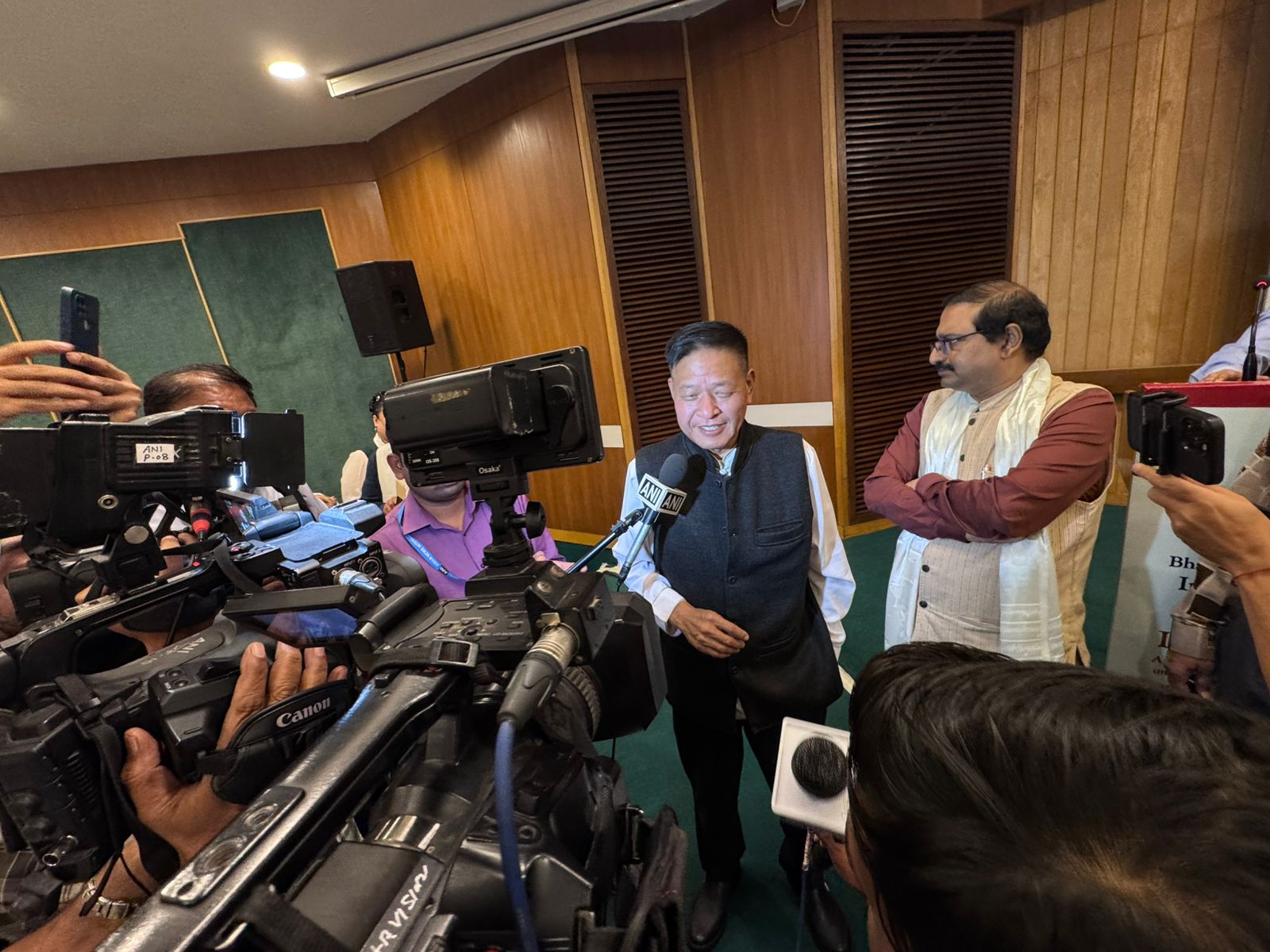
Following his address, Sikyong Penpa Tsering engaged in an interactive question-and-answer session with the audience and with certain media present at the lecture gathering.