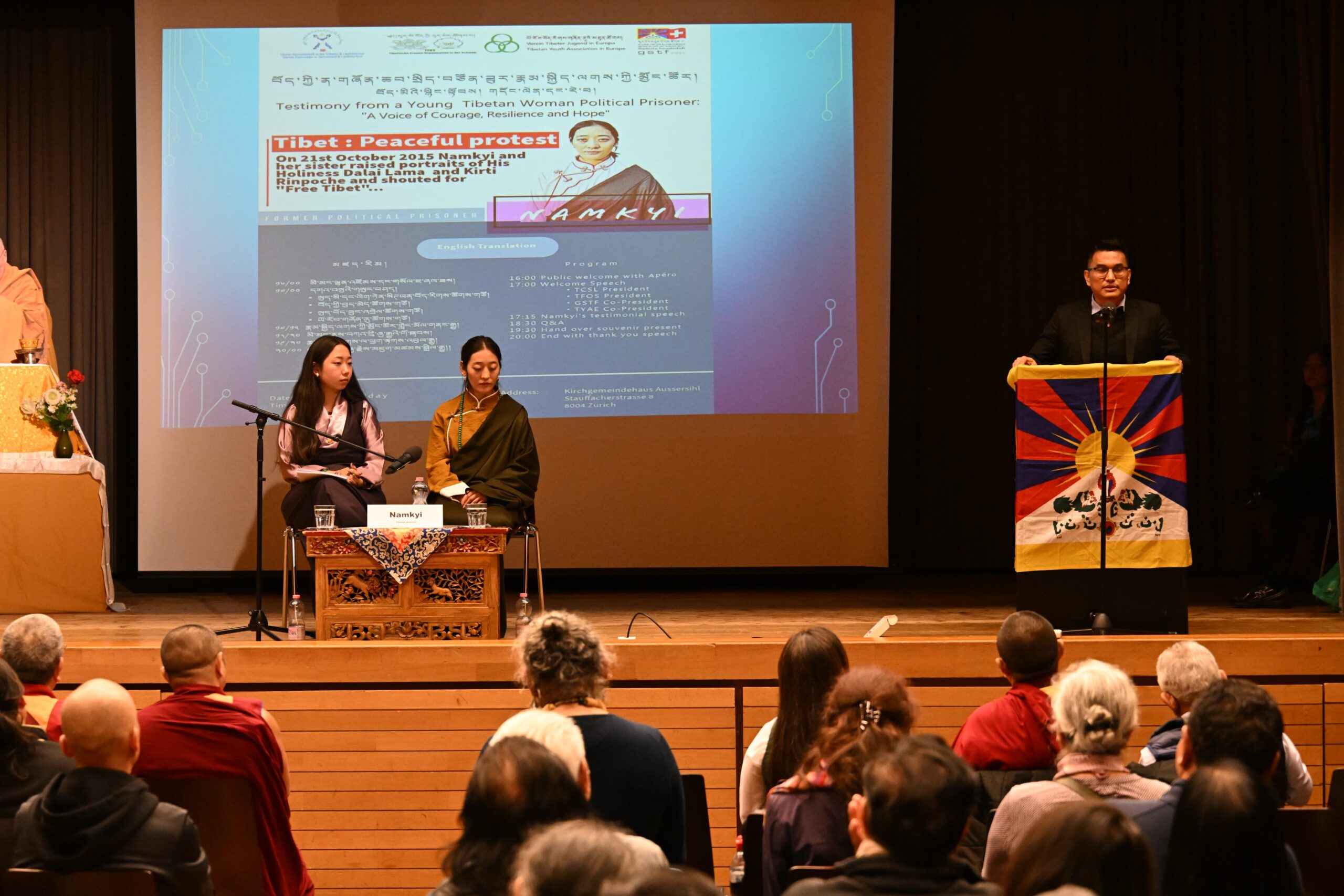
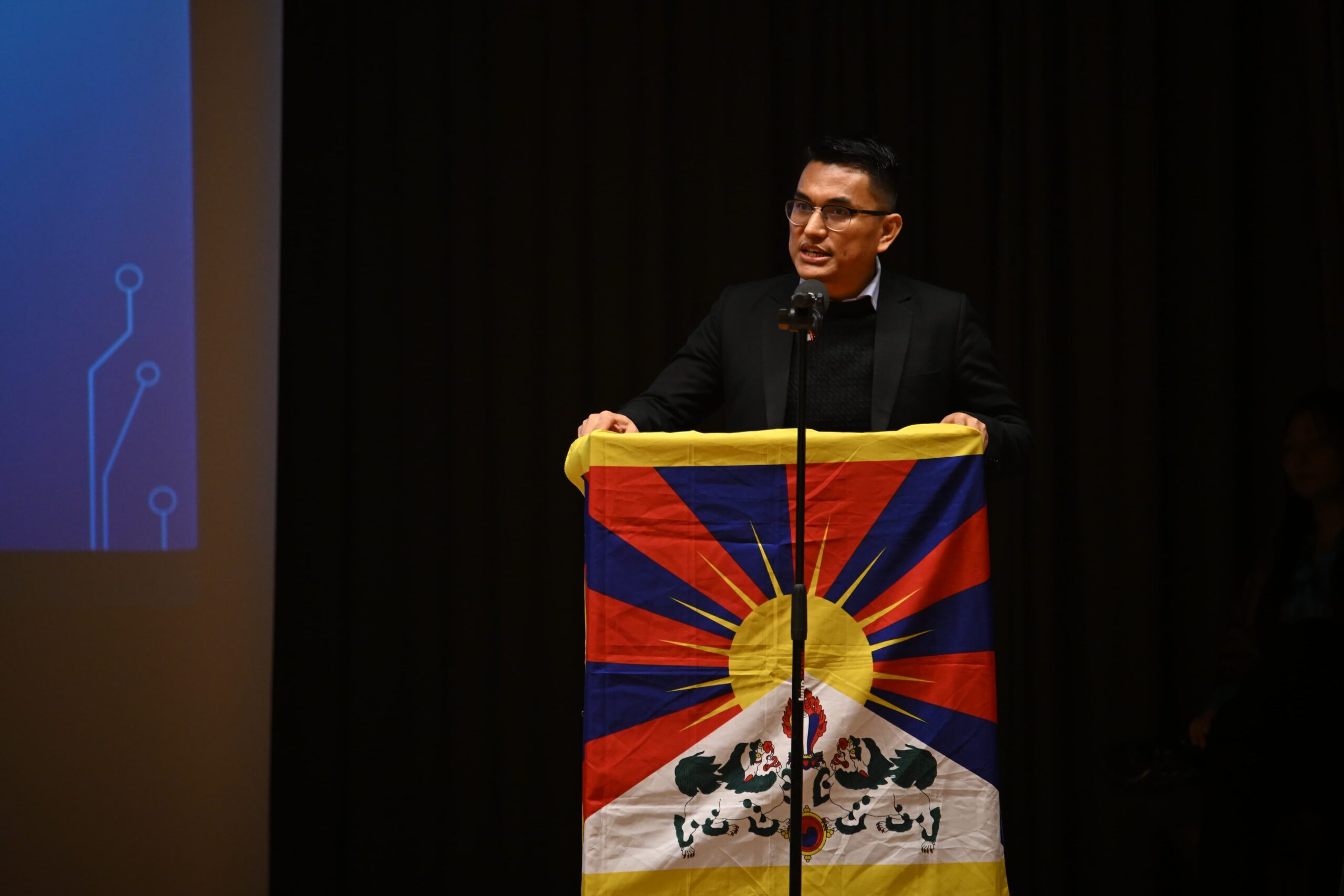
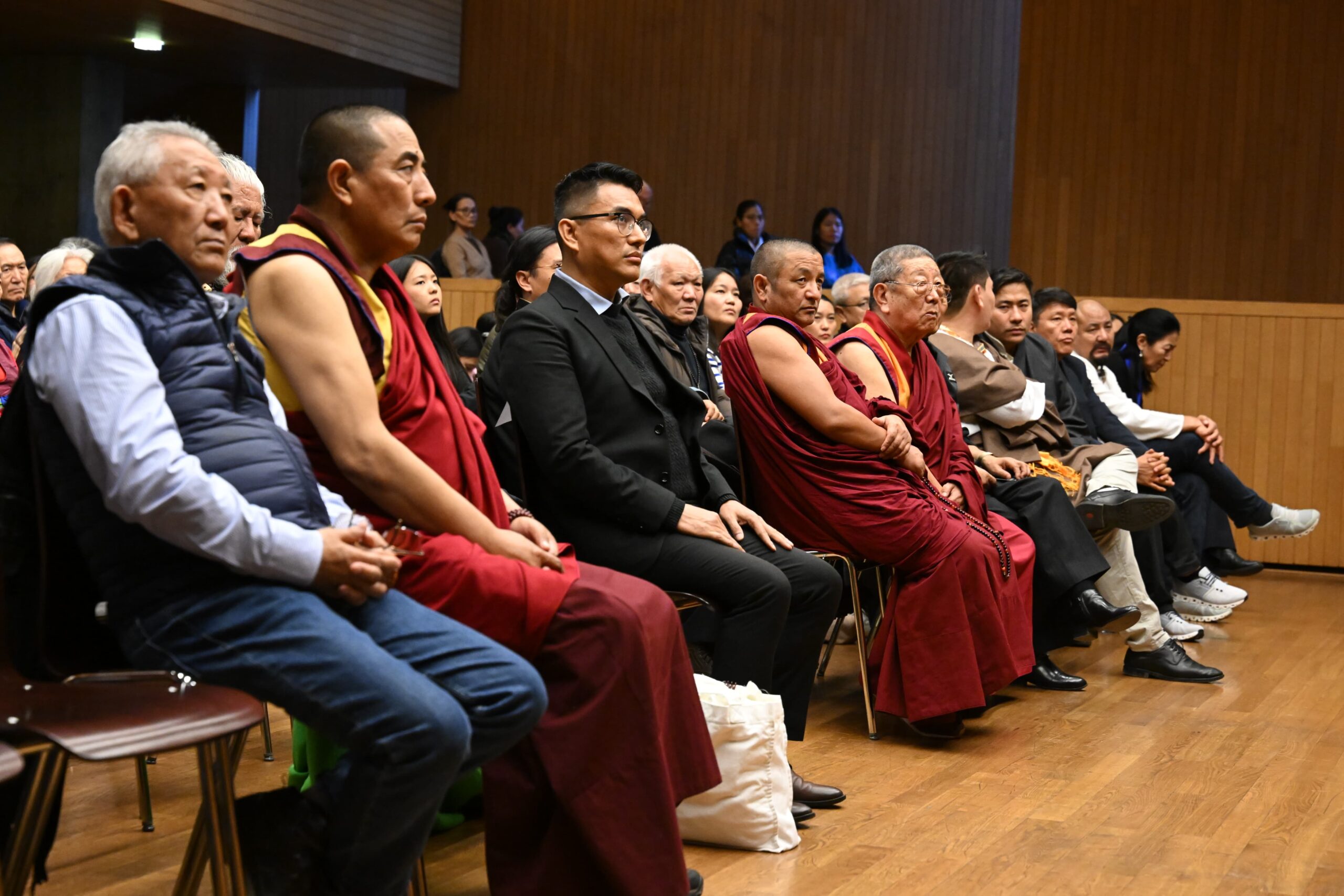
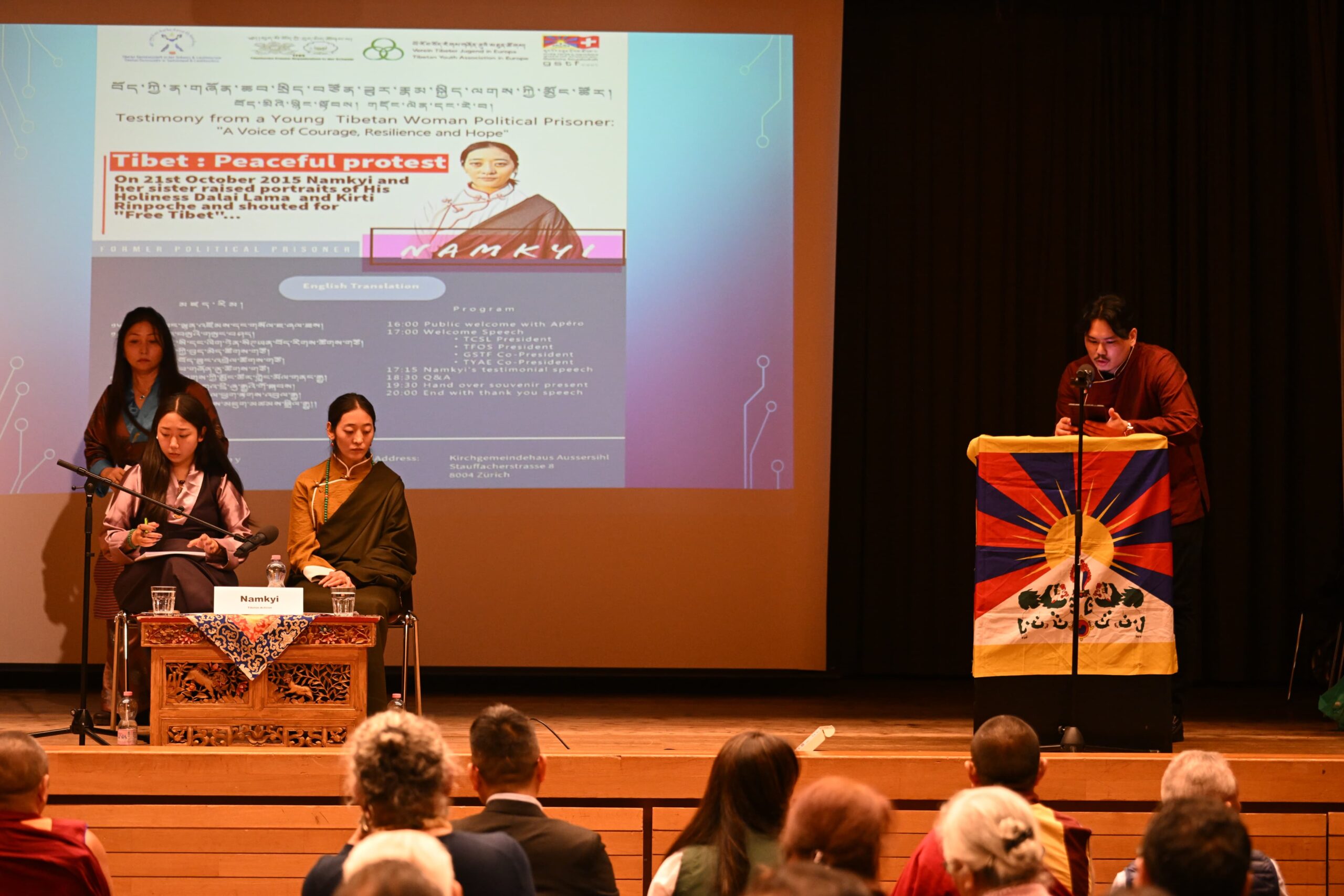
Geneva: On 21 February 2025, Namkyi, a former Tibetan political prisoner and Tibetan activist, addressed the Tibetan community members in Zurich, Switzerland. This event, organised by the Swiss-Tibetan Friendship Association (GSTF), Tibetan Youth Association in Europe (TYAE), Tibetan Women’s Association (TWA), and the Tibetan Community of Switzerland & Liechtenstein (TCSL), marked the conclusion of her 12-day advocacy tour across Europe.
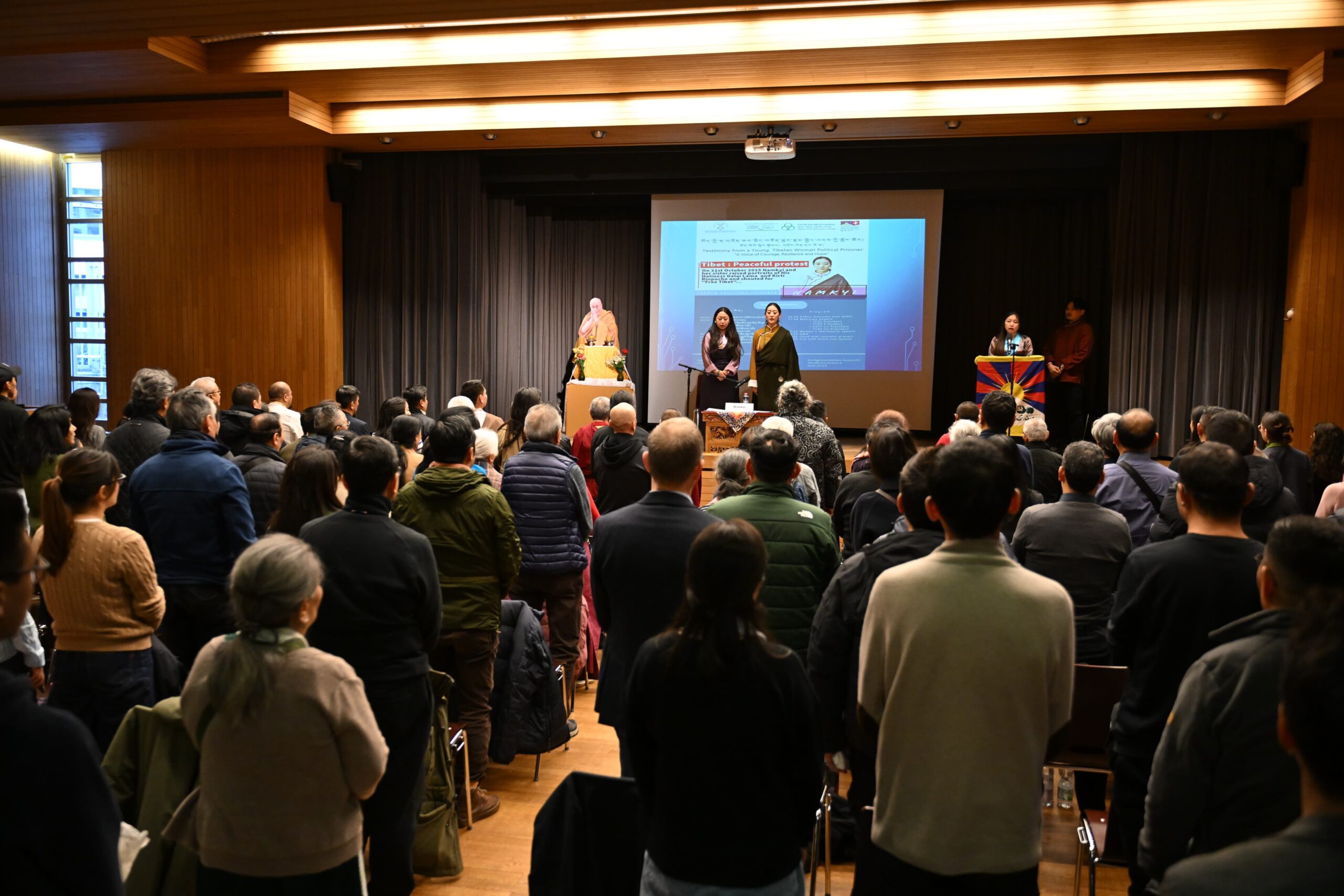
With more than 200 attendees, the gathering began with Tibetan national anthem and observation of a minute mourning, honouring Tibetan martyrs and remembering those who lost their lives in the recent earthquake. This solemn start set the tone for a powerful discussion on the ongoing challenges faced by Tibetans inside Tibet and in exile.
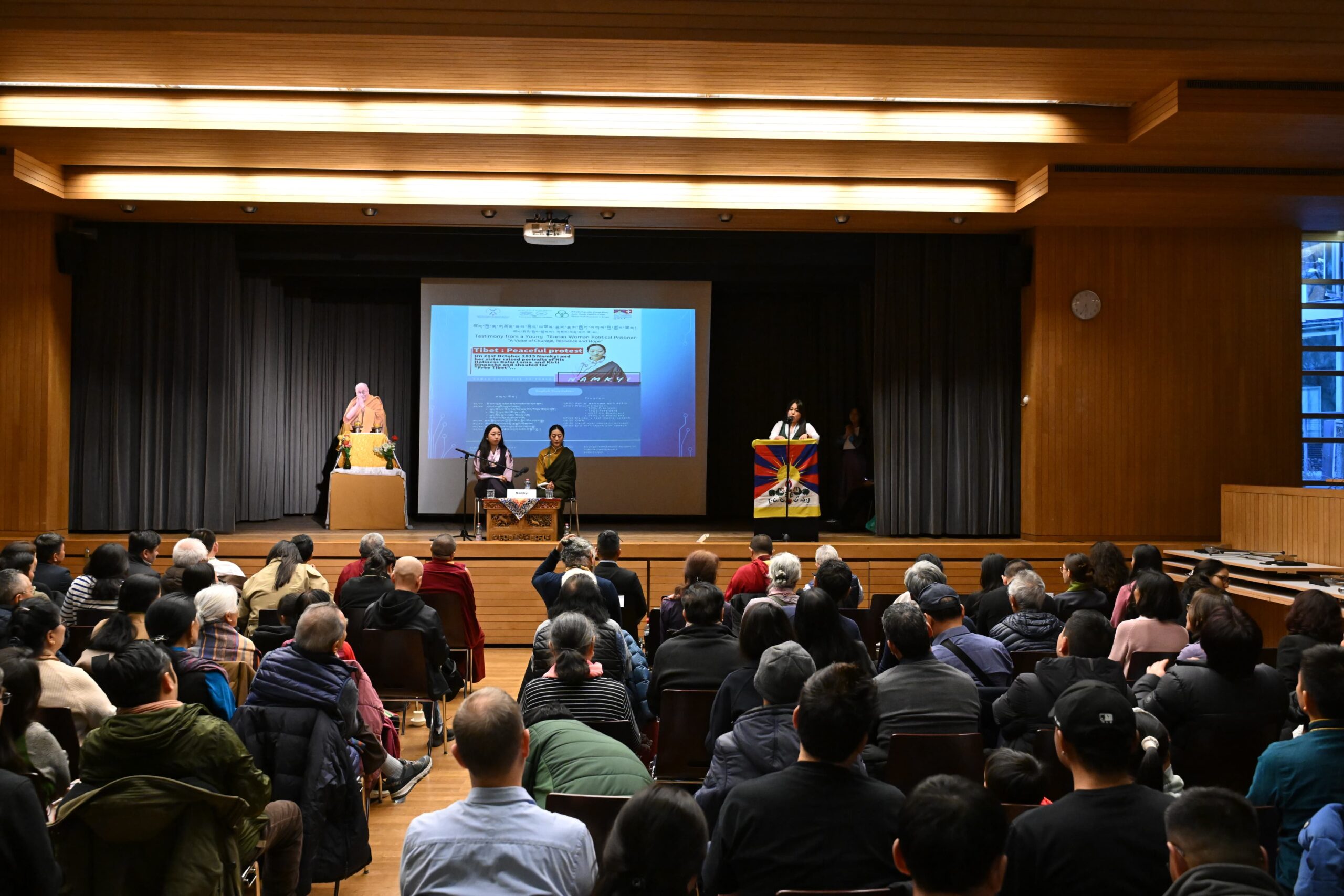
The event opened with a welcome speech by the President of TCSL, followed by remarks from the Vice President of TWA (Swiss), who detailed Namkyi’s participation in the Geneva Summit 2025.
Adding to this, Phuntsok Topgyal, UN Advocacy Officer, provided insights into Namkyi’s engagements at the United Nations and other international forums between 10 to 21 February 2025. She actively advocated for Tibetan rights, exposing the Chinese government’s oppressive policies and human rights abuses during these days.”
Namkyi’s speech was deeply personal and emotional, drawing the audience into her harrowing experiences. She shared her reasons for protesting against Chinese rule, despite knowing the severe consequences. She recounted her time in Chinese prisons, where she endured psychological and physical torture, and the struggles she continues to face, even in exile, due to Chinese surveillance and pressure. Her words left a profound impact on the audience, many of whom were moved to tears by her resilience and unwavering commitment to the Tibetan cause.
Following her speech, the event included a one-hour question-and-answer session, where attendees sought her insights on various issues, including her experiences in exile and advice for Tibetan youth.
When asked about her first impression upon arriving in exile, Namkyi expressed admiration for the strong educational and cultural infrastructure available to Tibetans outside Tibet. She pointed out that in exile, Tibetans have access to monasteries, schools, and institutions dedicated to preserving Tibetan language and culture. In contrast, inside Tibet, the Chinese government has banned Tibetan private schools and monastic education, forcing children into government-controlled boarding schools where Mandarin is mandatory, and Tibetan identity is systematically erased. She also highlighted the imprisonment of Tibetan artists, scholars, poets, and singers who have tried to preserve their cultural heritage.
When asked for advice to Tibetan youth in exile, she highlighted their crucial role in advocating for Tibet and preserving its cultural identity. “While Tibetans in Tibet face persecution, those in exile can raise awareness, engage in activism, and pressure international organisations for change. In addition to activism, preserving Tibetan language, traditions, and history is vital to maintaining our identity. By combining advocacy and cultural preservation, young Tibetans can strengthen our movement and ensure our heritage endures.”
As the event concluded, the organisers presented Namkyi with a souvenir as a token of appreciation for her dedication and contributions to the Tibetan cause. The Co-President of GSTF delivered a vote of thanks, commending Namkyi’s courage and the success of her European advocacy tour.
Namkyi’s 12-day visit to Europe made a significant impact, shedding light on Tibet’s ongoing struggle at the United Nations and other international platforms. Her final talk in Switzerland left a lasting message of unity, resilience, and the urgent need for continued advocacy.
Despite the immense challenges Tibetans face under Chinese rule, Namkyi’s journey stands as a testament to the power of resistance and the enduring spirit of the Tibetan people. Her story is a call to action for Tibetans in exile and the international community to continue the fight for justice, freedom, and the preservation of Tibetan identity.
-Report filed by Tibet Bureau Geneva