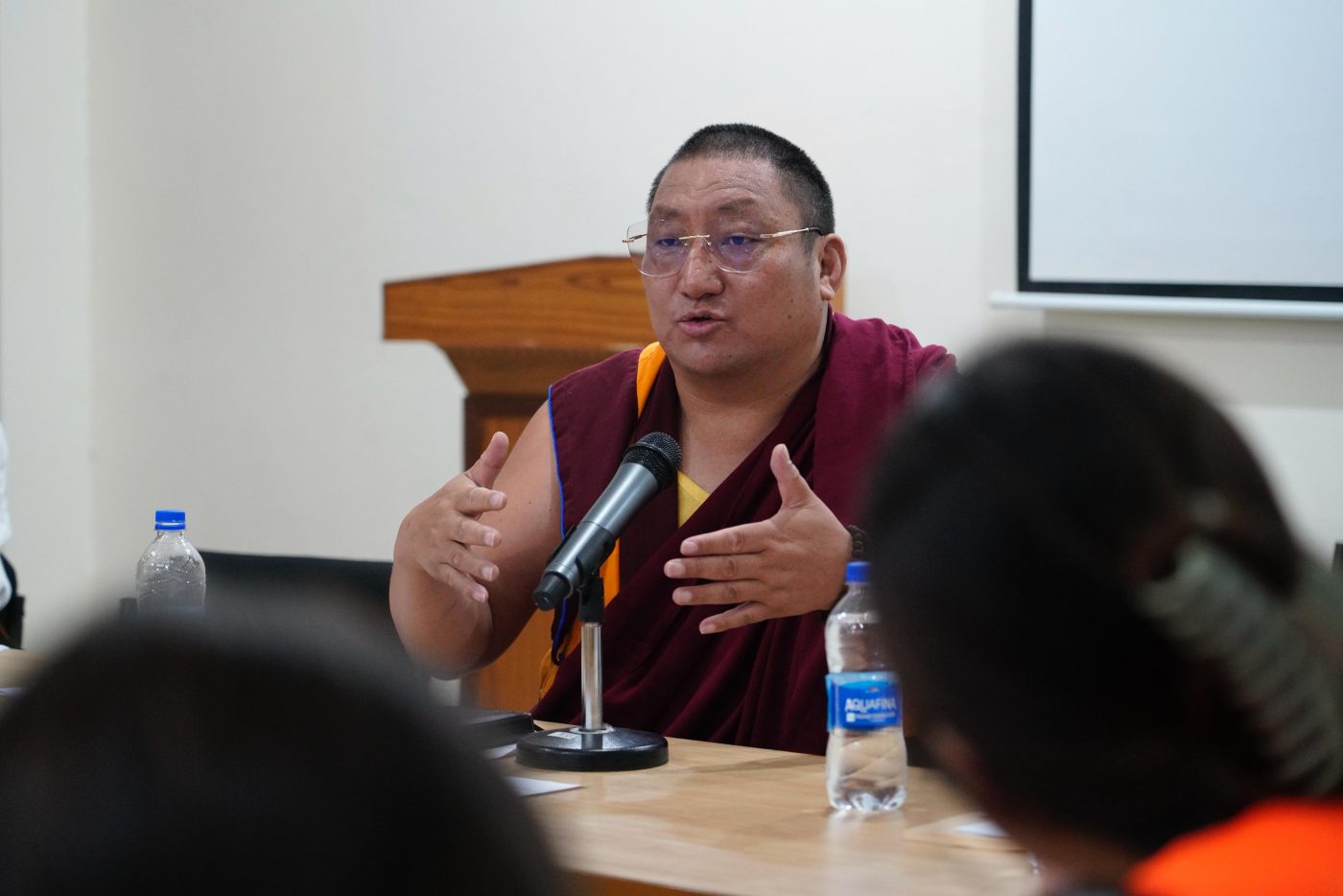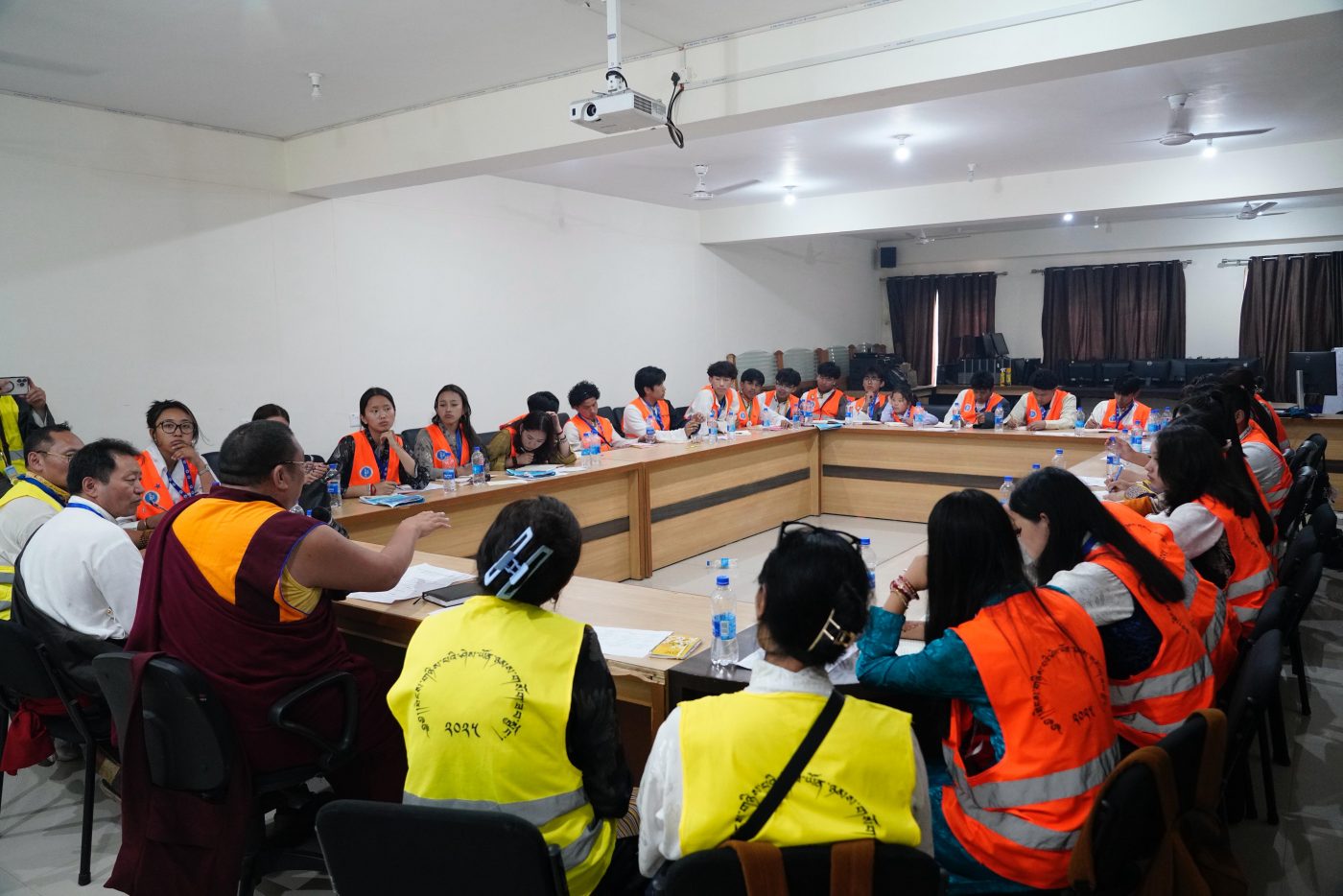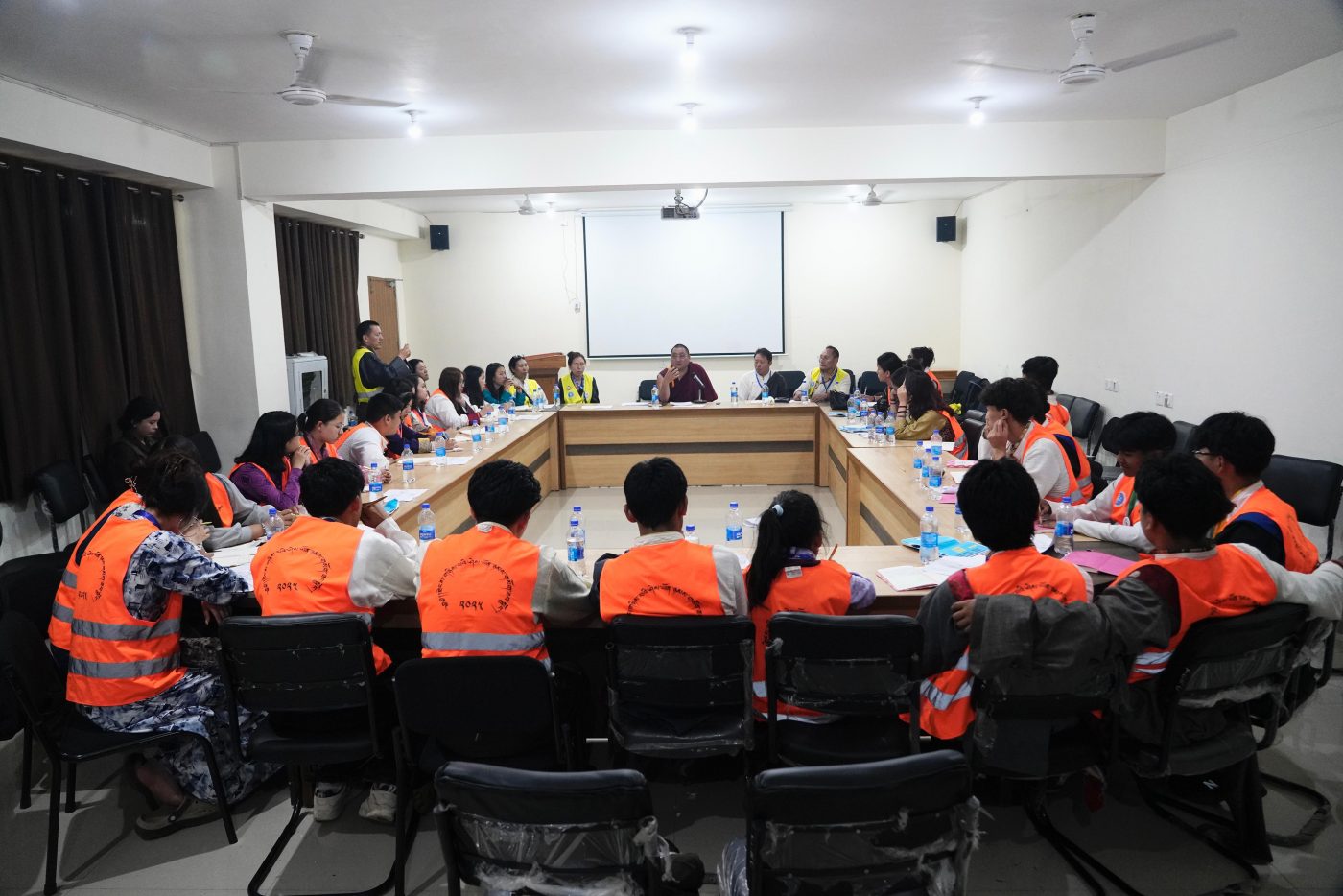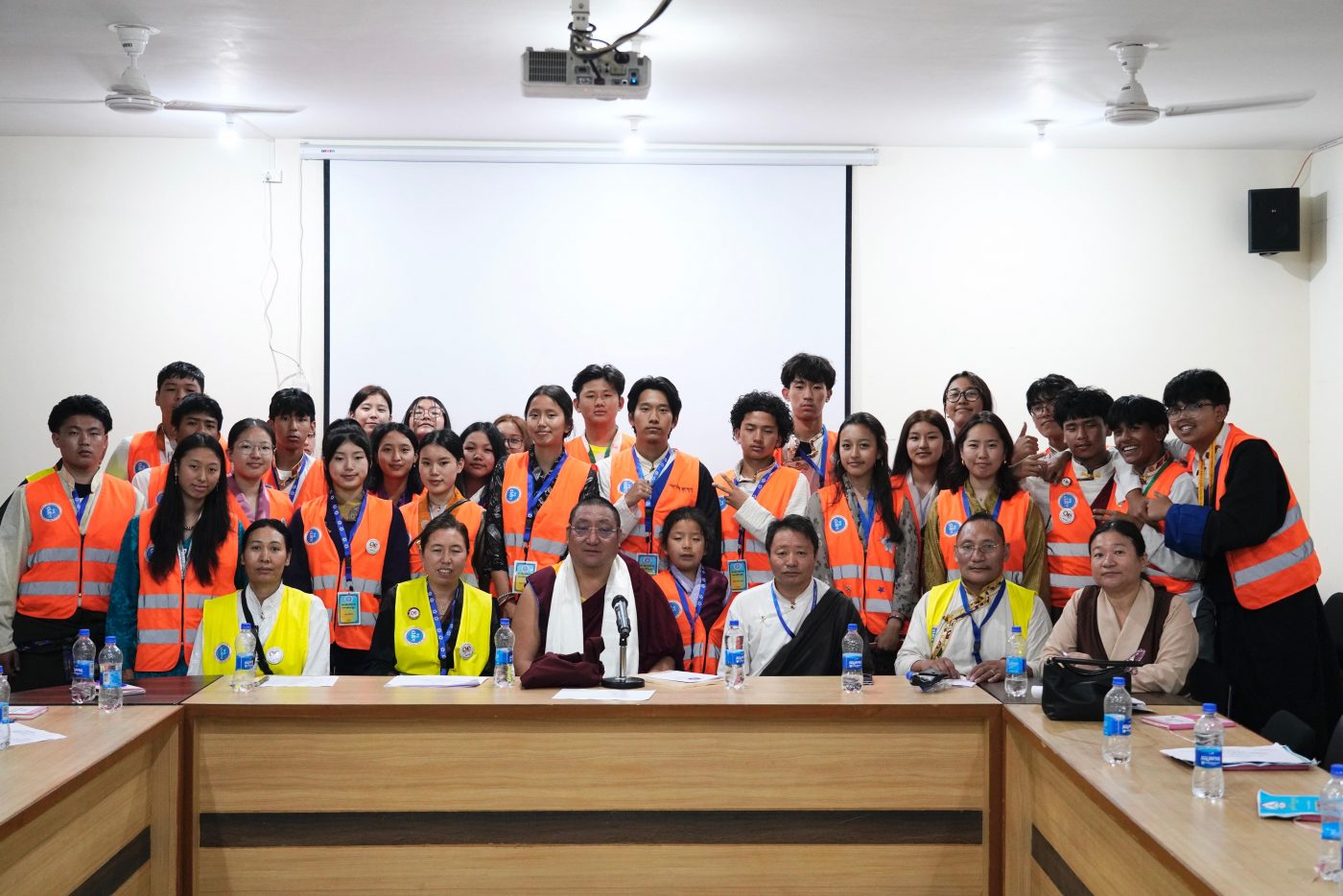
Dharamshala, July 14, 2025: Member of the Standing Committee and Parliamentarian, Geshe Lharampa Atuk Tseten, delivered an informative talk earlier today to students of the Tibetan Cultural Center of Belgium at the Tibetan Computer Resource Centre (TCRC) Hall of the Central Tibetan Administration. His talk focused on the historical evolution and current functioning of the Tibetan Parliament-in-Exile.
The MP began with an overview of democratic systems in general, followed by a detailed explanation of the democratic structure of the Central Tibetan Administration (CTA), highlighting its three pillars and three autonomous bodies. He also shared personal reflections, including his early life in a nomadic household in Tibet under Chinese Communist Party (CCP) rule, and his eventual escape into exile in India.
He then traced the evolution of Tibetan democracy, beginning with His Holiness the Dalai Lama assuming leadership at the age of 16 amid Chinese aggression. Geshe Atuk Tseten recounted His Holiness the Dalai Lama’s early efforts to initiate democratic reforms, such as the formation of the Reform Committee and other advisory bodies in Tibet, a pivotal step toward democratization. Unfortunately, these initiatives were cut short by the unlawful occupation of Tibet by the People’s Republic of China.
Further elaborating on the roots of Tibetan democracy in exile, the MP spoke about the historic oath taken in 1960 at the sacred site of Bodh Gaya. Representatives from the three traditional provinces of Tibet, U-Tsang, Dhotoe, and Dhomey, and from the four major schools of Tibetan Buddhism swore a solemn pledge to follow His Holiness the Dalai Lama with unwavering loyalty.
At His Holiness’s guidance, three representatives were democratically elected from each province and one from each of the four Buddhist schools. On September 2, 1960, these elected representatives took their oaths and were formally inducted as members of the newly established Commission of Tibetan People’s Deputies, today’s Tibetan Parliament-in-Exile. Since then, September 2 has been celebrated annually as Tibetan Democracy Day.
The MP went on to outline key developments, including the adoption of the Charter of the Tibetans in exile in 1991 and the present composition of the Tibetan Parliament-in-Exile. The Parliament currently has 45 members: 10 from each of the three traditional provinces, two from each of the four major Buddhist schools and the pre-Buddhist Bon religion, two from the Tibetan communities in North America and Europe, and one representing Australasia and Asia (excluding India, Nepal, and Bhutan).
A landmark in the democratic journey came in 2001, when the first Kalon Tripa (now called Sikyong) was directly elected by the Tibetan people. This was followed by an even more significant event in 2011, when His Holiness the Dalai Lama devolved all his political authority to the democratically elected leadership.
The session concluded with a Q&A segment.
-Report filed by Tibetan Parliamentary Secretariat