
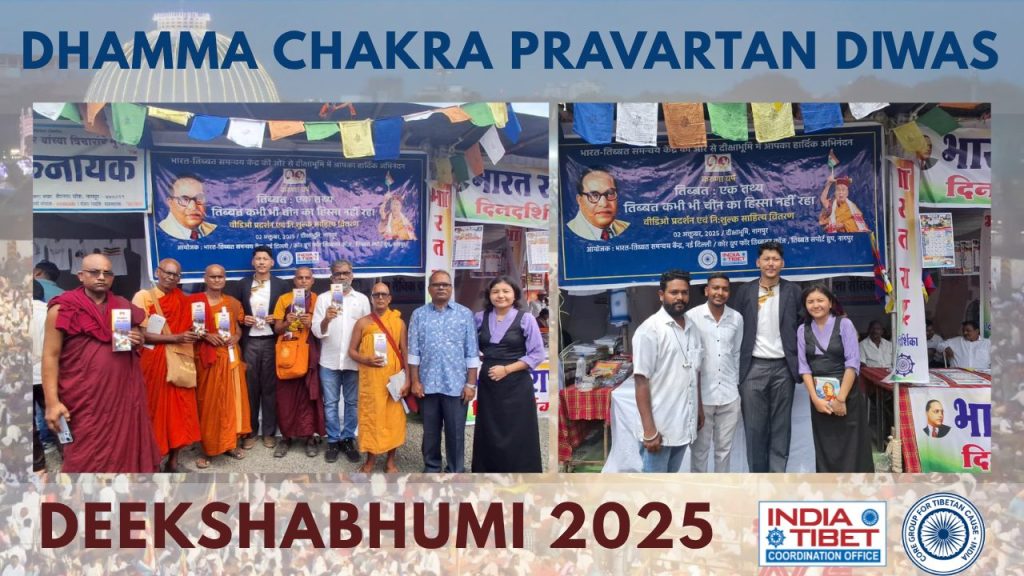
Nagpur: On the auspicious occasion of Dhamma Chakra Pravartan Diwas, observed annually during Dussehra, the India Tibet Coordination Office (ITCO) set up its informational stall at the historic grounds of Deekshabhumi, Nagpur. The day commemorates the mass conversion to Buddhism led by Dr B.R. Ambedkar in 1956, a turning point in modern Indian social and spiritual history.
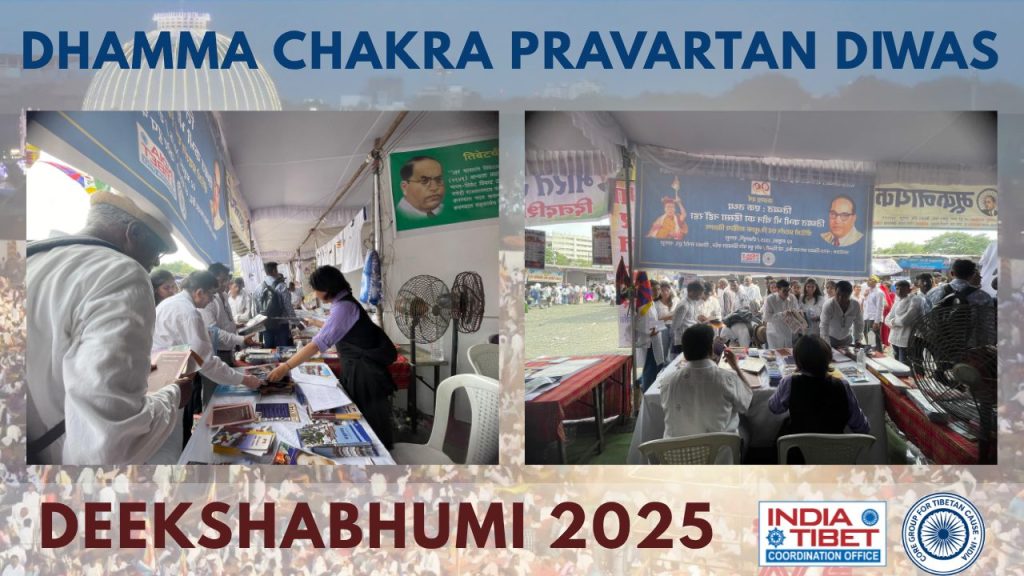
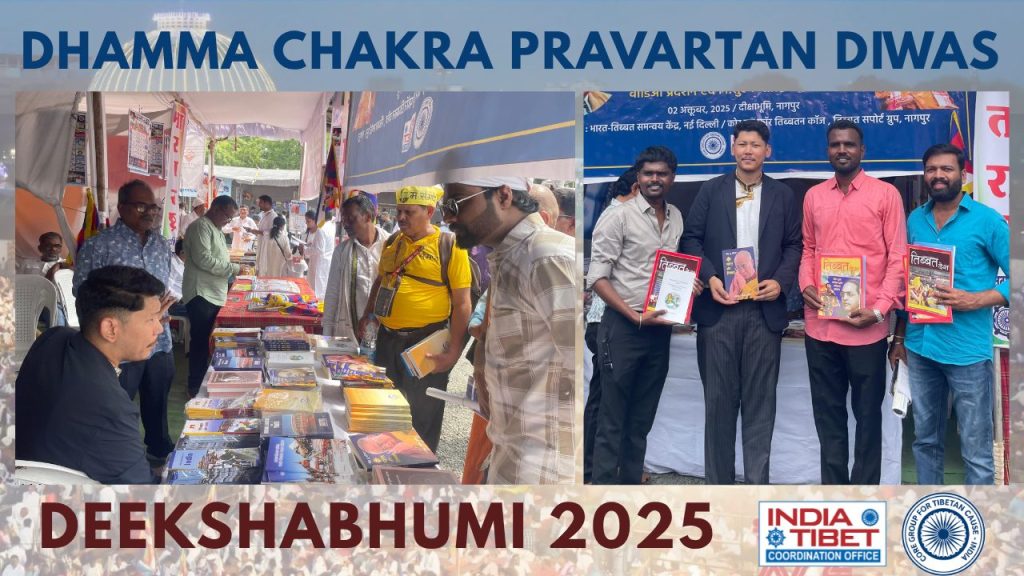
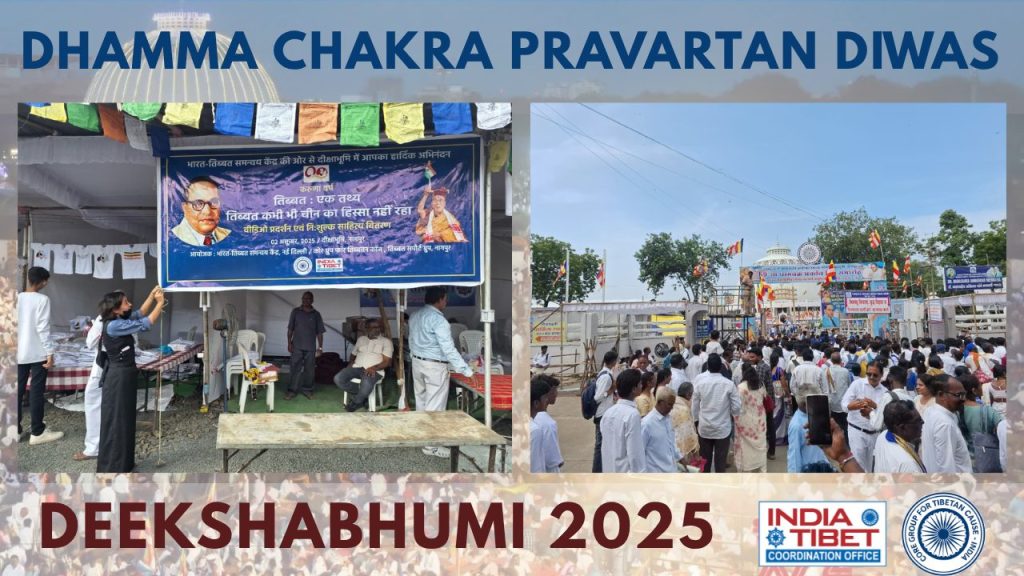
The theme of ITCO’s stall this year was: “Tibet: The Fact – Tibet Was Never a Part of China.” The initiative sought to raise awareness about Tibet’s independent past while also highlighting the deep cultural and spiritual ties between India and Tibet, rooted in their shared Buddhist heritage. Staff members of ITCO, along with members of the Core Group for Tibetan Cause – India (CGTC-I) and Tibet Support Groups (TSG), engaged the public through video presentations, free distribution of books, and interactive sessions. The stall drew significant attention from devotees, youth, scholars, and families who had gathered at Deekshabhumi for the observance. Many expressed keen interest in the Indo-Tibetan spiritual connection and the universal Buddhist values of compassion and non-violence.
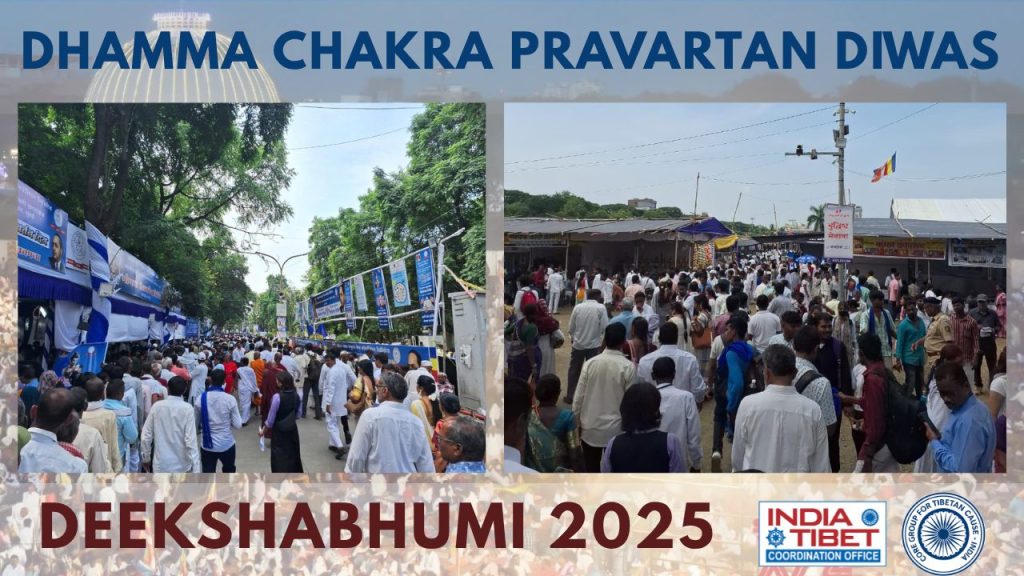
Dhamma Chakra Pravartan Diwas is celebrated every year on Dussehra to mark the historic day of 14 October 1956, when Dr B.R. Ambedkar, along with more than 4 to 6 lakh followers, embraced Buddhism at Deekshabhumi. The mass conversion was both a spiritual act and a landmark social movement, symbolising equality, justice, and liberation from caste-based discrimination. Today, millions of visitors attend the event annually, with mass conversions to Buddhism continuing at this sacred site.
The observance at Deekshabhumi was enriched by the participation of cultural, academic, social, medical, and artistic groups who showcased symbolic visuals, educational content, and artistic presentations centred on Dr Ambedkar’s life, vision, and legacy. Visitors also paid homage to Dr Ambedkar’s relics preserved at Deekshabhumi, reflecting on his enduring contribution to Indian society. Alongside the stalls, institutions such as the Dragon Palace Temple and Dragon International School—visited by delegates from various countries—added to the atmosphere of peace, harmony, and international friendship.
While ITCO’s information booth remained its central program, the stall served as a meaningful contribution to the wider spiritual and cultural movement unfolding at the grassroots level. By participating in Dhamma Chakra Pravartan Diwas, ITCO reaffirmed its commitment to promoting Buddhist values of wisdom, compassion, and non-violence, while also strengthening Indo-Tibetan spiritual and cultural bonds. The event served as a reminder of how the teachings of the Buddha continue to inspire movements for justice, peace, and human dignity in India and beyond, including the cause of Tibet.
— Report filed by the India Tibet Coordination Office (ITCO)