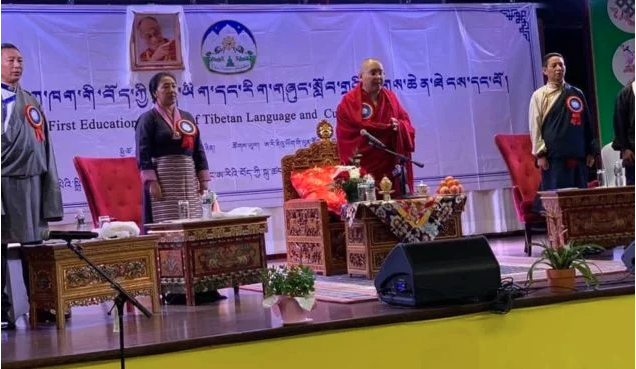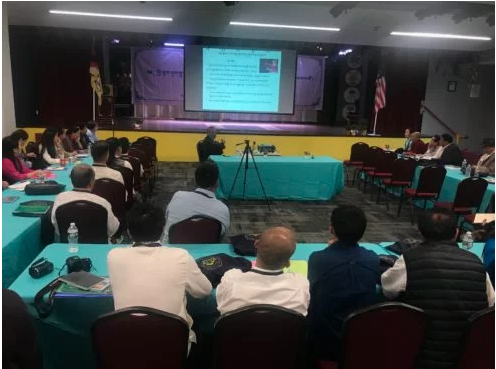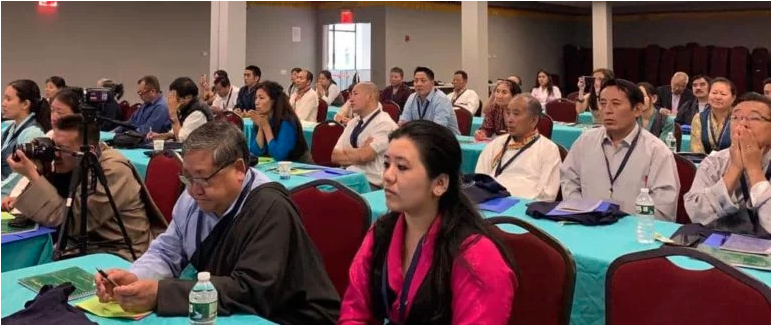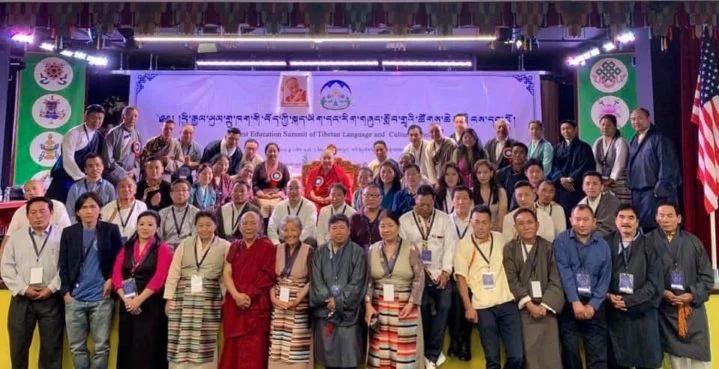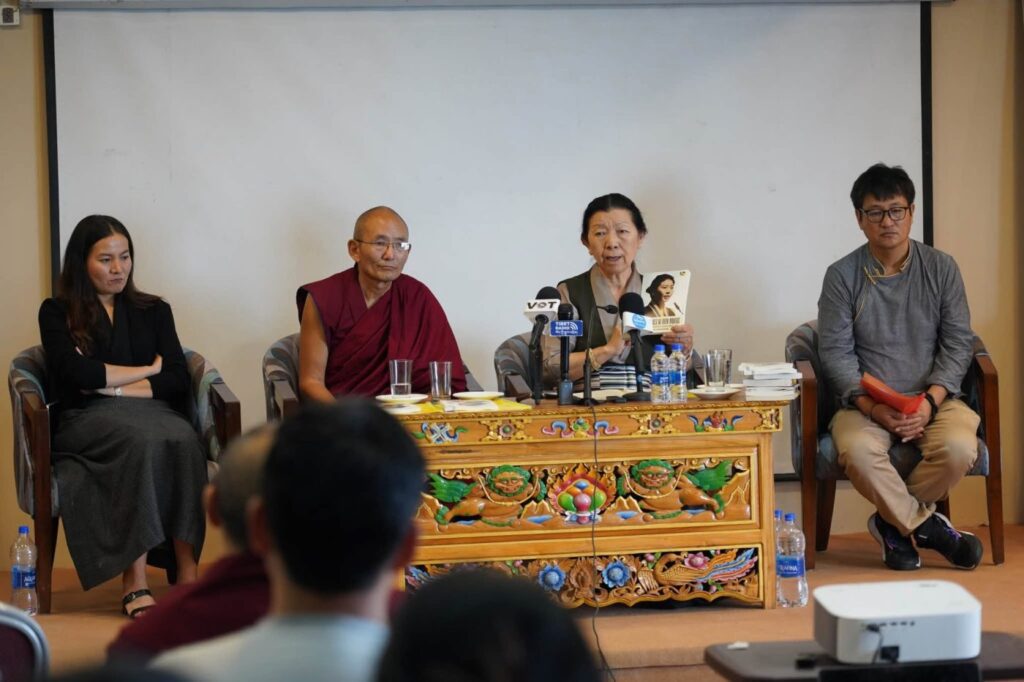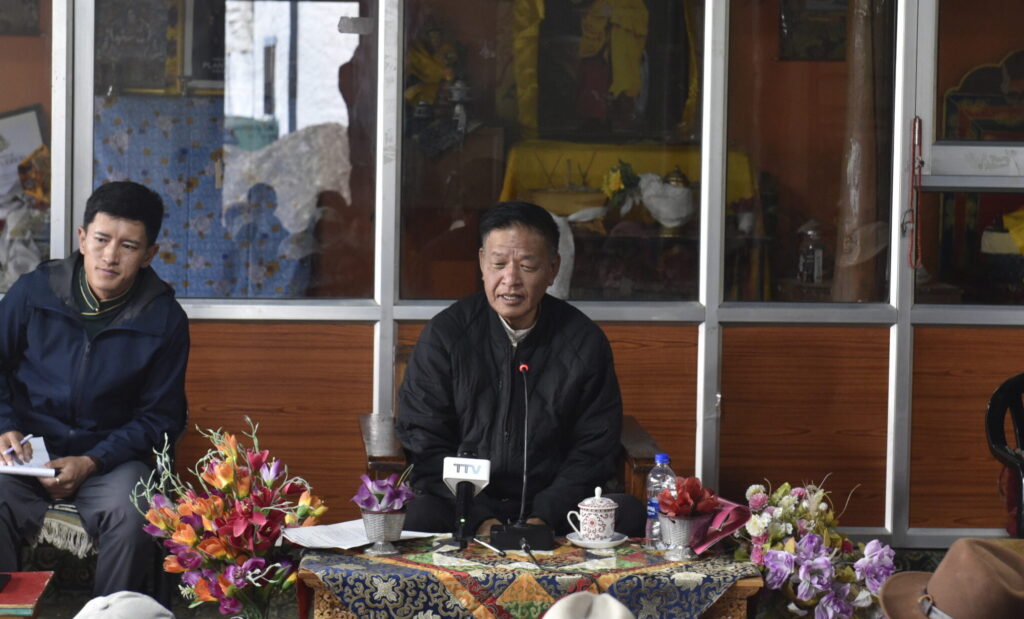


New York, U.S: The first Education Summit of Tibetan Language and Culture schools was organized by the Department of Education, Central Tibetan Administration in collaboration with the Office of Tibet, Washington D.C. for two days from 2 August 2019 at Phuntsok Deshe Tibetan Community Hall, New York.
The summit was participated by 61 teachers and school heads of the Tibetan Language and Culture Schools from five different countries including the US, Australia, Austria, Belgium, and Switzerland.
The two-day Summit focused on three main agendas: introduction, discussion on and finalization of the draft curriculum of the Tibetan Language and Culture Schools prepared by the Department of Education followed with the talks and discussions on the implementation of Secular Ethics and teaching methodology of the Tibetan language in the weekend schools.
The inaugural session was graced with the presence of Yongzin Ling Rinpoche as the Chief Guest. After the Education Secretary Mr. Karma Singey addressed the welcome remarks, the Chief Guest made his inaugural address. He reminded the audience about the critical situation of Tibetan culture and people by saying, " The current status of Tibet and Tibetans is critical and difficult. Since our civilization including our religion, culture, language, land, human resource, etc. has always been outstanding that there never was any situation we felt inferior. But after the invasion of Tibet, His Holiness the Dalai Lama along with the thousands of Tibetans was forced to take political asylum in India. Undoubtedly, with utmost hardships and perseverance, His Holiness with the first generation of Tibetans in exile could protect and preserve the Tibetan culture and language till date. Gradually, many Tibetans migrated to Western countries where their living condition not only improved but could help others in their first and second homelands. Eventually, many more Tibetans started settling in these foreign lands with their extended families and offspring. There arises the problem.”
He continued saying,” Tibetan children who are born in India are grown up in a Tibetan atmosphere where they are introduced to the Tibetan language and culture since birth. But on contrary, Tibetan children in the west are devoid of such natural Tibetan atmosphere to know, learn and understand their cultural heritage because they are sent to local schools where the Tibetan language is not taught. Therefore, the weekend Tibetan language and culture schools play an important role. But the fact is that even the weekend schools cannot inculcate the Tibetanness in our children. Hence it is utmost important for the Tibetan parents to take the individual responsibility to familiarise their own children with Tibetan culture and language from the very beginning. They must speak with their children in Tibetan. It will also be easier for them to learn the Tibetan script if they speak Tibetan well.”
He firmly cautioned Tibetan parents in the West by saying that, “If the children are not acquainted with Tibetan culture and language, then it is a sheer reflection of parent’s irresponsibility which they will definitely regret later. Therefore, it is extremely important that parents must speak Tibetan with their children. His Holiness the Dalai Lama has always been reiterating to teach our children the Tibetan language, and we really need to listen to him by speaking Tibetan with them.”
In her keynote address, Education Minister Dr. Pema Yangchen said, “There have been dramatic changes in our exile Tibetan community in the last three decades especially from the mid-90s, and therefore, there have been certain new situations where the Tibetan parents continuously face challenges in upbringing their children. But we must take every such situation positively and see it as an opportunity as well.”
She further said, “From our part, since 2012, DoE has been working hard on textbooks and curriculum for our children abroad. And in this summit, we are going to have an in-depth discussion on the draft to enable the finalization of the curriculum. For the betterment of our children in the future, we must make collective efforts from parents, weekend schools, society, and DoE. Collective effort is extremely important.”
After the summit, the Education Minister and Secretary are to make official visits to Washington D.C. and Canada.
-Filed by the Department of Education