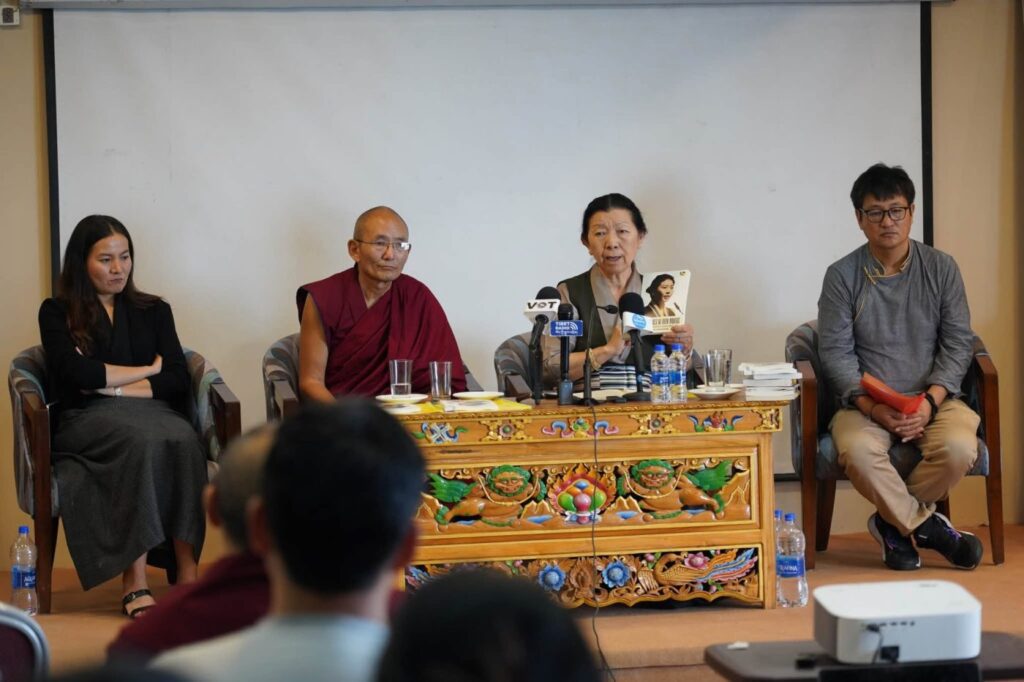
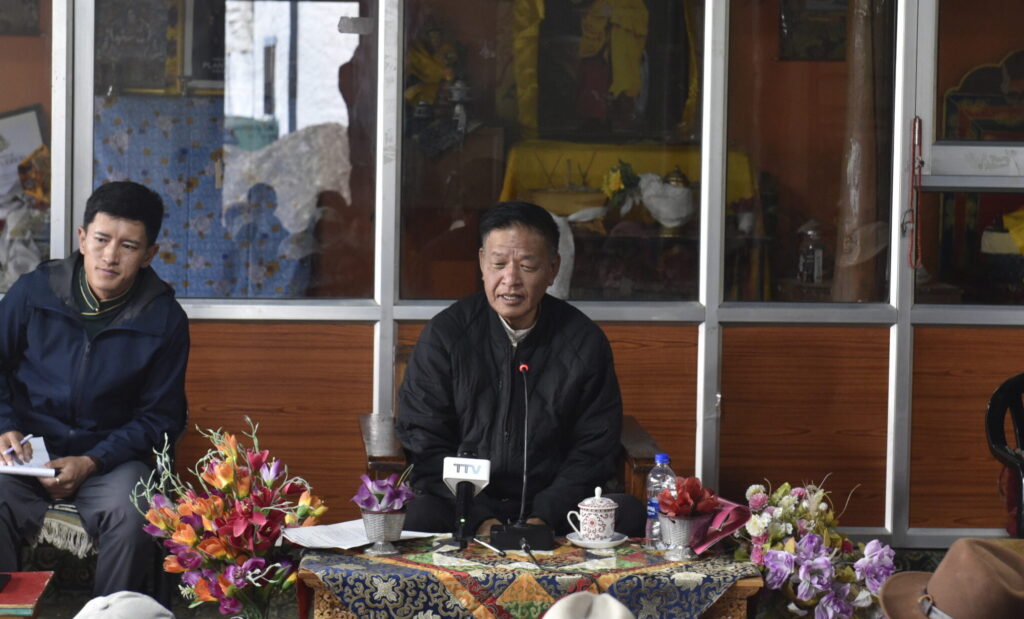
Dharamshala: The closing ceremony of the 7th Young Indian Scholars’ Conference on Tibetan Studies, organised by the Tibet Policy Institute (TPI), was held at the Administrative Training Welfare Society (ATWS) on 9 October 2025. Deputy Speaker Dolma Tsering Teykhang graced the occasion as the Chief Guest and delivered the keynote address to a gathering of young scholars and researchers.
Emphasising the crucial role of academic research, truth-telling, and global solidarity in preserving Tibet’s identity and advocating for justice, the Deputy Speaker expressed her heartfelt gratitude to the participants. She commended the Tibet Policy Institute for creating a meaningful platform for intellectual engagement at a time when “the world is in such chaos” and “those in power manipulate the truth according to their will.” She urged the scholars not only to pursue rigorous research but also to have “the courage to stand by what they have found.”
The Deputy Speaker highlighted that the question of Tibet is not merely an academic subject but “a living question of identity and a global responsibility.” She underscored the importance of building trust on the foundation of truth rather than manipulation, noting that the work of scholars and researchers gives “voice to the truth” and paves the way for future generations to understand the profound interconnectedness between India and Tibet.
Reflecting on the ongoing hardships faced by Tibetans inside Tibet, she described the human rights situation as “grave.” For over six decades, Tibetans have lived under severe repression with restrictions on religion, culture, language, and basic freedoms. “Inside Tibet, human dignity is under siege. Faith is criminalised. Truth is censored. And injustice wears the mask of development,” she stated, cautioning the audience against the Chinese Communist Party’s narratives surrounding development in Tibet.
One of the key concerns she raised was the colonial-style boarding school system in Tibet, where over a million children between the ages of four and eighteen are forcibly separated from their parents, denied their mother tongue, and uprooted from their cultural heritage. Calling this a “great loss to Tibet,” she urged for collective action to address the issue.
Despite these challenges, the Deputy Speaker highlighted the resilience of the Tibetan people, who continue to live with hope and courage inspired by His Holiness the Dalai Lama’s message of non-violence and compassion. In contrast to the situation inside Tibet, she described the democratic governance system of the Tibetan exile community as one rooted in accountability and transparency. Recalling the recent Tibetan Democracy Day celebrations on 2 September, she noted that the day is “more than a celebration; it is a reminder that though we have lost our country, we have not lost our democratic spirit.”
The speech also emphasised the deep civilisational ties between India and Tibet, asserting that Tibet matters to India not only geographically, but also spiritually, environmentally, and diplomatically. Tibet, she noted, has preserved key teachings of Buddhism that originated in India, serves as the source of major rivers such as the Brahmaputra and Indus, and plays a crucial role in regional geopolitics following its occupation.
“Protecting Tibet is in the international interest,” she stated, urging Indian scholars, researchers, and policymakers to help keep Tibet’s story alive. She called on young Indians in particular to raise their voices for Tibet through both print and social media, emphasising that their awareness and actions are key to ensuring the survival of Tibetan culture, democracy, and human rights.
The Deputy Speaker also observed that many young Indians today are unaware of Tibet’s historical and strategic significance, making the role of scholars and researchers even more vital in keeping Tibet’s history and current realities part of India’s collective consciousness.
Concluding her address, she appealed to the audience: “By supporting Tibet, you are not only helping Tibetans but also safeguarding your own heritage and future.” The Deputy Speaker extended her best wishes to all participants for their health and success, encouraging them to let their work “shine the light of truth for generations to come.”
-Report filed by the Tibetan Parliamentary Secretariat