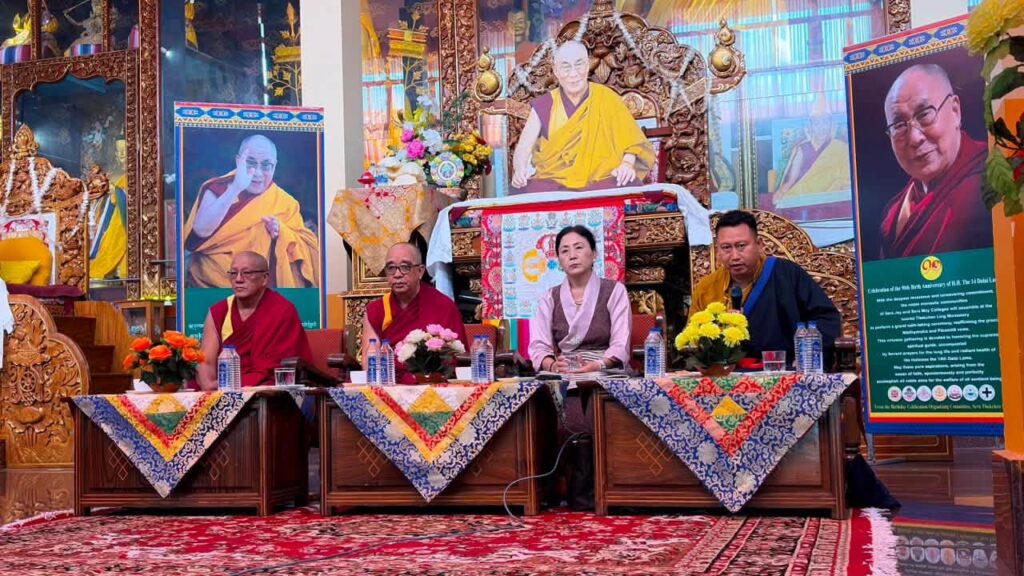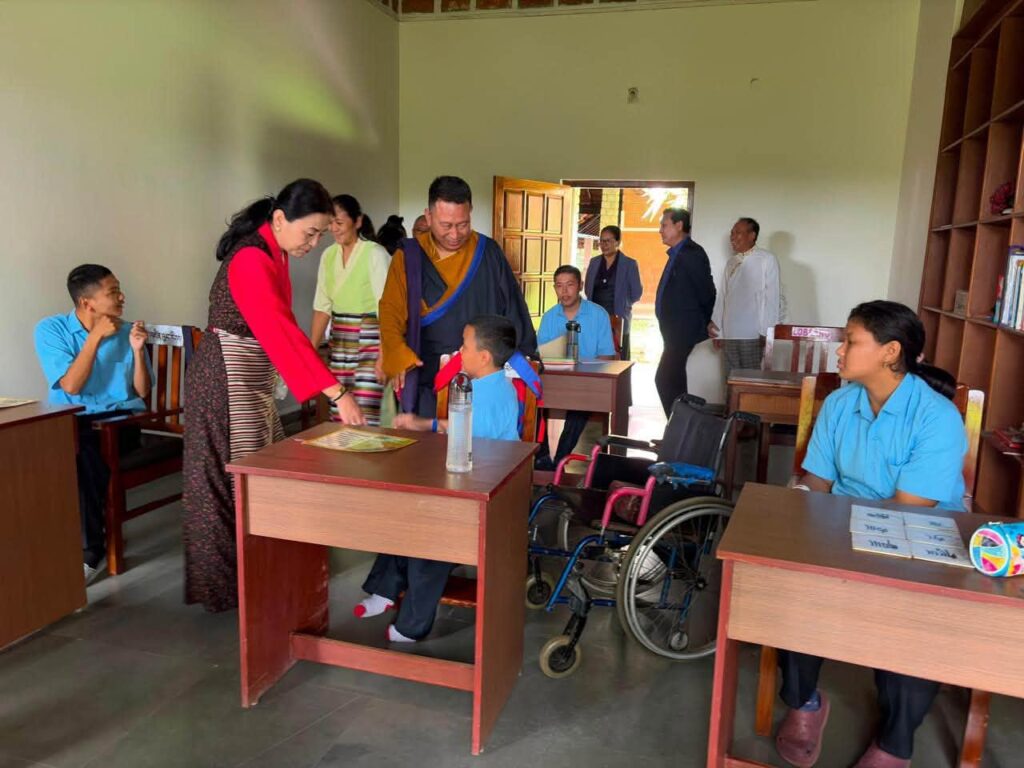


Dehradun: The Tibetan settlement officer of Dehradun, Dr. Tsewang Phuntsok attended a Buddha Purnima (Vesak) celebration organised by Jaya Siddhartha Hospital near Dekyiling Tibetan settlement as the chief guest on 1 May 2026. The event featured Tibetan cultural performances, along with addresses by Shri Durga Prasad Verma, Chairman of the Siddhartha Group of Institutions, and Dr. Kumar Prashant, Director of Jaya Group of Hospitals. Dr. Tsewang Phuntsok was accompanied by Tenzin Choephel, Vice President of the Local Tibetan Assembly, Dekyiling, and Tsewang Dhondup, President of the Dehradun Freedom Movement Office.
The programme was also attended by camp leaders from nearby Tibetan settlements, as well as hospital staff, doctors, and students from the institution’s law, nursing, and pharmacy colleges.
At the gathering, Dr. Tsewang talked about how Buddhism started flourishing in Tibet during the reign of three Tibetan religious (Dharma) kings, namely Songtsen Gampo, Trisong Duetsen, and Tri-Ralpachen, who invited Indian Nalanda scholars to Tibet and their translation works from Sanskrit to Tibetan, which is not only an indication of an ancient historical spiritual tie between India and Tibet but also a significant contribution to the preservation of Buddha’s teachings in Tibetan text. He connected His Holiness the Dalai Lama’s legacy with Buddha’s teachings, which brings him universal recognition as a global icon of peace. His Holiness’ messages of non-violence, love, compassion, tolerance, forgiveness, kindness, and universal responsibility continue enlightening humanity in today’s world. Due to His Holiness’ true practice of Buddha’s teachings, His Holiness has been offered over 150 to 200 awards, honorary doctorates, and prizes, including the Nobel Peace Prize in 1989, the US Congressional Gold Medal in 2007, and the Templeton Prize in 2012. His Holiness travelled to more than 67 countries to spread His messages that has greatly benefited humanity.
Furthermore Dr. Tsewang underscored the four principal commitments of His Holiness and the inclusion of SEE (Social, Emotional, and Ethical) Learning into modern education curricula, which helps in the enhancement of more peaceful communities and the world.
He introduced the Ghoton, ‘Year of Compassion’, marking the 90th birthday of His Holiness, and briefed the initiatives for free meals, blankets distribution, cloth distributions, and other Ghoton activities that the Dehradun Tibetans have conducted. He offered Ghoton mementos, including His Holiness’ latest book titled “Voice for the Voiceless,” to Shri Durga Prasad Verma, requesting him to keep one book in the college library.
The hospital held a free medical checkup camp for the day.
Dr. Tsewang also attended another Buddha Purnima (Vesak) Mahotsav as guest of honour, invited by the Doon Buddhist Committee in the evening at the IRDT Auditorium, near Survey Chowk, Dehradun. The programme was graced by Shri Malling Gombu, Chairman of the Arunachal Pradesh Khadi & Village Industries Board, Government of Arunachal Pradesh, and General Secretary of the Indian Himalayan Council of Nalanda Buddhist Tradition; Shri Baljeet Singh Soni, Vice Chairman, Uttarakhand Minorities Commission; other guests of honour, special guests, dignitaries, performers, and attendees. The programme was further valued by different Tibetan, Bhutani, and Nepali cultural performances and chanting of prayers by monks of Gaden Jangtse, Dekyiling, and Bhikhunis of Myanmar from Subharti University.
Dr. Tsewang’s speech for the gathering emphasised studying and practicing the Buddha’s teachings, which are significantly understood from His Holiness the Dalai Lama’s principal commitments, particularly the promotion of human values and revival of ancient Indian knowledge. Dr. Tsewang highlighted “Be your own lamp, be your own lamp!” scripted on the screen show movie to the public about the 12 Deeds of Shakyamuni Buddha. “We cannot be our lamp without dispelling our ignorance; we cannot be our lamp without study and practice”. Therefore, His Holiness guided us to treat the volumes of Buddhist scriptures as if they were your textbook, rather than placing them on a sacred altar remaining untouched.” The programme was concluded with Nagar Parikrama for World Peace.
– Report filed by Dehradun Tibetan Settlement Office