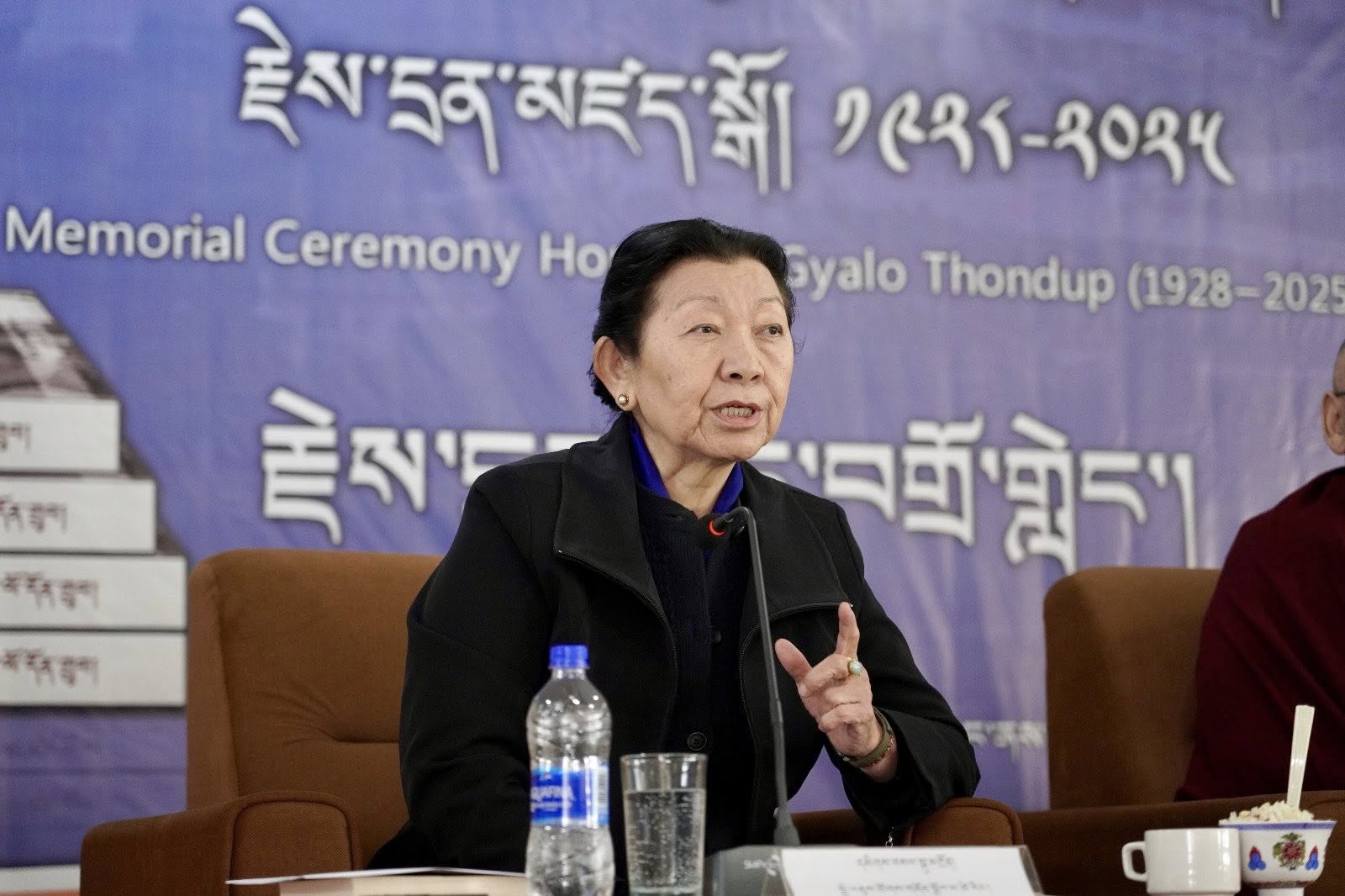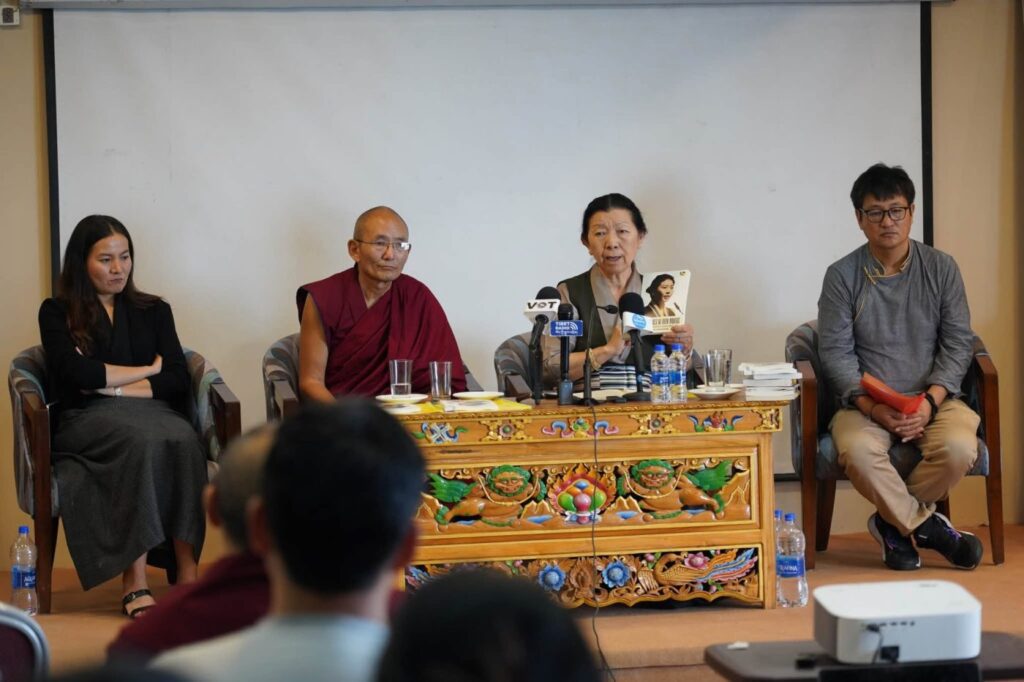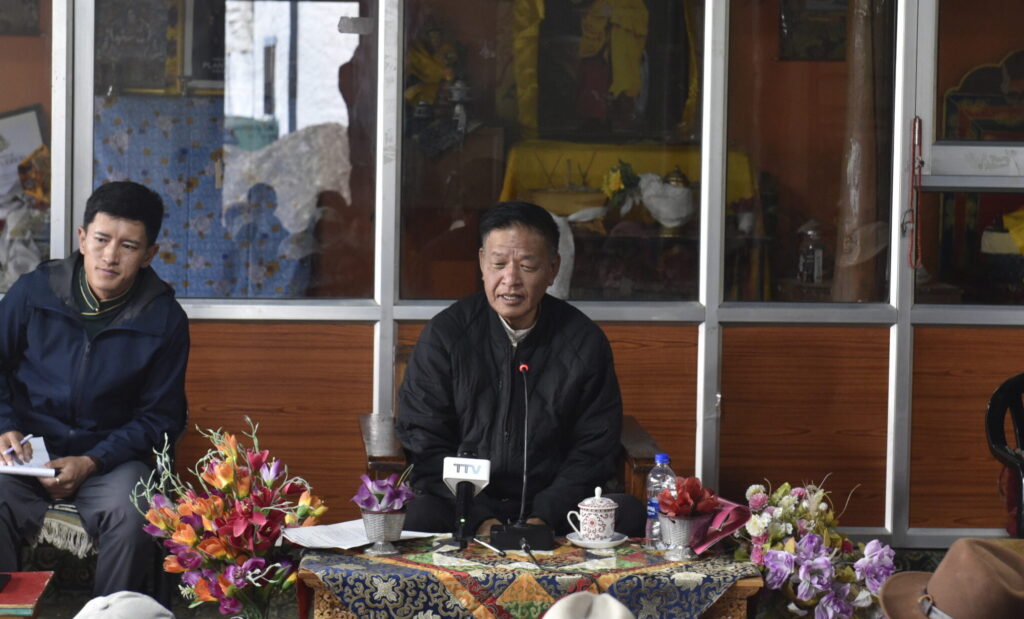


Dharamshala: The first memorial ceremony of Gyalo Thondup, elder brother of His Holiness the Dalai Lama and former Kalon Tripa of the Central Tibetan Administration, was held on 8 February 2026 in Dharamshala, marking the first anniversary of his passing.
The ceremony featured an address by Chief Guest Speaker Khenpo Sonam Tenphel, along with remarks from Sikyong Penpa Tsering (via video message), Deputy Speaker Dolma Tsering Teykhang, Kalon Gyari Dolma, and Gaden Phodrang’s Representative, Geshe Ronpo Lobsang Nyendak. The program was introduced by Parliamentarian Pontsang Lobsang Thupten, and the vote of thanks was delivered by Parliamentarian Pema Tso.
The commemoration also included the release of a new book on Gyalo Thondup, with researcher Sherab Dhargyal presenting an overview of the publication. In addition to members of the public and other dignitaries, the event was attended by Justice Commissioners Dawa Phunkyi and Phagpa Tsering, Parliamentarian Choedak Gyatso, and Secretaries of the Central Tibetan Administration, including Sonam Dorjee, Tashi Gyatso Shadrong, Lhadruk, and Dhondul Dorjee, among others.
Speaker Khenpo Sonam Tenphel, in his address, shed light on the exceptional life and legacy of Kalon Trisur Gyalo Thondup, highlighting in particular his invaluable role in international relations, his significant contribution to the Tibetan struggle, and his tireless efforts to connect Tibetans inside and outside Tibet. The Speaker further emphasised the gratitude that Tibetans in general owe to the Kalon Trisur, and especially the Tibetan diaspora, for his valuable contributions and meaningful influence on the Tibetan administration in exile.
As the eldest lay son of the family, Speaker Tenphel also shared how the Kalon Trisur shouldered major family responsibilities, recalling how His Holiness the Dalai Lama described him upon his passing a year ago. The Speaker went on to discuss the various approaches undertaken by the Kalon Trisur, particularly his role in initiating dialogue with China, advocating for Tibet through resolutions at the United Nations, and other related efforts.
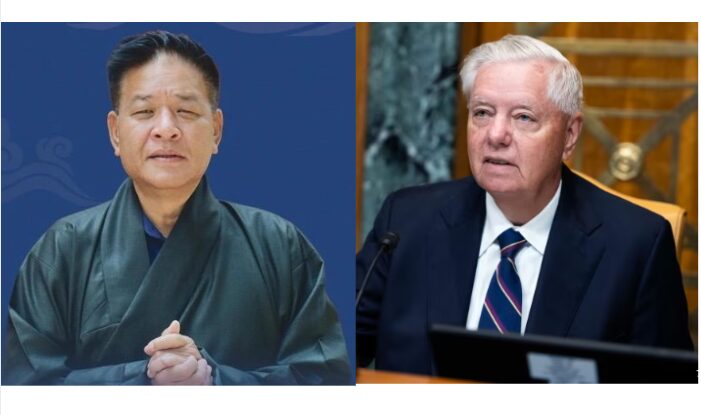
In his video remarks, Sikyong Penpa Tsering highlighted that Kalon Trisur Gyalo Thondup was a highly capable individual, who played crucial role in leading diplomatic efforts for the Tibetan cause on the global stage and in laying the foundation of the Tibetan struggle. The Sikyong applauded Kalon Trisur for having lived a meaningful life, wholeheartedly dedicated to the cause of Tibet.
Deputy Speaker Dolma Tsering Teykhang honoured Kalon Trisur Gyalo Thondup for his exceptional dedication and the sacrifices he endured throughout his life for Tibet and the Tibetan people. She praised his biography for vividly documenting one of the most difficult periods in Tibetan history, describing it as powerful evidence of Tibetan hardship and of his extraordinary contributions to the Tibetan struggle.
Referring to him as the Unsung Hero of Tibet, the Deputy Speaker lauded his pivotal role in initiating dialogue between Tibet and China, highlighting the intelligence and sensitivity with which he carried out this responsibility. She concluded by expressing her deep gratitude for his many sacrifices and contributions to Tibet, and urged younger generations to draw inspiration from his life and legacy and make their own meaningful contributions.
In her address, Kalon Gyari Dolma highlighted Kalon Trisur Gyalo Thondup’s lifelong dedication to the Tibetan cause, recalling personal observations from her childhood growing up in Kalimpong and Darjeeling, West Bengal. Reflecting on his life’s journey, the Kalon remembered the late Kalon Trisur as a kind and compassionate individual, yet a resolute figure who consistently challenged the Chinese Communist Party, especially honouring his pioneering role in Sino-Tibetan dialogue and in establishing the foundation of Tibetan struggle.
Geshe Ronpo Lobsang Nyendak, in his remarks, recalled the greatness of Kalon Trisur Gyalo Thondup and his service to Tibet, the Tibetan people, and His Holiness the Dalai Lama, narrating in detail his contributions as recorded in historical accounts.
– Report filed by Tibetan Parliament in Exile