– by Tenzin Chemey, 4 February 2026
His Holiness the 14th Dalai Lama
The year 2025 marked the 90th birthday of His Holiness the Dalai Lama. The celebration, Ghoton, holds special significance in the Tibetan tradition, Tibetans, friends of Tibet, and devotees continue to celebrate Ghoton in different ways in various parts of the world.
While several world leaders personally visited Dharamshala and Ladakh to meet and greet His Holiness the Dalai Lama, many of them sent in their birthday wishes. Many lawmakers were seen celebrating His Holiness the Dalai Lama’s birthday in their respective parliaments. The Central Tibetan Administration announced the year 2025 as the Year of Compassion, celebrating Ghoton.
His Holiness the Dalai Lama affirmed the continuation of the institution of the Dalai Lama, reiterating the sole authority of the Gaden Phodrang Trust-Office of the Dalai Lama in recognising the reincarnation. This historic announcement came amid global speculation surrounding His Holiness the Dalai Lama’s reincarnation, driven by a mix of profound spiritual, cultural, and political factors, one of which is China’s growing claims over recognition and reincarnation of Tibetan Buddhist figures, most prominently that of His Holiness the Dalai Lama.
Governments, parliaments, international organisations, and Buddhist associations around the world welcomed His Holiness the Dalai Lama’s historic announcement and reaffirmed their support for the Tibetan people’s right to religious freedom by explicitly condemning China’s interference in the selection of Tibetan religious leaders , including the succession of His Holiness the Dalai Lama.
The Tokyo Declaration, adopted at the 9th World Parliamentarians’ Convention on Tibet, and the Prague Declaration on Freedom of Religion or Belief 2025, adopted at the Fifth Anniversary Conference of the International Religious Freedom or Belief Alliance (IRFBA) – the Article 18 Alliance, affirmed that the reincarnation of the 14th Dalai Lama is a matter to be decided solely by the Tibetan Buddhist community, not by the Chinese government.
The European Union (EU) and the European Parliament (EP) raised the issue at the 25th EU–China Summit and the 40th session of the EU–China Human Rights Dialogue, and issued a joint statement demonstrating a clear and coordinated stance in support of the religious freedom of the Tibetan people and of Tibetan Buddhists worldwide to choose their spiritual leaders.
Legislative bodies including the U.S. Congress, the Australian Parliament, the Canadian House of Commons, and the Scottish Government have formally established policies affirming that the reincarnation of the Dalai Lama is an exclusively religious matter for the Tibetan Buddhist community, directly countering interference by the Chinese government.
A group of United Nations human rights experts, in a formal communication, warned China against interference in the succession of the Dalai Lama.
As His Holiness the Dalai Lama crossed the age of 90, his enduring message promoting human qualities such as warm-heartedness and care for one another was widely lauded and embraced. This recognition was further underscored when His Holiness received his first Grammy Award at music’s biggest night—the 68th Grammy Awards in Los Angeles.
His Holiness the Dalai Lama made a significant number of public appearances in 2025. Presiding over several long-life prayer ceremonies offered to Him by devotees from different parts of the world, His Holiness the Dalai Lama reaffirmed His commitment to live a long life and continue working for the wellbeing of all sentient beings.
One of the large gatherings of thousands at Thekchen Choeling Tsuklakhang in Dharamshala was a long-life prayer offering by the Assembly of Asian Buddhist Leaders and followers from South Korea and 10 South-east Asian countries, including Thailand, Vietnam, Indonesia, Laos, Myanmar, Cambodia, Malaysia and Singapore. During the ceremony, the Assembly of Asian Buddhist Leaders and followers unanimously declared His Holiness the Dalai Lama as ‘The Universal Supreme Patriarch of the Buddhist World.’
His Holiness the Dalai Lama travelled and stayed for over a month in Ladakh, North India and Mundgod, South India in summer and winter, respectively. During the time, His Holiness gave public teachings, bestowed ordination on hundreds of monks, and met with many thousands of people. Many long-life prayer offerings were made to His Holiness by the devotees.
These visits of the Dalai Lama to South India and the remote regions of Ladakh, along with his relatively longer stays, were seen as pure blessings—especially for the hundreds of devotees who are unable to travel to Dharamshala due to challenges related to health, economic constraints, and geographical inaccessibility.
Human Rights in Tibet
More than 70 years have passed since the Chinese Communist Party’s violent invasion of Tibet. Yet repression against Tibet and the Tibetan people has not only persisted—it has become systemic. Once again this year, despite the strict “Great Firewall” and pervasive surveillance, reports emerging from Tibet bear witness to the Chinese Communist Party’s policies targeting Tibetan cultural, religious, and demographic structures, even in the face of continued and significant resistance from Tibetans inside the country.
Around the time of His Holiness the Dalai Lama’s 90th birthday, the Chinese government has taken extreme measures, including intensified surveillance, restrictions on movement, communication and gatherings, illegal interrogations, mass detentions, and the deployment of large numbers of police in monasteries and other areas.
These heightened restrictions were visibly seen with the Chinese authorities conducting mass detention of Tibetans in Karze monastery, Drakgo county, Ba Zong, Kirti monastery, Kangtsa, Chentsa and Lhasa, basically, across all three traditional provinces of Tibet.
2 Tibetans were detained in Chentsa in Amdo province without reason. More than 5 monks and nuns were restrained from gathering in several monasteries, and over 200 Tibetans were interrogated over alleged links to His Holiness the Dalai Lama’s 90th birthday celebration.
Sources also reported Chinese authorities detained a young Tibetan singer, Tzukte, popularly known as Asang and Paljung, for singing a song in praise of His Holiness the Dalai Lama and expressing their longing for the return of His Holiness the Dalai Lama.
In March 2025, the death of Tibetan religious leader and philanthropist Hungkar Dorjee in Vietnam, reportedly under the watch of Chinese secret agents, came as another blow to the religious and cultural sentiments of the Tibetan people.
Reports say Tulku Hungkar Dorje, the throne holder of Lungnon Monastery in Gade County of Amdo, Tibet, was arrested from his hotel room in Ho Chi Minh City, Vietnam, through a coordinated operation by local police and Chinese secret agents. He was reportedly then transferred to the local public security office, where he passed away the same day under suspicious circumstances, raising serious concerns about cross-border security cooperation, transnational repression, and human rights violations.
Born in 1969 in Tibet’s Amdo province, Tulku Hungkar Dorje was a remarkable Tibetan spiritual leader whose contribution to the preservation of Tibetan identity through education, healthcare and cultural initiatives remained unwavering till the end.
Sources have reported that Chinese officials in Tibet have detained and interrogated Tulku Hungkar Dorje a few times prior to his visit to Vietnam.
Kasa Dukar Dolma, aged 85, the mother of the late Hungkar Rinpoche, reportedly passed away in Golog, Amdo, following a prolonged illness caused and exacerbated by the distress and emotional toll of her son’s sudden death.
The Central Tibetan Administration, the Tibetan Parliament-in-Exile and non-governmental organisations strongly condemned the Chinese government’s role in the death of Tulku Hungkar Dorje, calling for accountability and intervention and urged the Vietnamese government, international human rights bodies, and the global Tibetan community to press for a thorough and transparent investigation.
The Chair of the European Parliament’s Subcommittee on Human Rights, MEP Mounir Satouri, and the Chair of the Delegation for Relations with the People’s Republic of China, MEP Engin Eroglu, have jointly addressed a letter to the Chinese Ambassador to the European Union concerning the suspicious death of Tulku Hungkar Dorje.
Another grave assault on Tibetan religious heritage by the Chinese authorities became evident from the reports of the demolition of hundreds of Buddhist stupas and statues in Karze, eastern Tibet.
Around late May and early June 2025, Chinese authorities have reportedly destroyed over 300 Buddhist stupas, a revered Guru statue, and a newly constructed statue of Khenpo Jigme Phuntsok, the late founder Abbot of Serthar Buddhist Institute, in Drakgo County of Karze, Tibet.
Chinese authorities claimed the stupas were built on government land and imposed a further information blackout.
The crackdown has extended beyond Drakgo county; every movement of the Tibetans is surveilled and followed, and when the entire world rejoiced in a global celebration of His Holiness the Great 14th Dalai Lama’s 90th birthday, all public gatherings were banned that week in Karze and regions nearby.
Arbitrary arrests, incommunicado detention, and enforced disappearances of Tibetans in Tibet are no longer news to the Tibetan people. Such violations occur frequently and at an increasingly intensified pace, particularly targeting abbots, teachers, artists, environmentalists, scholars and community leaders, entailing high risk of torture and death in custody.
Even with strong restrictions on the information flow, reports say a senior monk of Kirti monastery, Tibet, who was arbitrarily arrested in December 2024 by the police of Sangchu county, remains missing even after 8 months of his arrest. His name is Geshe Konchok Choedak, a senior monk and teacher at the monastery.
Reports also showed China’s escalating repression driving Tibetans to take their own lives.
Chinese police in Lhasa have reportedly assaulted and manhandled Gonpo Kyi, the sister of imprisoned Tibetan political prisoner Dorjee Tashi. Sources state that, driven by desperation, Gonpo Kyi attempted suicide and was in critical condition, having sustained serious injuries to her waist and limbs.
Dorjee Tashi, once a successful Tibetan businessman, was arrested during the 2008 protests in Tibet and subjected to months of torture while in detention. In 2010, after a closed trial at the Lhasa Intermediate People’s Court, he was sentenced to life imprisonment on fabricated charges of loan fraud. Rights groups consider the case politically motivated. His brother, Dorjee Tseten, received a six-year prison sentence at the same time and was later released. Since his imprisonment, Dorjee Tashi’s family has repeatedly sought legal review of the case multiple times and in multiple ways.
A 52-year-old Shersang Gyatso, a senior Tibetan monk at Tsang Monastery in Amdo, reportedly took his own life in the monastery compound due to severe restrictions imposed, especially on religious activities, by the Chinese government.
Chinese authorities expelled all monks under the age of 18 from the monastery, and the restrictions and movements have been further intensified since His Holiness the Dalai Lama’s 90th birthday earlier on July 6, according to sources. There have been regular house searches of monks and mandatory daily sessions on political indoctrination.
Deaths from torture in prisons and detention centres have become common cases in Tibet. According to reliable sources, Tulku Palden Wangyal, the Head Lama of the Choegyal Monasteries in Botoed, Gardhab, Ngyagle, and Shungkor villages of Gonjo in Tibet, passed away in prison at the age of 53 after prolonged detention.
Initially held in Gonjo County prison by the Chinese authorities, Tulku Palden Wangyal was later transferred to Chamdo and Lhasa. Despite multiple appeals for his release, the Chinese authorities refused to respond and imposed strict prohibitions on any contact with him. In 2025, he was forcibly moved to Gansu Province, where he continued to face unrelenting torture, resulting in his death in custody. Tulku Palden Wangyal was known as an individual deeply committed to the welfare of the local Tibetan community.
The Chinese Communist Party’s assault has not been confined to the repression of the Tibetan people; Tibet’s ecology has also been severely damaged since China’s occupation in 1959. Large-scale mining, damming of rivers, and the rapid construction of mega infrastructure projects—often carried out without thorough research or the consent of local Tibetans—have backfired, exposing the recklessness of China’s development policies and fuelling resentment among the Tibetan people.
Sources have confirmed that the situation in Kashi village, Sershul County (Dzachukha), eastern Tibet, fell extremely tense after Chinese authorities conducted mass arrests, torture, interrogation, and invasive home searches following localTibetans’ objection to gold mining activity in the village.
In November 2025, around 80 local Tibetans were reportedly arrested by Chinese authorities, who were reportedly taken to Sershul county for interrogation, where they were tortured. Many of them were held for over a month after their arrest.
Voices for Tibet
In view of the grave violations of rights and freedoms committed by the Communist Party of China in Tibet, the situation in Tibet has continued to remain on the agenda in discussions concerning China’s human rights record.
At the 58th UN Human Rights Council session, UN High Commissioner Volker Türk raised serious concerns about human rights abuses in Tibet, East Turkistan, and Hong Kong.
28 European countries have raised concerns about the deteriorating human rights situation in Tibet in their joint statement at the 58th session of the United Nations Human Rights Council.
At the 60th UNHRC, multiple Nations raise concerns over Human Rights in Tibet.
A group of United Nations human rights experts has expressed grave concern over the arrest, enforced disappearance, and subsequent death in custody of prominent Tibetan religious figure Tulku Hungkar Dorje Rinpoche.
In two separate communications the UN Working Group on Arbitrary Detention, the Working Group on Enforced or Involuntary Disappearances, the Special Rapporteur on Extrajudicial, Summary or Arbitrary Executions, and the Special Rapporteur on Minority Issues called for urgent clarification and an independent investigation into the case and reminded both China and Vietnam of their obligations under the International Covenant on Civil and Political Rights (ICCPR)
The Congressional Executive Commission on China’s annual report of 2025 confirmed grave violations of human rights in Tibet by the Communist Party of China.
The United States Commission on International Religious Freedom released its 2025 annual report on the religious freedom conditions in 2024. The report noted that religious freedom conditions in China remained among the worst in the world in 2024.
Three UN Special Rapporteurs released a joint communication to raise concerns over the summoning and questioning of Tibetan environmental activist Tsongon Tsering, as well as his subsequent detention due to his activism against sand mining in and around his hometown Ngaba, Tibet.
On the occasion of the 36th birthday of Tenzin Gedhun Yeshi Trinley Phuntsok Pal Sangpo well known to the world as Gedhun Choekyi Nyima, the 11th Panchen Lama of Tibet, several members of the European Parliament demanded the Chinese government for his release and to immediately disclose his whereabouts.
Likewise, the Swiss Parliamentarians from the Swiss Parliamentary group for Tibet, Frank Shwabe, the German Commissioner for Freedom of Religion or Belief; Andrea De Priamo, Italian Senator; Michael Brand, German Member of Parliament and the Chairman of the Tibetan Parliamentary Group in Bundestag; have all issued statements or publicly tweeted, pressing China to speak on the whereabouts and to release the 11th Panchen Lama.
At the 42nd EU-China inter-parliamentary meeting, the European Parliament adopted a resolution condemning China’s systematic violation of religious freedom in Tibet. Marking the International Human Rights Day, the Delegation of the European Union in China issued a statement condemning China’s interference in the matter of His Holiness the Dalai Lama’s reincarnation and reiterating concerns about the overall human rights situation in the country.
At the 25th EU-China Summit held in Beijing, the European Union voiced serious concerns about the human rights situation in Tibet, including the abuse and persecution of human rights defenders and restrictions on fundamental freedoms.
In a formal communication 6 United Nations Special Rapporteurs and Working Groups wrote to the Chinese government regarding Tibetan political prisoner Namkyi’s arbitrary detention, sentencing and ill-treatment while in prison. The experts raised significant concern on this matter and said that the case illustrates violations of international human rights law, creates a deeply suppressive environment and discourages Tibetans inside Tibet from freely exercising their rights.
Focusing strongly on educating the young Indians on the situation inside Tibet and China’s expansionist policy and its threat to India, the friends and supporters of Tibet in India met to discuss and plan their Tibet advocacy programs.
All Party Indian Parliamentary Forum for Tibet and the Core Group for Tibetan Cause – India held a meeting on Tibet advocacy and awareness initiatives. The meeting focused on strengthening parliamentary advocacy for Tibet, and raising public awareness among India masses while addressing challenges faced by the Tibetan community in India.
The All-Party Indian Parliamentary Forum for Tibet (APIPFT) convened a meeting at Samvidhan Sadan, New Delhi, to discuss and reinforce parliamentary advocacy for Tibet.
Core Group for Tibetan Cause- India held its Annual Meeting by bringing together 13 core group members.
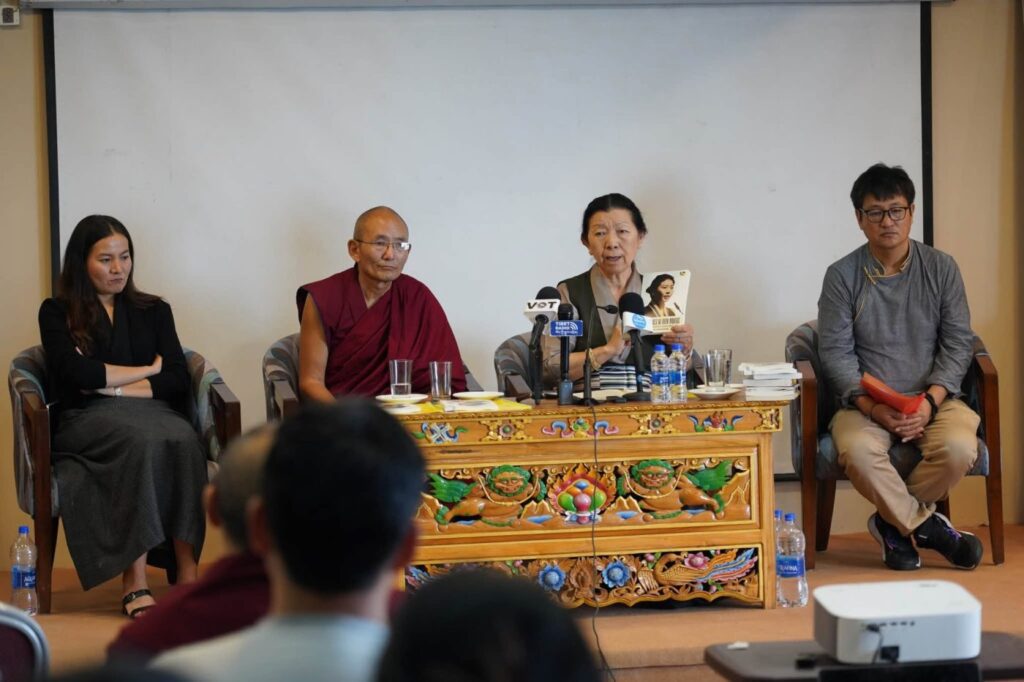
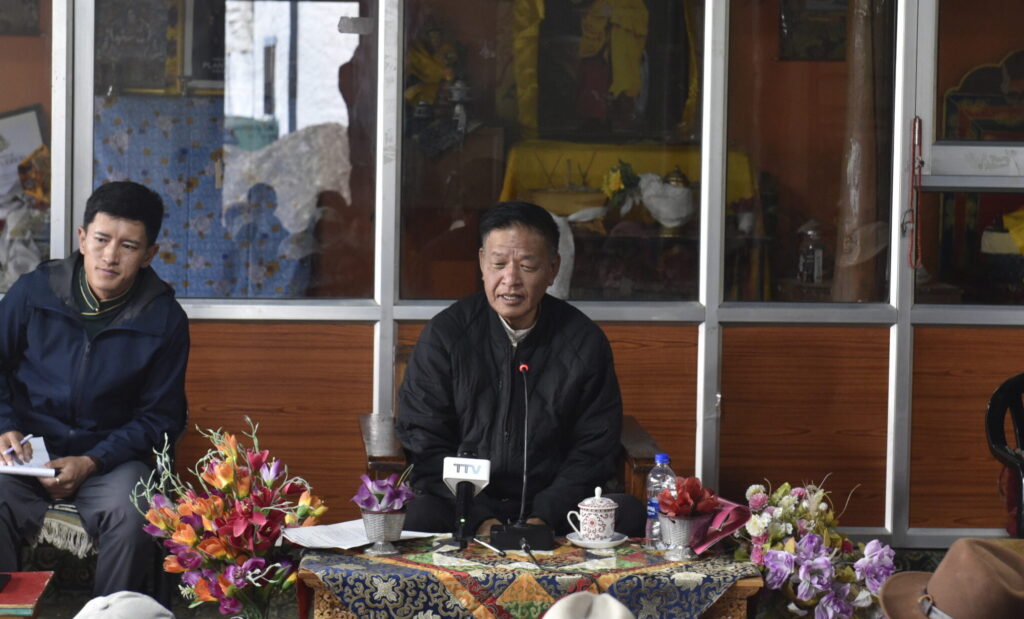
The Core Group for the Tibetan Cause – India also held a press conference in Dharamshala, calling for strengthened awareness on the importance of a free Tibet for India’s security among young Indians.
Member of the Indian Parliament and Co- Convener of the All-Party Indian Parliamentary Forum for Tibet, Tapir Gao called upon the Indian government to recognise His Holiness the Dalai Lama’s lifelong commitment to the promotion of peace and non-violence. During the monsoon session of the Indian parliament, the Lok Sabha Member of Parliament made an appeal to the Indian government to confer upon the 90-year-old Tibetan leader India’s highest civilian award, Bharat Ratna.
Ghoton: Year of Compassion
As the Central Tibetan Administration observed 2025 as the Year of Compassion, commemorating the 90th birthday of His Holiness the Dalai Lama, the annual calendar marked special occasions, including 17 November, the 75th anniversary of His Holiness the Great 14th Dalai Lama’s assumption of both temporal and spiritual leadership of Tibet, and 22 February, the 86th anniversary of his enthronement.
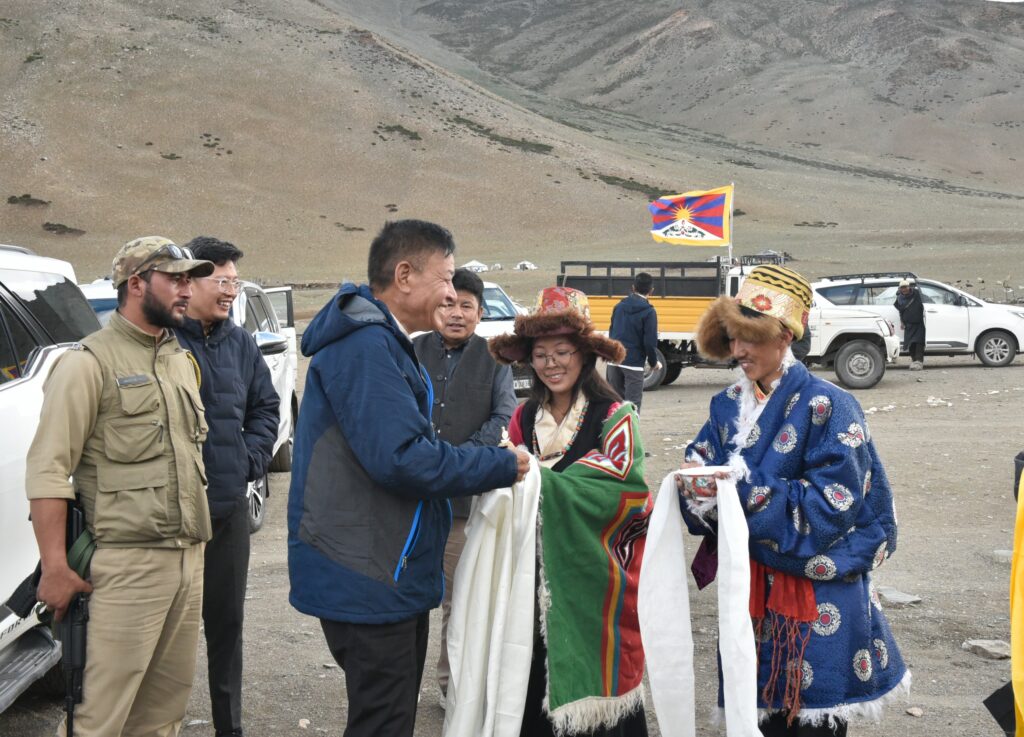
All the official commemorations of the year 2025 saw delegations from different countries, such as Estonia, Slovakia, the Czech Republic, Chile, New Zealand, Fiji Islands, Australia, France, Japan, Switzerland, and Canada visit Dharamshala in a symbolic act of support and solidarity. The series of visiting delegations sought an audience with His Holiness the Dalai Lama and paid special visits to the seat of the Central Tibetan Administration. The leadership of the Central Tibetan Administration received the official delegations by organising receptions and press conferences, strengthening existing friendships and garnering new support from world parliaments, governments, civil societies and media organisations.
As the year comes to an end as per the Tibetan Lunar calendar, Tibetans around the world continue to observe 2025–2026 as the Year of Compassion, commemorating Ghoton and celebrating the 90th birthday of His Holiness the Dalai Lama. From tree plantation drives to pledges to increase the use of the Tibetan language, these celebrations are being marked in diverse and meaningful ways by large numbers of people.
*Tenzin Chemey is the Deputy Secretary and Director of Tibet TV at the Department of Information and International Relations, Central Tibetan Administration.