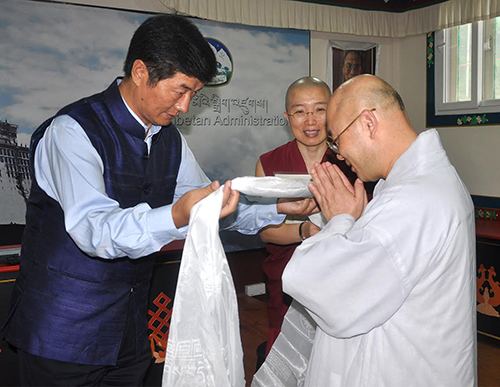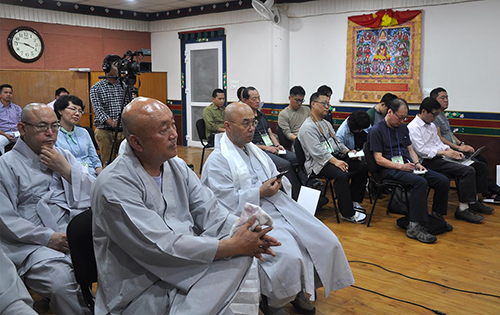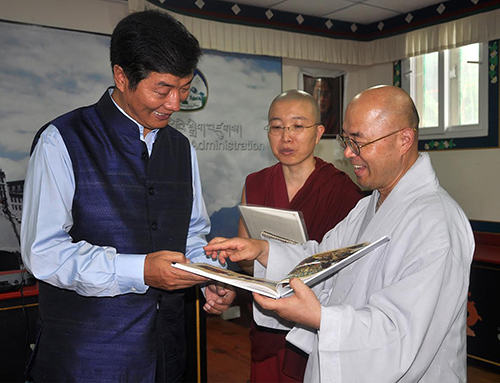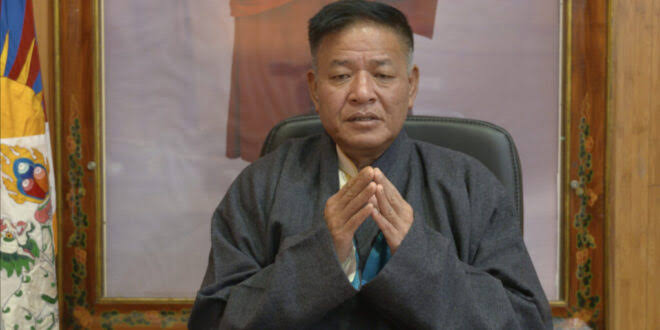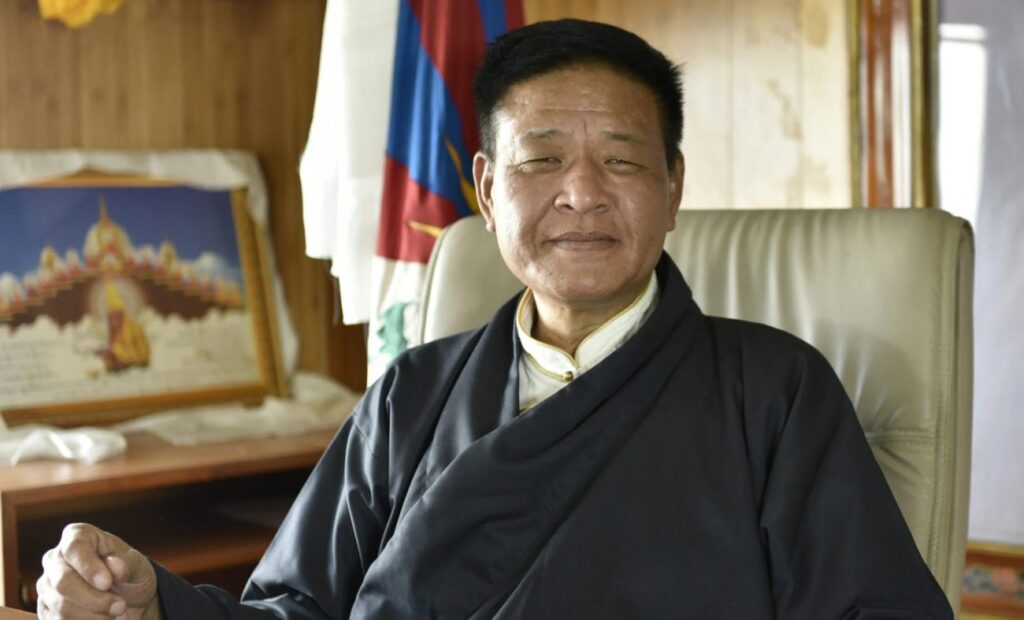

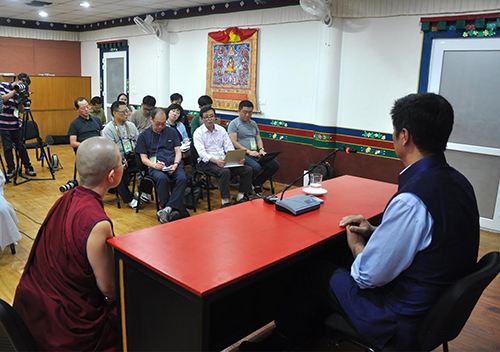
DHARAMSHALA: Sikyong Dr Lobsang Sangay, the democratically elected political leader of Tibet, met a group of Korean media personnel and members of the committee for the promotion of His Holiness the Dalai Lama’s visit to Korea at Lhakpa Tsering hall, DIIR.
In his interaction with the Koreans, Sikyong spoke about Korea-Tibet relations particularly relating the brutal invasion of Tibet with the Korean War, which happened simultaneously in the early 1950s.
He also expressed his gratitude to the Jogye order of Korean Buddhism for their sustained efforts towards making His Holiness the Dalai Lama’s visit to South Korea a success. Sikyong expressed his optimism and explained that Korea being a Buddhist nation with over 42 per cent Buddhist population, would benefit greatly from the teachings of His Holiness the Dalai Lama.
Sikyong further lamented the inability of the Korean government to invite His Holiness the Dalai Lama to Korea till now. “It is just an excuse to blame China’s economic pressure, for the inability of many Buddhist countries in Asia for not inviting His Holiness the Dalai Lama to their countries. China is a profit-oriented country and whatever happens, they will place profit as their first priority. So, even if a country invites His Holiness the Dalai Lama, China may sulk but they won’t stop their economic relations,” he explained.
“Many western countries host His Holiness the Dalai Lama on a regular basis but it doesn’t stop them from maintaining economic relations,” he noted.
Sikyong also spoke on the Middle Way Approach of the Central Tibetan Administration to resolve the Tibet issue. “The Middle Way Approach is a win-win proposition, which straddles the middle path between the status quo and independence – one that categorically rejects the present repressive and colonial policies of the Chinese government towards the Tibetan people while not seeking complete separation from the People’s Republic of China.” Sikyong said.
He further gave a brief outline of the Central Tibetan Administration’s structure and the activities performed by the various departments to amplify the Tibetan movement on the one hand and looking after the welfare of the Tibetan people on the other.
The interaction lasted for about one hour followed by question and answer session.