DHARAMSHALA: The Tibetan Parliament-in-Exile yesterday condoled the family and devotees of His Eminence Sakya Dagchen Rinpoche who passed away on 29 April in Seattle, US. Rinpoche was 88.
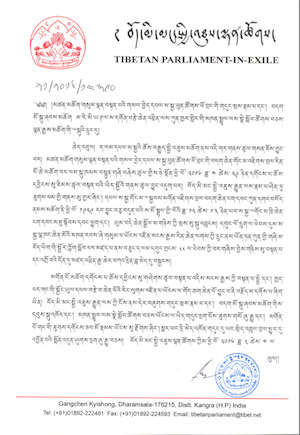
In a condolence letter addressed to Rinpoche’s family and disciples, the Tibetan Parliament wrote: “We are saddened to learn of the passing away of His Eminence Sakya Dagchen Rinpoche Ngawang Kunga Sonam of Phuntsok Phodrang. We offer our deepest condolences to his family and disciples.”
“Rinpoche has spent his entire lifetime engaged in dharmic activities for the sake of humanity as well as for the collective merit of Tibetans inside and outside Tibet. Therefore, his demise is a huge loss to Tibetan Buddhism as well as to his numerous disciples and devotees,” it said.
The Tibetan Parliament also expressed its prayers for the swift rebirth of Rinpoche so that he can continue his noble teachings and transmissions of the esoteric Tibetan Buddhist practice.
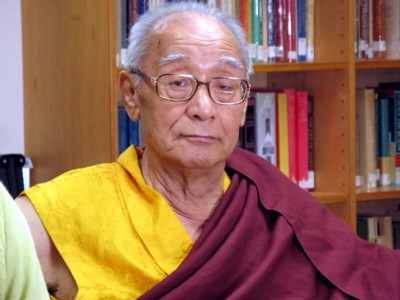
A brief biography of His Eminence Sakya Dagchen Rinpoche
His Eminence Sakya Jigdrel Dagchen Rinpoche Ngawang Kunga Sonam was born on 2 November 1929 in Southwestern Tibet. He was born into the Phuntsok branch of the Khon lineage of the Sakya School to Sakya Trichen Ngawang Thutop Wangchuk and Dechen Dolma. At the age of six, he joined the main Sakya monastery and studied Tibetan alphabet, composition, classical literature and philosophy under the tutelage of Yongzin Sangay Rinchen.
Rinpoche was later tutored by the abbot of the South Monastery of Sakya and by the Secretary of the Sakya administration. Under these two teachers, Rinpoche studied the Four Classes of Tantra (esoteric Buddhism) and also received teachings on the Sakya meditation deities and learned the fundamental esoteric religious rites of the Sakya tradition: religious music, mandala offering, dancing, and ritual hand gestures.
Under the guidance of his father, His Eminence Trichen Ngawang Thutop Wangchuk (the 40th throne holder of Sakya school, and other distinguished teachers, he received instructions in all the teachings of the sutras and tantras. Upon completion of his training, he received the unbroken Khön lineage transmission of the Sakya Vajrakilaya and Hevajra empowerments and the complete Lamdre, the main teachings of the Sakya tradition. Following this, he went into a long series of study and meditation retreats until the age of 17.
In 1947, as requested by the then Tibetan government, Rinpoche accompanied his father Sakya Trichen Ngawang Thutop and visited Ngari, Mangyul, Lochumik, Gyatsa in western Tibet, where he gave a series of teachings. Following his successful teachings in western Tibet, he visited Lhasa and met His Holiness the Dalai Lama and Sikyong Tagdra Rinpoche and visited the Potala palace and Jokhang temple.
In 1948, he came to India with his father and went on a pilgrimage tour of the holy Indian cities including Bodh Gaya, Nalanda, Varanasi, Lumbini, Kushinagar etc.
At the age of 20 in 1949, Rinpoche married Jamyang Palmo, who descends from a family of lamas and doctors in Kyegudo, Kham. She is the niece of Deshung Rinpoche. They have five sons together.
In 1951, Rinpoche gave his first sermon to the public, conferring the Lamdre Tsokshé teachings in front of the main Sakya mnonastery. In the same year, he went to eastern Tibet where he studied under Jamyang Khentse Chokyi Lodoe and Dilgo Khentse Rinpoche. After completing his major studies, Dagchen Rinpoche bestowed empowerments and teachings throughout the region.
During his journey from Lahsa to Kham, he also visited the Tashi Lhunpo monastery and met the 10th Panchen Rinpoche.
In 1954, when His Holiness the Dalai Lama and the Panchen Rinpoche visited Beijing, Dagchen Rinpoche was also in the Tibetan delegation as the representative of Sakya Tradition of Tibetan Buddhism.
In 1958, Rinpoche left Tibet via Phenpo to Bhutan. From Bhutan, he came to Kalimpong in India. From Kalimpong, Rinpoche went to Darjeeling where he stayed for over a year, giving empowerments and spiritual teachings. He also attended the meeting of the four schools of Tibetan Buddhism at that time on behalf of the Sakya Tradition.
In 1960, Rinpoche was invited to participate in a research project on Tibetan civilisation at the University of Washington sponsored by the Rockefeller Foundation. Since then, Rinpoche was based in Seattle along with his wife, five sons and other family members.
In 1974, Rinpoche co-founded the Sakya Thekchen Choeling in Seattle, one of the first dharma centres in the west, with Deshung Rinpoche. They worked actively together to impart the teachings of Tibetan Buddhist philosophy and ritual practice to westerners. Since then, Rinpoche has been travelling extensively around the world including India, Singapore, Malaysia and Europe to give empowerments and teachings at the request of devotees.
In 1984, Rinpoche’s dharma center Sakya Thegchen Choeling was renamed Sakya Tsechen Kunkyab Thekchok Choeling. The centre hosted scholars from all the four Tibetan Buddhist traditions including His Holiness the Dalai Lama, Sakya Trichen Rinpoche, Gyalwang Karmapa Rinpoche, among others.
In 1996, Rinpoche accompanied by his wife, visited Tibet and went on a pilgrimage to the Jokhang temple, Samye monastery and the great Sakya monasteries in southern Tibet. Rinpoche also gave teachings and empowerments to the public during his visit.
Having taught the Lamdre Lopshey (The Path and Its Fruit in its more esoteric form) five times in his lifetime, Rinpoche has accumulated numerous disciples around the world. Therefore to cater to the spiritual needs of these students, Rinpoche has established many dharma centers and Sakya institutes around the world including in New Delhi, Taiwan, Hong Kong, and Vietnam.
An ecumenical Buddhist scholar and a non-sectarian spiritual teacher, Rinpoche places great emphasis on education and encourages inter-religious and interdisciplinary meetings for the collective growth of the Tibetan Buddhist world. He continued to give instructions, empowerments and transmissions to everyone until his journey into parinirvana on 29 April 2016. He is survived by his sons and wife.