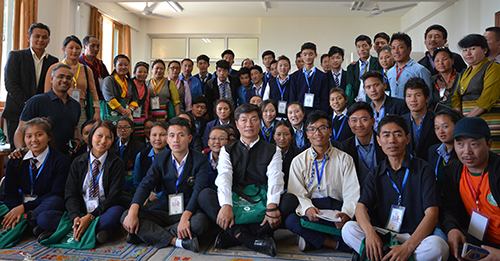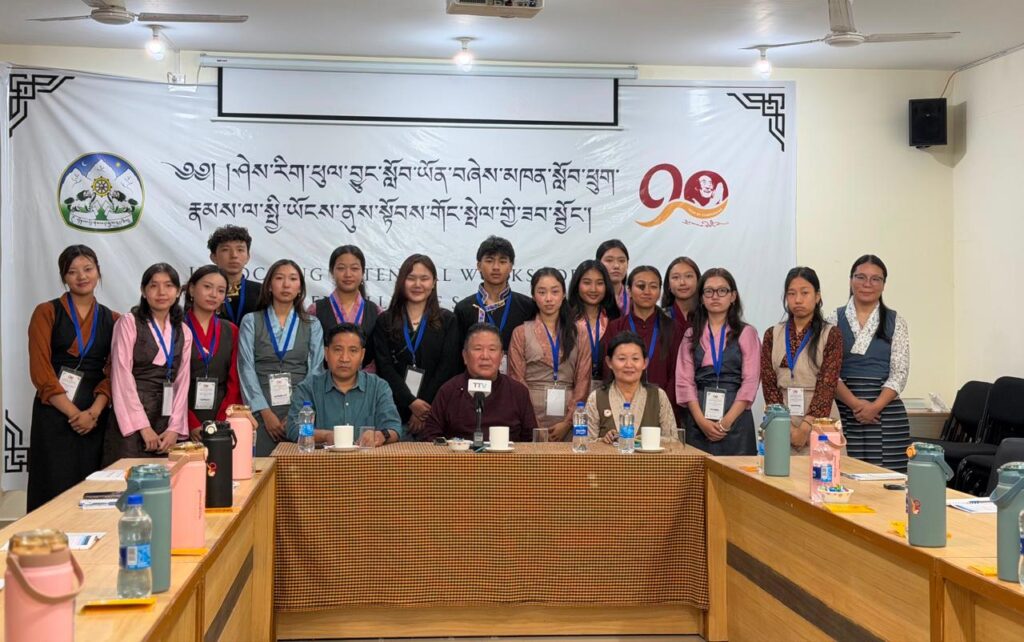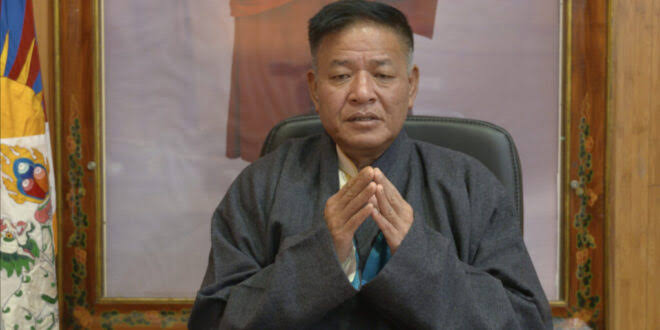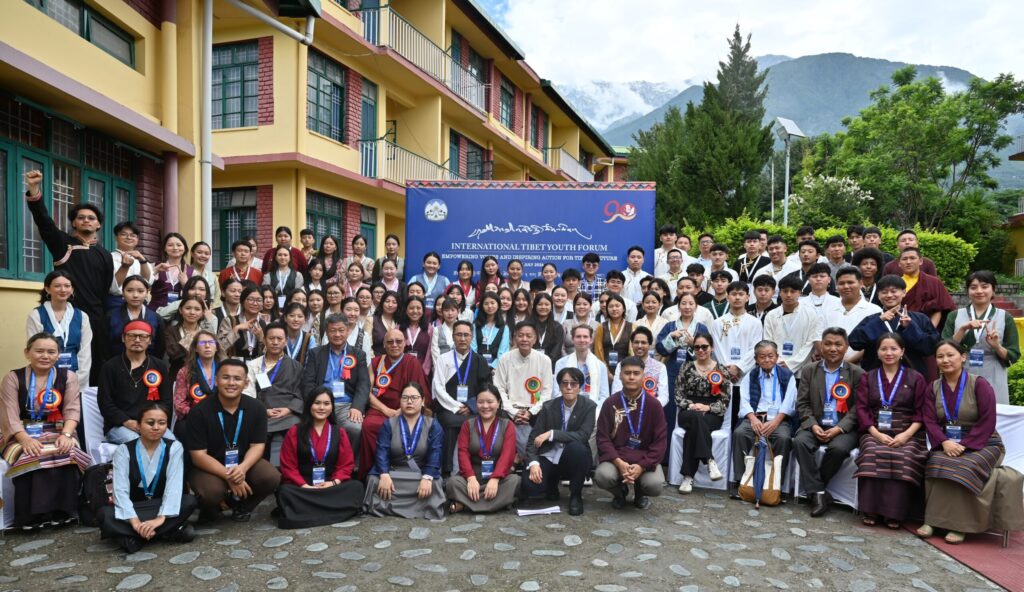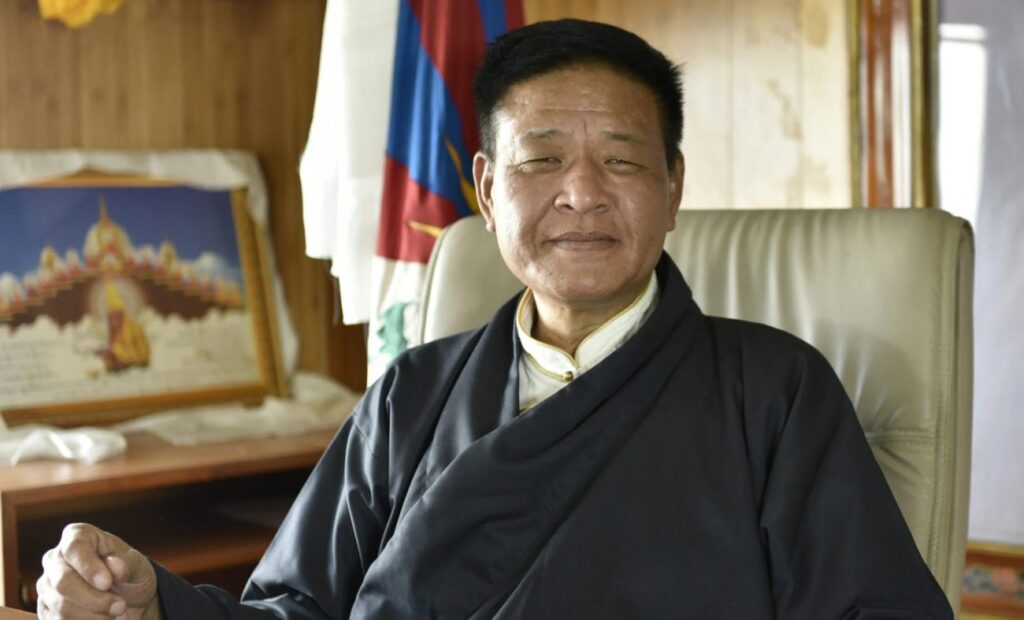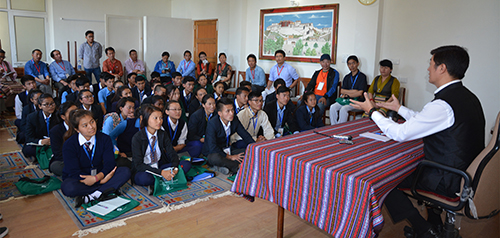
DHARAMSHALA: Sikyong Dr Lobsang Sangay today met with a delegation of school captains from 19 Tibetan schools based in India and Nepal. The students are in Dharamshala as part of a leadership workshop organised by the Department of Education.
Ahead of the interaction, Sikyong invited questions from the students in order to facilitate dialogue rather than a monologue. The students actively posed questions ranging from education policies of the 15th Kashag to the current situation inside Tibet.
In his response, Sikyong Dr Lobsang Sangay spoke about the critical political and human rights situation prevailing inside Tibet and the official policies of the Central Tibetan Administration to resolve these issues. He also explained in detail the scholarship programs of the education department particularly the Sikyong Scholarship, which is the most prestigious scholarship awarded to a Tibetan student in exile.
Speaking on the Sino-Tibetan dialogue, Sikyong explained that the resolution of the Tibetan issue relies strongly on the success of the Sino-Tibetan dialogue process. “The Middle Way Approach of the Central Tibetan Administration is the only realistic solution to resolve the Tibet issue. And it will be successful some day. However, till then, we should exert concerted effort and formulate policies to ensure the sustenance of the Central Tibetan Administration,” he said, adding that galvanising international support for Tibet and remaining united against the common adversary is our most powerful strategy.
Sikyong also highlighted five-important aspects of the Tibetan struggle that strengthens the Tibetan movement, namely the valour of the Tibetans inside Tibet, the need to study and understand social changes in China, growth of international support for Tibet, the support of India and the Indian people, and a vibrant Tibetan democratic administration.
Further speaking on the Tibet issue, Sikyong said that the narrative of contemporary Tibet issue could be effectively compressed into five M’s – Mistake, Misinterpretation, Misunderstanding, Middle Way Approach and Mutual understanding.
Sikyong attributed the occupation of Tibet as a mistake, which caused widespread ecological destruction, and political and human rights violation in Tibet. Misinterpretation is referred to as the Chinese government’s attempt to misinterpret the mutually beneficial Middle Way Approach of the Central Tibetan Administration. Misunderstanding is the outcome of the Chinese government’s false propaganda, which led to a wrong perception of Tibet among the Chinese public. Middle Way Approach is the official policy proposed by His Holiness the Dalai Lama and adopted by the Tibetan Administration to resolve the Tibet issue, and the final M which stands for mutual understanding refers to the renewed understanding and affinity between the Chinese and Tibetan people as a result of the Middle Way Approach.