Tibetans Reaffirm Faith in His Holiness the Dalai Lama, Stand Firm on Middle-Way ApproachSaturday, 22 November 2008, 9:20 p.m.
 |
|
The special general meeting of the Tibetan people successfully concludes with a unanimous resolution to stand firm with His Holiness the Dalai Lama’s Middle-Way Approach to engagethe Chinese government in finding a mutually beneficial solution to the issue of Tibet. The meeting resolutely calls on the China to respond positively to the Tibetan people’s demand for genuine autonomy for Tibet as enshrined in the constitution of the People’s Republic of China.
|
Dharamshala:
The historic special general meeting of the Tibetan people unanimously
reaffirmed Tibetan people’s faith and allegiance in His Holiness the
Dalai Lama and to continue to follow the Middle-Way Approach to engage
China in finding a peaceful resolution of the Tibetan issue.It
was decided that the Tibetan people will remain steadfast to the
principles of non-violent in all its activities to resolve the issue of
Tibet under the leadership of the Central Tibetan Administration. The
meeting was convened by His Holiness the Dalai Lama taking into
consideration particularly the present critical situation in Tibet and
the lack of positive response from the Chinese leadership to resolve
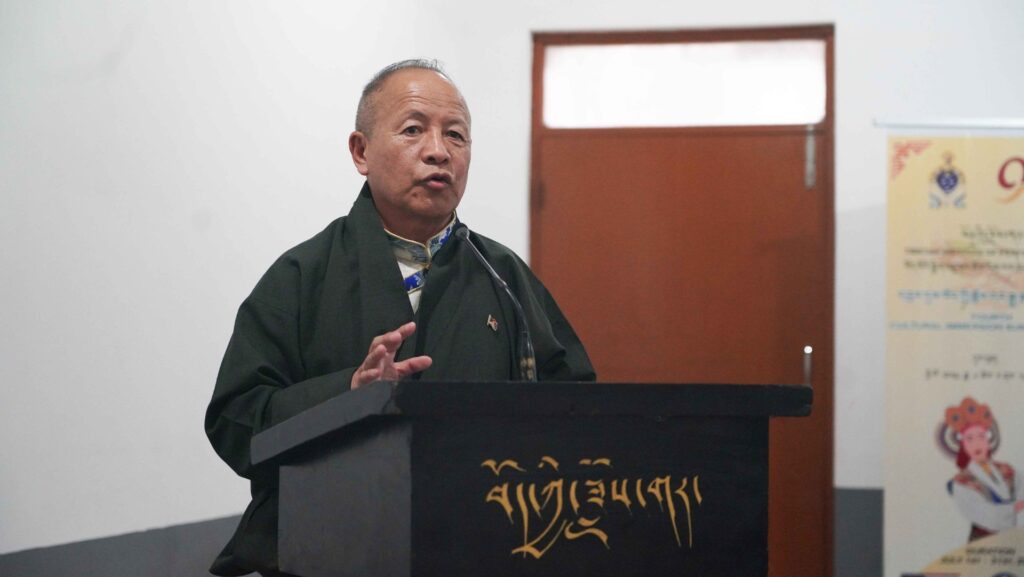
the issue of Tibet. “The meeting reaffirmed our faith and
allegiance in the leadership of His Holiness the Dalai Lama to out
rightly refute the Chinese government’s claim that His Holiness and the
Central Tibetan Administration cannot represent the Tibetan people,” Mr
Karma Chophel, speaker of the Tibetan Parliament-in-Exile, said in his
closing remarks.“The envoys of His Holiness the Dalai Lama has
challenged the Chinese leadership to hold a referendum of the Tibetan
people if they wanted to know whom they consider their sole
representative and leader,” Mr Chophel said.“We affirmed that
His Holiness and the Central Tibetan Administration are the sole
representative of the Tibetan people,’’ the speaker added.The
special general meeting also strongly appealed to His Holiness the
Dalai Lama not to take semi retirement or retirement and to continue to
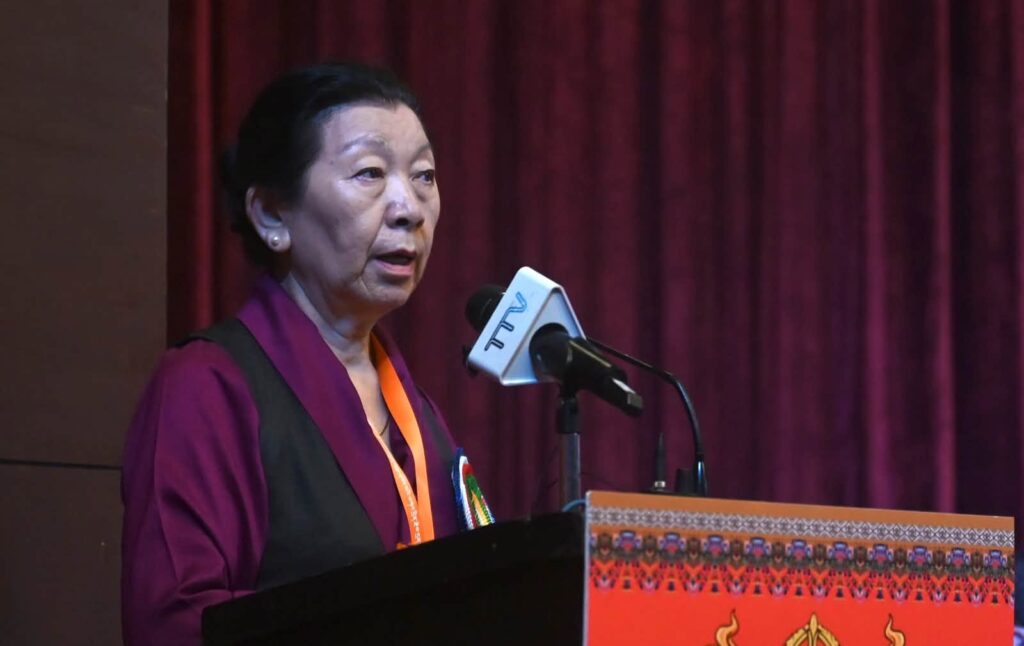
lead the Tibetan people.“The Tibetan delegates also called upon
the Chinese government to stop criticizing and making baseless
allegations against His Holiness the Dalai Lama, as it not only hurts
the sentiments of the six million Tibetan people, but also many
Buddhist followers including many Chinese people who follow Buddhism,”
the speaker said.“It also hurts the feelings the all those
people who have respect and love for His Holiness the Dalai Lama and
his untiring work for world peace and universal responsibility,” he
said.The delegates lauded the courage and determination of
Tibetans living in Tibet for expressing their suggestions and opinions
to find a way forward to resolve the issue of Tibet under the
leadership of His Holiness the Dalai Lama.
 |
The
meeting called upon the Kashag to terminate the ongoing talks with the
Chinese leadership if the Chinese government does not agree to the
demands and reciprocate positively to the overtures of the Tibetan
people.Some of the delegates expressed frustrations over the
Chinese government’s lack of positive response to the mutually
beneficial solution of the Middle-Way Approach, discrediting His
Holiness the Dalai Lama and the continued repressive measures being
undertaken in Tibet.The delegates unanimously agreed that the
uprising of the Tibetan people across the traditional provinces of
Tibet in March this year is a call against the wrong policies of the
Chinese government and Tibetans bear no ill feelings against the
Chinese people. Out rightly rejecting the Chinese government’s
decree on getting its approval in selecting the reincarnation of
spiritual leaders, the delegates resolutely called upon the Chinese
government to uphold and follow the Tibetan traditional method of
recognizing the reincarnation of Tibetan spiritual leaders.While
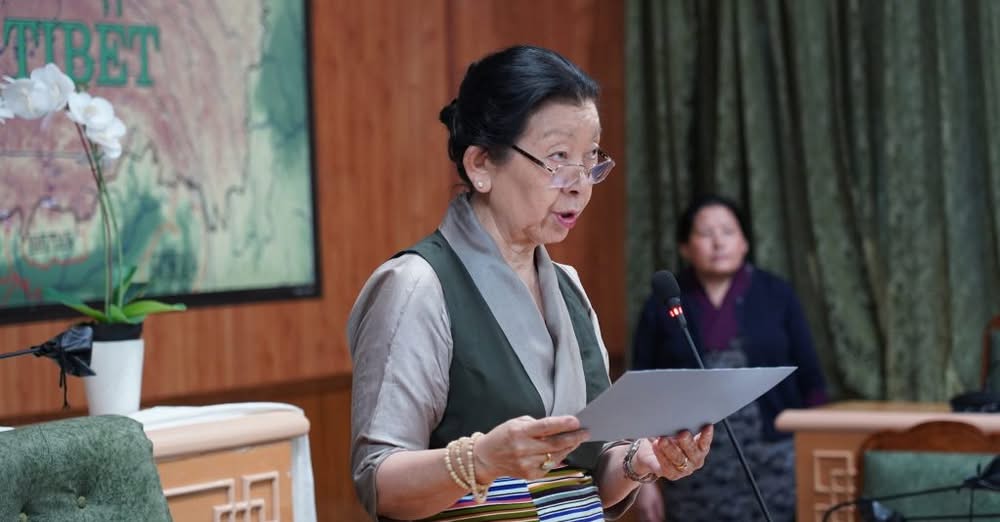
addressing gathering, Kalon Tripa Prof Samdhong Rinpoche said we have
made our demands clear to the Chinese government by presenting the
“memorandum on genuine autonomy for Tibet”. We will not make any
further compromise on our demands outlined in the memorandum, he added.Kalon
Tripa reiterated that the main issue of contention between China and
Tibet is only the welfare of the six million Tibetan people. It is not
at all related to the personal status of His Holiness the Dalai Lama;
nor is it related to the status of a few Tibetans who are close to him.
We would like to once again make it very categorical that concerning
them that we do not have a single issue to be discussed with the
People’s Republic of China.Kalon Tripa encouraged the Tibetan
people to put concerted effort on the proposed 11 model action plans,
broadly categorised as educational, social, economic, religion and
culture. These plans include engaging in meritorious actions
to enhance the collective merit of the Tibetan people; establishing
close ties with all the people who have cultural, religious and
linguistic affinities with the Tibetan people; sustaining Tibetan
language and culture by providing an adequate level of modern education
to the children; providing help for the education and health care of
Tibetans in Tibet; spreading awareness on the current state of Tibet
and clarifying misunderstandings and misinterpretations – including to
the Chinese based in the Mainland China; preserving the unity and
harmony of Tibetan community in exile; and others. Kalon Tripa
expressed his heartfelt appreciation and gratitude to all the national
and international press, documentary filmmakers, for extensive coverage
of the special meeting and taking special interest and initiative on
the issue of Tibet.He also thanked the Tibetan Parliamentary
Secretariat for putting concerted effort in successfully organising the
special general meeting on Tibet.The delegates expressed their
gratitude to governments, parliaments, groups and individuals, and
especially the government and people of India for their continued
support for the Tibetan people and the Tibetan cause. 581
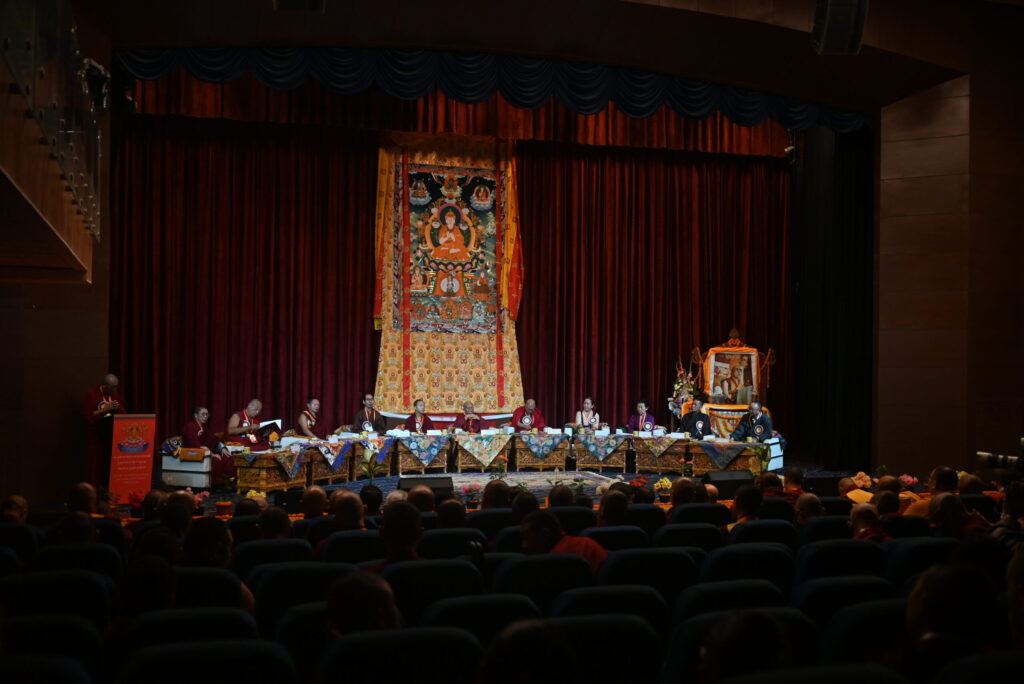
delegates representing Tibetan people based in 19 different countries –
US, Canada, Switzerland, England, Australia, France, Belgium, Taiwan,
Russia, Japan, Sweden, Germany, Italy, Netherlands, Spain, Hungary,
Nepal, Bhutan and India – attended the six-day special general meeting
on Tibet, from 17 – 22 November held in Dharamsala.