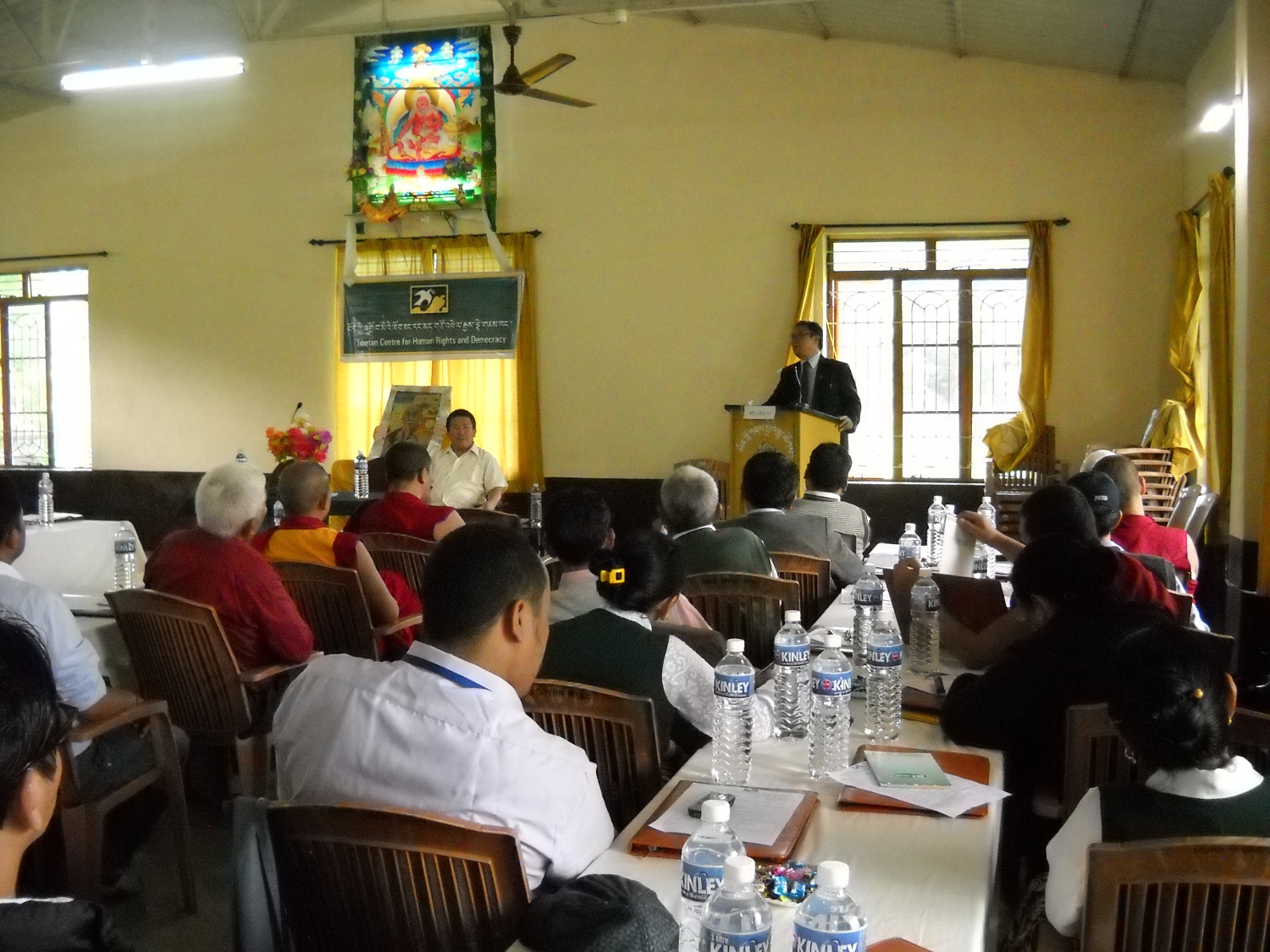
Mundgod: A three-day workshop on human rights and democracy organised by the Dharamsala-based Tibetan Centre for Human Rights and Democracy at the Tibetan settlement of Mundgod in south India has begun today.
Over 60 participants from the five Tibetan settlements in south India and Mainpat and Bandara in Orissa are attending the workshop. The participants consist of Tibetan assemblies, the Tibetan freedom movement, members of the regional Tibetan Youth Congress and the Tibetan Women’s Association.
In his introductory address, Mr Ugen Tenzin, the director of the Tibetan Centre for Human Rights and Democracy, underlined the importance of strengthening democracy in order to make the exile community cohesive and sustainable. He thanked the participants for making time to attend the workshop and wished them a great learning experience from these three days of workshop and togetherness.
The workshop was inaugurated by Mr Palden Dhondup, the Tibetan Settlement Officer of Mundgod.
In his inaugural speech, Mr Palden Dhondup told the participants that they should spread what they learned at the workshop to other younger people in their respective settlements when they return. He said he got the impression that the same group of people were receiving many workshops and the experience and knowledge they gained at these workshops did not percolate down to younger people. He suggested very strongly that what they learned at this workshop should be spread to a wider and younger participants.
Mr Thubten Samphel, Secretary for Information of the Department of Information and International Relations of the Central Tibetan Administration, spoke on the issue of Tibet in the current international scenario. He pointed out that one important source of support for the Tibetan people comes from the Chinese community from both within and outside China. Mr Samphel emphasised that this kind of support is both enduring and precious.
Mr Samphel also touched upon the significance of Tibet as the Third Pole and the source of life and livelihood for millions in Asia who depend on the river waters of Tibet for their survival. He pointed out that more Asians are coming to a better appreciation of Tibet as a source of life.
Following the talk by Mr Samphel, the session was opened to the floor for questions and comments. The participants expressed their appreciation for coming together event, where they learn and share experiences and exchange opinions.