
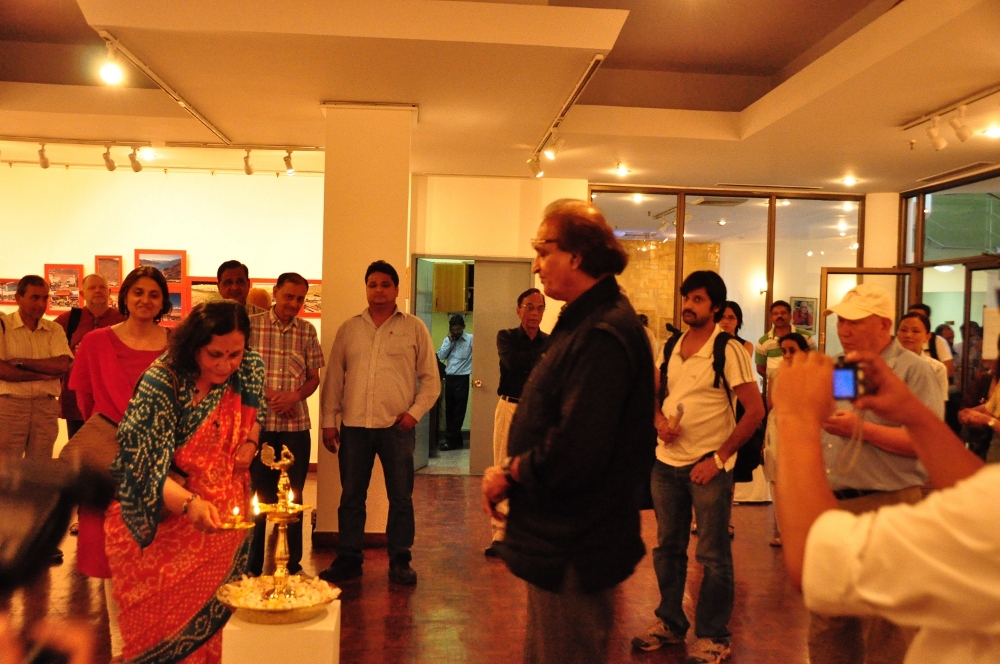
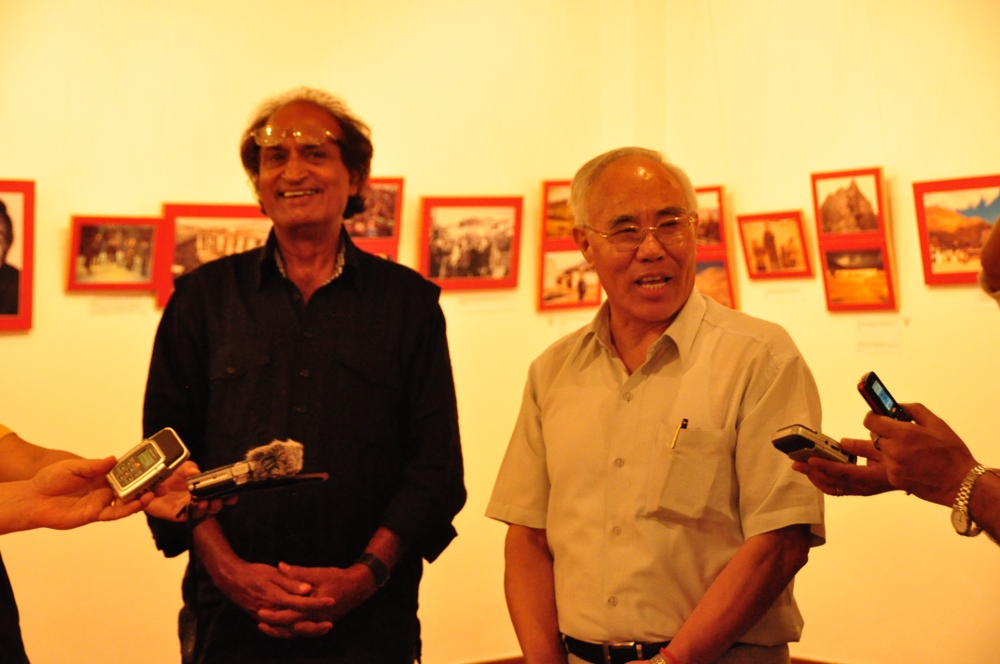
NEW DELHI: An exhibition of rare photographs that shows the history, culture and people of Tibet since 1914 was inaugurated by Mr. Raghu Rai, a globally acclaimed Indian photographer, photojournalist and a Padmashree awardee and Kalon Tempa Tsering, representative of His Holiness the Dalai Lama in New Delhi last Thursday (7 July) at the India International Center.
Speaking on the occasion, Mr Rai said the world has changed to wilderness and madness yet the spirituality and humane spirit of Tibet has remained forever strong and static.
Referring to the images of ordinary Tibetans mobbing and reverently pulling the clothes of His Holiness’ emissaries during the 1979 trip to Tibet, Mr Rai expressed his fascination with the belief that in Tibet people treasure even shreds of clothing as holy and virtuous by keeping them at home. “That magic is lost among many cultures and communities around the world,” he said.
The Chinese agenda to destroy the spirit of the Tibetan people has failed, Mr Rai said, because these photographs not only show the world of emotions and spirituality of Tibet but also the fact that Tibetan spirit is as magnificent and real as ever. “History can be written and rewritten,” he said, “but photos cannot be rewritten.”
The veteran photographer who has published numerous books on world famous personalities including His Holiness and Mother Teresa said he is waiting for His Holiness to return to Lhasa. “That’s when I will take my last photographs of His Holiness. In Lhasa.”
As His Holiness says, I believe he will certainly survive the Chinese Communist Party, Mr Rai added.
Kalon Tempa Tsering said the exhibition portrays what Tibet really was before and after Chinese rule including the destruction of material and emotional possessions of the Tibetan people. Despite the Chinese government narrative on Tibet as a “socialist paradise”, the photographs show Tibet’s real situations over the years under Chinese rule for instance, in the way the so-called serfs enthusiastically welcomed the 1979 fact finding delegation of exile Tibetans by tearing off their clothes as sacred souvenirs, said Kalon Tempa Tsering.
Divided into three sections, the first part of the exhibition titled Tibet Then And Now includes photographs taken between 1914 and 1958 in Tibetan
provinces of Amdo, Kham and U-Tsang by Dudul N. Tsarong, former Tibetan government official and Alexandra David Neel, the well-known French traveler and explorer who became the first western woman to enter Tibet. During her journey, Neel also met the Thirteenth Dalai Lama in 1912. Dudul Tsarong, an avid photographer, was still taking photos until his sudden demise last month at the age of 92. The second section displays photographs taken in 1979 by Lobsang Samten Taklha, elder brother of His Holiness the Dalai Lama, during the first visit of exile Tibetan delegation to assess the situation in Tibet under Chinese rule. Largely informal and unofficial record of the groundbreaking trip, Mr Taklha’s collection reveals the outpourings of long-hidden emotions and longing for His Holiness among ordinary Tibetans; and the ruins of Tibetan monasteries and monuments in the wake of Chinese occupation. The final section depicts the current conditions in Tibet through photographs taken from 2000 to 2010 by numerous visitors and tourists to Tibet.
The exhibition is jointly organised by the New Delhi Bureau of His Holiness the Dalai Lama, India International Center and the Dehradun-based Songsten Library. The photographs were assembled by Mrs Namgyal Taklha and Ms Jane Moore.
The exhibition will be on display until 14 July from 11am to 7pm daily at the IIC Annexe.