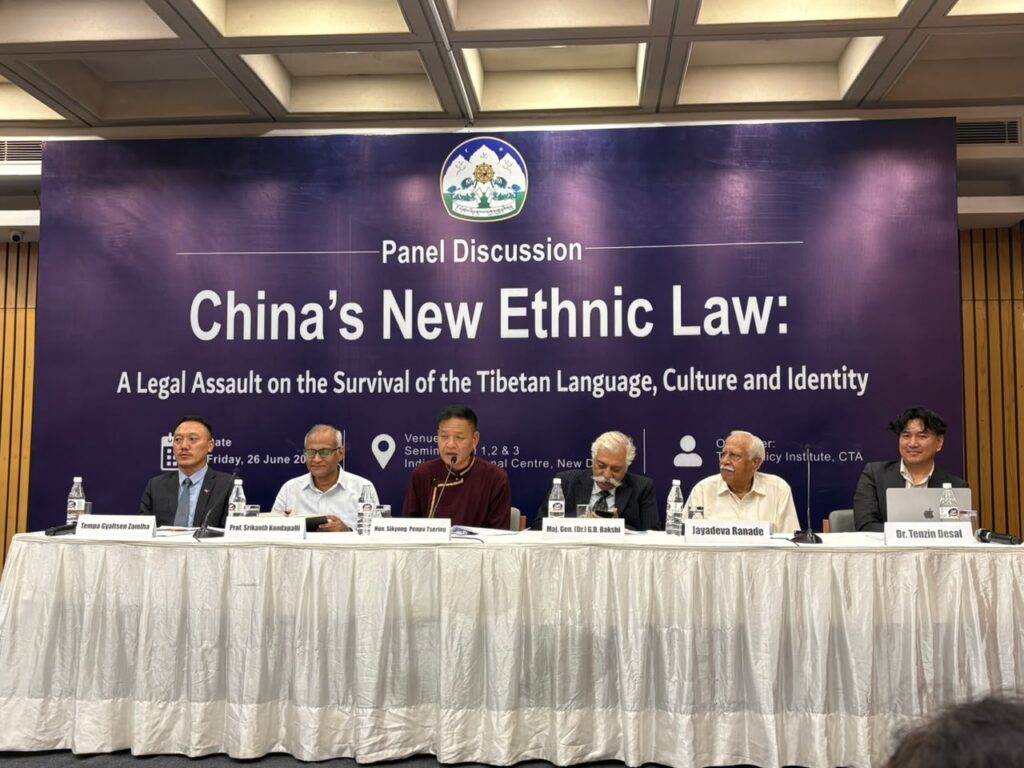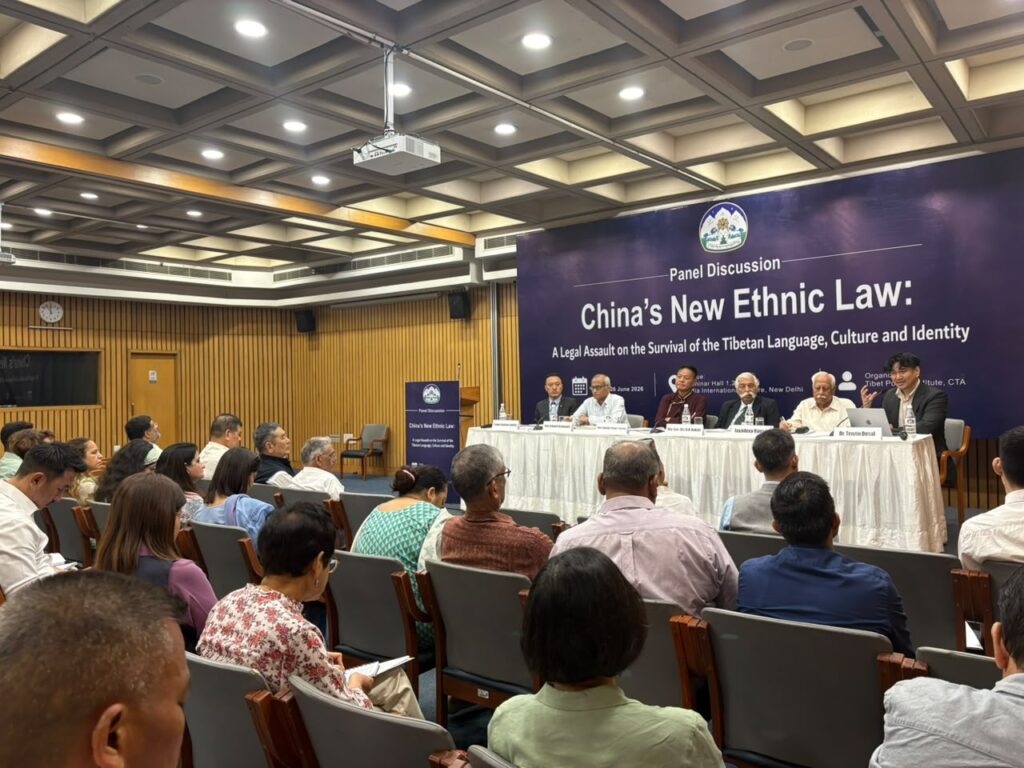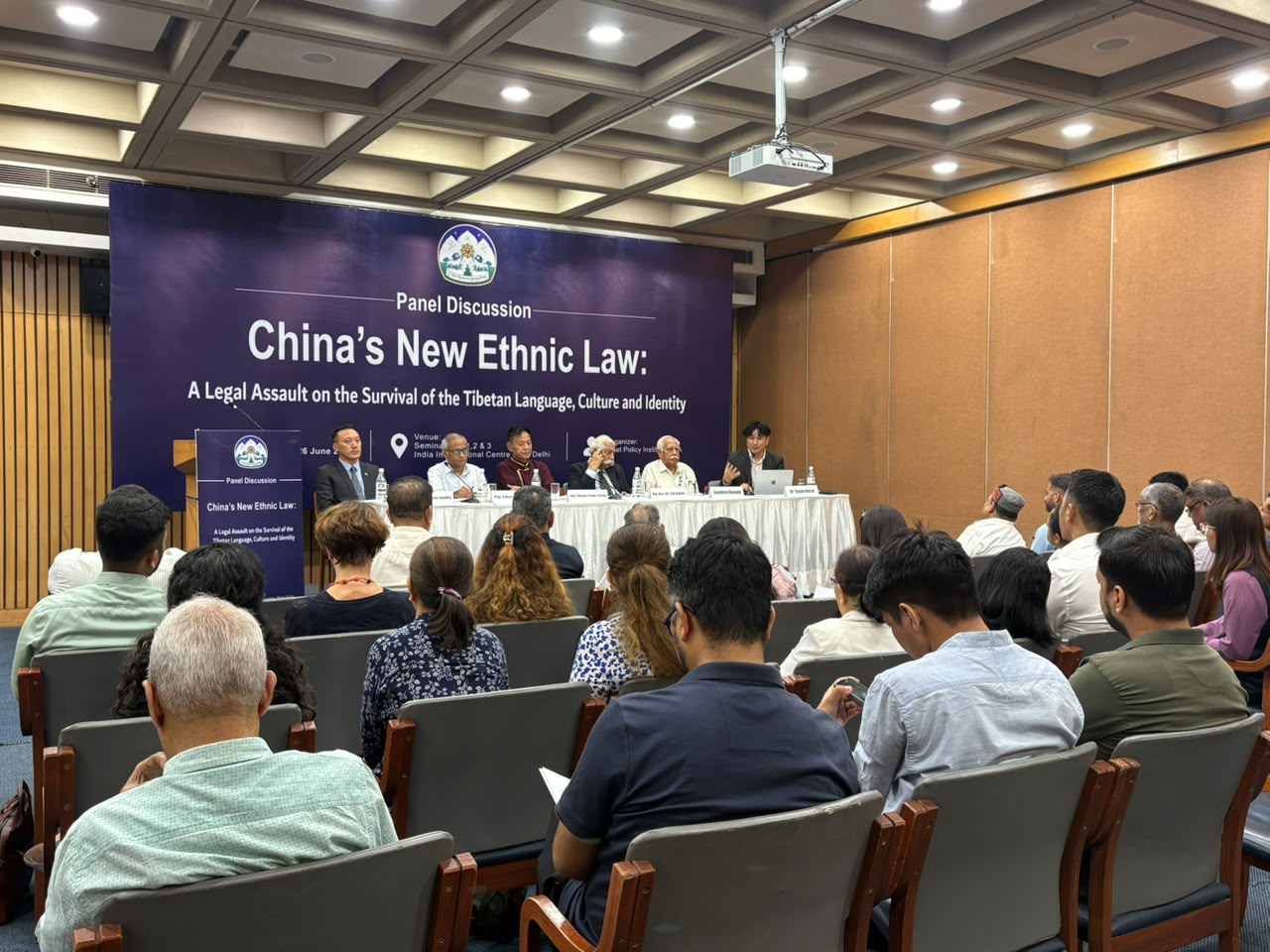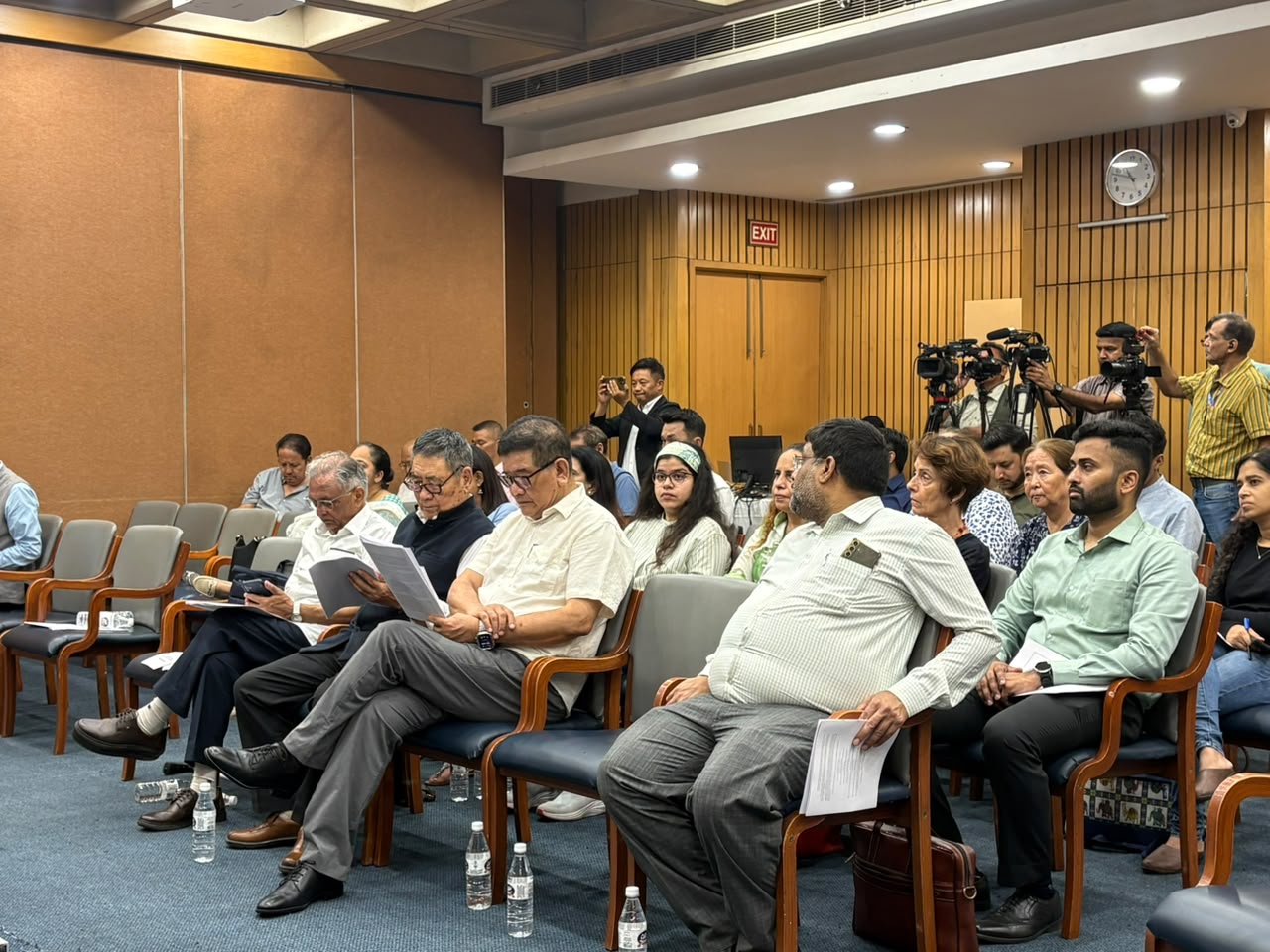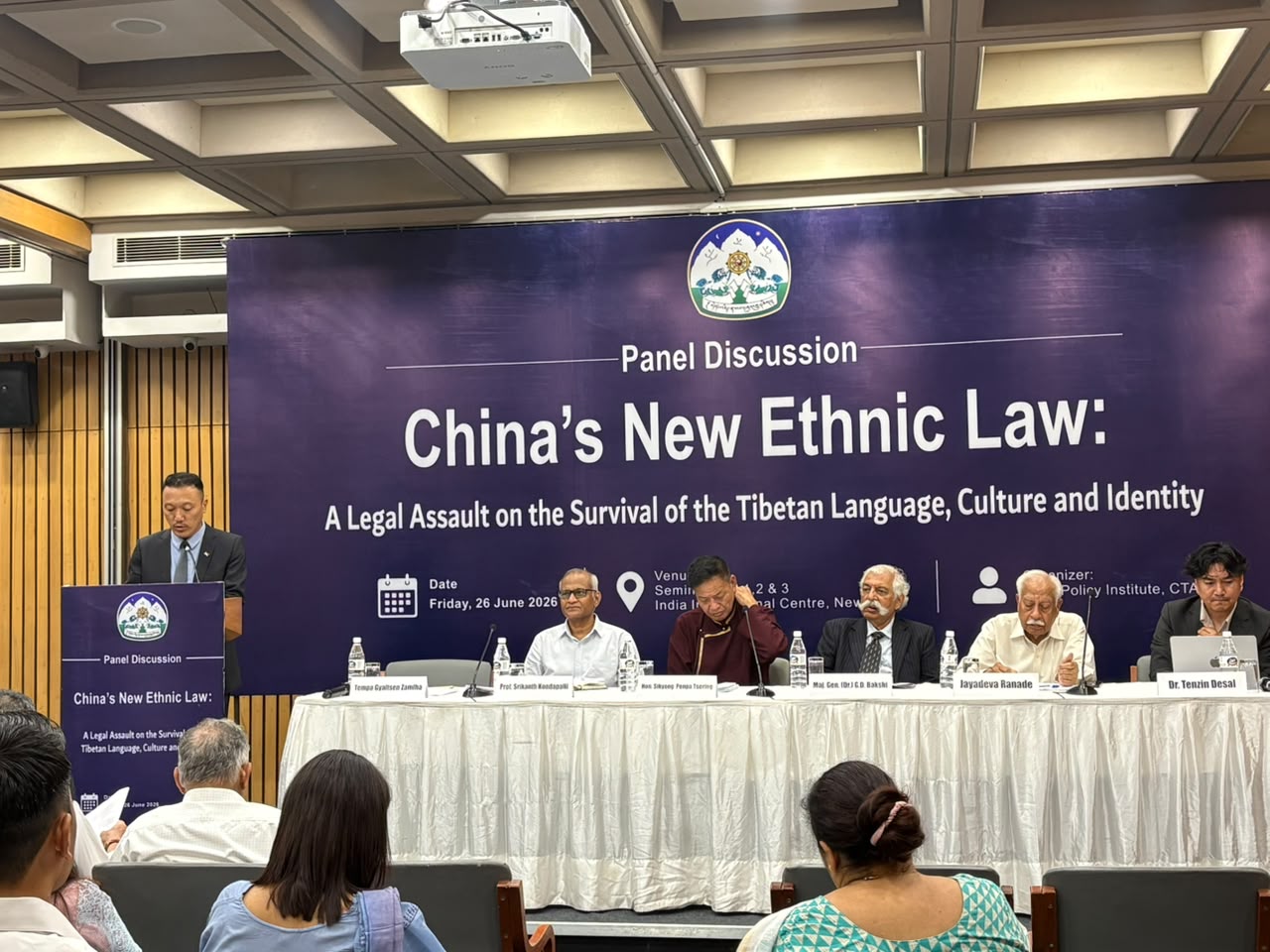
Dharamshala: Less than four days before China’s discriminatory law on “Promoting Ethnic Unity and Progress” comes into effect, the Central Tibetan Administration (CTA) in exile convened a panel discussion to denounce what it described as China’s new ethnic law—a legal assault on the very survival of the Tibetan language, culture, and identity.
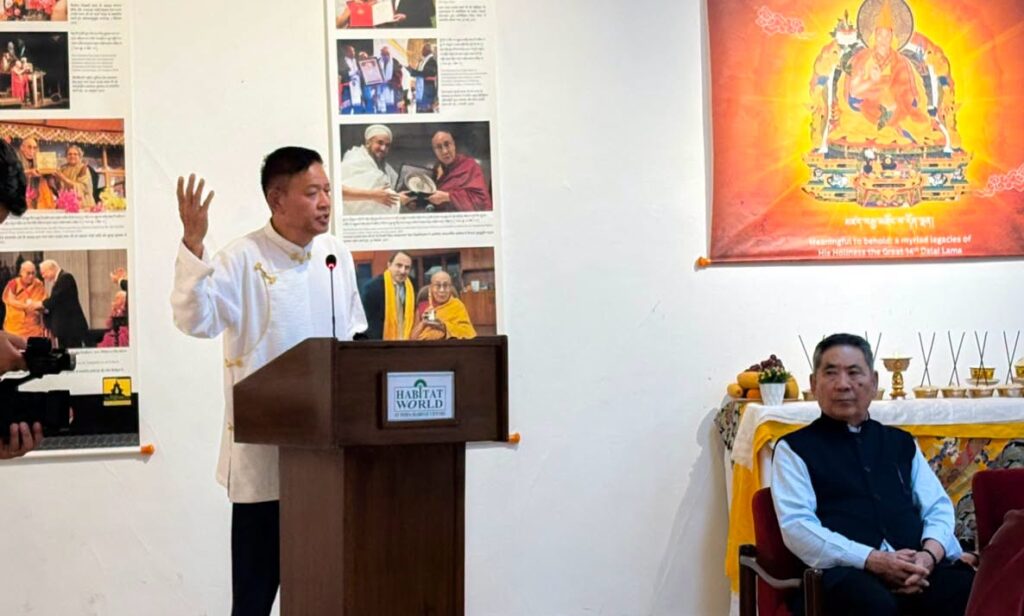
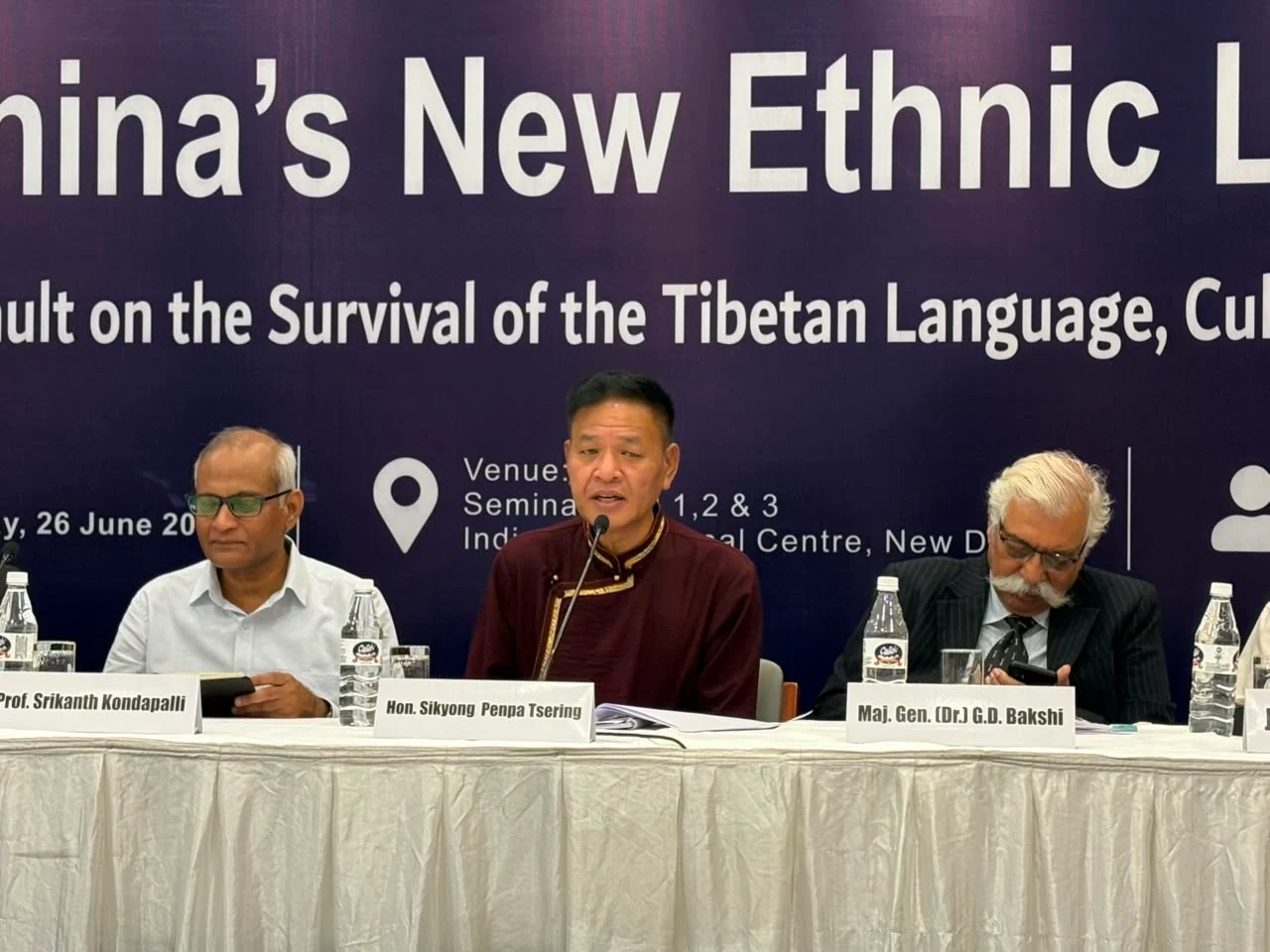
The democratically elected political leader of the Tibetan people and Sikyong of the Central Tibetan Administration (CTA), Penpa Tsering, attended the conference organised by the CTA’s research and policy wing, the Tibetan Policy Institute, as chief guest. He expressed serious concerns about the possible repercussions this new law could have for Tibetans, as well as other ethnic minorities inside China.
“Within days, on 1 July 2026, the People’s Republic of China will bring into force its so-called Ethnic Unity Law, adopted by its rubber-stamp parliament, the National People’s Congress on 12 March 2026. At first glance, the legislation appears benign. It speaks of unity, harmony, national cohesion, and the forging of a shared identity. These are words that, in almost any society, evoke positive aspirations. Yet history reminds us that some of the gravest injustices have been committed in the language of peace, order, and unity.” Sikyong continued, “This law is one such example. To the outside world, it is presented as a framework for strengthening ethnic solidarity. To Tibetans, however, it represents something fundamentally different. It represents the legal codification of a decades-long campaign aimed at transforming Tibetan identity, weakening Tibetan culture, restricting religious life, and replacing a distinct civilisation with a state-defined conception of national identity. In essence, this tantamount to China committing crime against humanity and legalising genocide in Tibet.”
Given that nearly all assimilation measures contained in the legislation have already been carried out in Tibet over many years through Party directives, administrative regulations, educational reforms, religious restrictions, surveillance systems, and security campaigns, the significance of this law rests not in policy innovation but in the formal legal codification of practices that have long been operational on the ground.
Sikyong highlighted, “That distinction is critically important. Policies may change. Campaigns may come and go. Administrative directives may be revised. But when governments transform political objectives into legislation, they seek to normalise them, institutionalise them, and shield them from criticism. The law gives the appearance of legitimacy to policies that would otherwise be recognised for what they are. China is not creating a new system in Tibet. It is giving an old system a legal mask. What has existed for decades under the language of “stability maintenance,” “development,” and “poverty alleviation” is now formally presented as “ethnic unity.” The vocabulary has changed. The objective has not.”
Soon after the law was adopted, the 16th Kashag introduced a resolution during the budget session of the Tibetan Parliament-in-Exile in Dharamshala, which was unanimously passed. The resolution rejected the legislation as illegitimate and, in seven points, condemned it as a tool of forced assimilation aimed at eroding Tibetan language, religion, culture, and identity. It further stated that the law violates international human rights standards and contradicts provisions in China’s Constitution and its regional ethnic autonomy laws.
Sikyong further added that, “This legislation serves two principal purposes. First, it provides the Chinese government with an explicit legal framework to intensify long-standing assimilation policies on Tibetan, Uyghur and Mongolian people within PRC. At the centre of the legislation lies the directive to “forge a strong sense of community for the Chinese nation” the Zhonghua Minzu. While this may sound inclusive, its practical implication is profoundly different. It requires peoples with their own languages, histories, cultures, and identities to gradually subordinate those identities to a singular state-defined national identity. Unity, in this formulation, does not celebrate diversity. It seeks to replace diversity. Second, the legislation attempts to insulate these policies from both domestic and international criticism. Once assimilation is codified into law, criticism can be portrayed as opposition to the rule of law itself. Beijing increasingly seeks to argue that concerns raised by governments, scholars, journalists, or international organisations constitute interference in China’s internal affairs rather than legitimate responses to internationally recognised human rights obligations.”
To trace the evolution of China’s policies toward Tibet since its illegal occupation, Sikyong outlined successive phases, including military incorporation, socialist transformation, collectivisation, political campaigns, the Cultural Revolution, economic development, patriotic education campaigns, securitisation following the 2008 protests, and the recent intensification of Sinicisation. The Ethnic Unity Law was presented as the latest phase in this trajectory, transforming what were once political campaigns into legally mandated obligations.
To underscore why this law warrants international attention, Sikyong stressed that it is essential to understand why Tibet itself matters. Tibet is not merely an administrative region but one of the world’s oldest continuous civilisations, with a recorded history spanning over a millennium and much earlier human settlement. Unified under the Yarlung dynasty in the seventh century, Tibet developed its own political institutions, legal traditions, diplomatic relations, script, and a rich literary and scholarly heritage. Buddhism, introduced from India, profoundly shaped its civilisation, fostering values of compassion, nonviolence, and intellectual inquiry. This enduring historical, cultural, linguistic, and religious identity is precisely why efforts at forced assimilation continue to encounter persistent resistance.
To the international community, this law presents a serious challenge. China has increasingly sought to reshape the international order by expanding its influence within multilateral institutions and promoting norms that favour authoritarian governance. Hence, Sikyong, in his address, underscored that the law claims extraterritorial jurisdiction, extending far beyond China’s borders. It can be used to target anyone, anywhere in the world, who criticises the Chinese regime or its policies of forced assimilation.
Sikyong stressed, “International human rights law recognises that every people has the right to preserve its language, practise its religion, enjoy its culture, and transmit these traditions to future generations. Yet China’s long-standing policies in Tibet, now reinforced through the New Ethnic Unity Law, stand in contravention of the very international human rights instruments to which China is a signatory.”
“Even more striking is the fact that this legislation contradicts the People’s Republic of China’s own constitutional framework. China’s Constitution guarantees equality among nationalities and provides for the protection of the lawful rights and interests of the so-called ethnic minorities. Likewise, the Law on Regional National Autonomy affirms the rights of “minority nationalities” to preserve and develop their own languages, cultures, customs, and distinct way of life. The New Ethnic Unity Law undermines these commitments by placing political conformity above cultural diversity and by prioritising assimilation over genuine autonomy,”Sikyong added.
The Seventeen-Point Agreement has been widely contested on the grounds that it was signed under military coercion and therefore lacks genuine legal and political legitimacy. Even if accepted at face value, the New Ethnic Unity Law stands in contradiction to its core provisions, which pledged to preserve Tibet’s existing political system, religious institutions, and way of life without enforced reforms. In practice, current policies move in the opposite direction by promoting a standardised national identity that reshapes Tibetan language, religion, culture, and broader social structures.
The Tibet cause remains one of the world’s longest-standing unresolved political disputes. Its origins trace back to the 1950s, following the entry of the People’s Liberation Army and the subsequent transformation of Tibet’s political status. Since then, ongoing resistance has centred on concerns over the preservation of a distinct Tibetan identity, culture, and religious tradition.
The incorporation of Tibet into the People’s Republic of China also significantly altered the geopolitical dynamics of Asia, particularly for neighbouring South Asian states that came to share extended and strategically sensitive borders with China. These changes continue to influence regional security considerations, diplomacy, and strategic stability.
As a result, the situation is often framed not only as a domestic matter but also as one with broader international implications involving human rights, international law, regional peace, environmental concerns, and the principle of cultural and historical preservation for distinct peoples.
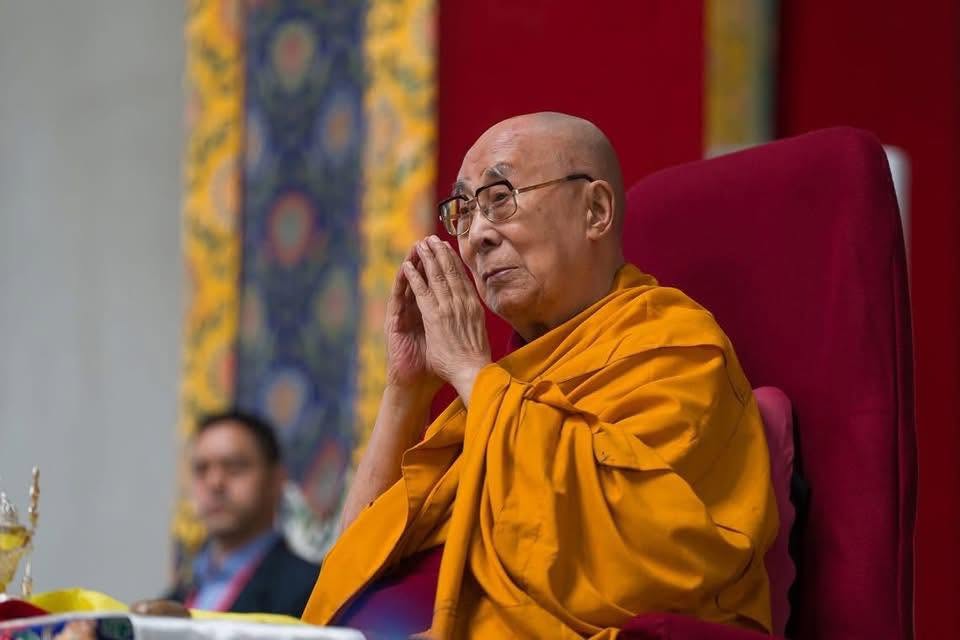
However, Sikyong emphasised that, “At the heart of the Central Tibetan Administration’s vision for resolving the Sino-Tibetan conflict lies the Middle Way Approach, a peaceful, pragmatic, and mutually beneficial framework proposed by His Holiness the Dalai Lama. It does not seek separation from the People’s Republic of China but genuine autonomy within the framework of the Chinese Constitution, enabling Tibetans to preserve their language, religion, culture, and way of life while becoming, in the words of the proposal, “masters of their own affairs.” For more than four decades, His Holiness has consistently demonstrated his commitment to dialogue and reconciliation, believing that lasting peace can only be achieved through mutual respect rather than coercion.”
“Unfortunately, the recently enacted Ethnic Unity Law takes China in precisely the opposite direction. Rather than creating conditions for trust and reconciliation, it institutionalises policies of assimilation under the guise of “national unity.” It replaces dialogue with compulsion and diversity with conformity. Such an approach cannot produce lasting stability because peace built on fear is never durable, and unity achieved by erasing a people’s language, religion, and culture is neither genuine nor just.”
“The choice before China is therefore clear. It can continue down the path of coercion, deepening mistrust and prolonging one of the world’s oldest unresolved conflicts, or it can embrace the path of dialogue, reconciliation, and mutual respect offered by the Middle Way Approach,” Sikyong concluded.
Among other distinguished speakers, Major General (Dr.) Gagan Deep Bakshi, SM, VSM (Retd.), offered a comparative perspective on the civilisational outlook of the two Asian giants.
He noted, “If we examine the civilisational context, Indian civilisation is characterised by its tolerance and its encouragement of diversity. In contrast, Chinese civilisation is often characterised by a tendency toward homogenisation and the enforcement of uniformity in language, culture, and social norms.”
He further observed that India’s pluralistic ethos is deeply rooted in traditions such as the teachings of the Buddha. Expressing concern, he remarked on how unsettling it is that the China’s Ethic Unity Law appear aimed at diminishing the country’s rich cultural and linguistic diversity.
The retired Major General also highlighted concerns regarding China’s long-arm influence and its capacity for transnational repression, particularly through the United Front Work Department, in advancing its objectives beyond its national borders.
The President of the Delhi-based Centre for China Analysis & Strategy, Jayadeva Ranade, spoke about the key figure behind the new law. He noted that Chinese President Xi Jinping, coming from a “princeling” background, is well aware of how power operates within the Communist system. According to him, it is largely during Xi’s tenure that ethnic minorities in China have gradually seen erosion of their ability to preserve their distinct cultural and traditional identities.
He further observed that representation of ethnic minority members within the party leadership and the broader state apparatus has steadily diminished over time under Xi.
Dr. Tenzin Desal, a research fellow at the Tibet Policy Institute, spoke about China’s inability to tolerate internal diversity as an indicator of shortcomings in its nation-building process, despite its widely acknowledged achievements in state-building through large-scale infrastructure development.
Speaking specifically about Tibet, he noted that although China claims significant progress in governance and development in the region, it has nevertheless failed to foster a sense of belonging among Tibetans, owing to what he described as restrictive policies and long-standing patterns of repression.
Delivering the concluding remarks, Srikanth Kondapalli, Professor of Chinese Studies at Jawaharlal Nehru University, spoke about how the Constitution of the People’s Republic of China, along with various regional ethnic autonomy laws, provides for minority rights and special provisions. However, he noted that the implementation of these provisions often diverges significantly from their stated intent, resulting in widespread disappointment among minority communities due to largely unfulfilled promises.
The discussion was moderated throughout its sessions by the Deputy Director of the Tibetan Policy Institute, Tempa Gyaltsen Zamlha.