
London: For the first time in more than two decades, artists from the Tibetan Institute of Performing Arts (TIPA) returned to the United Kingdom, bringing with them far more than music, dance and theatre. They brought memories of a homeland, the strength of a people determined to preserve their identity, and the living spirit of Tibetan culture.
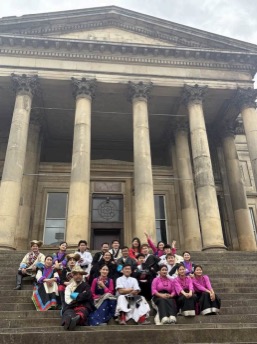
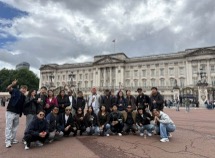
Invited and funded by the Office of Tibet, London, and its official charity, Tibet House Trust, a 25-member cultural troupe from TIPA embarked on a week-long tour of the UK from 2–9 June 2026, performing in Oxford, London and Liverpool.
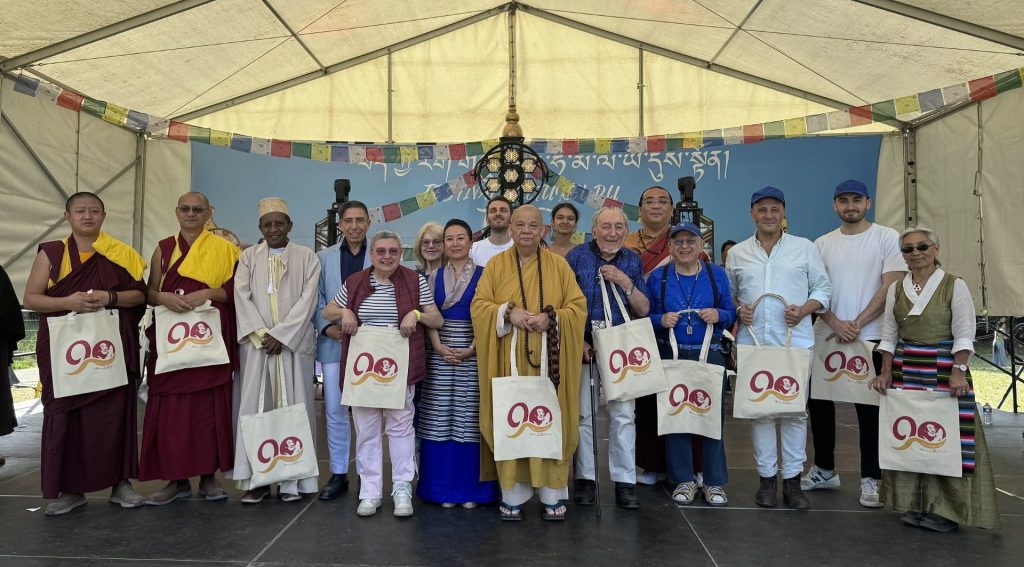
The visit carried special significance. It took place during the ongoing Year of Compassion, marking the 90th birthday year of His Holiness the Great 14th Dalai Lama (Ghoton). For many audience members, the performances felt like both a celebration and a reminder of the enduring values of compassion, resilience and cultural preservation that Tibet continues to offer the world.
Across all three cities, audiences responded with warmth, admiration and emotion as TIPA showcased the richness and depth of Tibet’s artistic traditions. Every song, dance and theatrical performance reflected decades of dedication to preserving a culture that faces increasing threats inside Tibet.
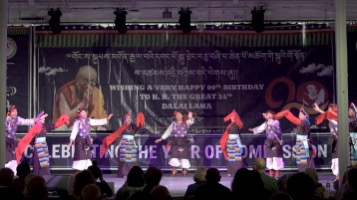
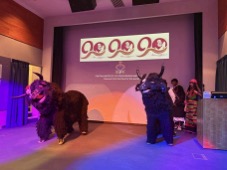
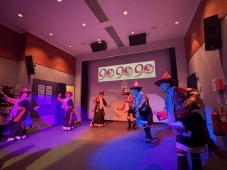
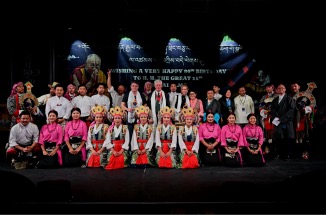
The centrepiece of the tour was TIPA’s London performance at the Fireworks Factory, Woolwich Works, one of the capital’s most vibrant cultural venues. More than 500 Tibetans and supporters of Tibet gathered for an evening that was at once joyous, inspiring and deeply moving.
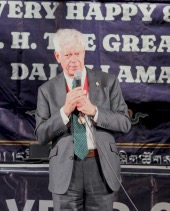
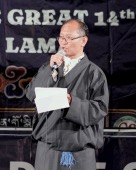
Among those in attendance was David Gardner, Mayor of the Royal Borough of Greenwich. In his remarks, he praised the richness and compassionate nature of Tibetan culture and highlighted the importance of safeguarding Tibet’s unique heritage, not only for Tibetans but for humanity as a whole.
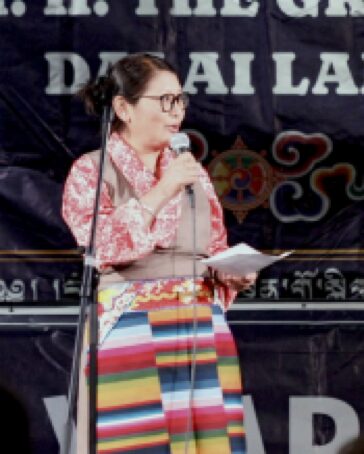
Addressing the audience, Tsering Yangkey, Representative of His Holiness the Dalai Lama at the Office of Tibet, London, reflected on the deeper significance of TIPA’s visit. She noted that the tour coincides with the Chinese government’s implementation of its so-called “Ethnic Unity” policies, which seek to dilute and erase the distinct identities of Tibetans, Uyghurs and other peoples under its rule. Against this backdrop, she said, TIPA stands as a powerful cultural ambassador and a living expression of Tibetan resistance through art, language and tradition.
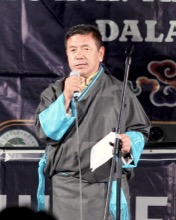
For TIPA’s Director, Dhundup Tsering, the visit represented both a privilege and a responsibility.
“For 65 years TIPA has worked to keep alive the music, dance and theatre of a homeland from which most of our artists have been separated by birth or by force. Every performance is an act of cultural preservation. To bring this work to the UK is both a joy and a responsibility.”
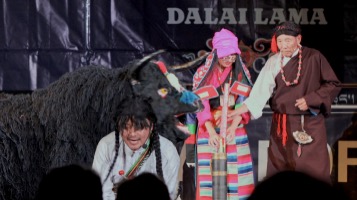
Over the course of the two-and-a-half-hour programme, audiences were treated to vibrant traditional performances and a powerful theatrical production depicting the experiences of Tibetan children separated from their families and placed in China’s colonial boarding school system.
The contrast in audience reactions spoke volumes. The traditional dances and songs drew enthusiastic applause, cheers and celebration. Yet as the theatre production unfolded, the atmosphere shifted. The hall fell silent. Many watched with tears in their eyes as the story revealed the painful reality faced by thousands of Tibetan children and families today.
One audience member captured the evening perfectly in a written review, stating, “I enjoyed the amazing TIPA performance on Friday evening. It was stunning and unforgettable. Deeply moving as well, the second part highlighting so poignantly the preciousness of TIPA’s work.”
Another described the performance simply as “Magical.”
Speaking after the performances and the play, Tenzin Kunga, Secretary of the Office of Tibet, London, expressed gratitude to the many individuals and organisations whose support made the London performance possible. He thanked the Tibetan Community in Britain, led by Chair Phuntsok and council members and volunteers, as well as Pema Yoko, Jane Rasch, Eleanor Byrne-Rosengren, the Tibet Relief Fund and Free Tibet.
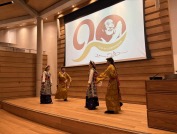
The tour began in Oxford on 3 June at the Leonard Wolfson Auditorium, Wolfson College, University of Oxford. In the intimate setting of the auditorium, more than 70 audience members experienced Tibetan performing arts up close, responding with enthusiastic applause after every performance. The event was organised in collaboration with Dr Lama Jabb, Head of Tibetan and Himalayan Studies Centre, Wolfson College.
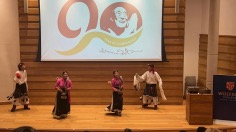
The journey then continued north to Liverpool, where TIPA performed to a packed audience at the Treasure House Theatre inside the World Museum on 7 June. The sold-out event was the troupe’s only performance at a national institution during the UK tour and attracted long-time friends of Tibet, local Tibetans and museum representatives.
The Liverpool performance was made possible through the collaboration of Meghan Backhouse, Lead Curator (World Cultures) at the World Museum, and Dr Thupten Kelsang of the V&A Museum. One attendee later reflected, “It was a lovely performance, and people here in the World Museum are still talking about it.”
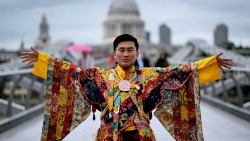
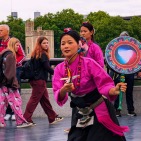
The impact of the tour extended beyond formal performance venues. During their stay in London, selected members of the troupe performed the lively Relpa dance near the iconic Tower Bridge and the sacred Shacham ritual dance on Millennium Bridge, with St Paul’s Cathedral standing majestically in the background.
Organised by the team at Free Tibet and filmed by a professional camera crew, these outdoor performances attracted the attention of hundreds of tourists and passers-by. Many stopped, watched and asked questions, encountering Tibetan culture in an unexpected and memorable way.
More than twenty years after their last visit to Britain, TIPA’s return has proven to be much more than a successful cultural tour. It has inspired Tibetans to reconnect with the beauty and richness of their heritage. It has reminded international audiences that the Tibetan struggle remains unresolved. It has strengthened bonds between Tibetans and their supporters and introduced a new generation to the power and beauty of Tibetan performing arts.
Most importantly, it demonstrated that despite exile, political pressure and attempts to erase cultural identity, Tibet’s songs continue to be sung, its dances continue to be performed, and its stories continue to be told.
After a memorable week in the United Kingdom, the TIPA delegation departed on 9 June and arrived safely in Delhi the following day, bringing a remarkable and deeply meaningful tour to a close.
– Report filed by Office of Tibet, London