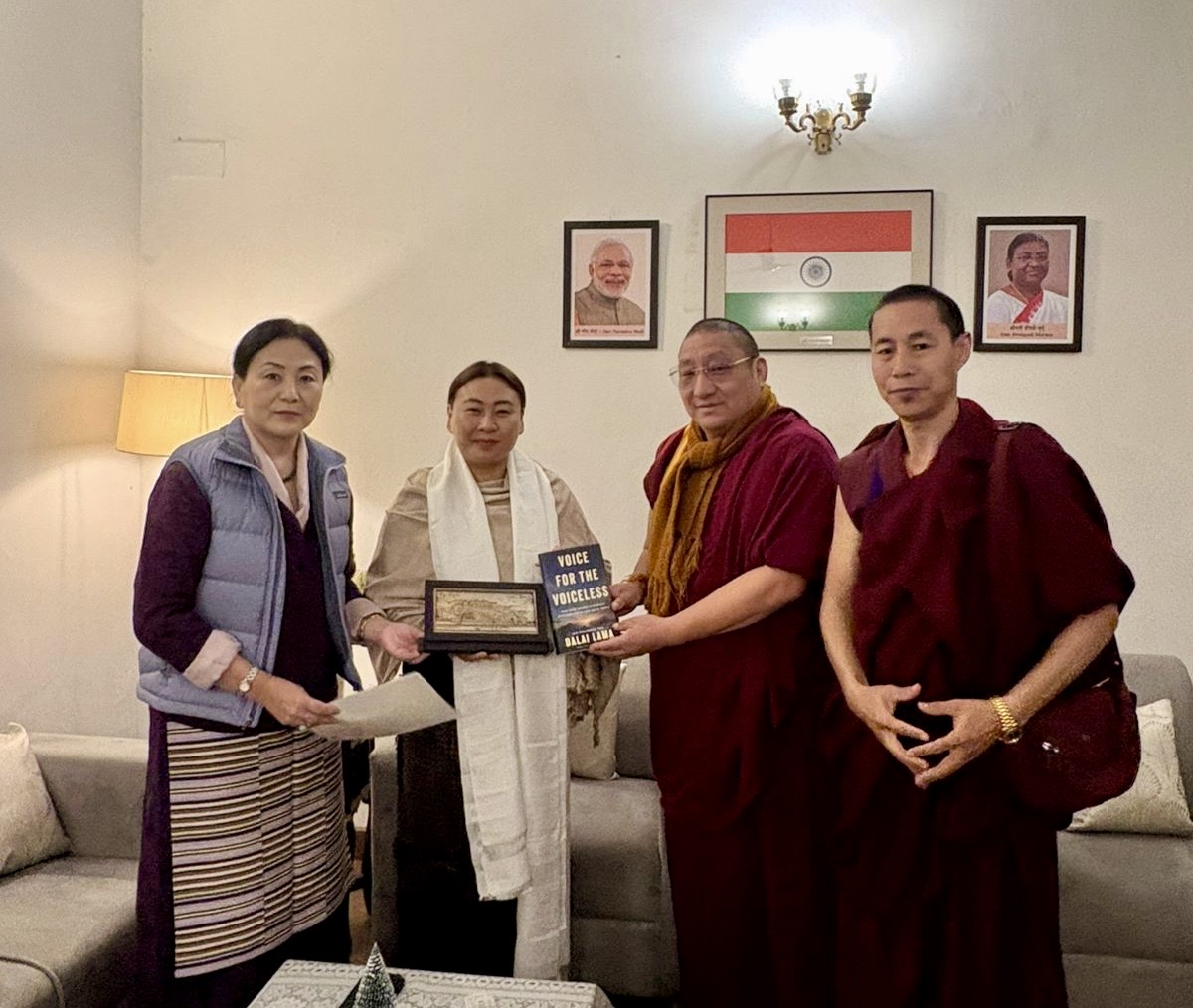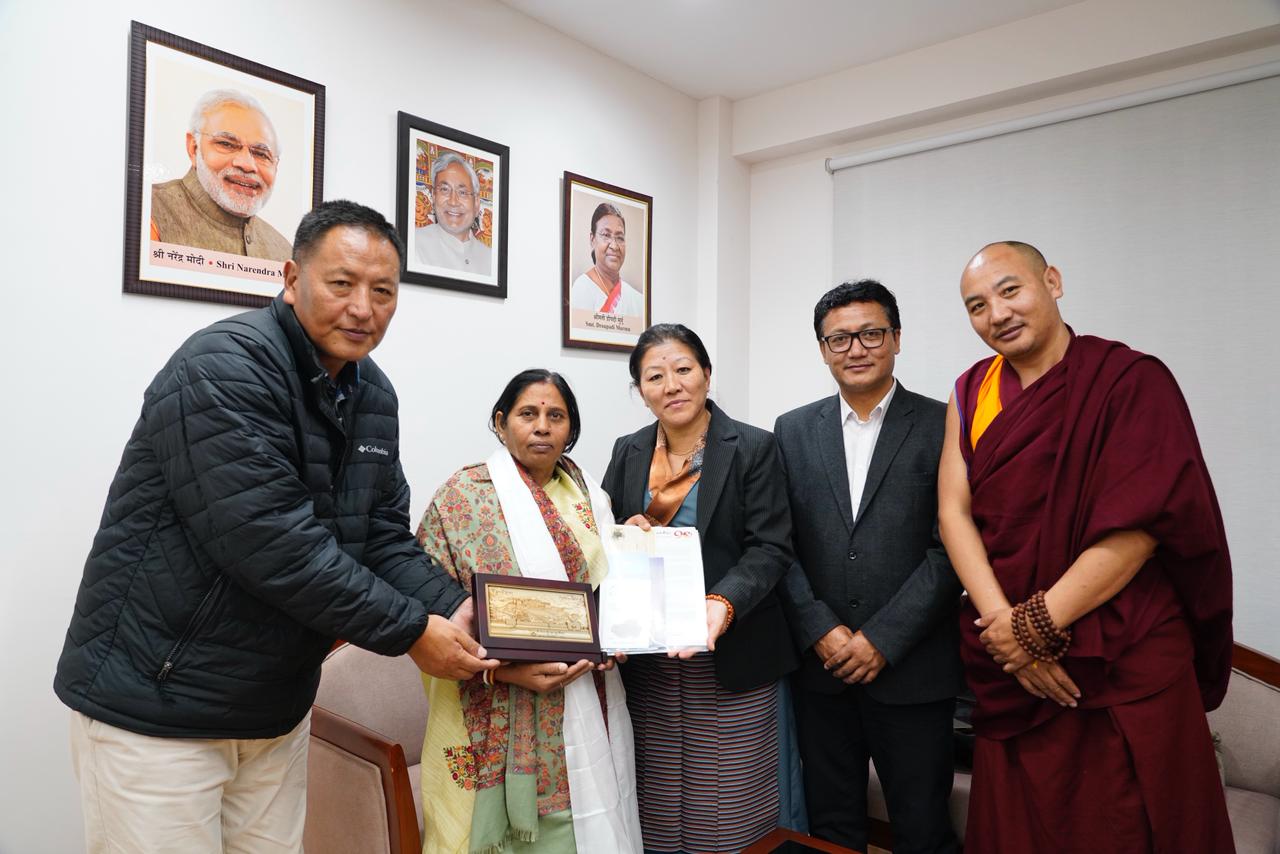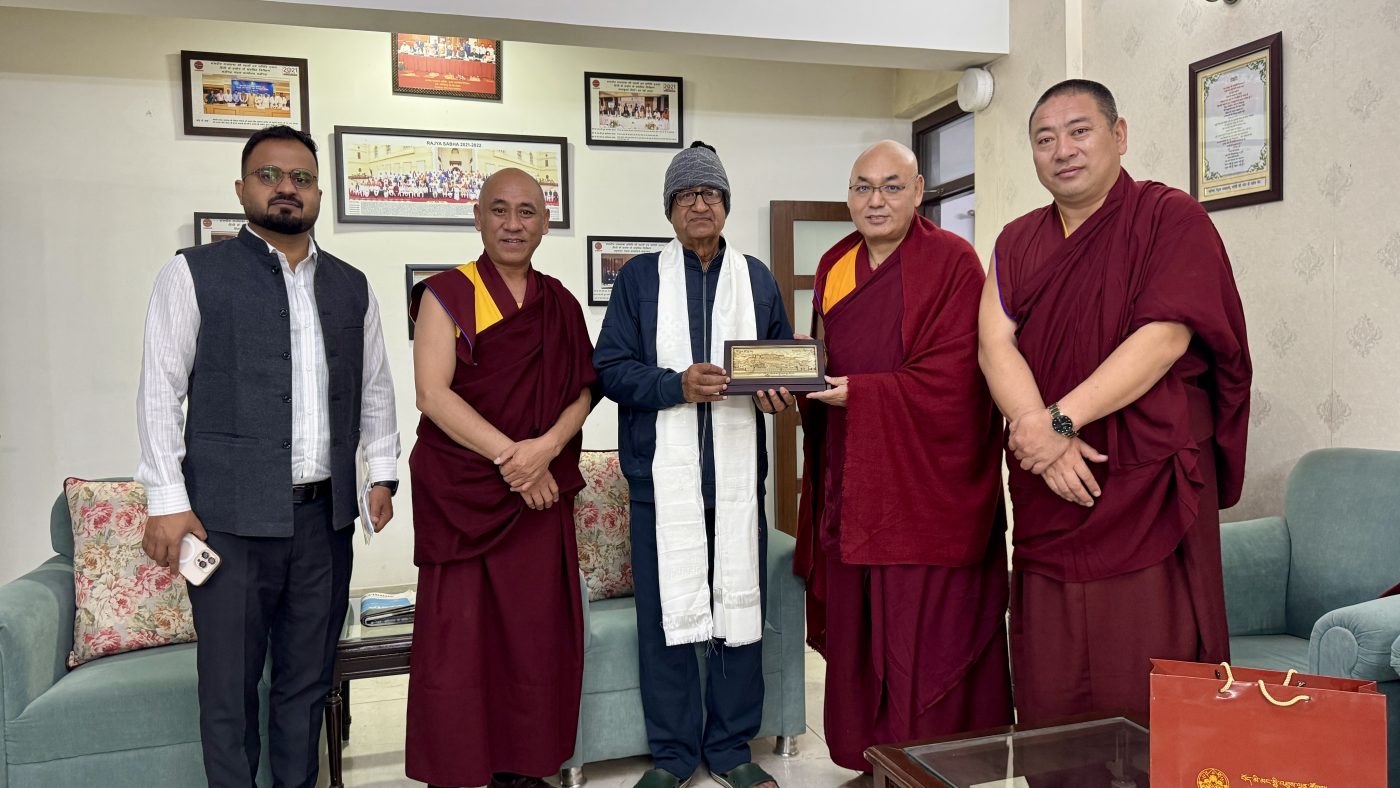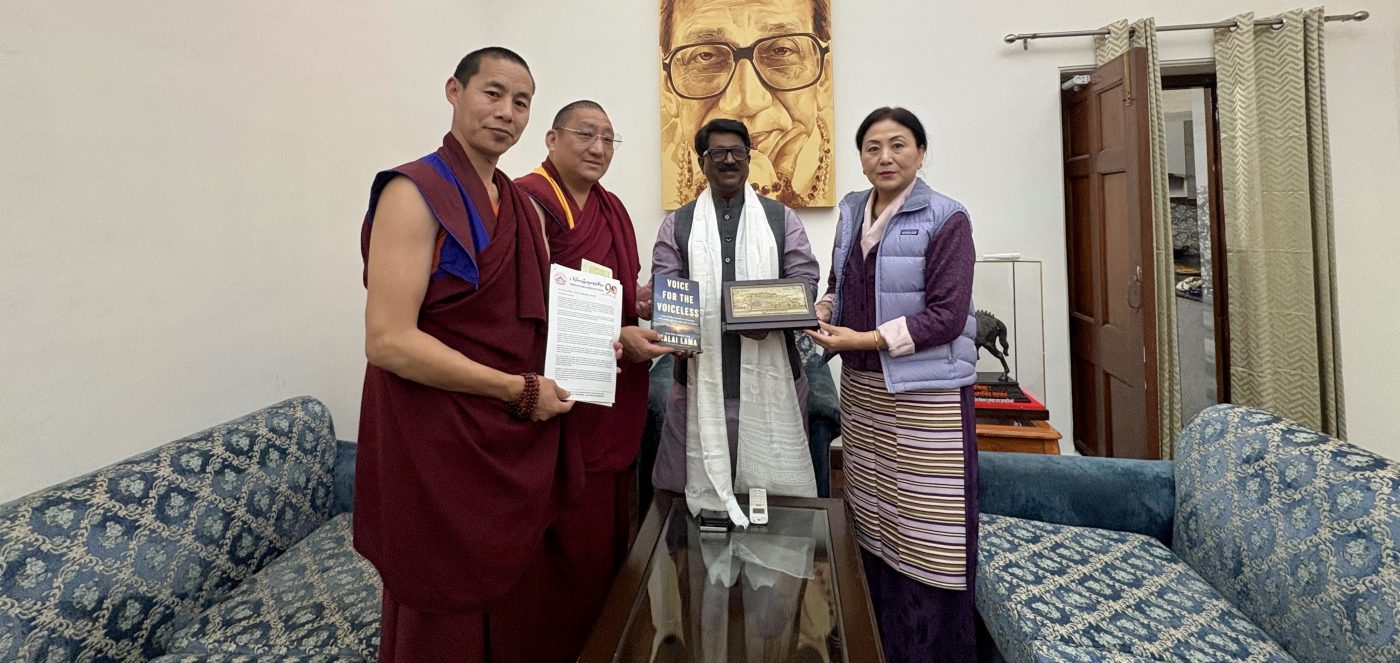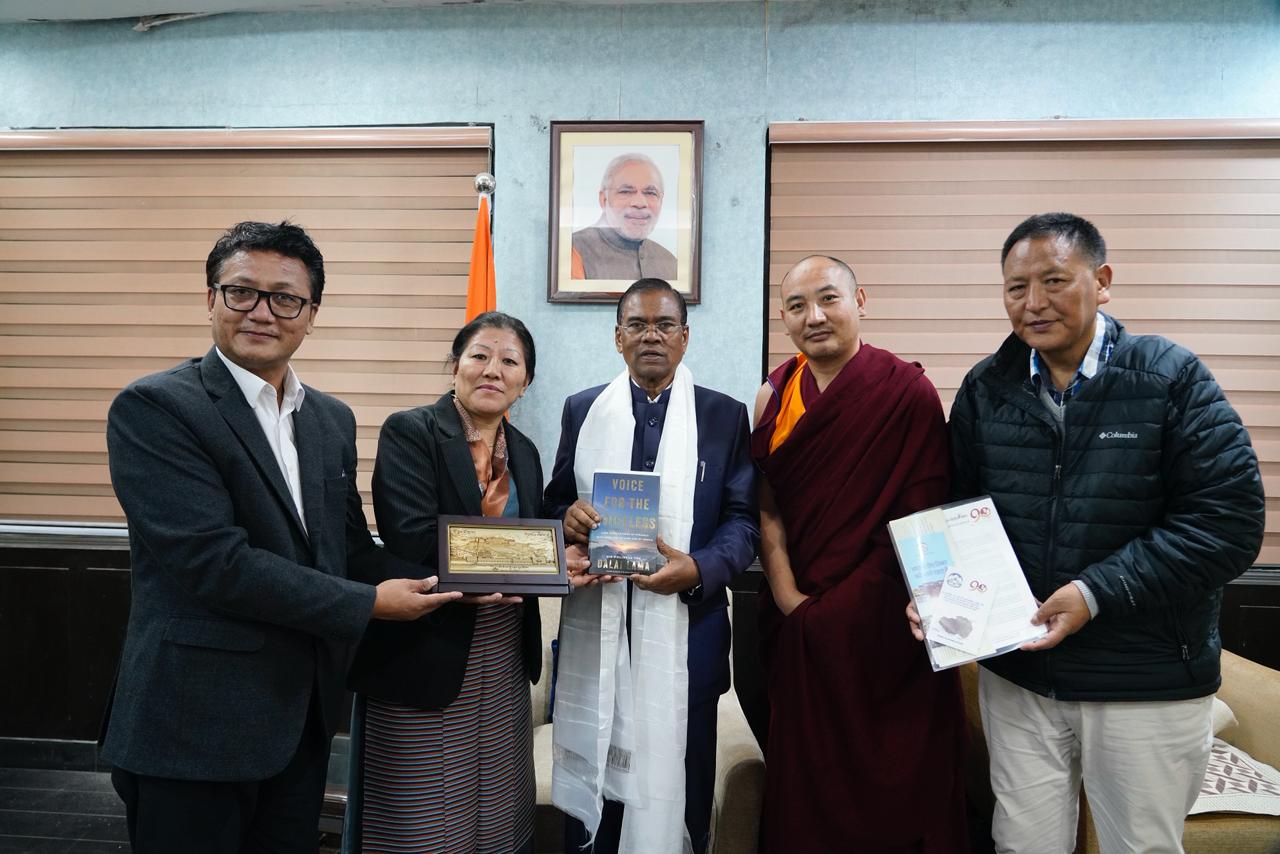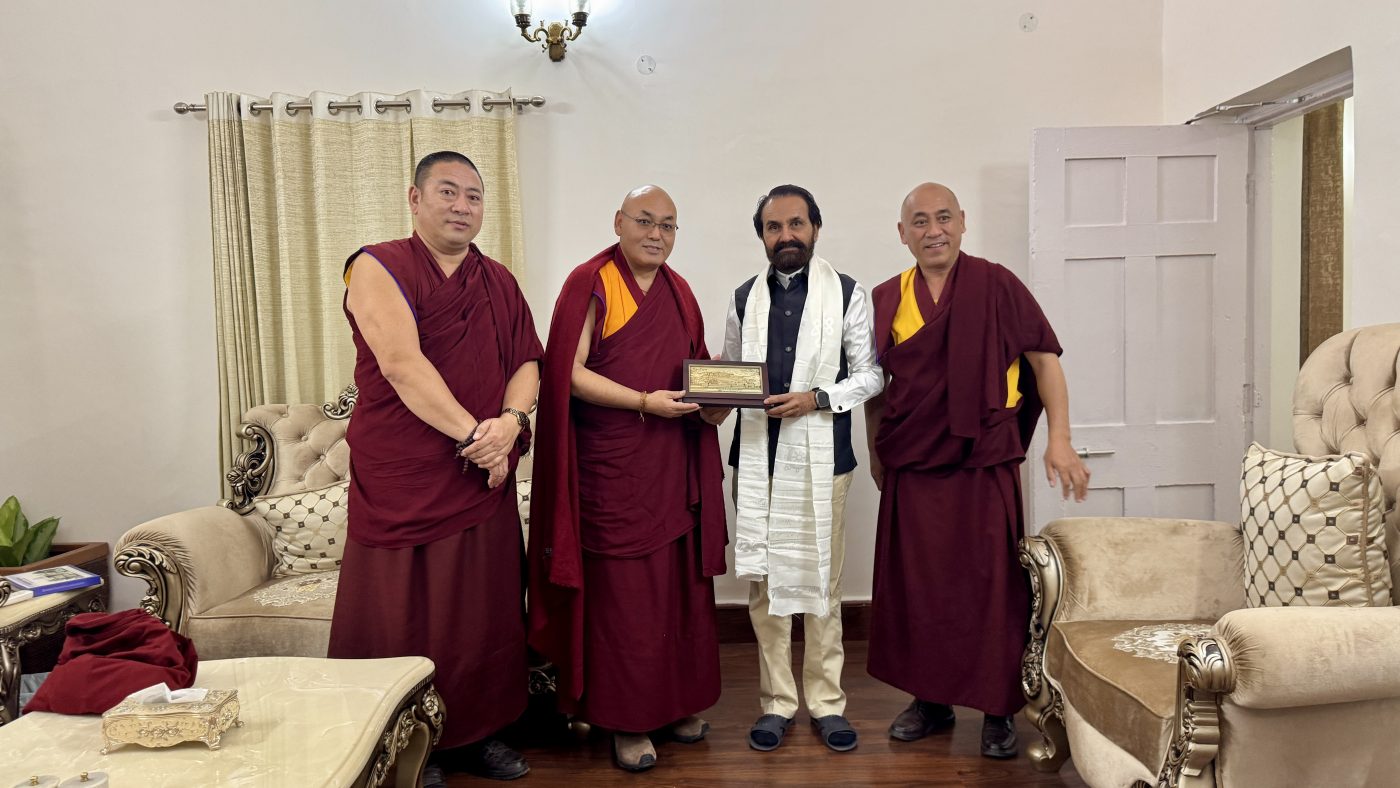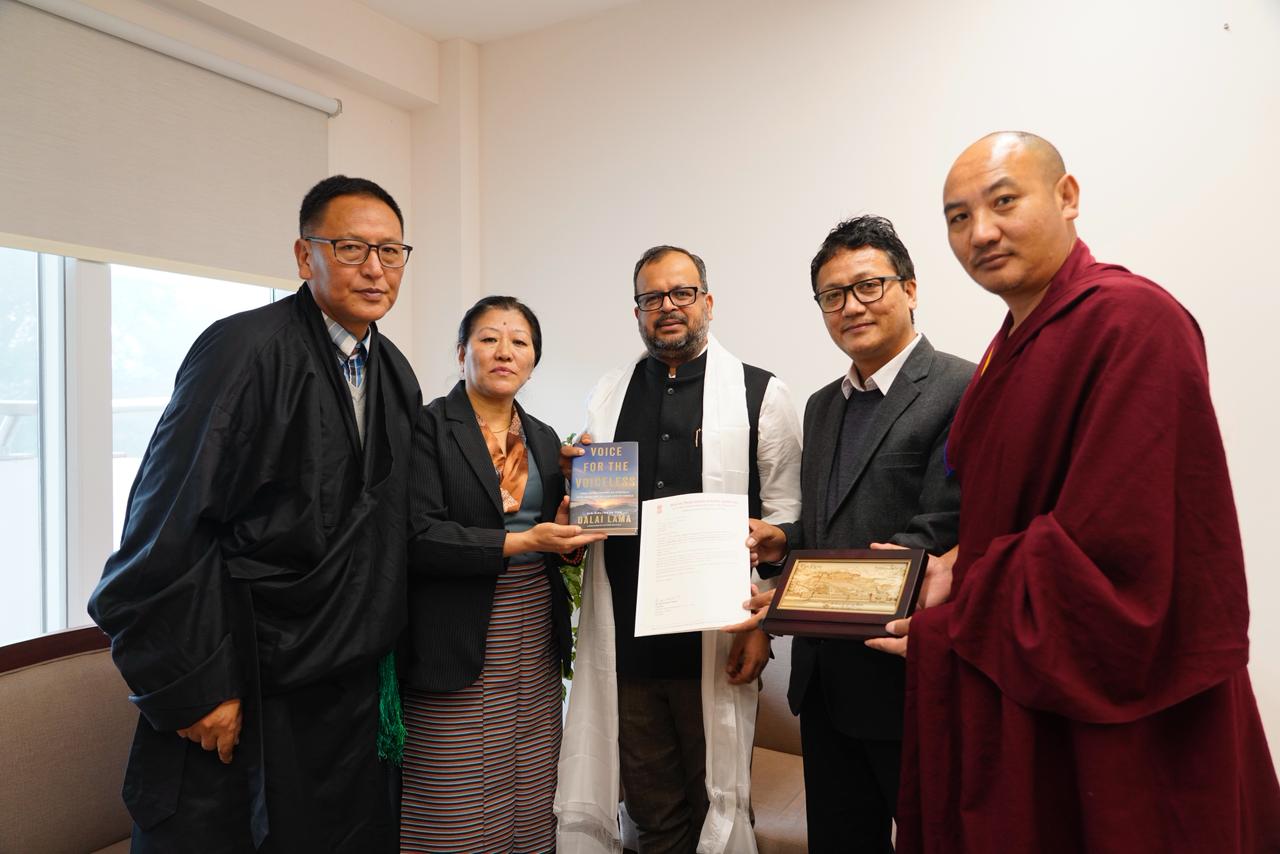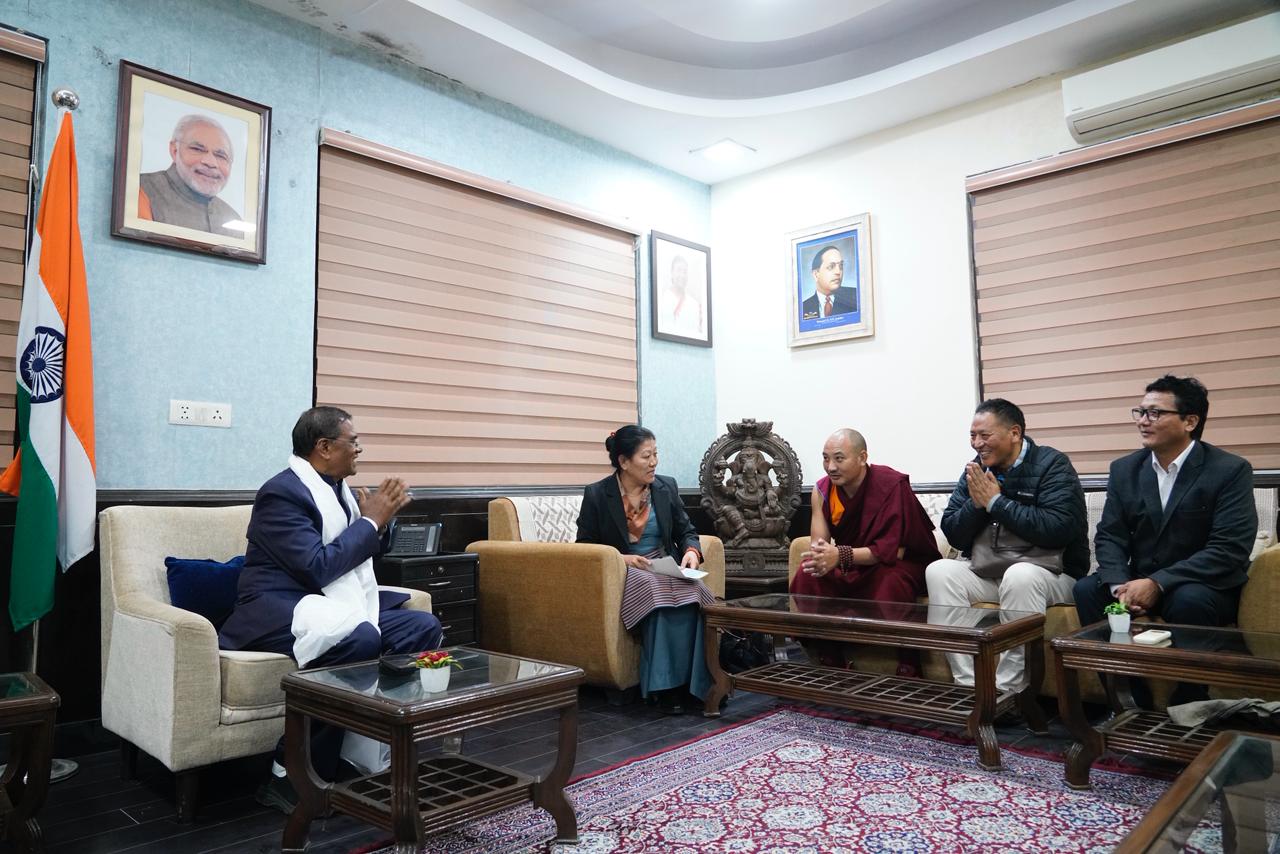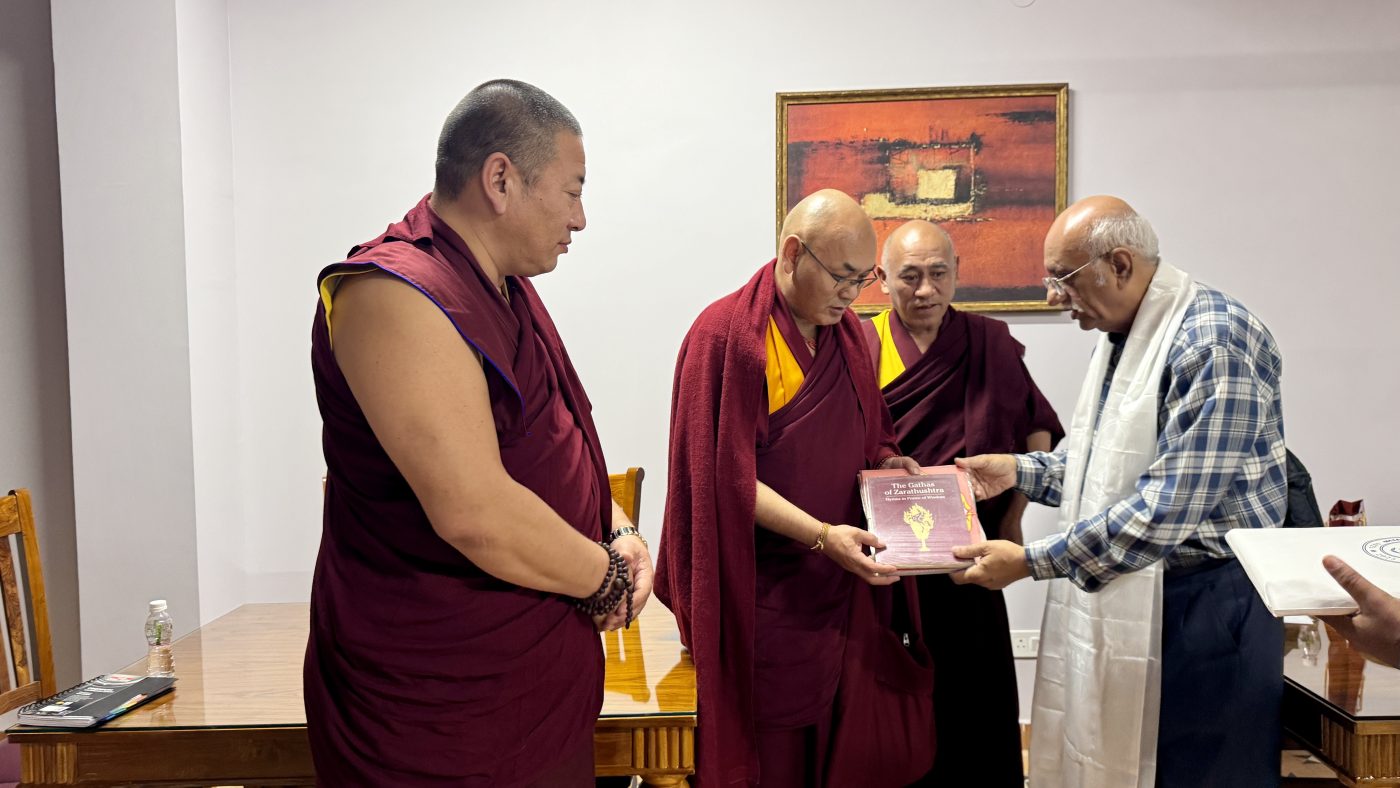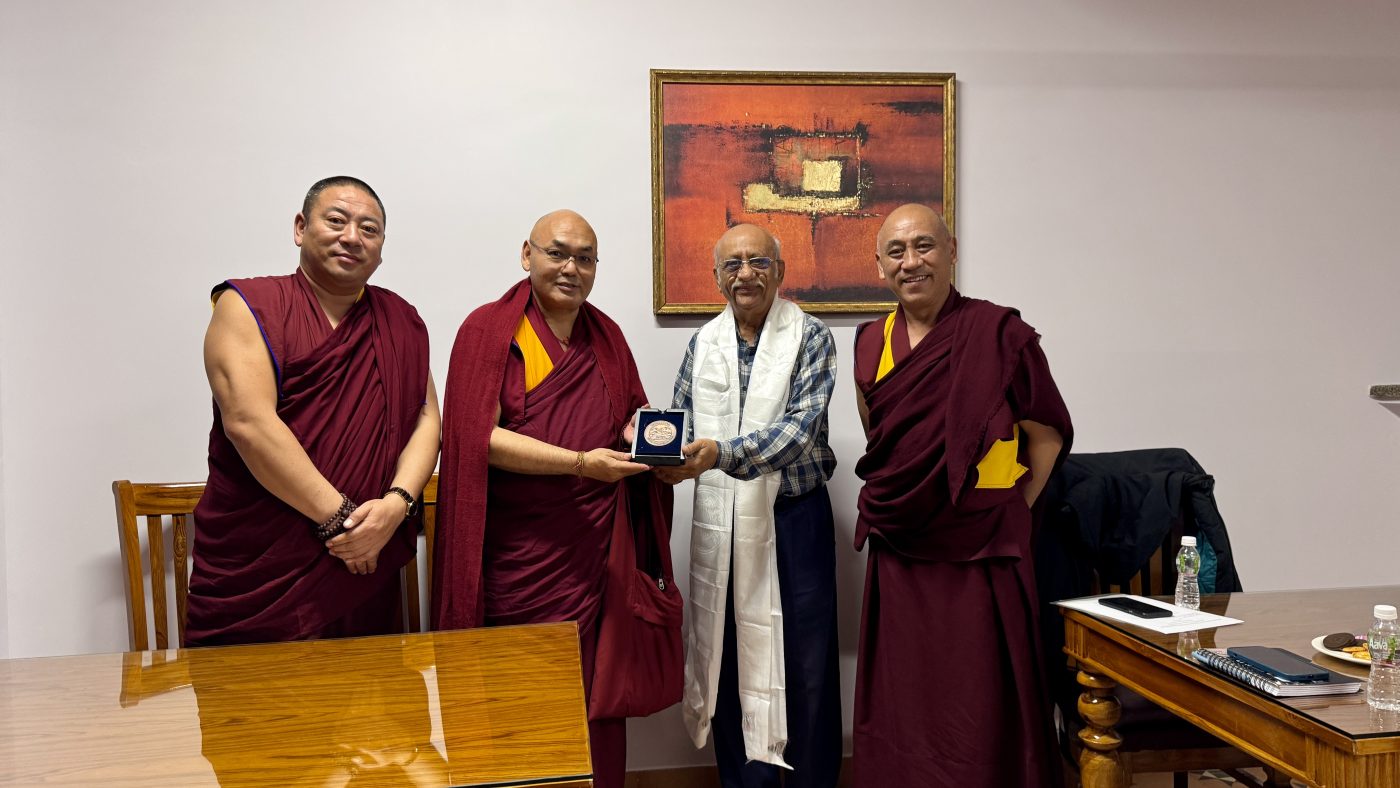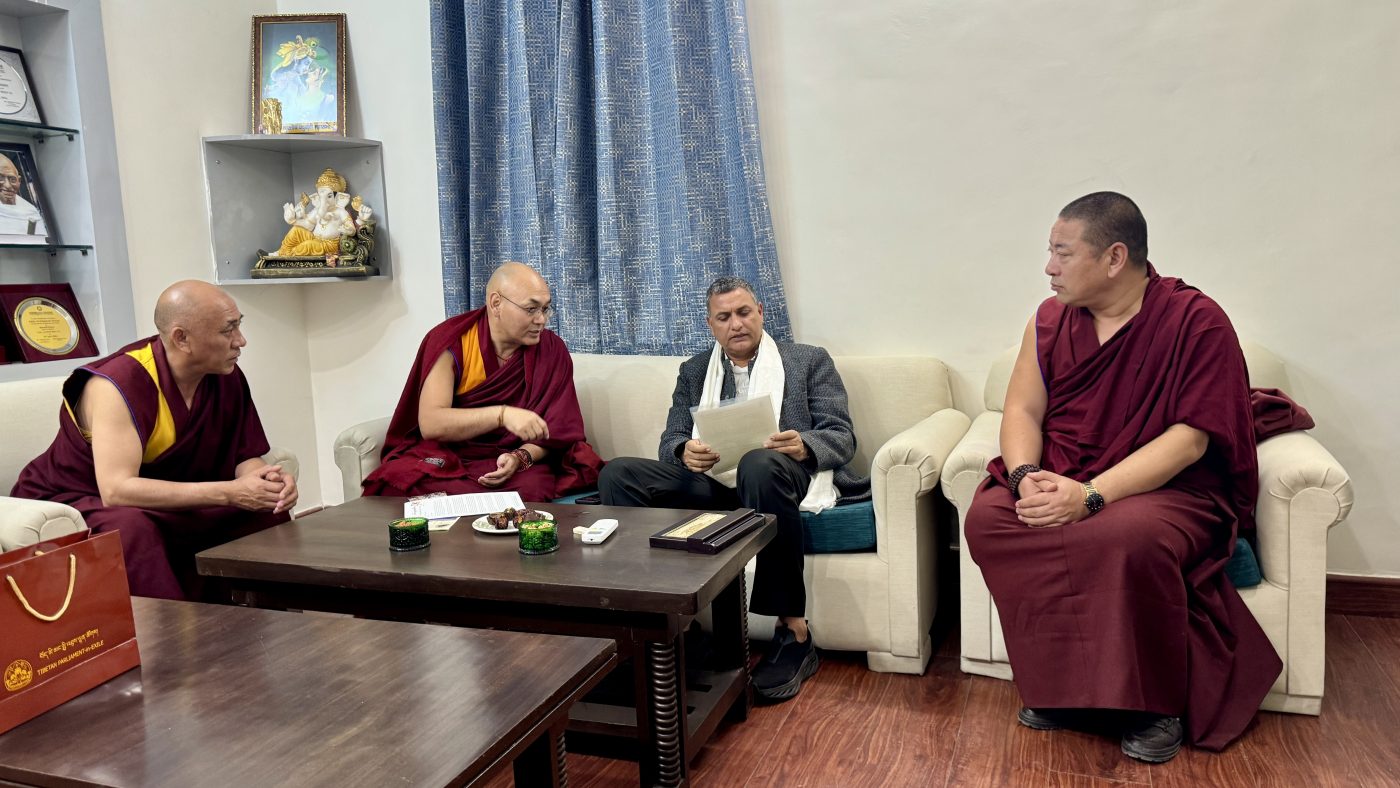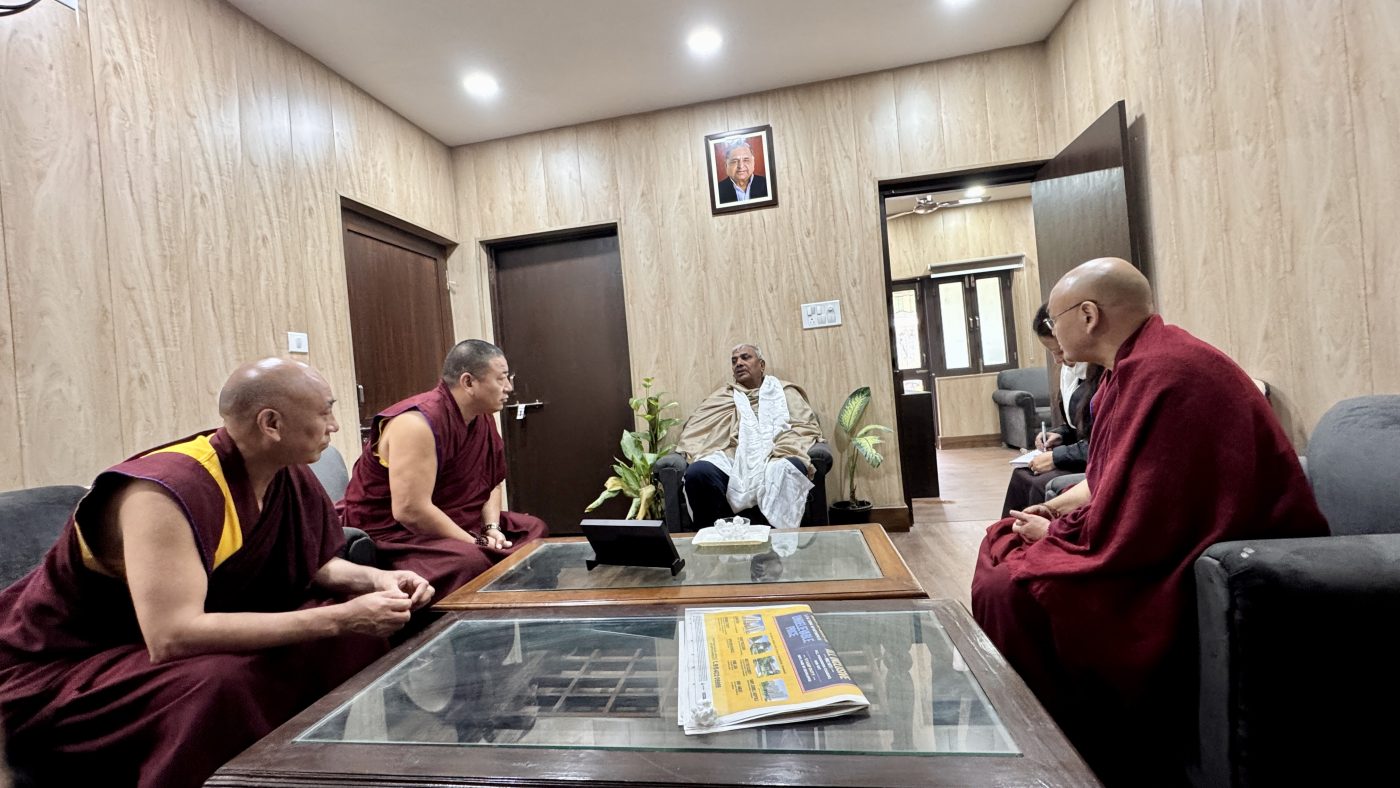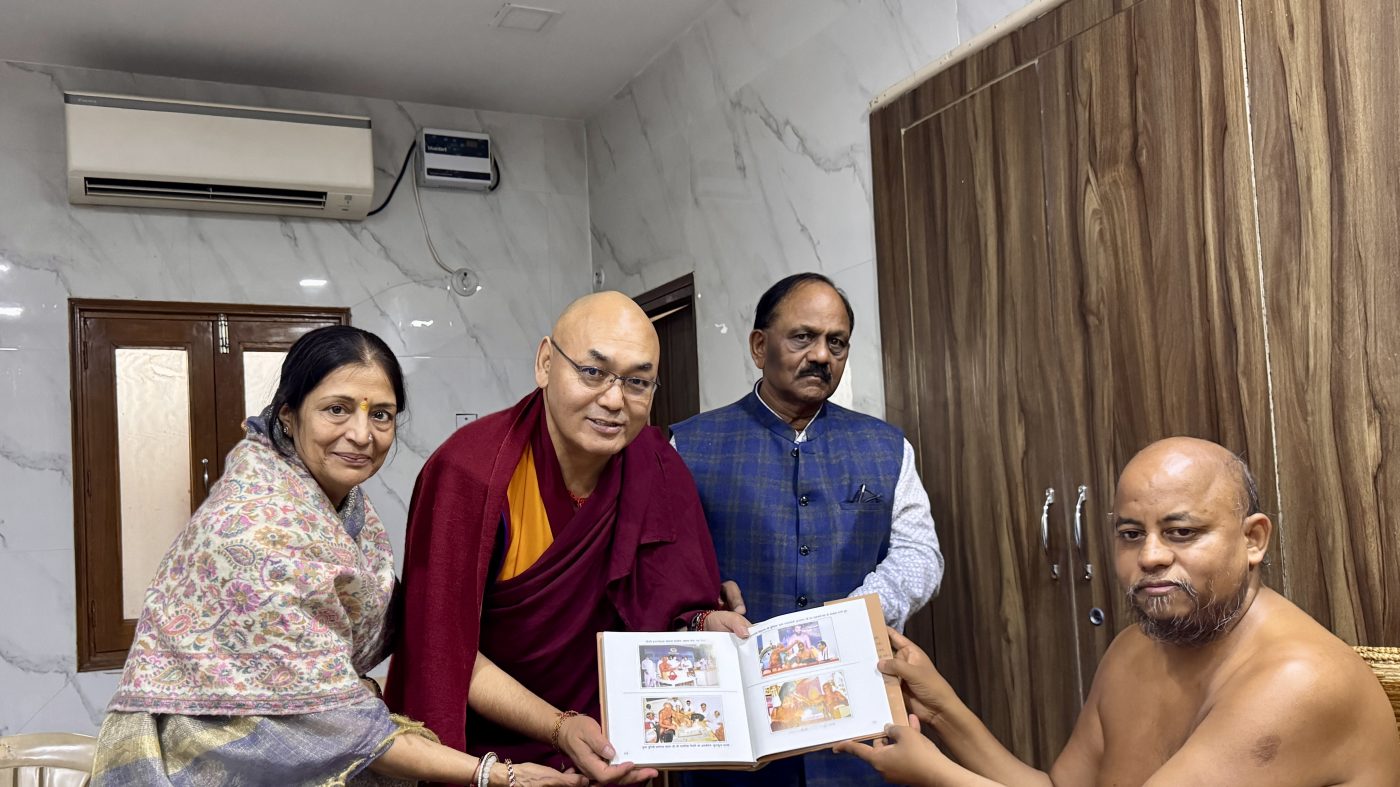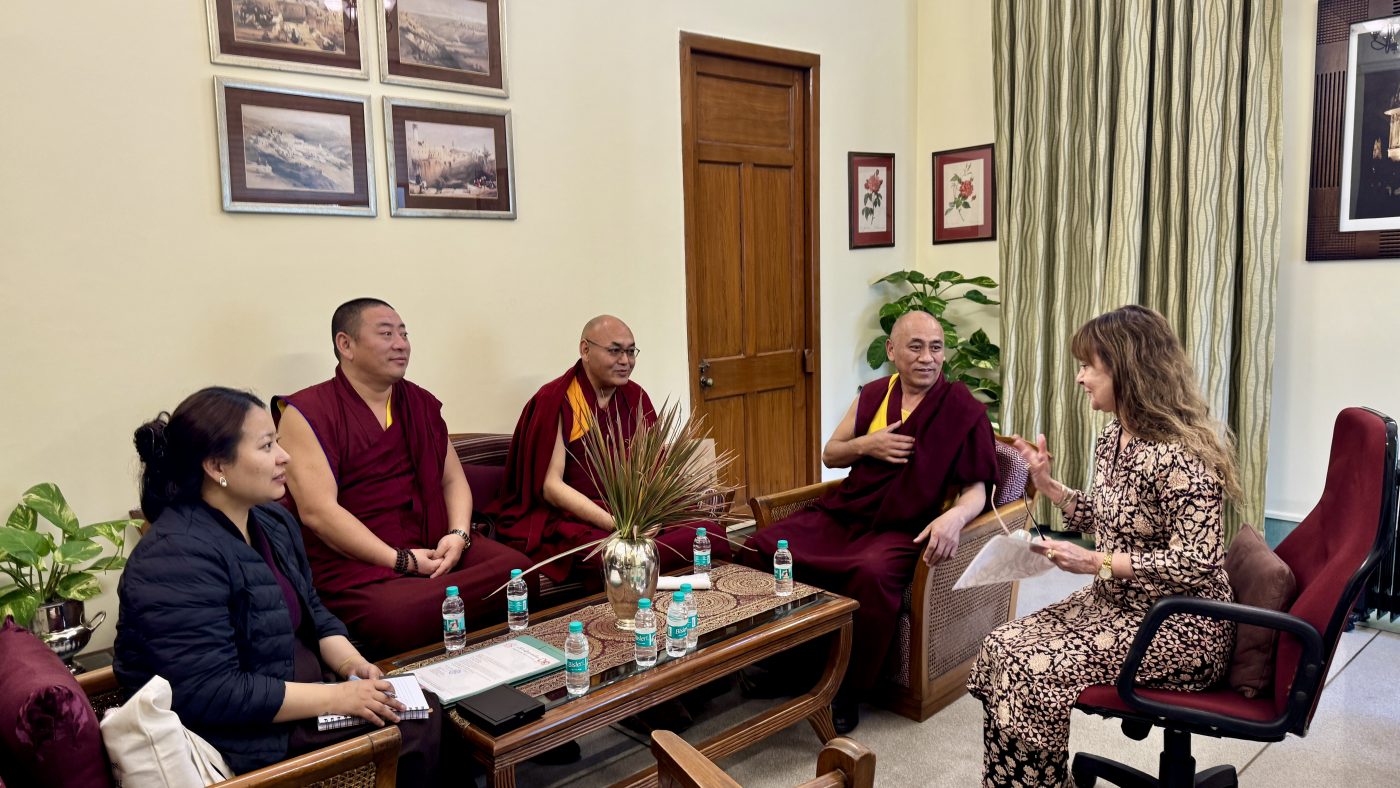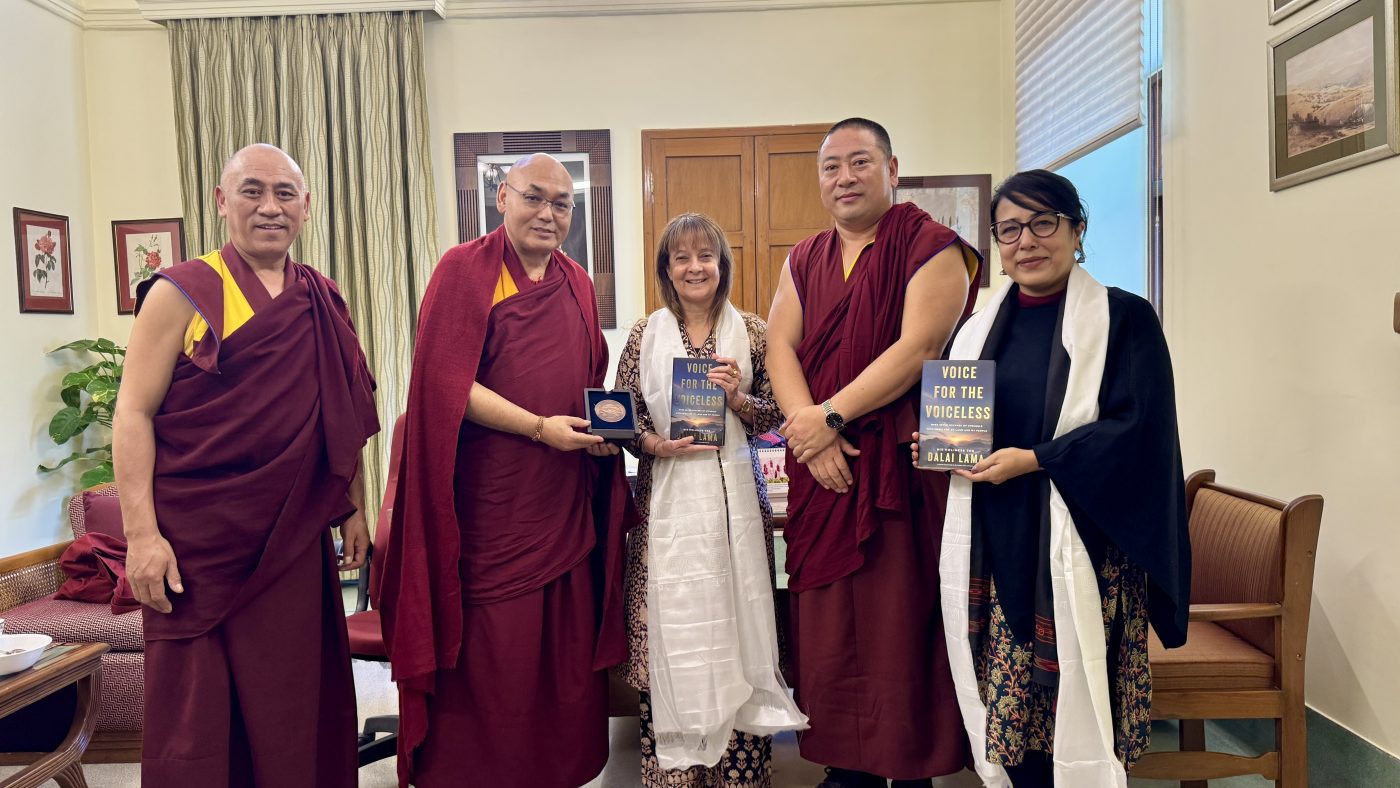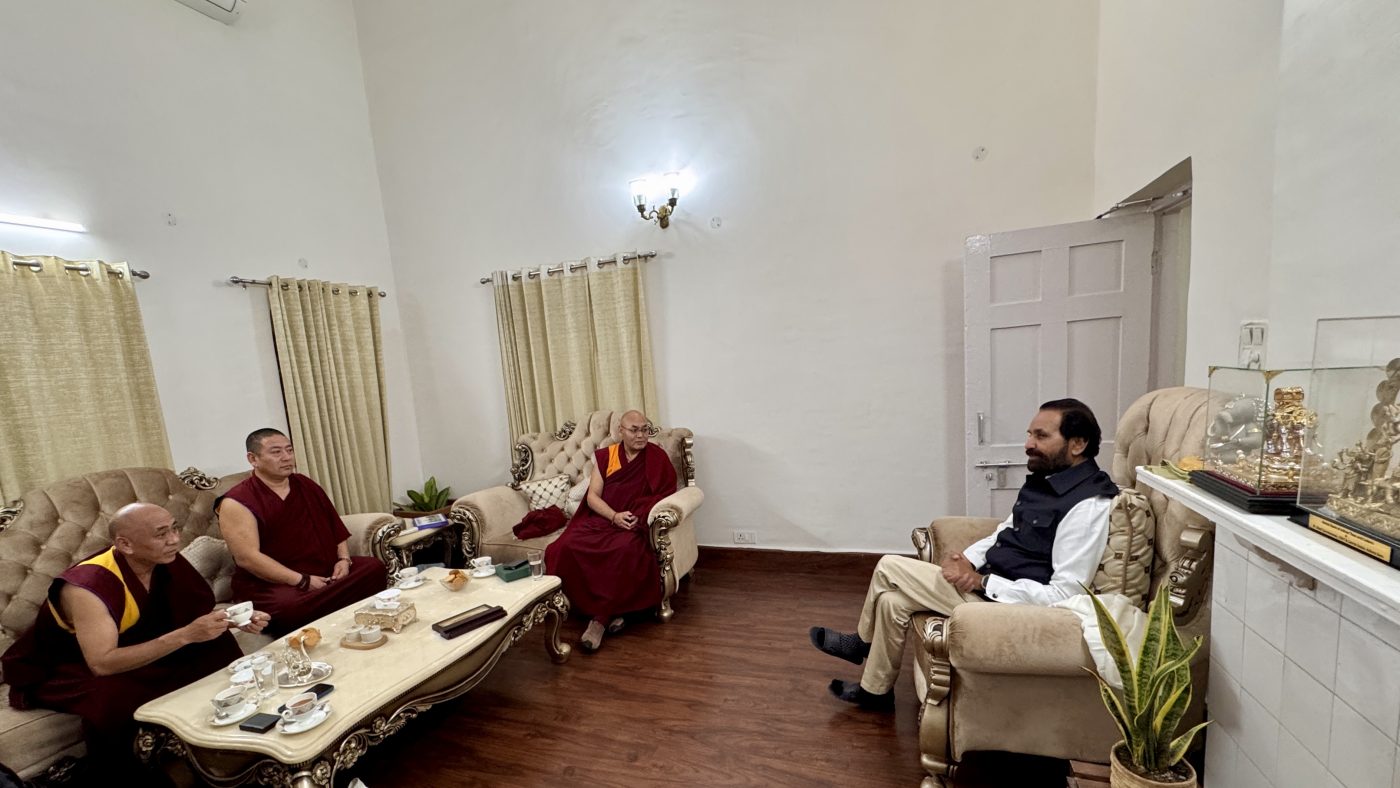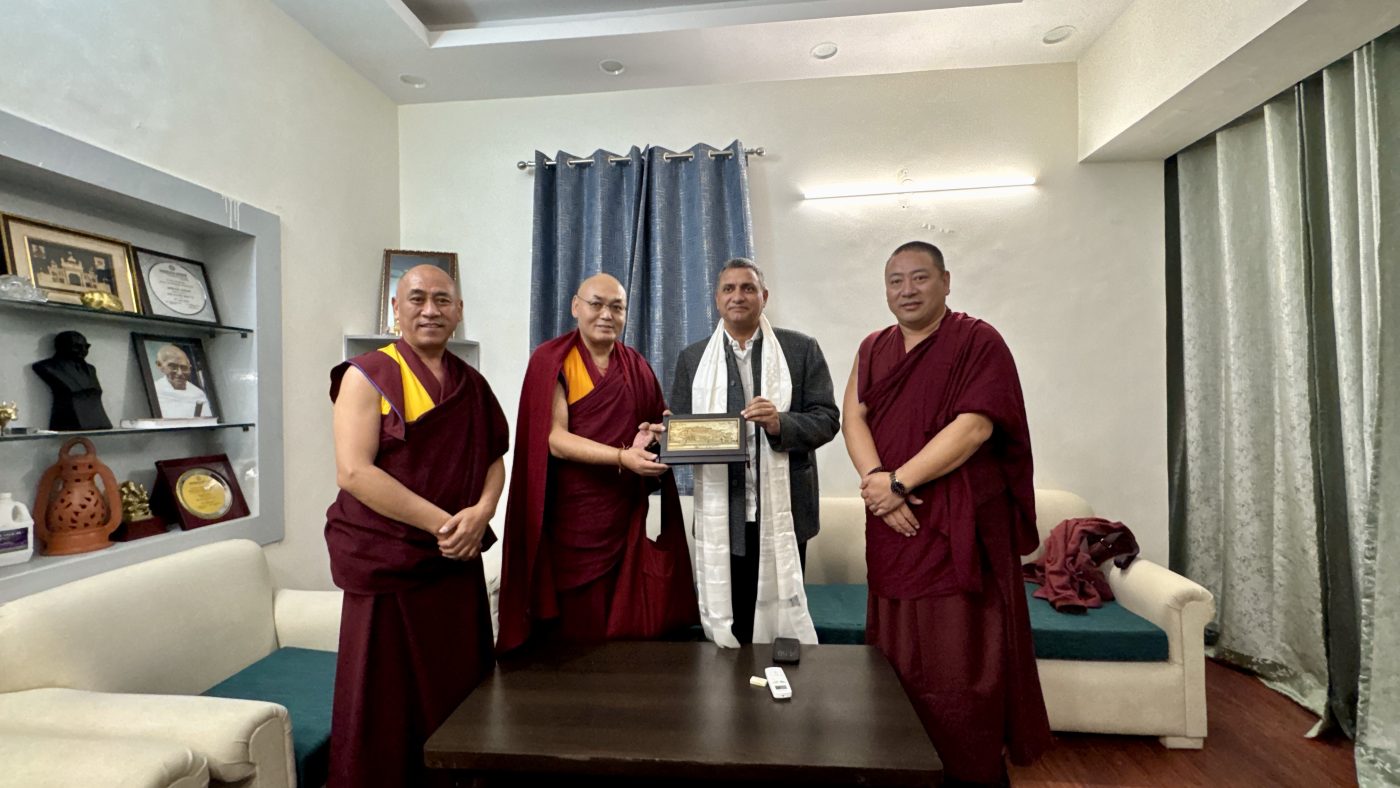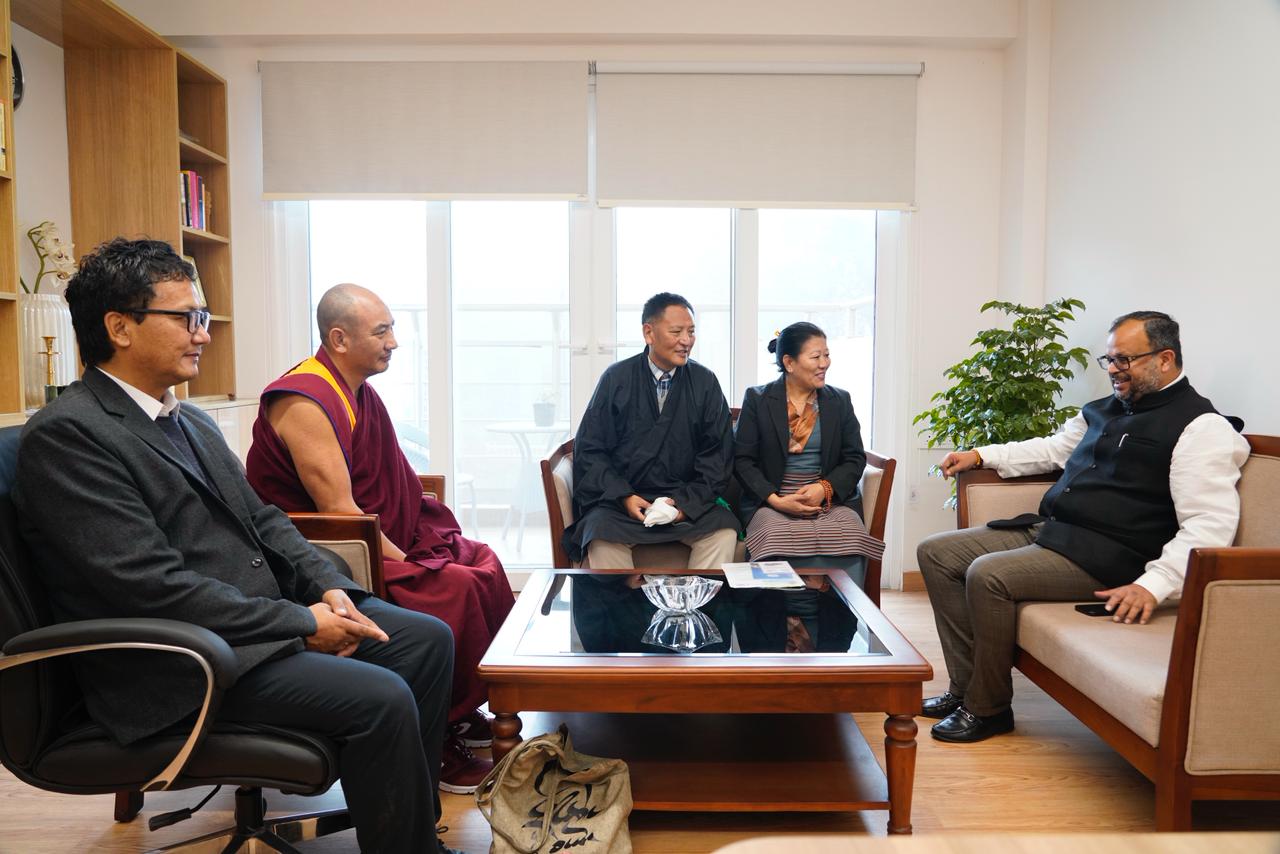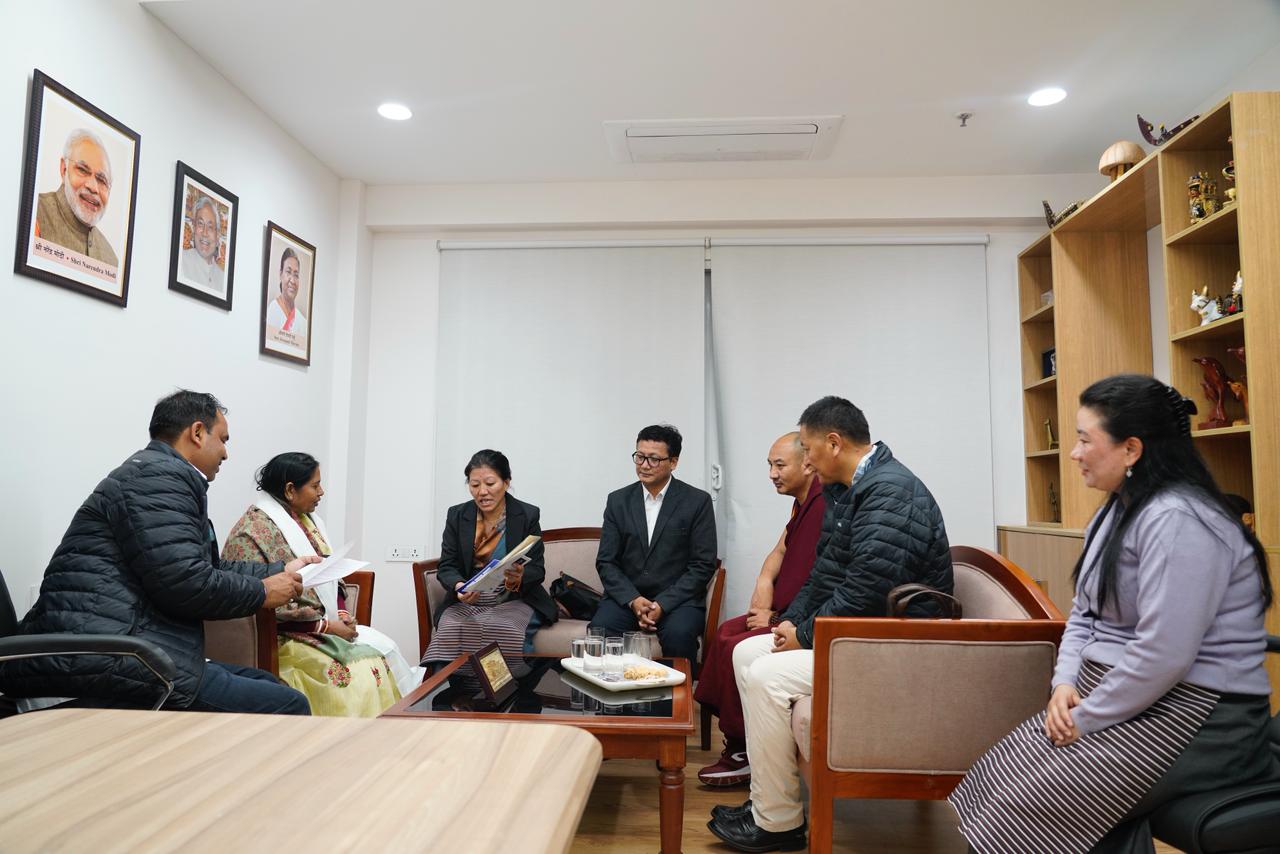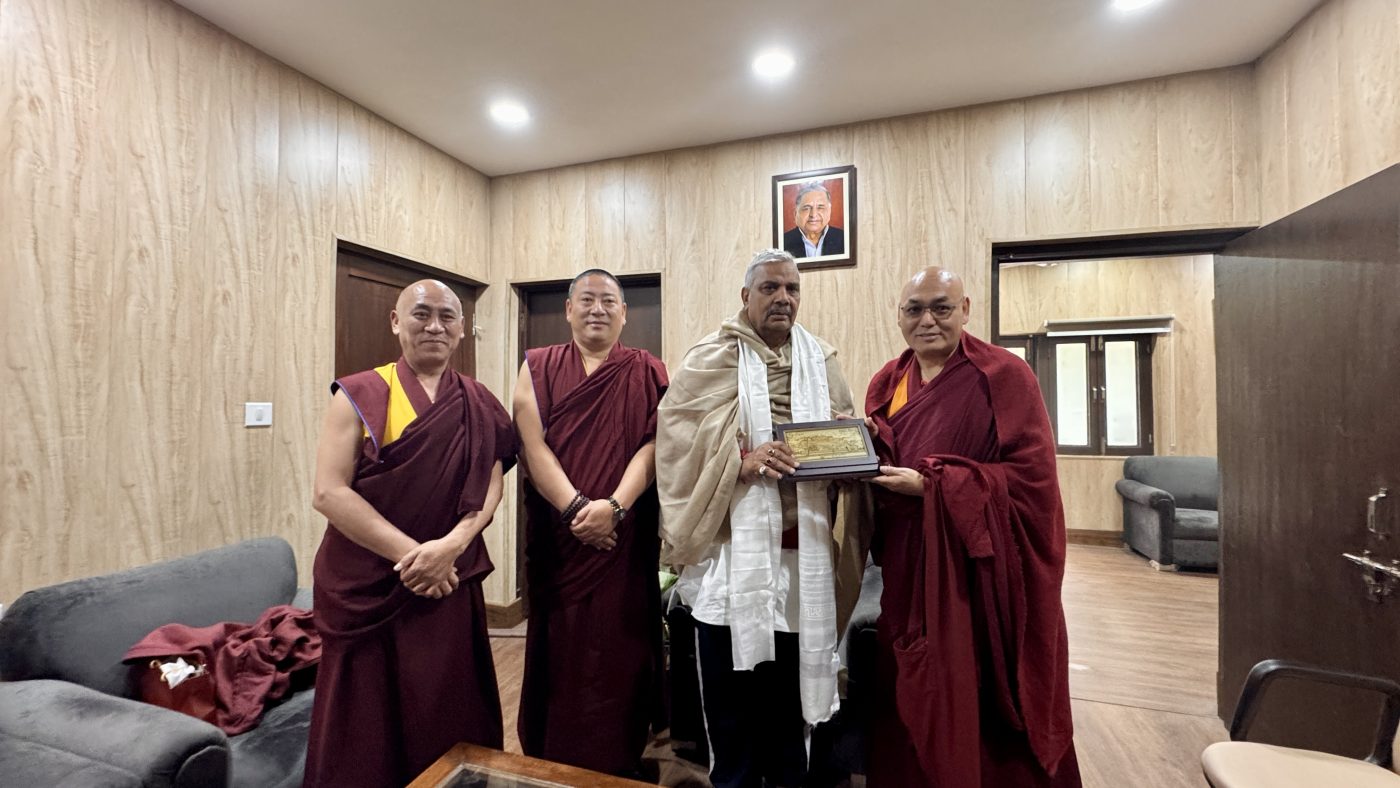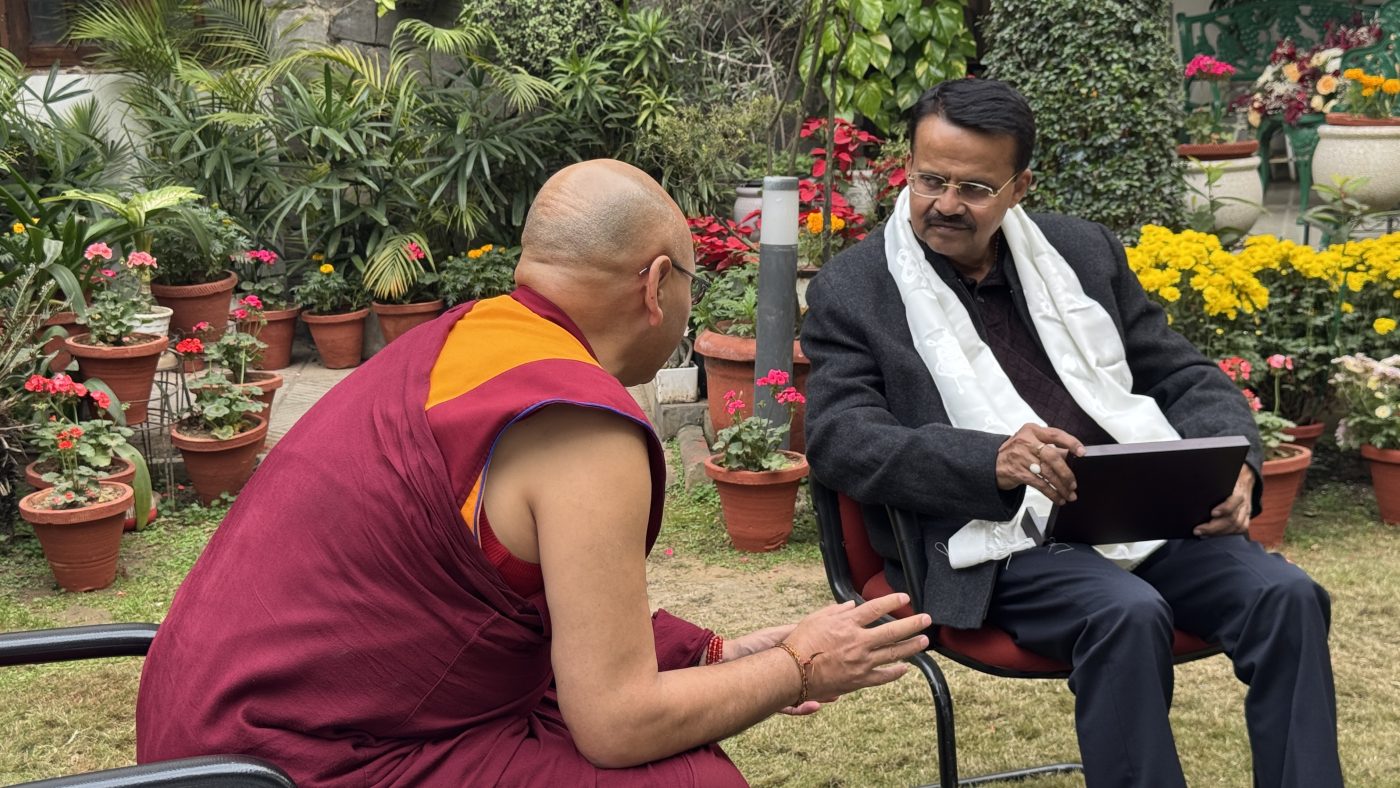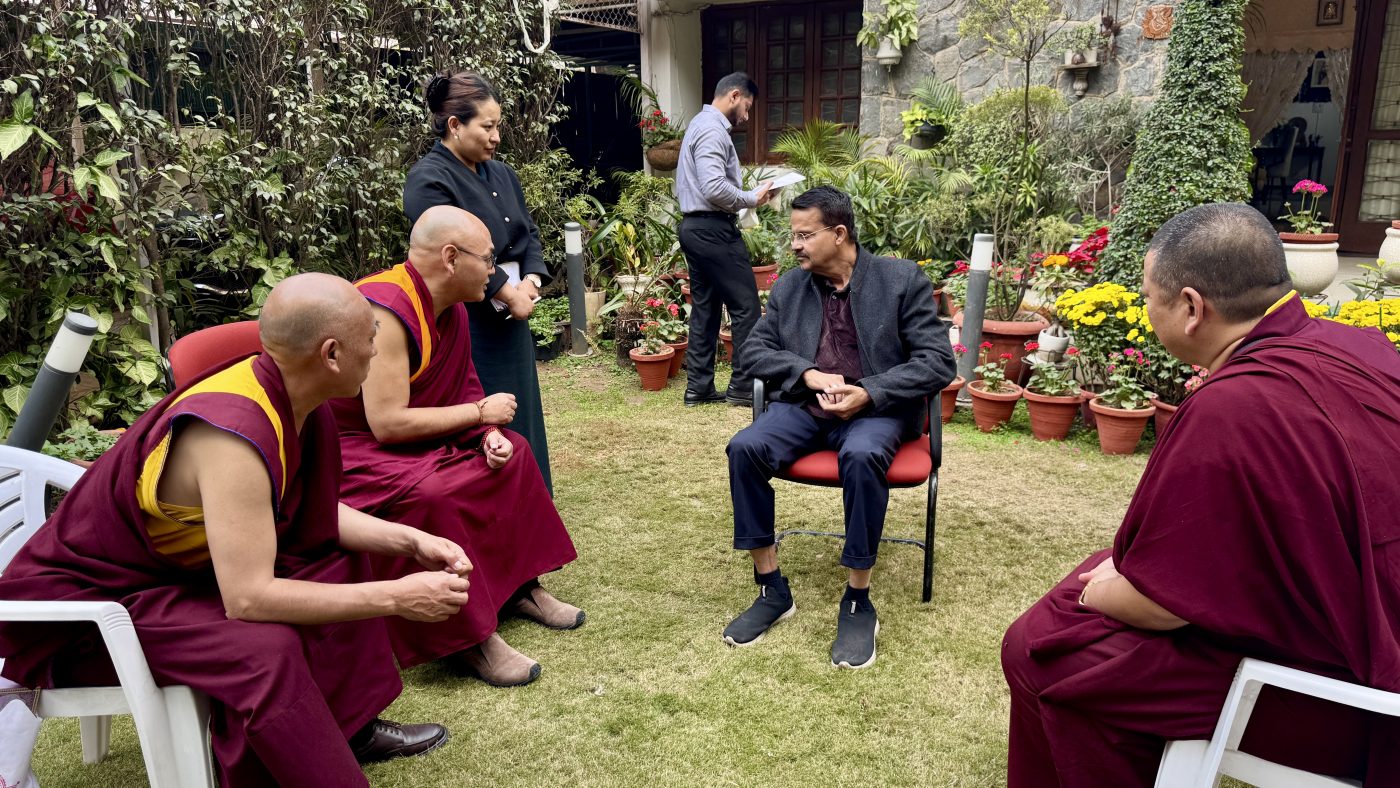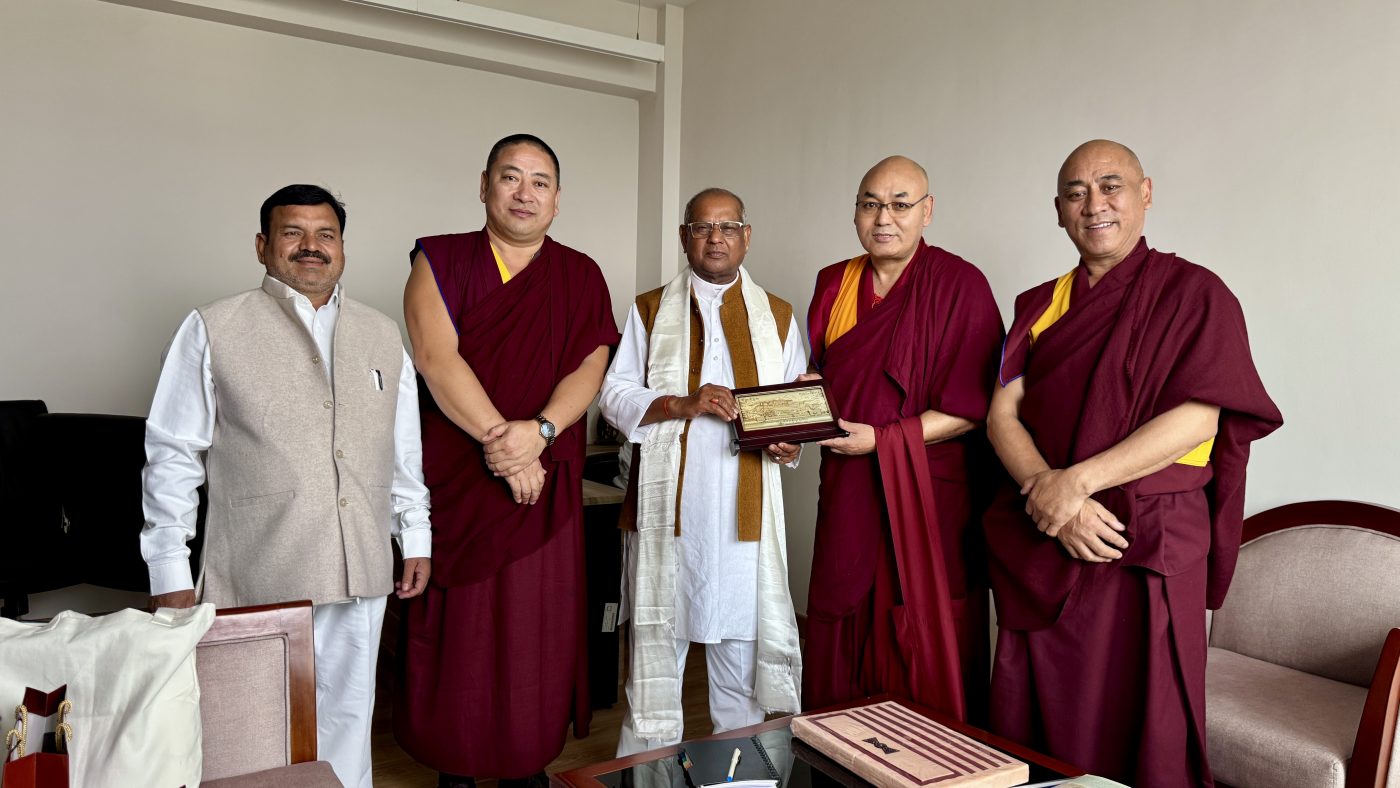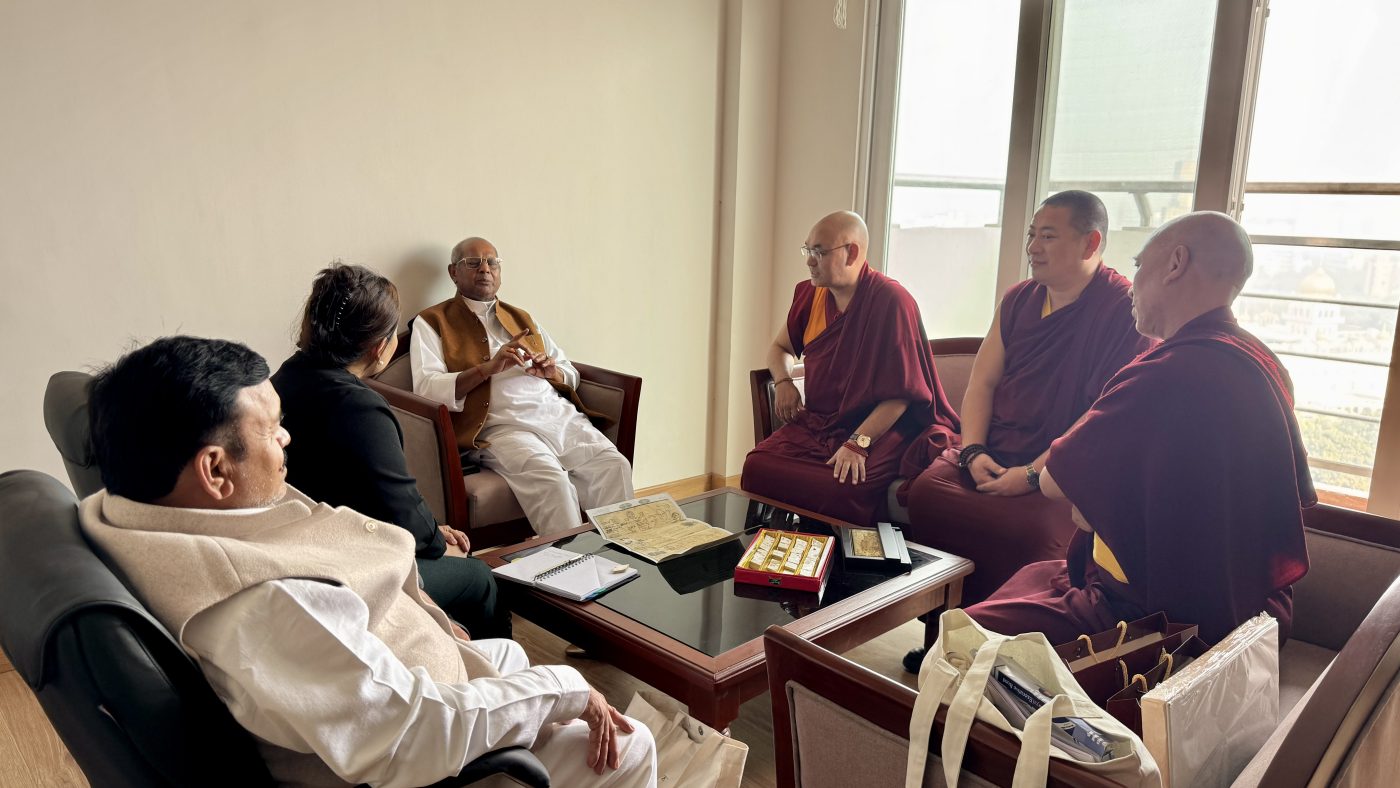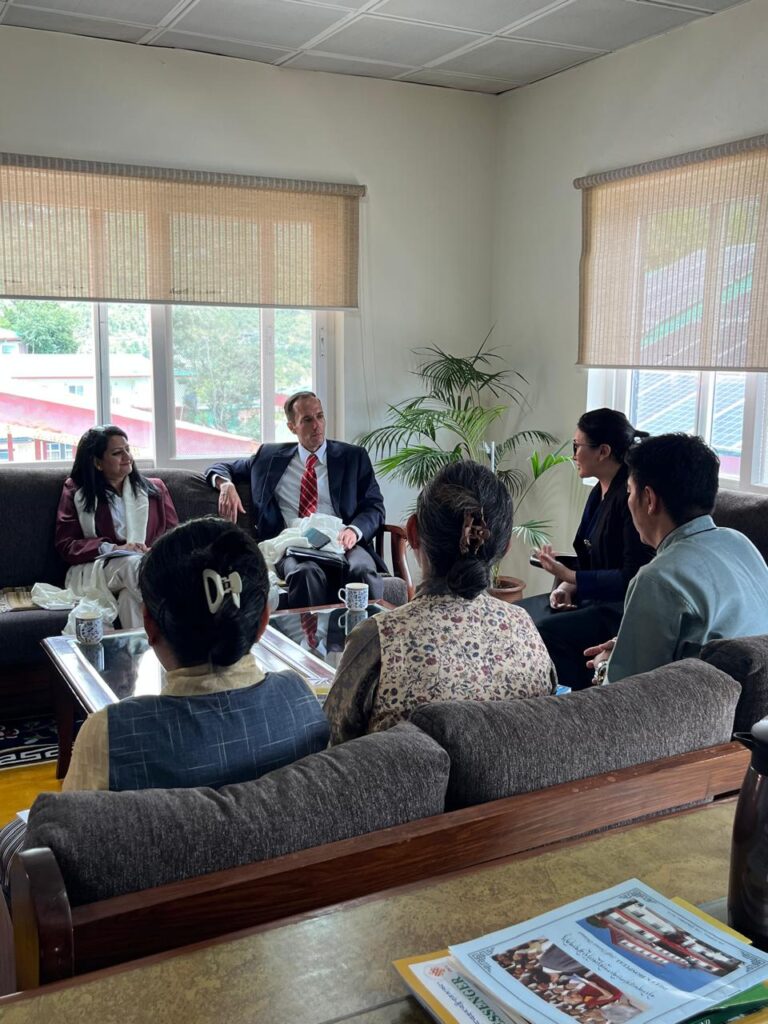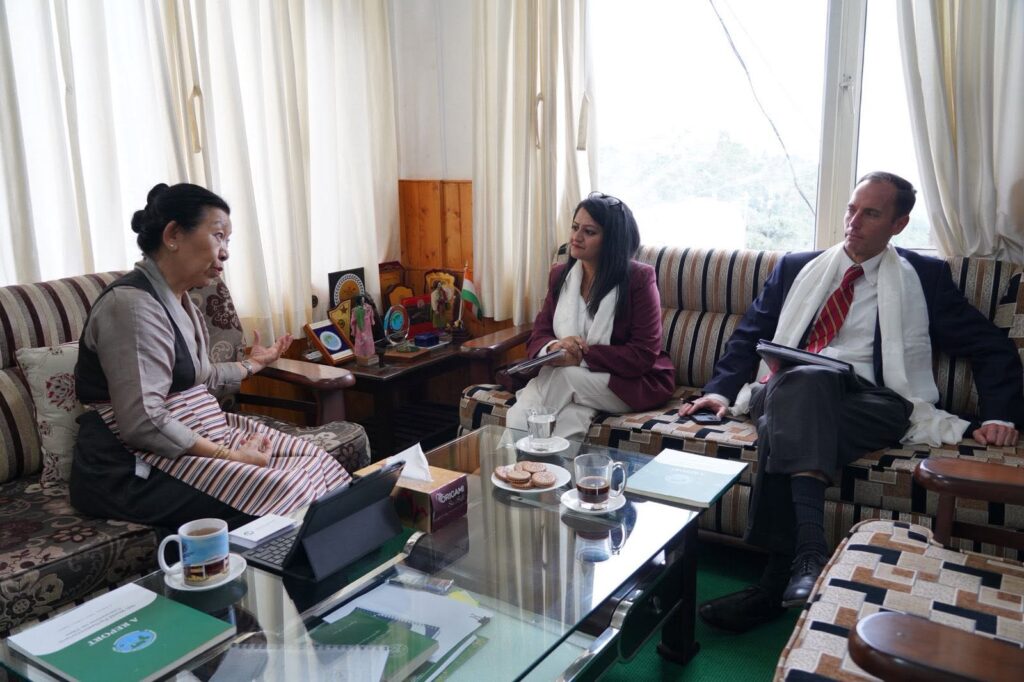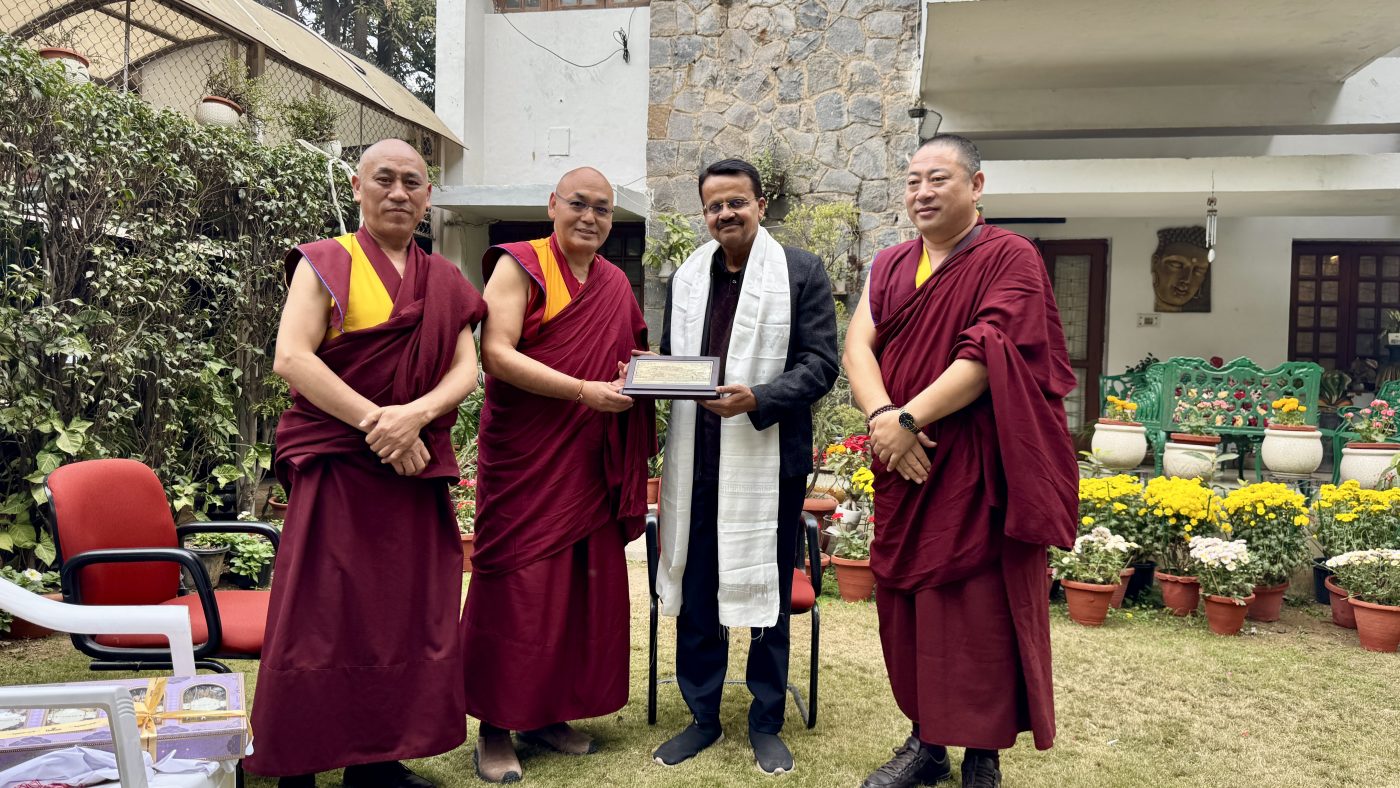
Delhi, 15 December 2025: As the winter session of the Indian Parliament continues, Speaker Khenpo Sonam Tenphel led the Standing Committee, divided into three groups, continued Tibet advocacy initiatives in New Delhi by engaging with Indian Members of Parliament and other dignitaries.
The first group met with Shri Narayan Das Ahirwar, Member of Lok Sabha from Uttar Pradesh (Samajwadi Party); Shri Bhartruhari Mahtab, Member of Lok Sabha from Odisha (BJP) and the Convener of the All Party Indian Parliamentary Forum for Tibet (APIPFT); Shri Ram Chander Jangra, Member of Rajya Sabha from Haryana (BJP); Shri Harendra Singh Malik, Member of Lok Sabha from Uttar Pradesh (Samajwadi Party); Shri 108th Pragyasagar Ji Muniraj, religious leader of Jainism; Naznene Rowhani, Secretary General of National Spiritual Assembly of the Baha’is of India; Shri Shaktisinh Gohil, Member of Rajya Sabha from Gujarat (INC); Shri Sudhakar Singh, Member of Lok Sabha from Bihar (Rashtriya Janata Dal); and Rev. Marazban Nariman Zaiwalla, Zoroastrian Priest (Parsi Community).
The second group met with Smt. S. Phangnon Konyak, Member of Rajya Sabha from Nagaland (BJP) and Shri Arvind Ganpat Sawant, Member of Lok Sabha from Maharashtra (Shiv Sena).
The third group met with Shri Varun Chaudhary, Member of Lok Sabha from Haryana (INC); Shri Faggan Singh Kulaste, Former Minister of State for Rural Development of India and Member of Lok Sabha from Madhya Sabha (BJP); and Smt. Vijaylakshmi Devi, Member of Lok Sabha from Bihar (Janata Dal (United) (JDU)).
The first group comprised Speaker Khenpo Sonam Tenphel and parliamentarians Tenpa Yarphel and Geshe Ngawa Gangri. The second group included parliamentarians Juchen Kunchok Chodon, Geshe Lharampa Atuk Tseten, and Geshe Atong Rinchen Gyaltsen. The third group consisted of parliamentarians Serta Tsultrim, Lopon Thupten Gyaltsen, Tsaneytsang Dhondup Tashi, and Tsering Yangchen.
During their meetings with the aforementioned dignitaries, the delegations advocated for the recognition of Tibet as an occupied nation with a historically sovereign past. They called upon the People’s Republic of China to engage in substantive and unconditional dialogue with representatives of His Holiness the Dalai Lama or the democratically elected Tibetan leadership. They also appealed to the UN Framework Convention on Climate Change (UNFCCC) to conduct scientific studies on the PRC’s exploitation of Tibet’s natural resources and its consequential impact on global climate change.
Furthermore, the delegations urged pressure on China to grant independent human rights organizations access to Tibet and to extend standing invitations to UN Special Rapporteurs, particularly those mandated on freedom of expression, peaceful assembly, association, and the protection of human rights defenders. They appealed for demands for the unconditional release of all Tibetan political prisoners, including Gedhun Choekyi Nyima, the 11th Panchen Lama, whose whereabouts have remained unknown since 1995, and called for an end to repressive policies aimed at suppressing Tibetan culture, language, and religion.
The Tibetan parliamentary delegation also appealed for the establishment of a national legislative framework to counter China’s networked authoritarianism and disinformation campaigns that undermine democratic institutions and global stability. They urged legislators to raise their voices and express concern over human rights violations in Tibet across all available platforms.
Throughout the meetings, the respective delegations were accompanied by staff members of the Tibetan Parliamentary Secretariat and the New Delhi based coordinator of the Tibetan Parliament-in-Exile.
– Report filed by Tibetan Parliamentary Secretariat