
Italian Parliament Takes up Urgent Question on Humanitarian Crisis in Ngaba[Tuesday, 21 June 2011, 5:38 p.m.]
 |
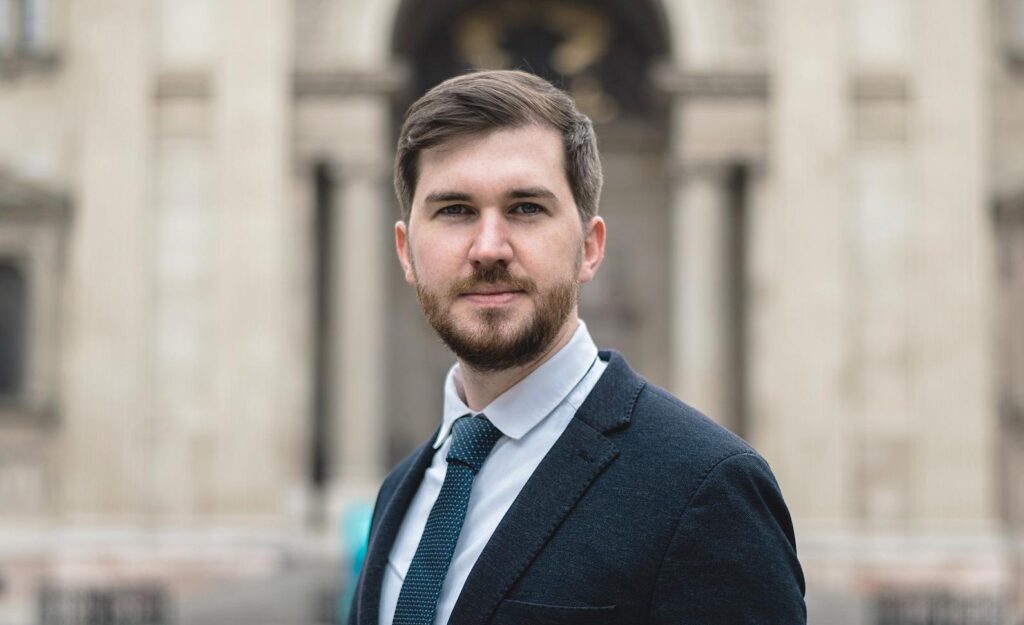
| From right: Matteo Mecacci, the President of the Italian Parliamentary Inter-Group for Tibet, with His Holiness the Dalai Lama during the 5th World Parliamentarians’ Convention on Tibet, held in Rome in November 2009 |
DHARAMSHALA:
The Italian Parliament discussed the issue of severe repression imposed
by the Chinese authorities on Tibetans in Kirti monastery in Ngaba
region of northeastern Tibet’s Amdo province since 16 March, which has
so far left at least two Tibetans dead and hundreds of monks arrested.The
urgent question was raised by Mr Matteo Mecacci, a member of Italian
Parliament and who is also the current president of the Italian
Parliamentary Intergroup for Tibet. “I wish to thank one by
one the thirty-eight colleagues from the various political groups with
which I submitted this urgent question to the Government, for
witnessing the attention of the Parliament towards what is happening
Tibet, particularly in the county in which a severe humanitarian crisis
has been taking place for some weeks or months,” Mr Mecacci told the
parliament.He expressed concern over the reluctance by Western
Governments, including the Italian Government, in dealing with tens and
thousands of Tibetans suffering under a strong and lasting repression
inflicted by the Chinese government.He apprised the parliament
by giving a comprehensive account of how the situation worsened and
culminated in the military siege of Kirti Monastery in Ngaba after a
monk burned himself to death on 16 March in protest against the Chinese
government’s brutal suppression of peaceful protests across Tibet in
2008.He likened the ‘patriotic education’ enforced upon the
Tibetans by the Chinese authorities as ways to control a society
through repression and ideological approach known to Italians as
contained in the black book of Communism.He said the Italian
government maintaining silent over the repression in Tibet jeoperdises
the interests that Italy and other European Countries intend to start
with China.“I hope that the Government might mirror the
attention showed by the Parliament, and have a feedback that is not
just formal but that leads to concrete results,” he told the House..Responding
to the urgent question, Undersecretary for Economic Development Stefano
Saglia said the government had decided to promote a joint action to
express with a single voice the unease of the EU in relation to the
news coming from Ngaba.“The EU Foreign Service summoned the
Ambassador of China at the EU to express the deep concern of the Union
for the news of violence perpetrated by the Chinese authorities against
the Tibetan monks,” Saglia said.He said Italy would continue to follow this delicate matter with the highest level of attention.“We
obviously intend to keep our constant commitment in monitoring – in
general – the situation of human rights in China. We actively support
those instances that, inside of the European Union and in other
international frameworks, might be addressed to the Chinese
authorities, asking them for more openness towards the protection of
religious freedom and freedom of thought,” he added.“It must be
stressed that, on the occasion of his visit to China last May, the
President of the European Council indicated the respect for human
rights, including religious rights, as a parameter to evaluate the role
and the contribution of China as a global responsible actor. The
President reminded the Chinese interlocutors that human rights
represent one of the founding values of the European construction,” he
said.“The Italian Government, in the full respect of the
territorial sovereignty and integrity of China, supports the common
position expressed at European level to foster a constant and
constructive dialogue between Beijing and the Tibetan representatives.
The latter obviously represent fundamental interlocutors to find a
shared solution to the Tibetan issue, a solution that – in the
framework of the Chinese Constitution – ensures the level of protection
and autonomy needed to preserve the culture, the century-old tradition
and the religion of Tibet,” Mr Saglia said.