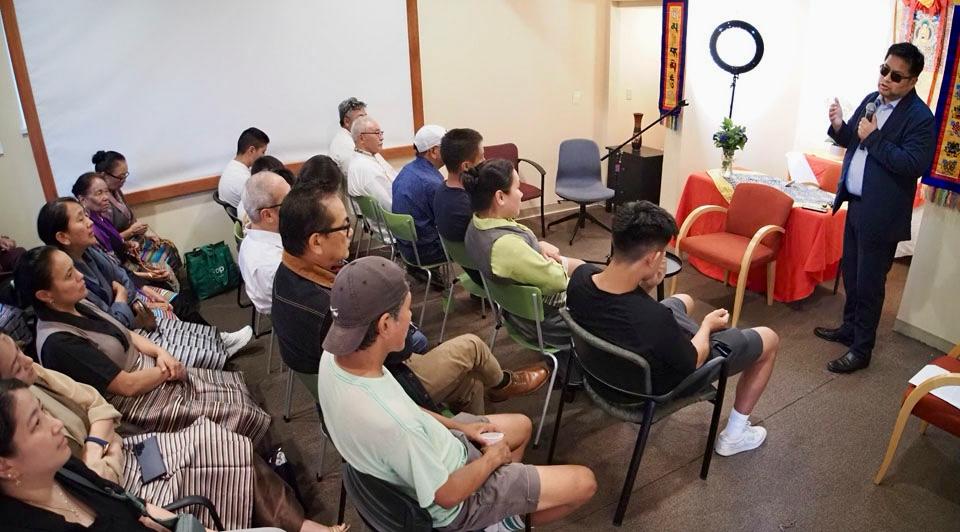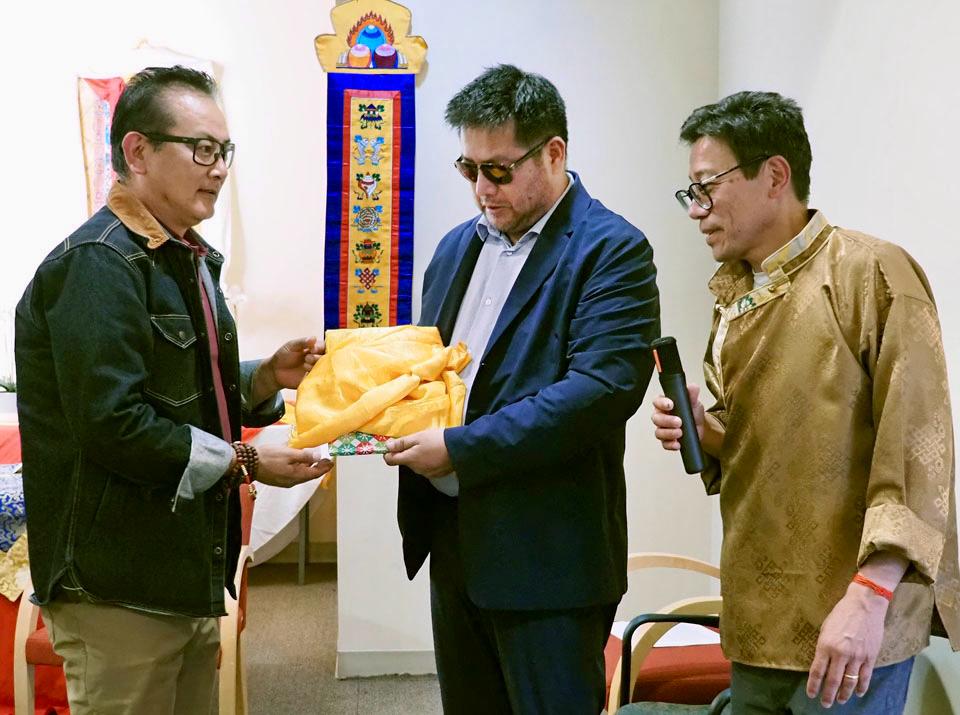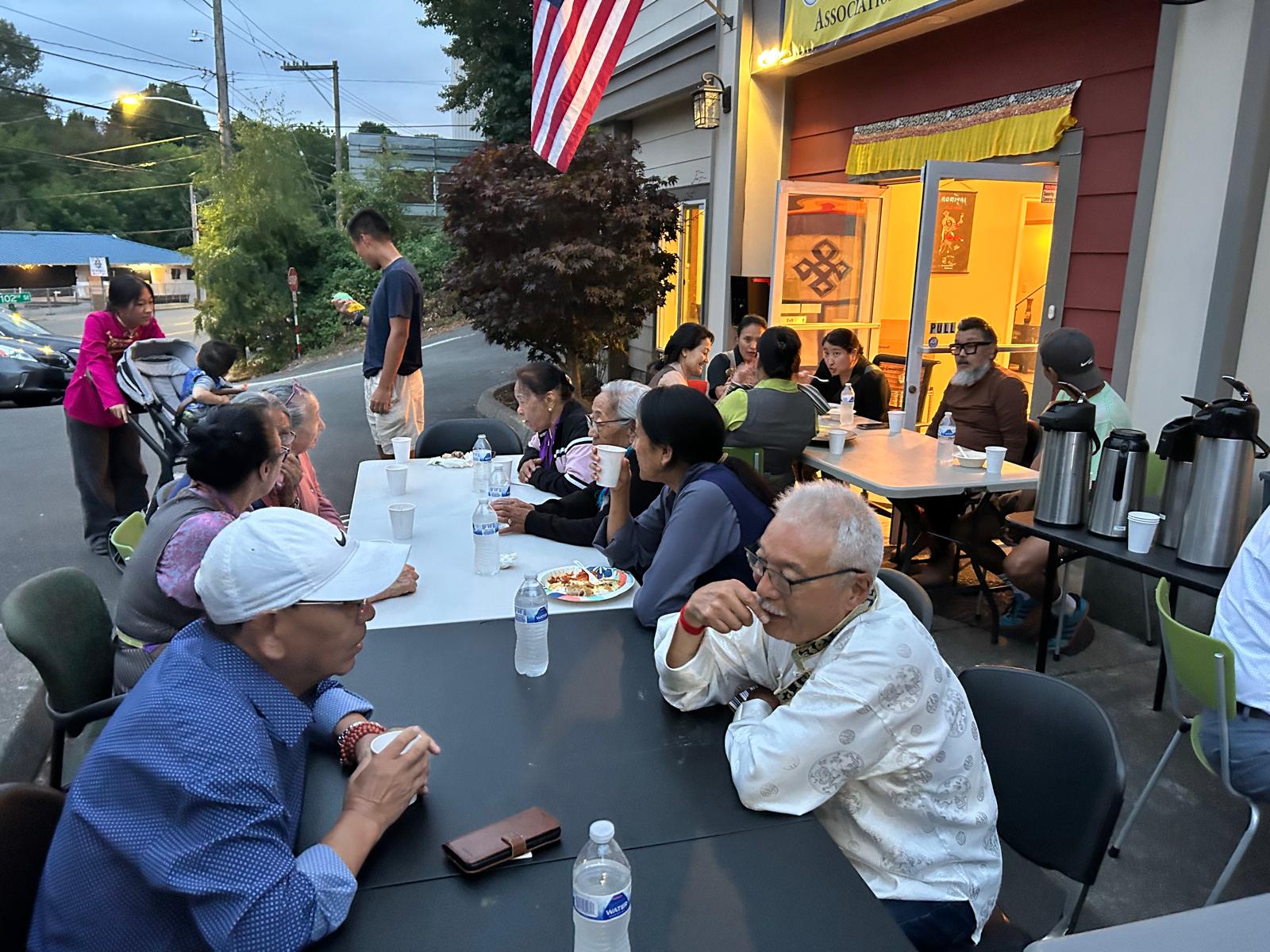

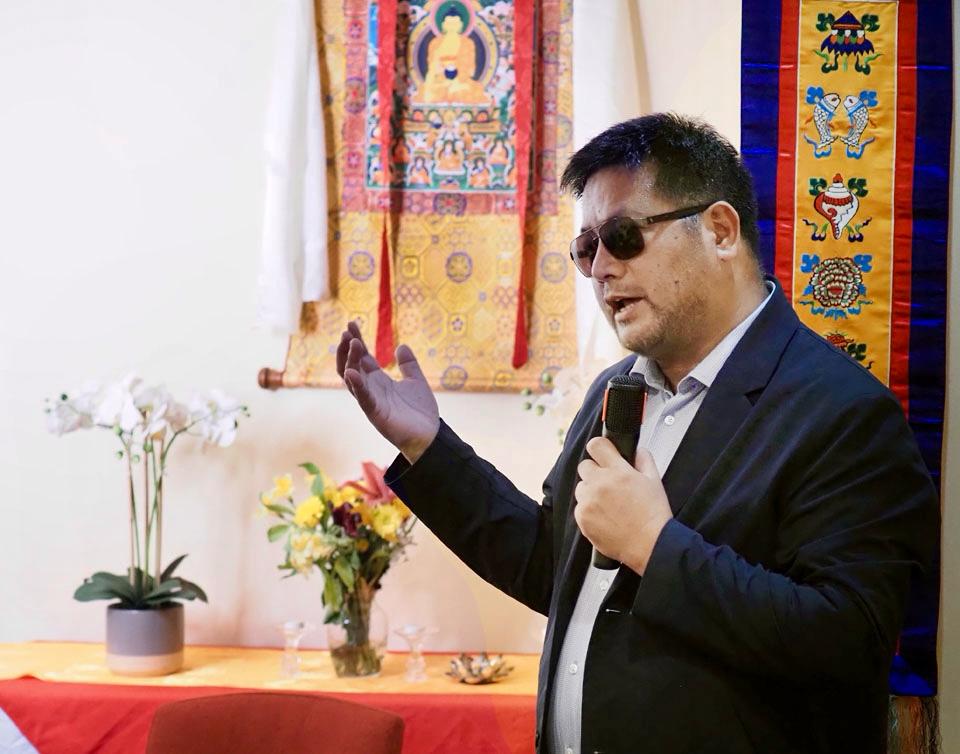
Seattle: In the evening on August 13, 2025, Dr Namgyal Choedup, Representative of His Holiness the Dalai Lama to North America, met with members of the Tibetan community in Seattle gathered at the newly inaugurated Mewon Sishu Tsogkhang—a community building blessed with its name by His Holiness the 14th Dalai Lama.
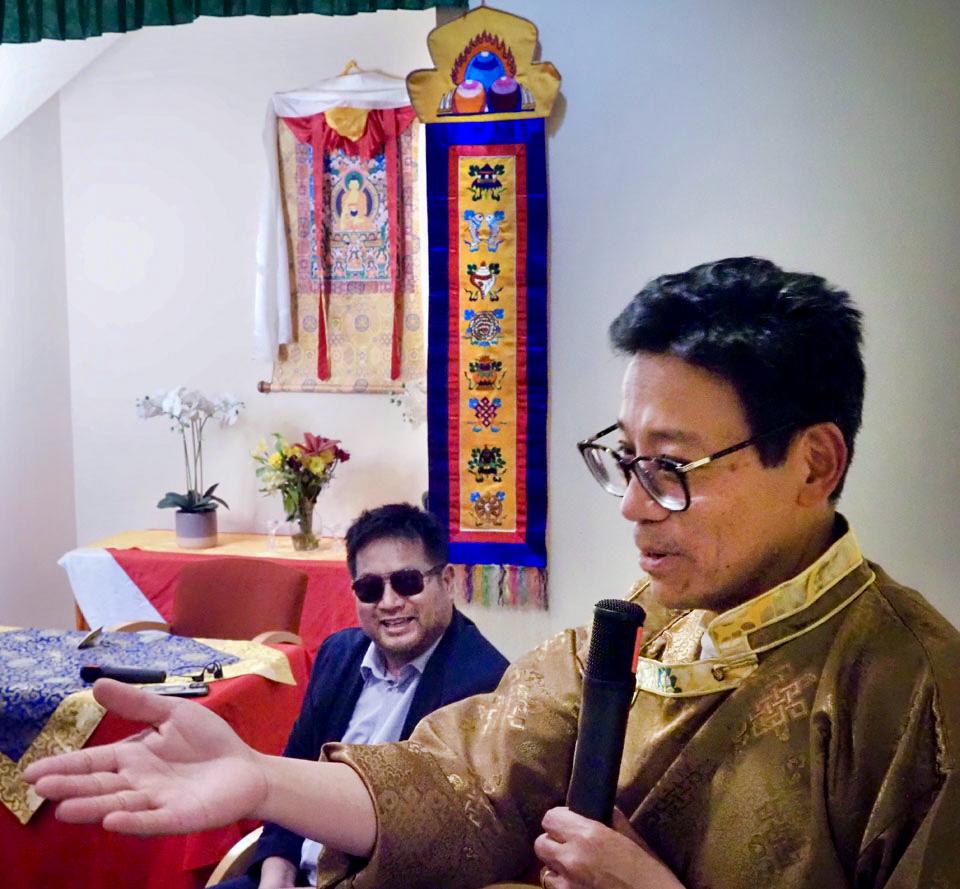
The event began with a welcome speech by Lobsang Tsering, a member of the Tibetan Association of Washington (TAW) Board of Directors. He shared a short overview of the Association’s ongoing work, its goals for the future, and the meaning behind the newly opened community space. TAW had come a long way, and the gathering that evening was a testament to the community’s unity.
Soon after, Dr Namgyal Choedup took the stage. He opened with warm thanks to the organizers and expressed his joy at being able to attend Seattle’s annual Tibet Fest. He explained that the Office serves as the official diplomatic arm of the Central Tibetan Administration (CTA) in North America. It works tirelessly to represent His Holiness and the Tibetan people, advocate for Tibetan rights in Washington, D.C. and Ottawa, and coordinate efforts among Tibetan communities across the continent.
One of the central messages of his talk focused on building relationships with Chinese communities, especially in academic and civic spaces. He emphasied that despite the political challenges, Tibetans and Chinese will inevitably need to live side by side in the future. Creating open lines of communication today, he said, was essential for the path forward. Dr Namgyal also shared updates on political outreach efforts, highlighting the importance of bipartisan support in the U.S. Congress. He encouraged Tibetans in America to meet with their local representatives, share their personal stories, and keep the issue of Tibet alive in the minds of lawmakers.
Turning to education, he introduced the SEE Learning program—a curriculum developed by Emory University in partnership with His Holiness. Built on the foundation of compassion, emotional intelligence, and ethics, the program is already being adopted in various schools worldwide. Dr Namgyal stressed its relevance not only to Tibetan children but to all students navigating today’s complex world.
In speaking about public awareness, he reminded the community of the power of storytelling. Local media, he said, can be valuable allies if approached with messages of peace, cultural resilience, and non-violence. Positive stories about Tibet can help build understanding and strengthen support in broader American society.
Dr Namgyal also praised the Tibetan Association of Washington, commending its active role and encouraging members to continue strengthening their organization. He invited the community to participate in the upcoming North America Tibetan Associations Meeting in Minnesota this September and welcomed suggestions for how to improve TAW’s operations.
He then shifted to a more personal but important topic—travel to Tibet. For those visiting family back home, he urged everyone to follow CTA guidelines and, where possible, inform the Office of Tibet before making the trip. Doing so helps protect both travelers and their relatives still living under Chinese rule.
At the end, Dr Namgyal spoke about the upcoming Tibetan elections, scheduled to begin in October 2025. These elections will determine the next Sikyong (President of CTA) and members of the Tibetan Parliament-in-Exile. He encouraged everyone to participate fully—study the candidates, listen carefully, and choose leaders who can unite Tibetans and lead with vision and integrity. “This is a critical time,” he said. “We need strong, visionary leaders who can unite all Tibetans—those in exile and those inside Tibet—and who can stand firm in our just struggle.”
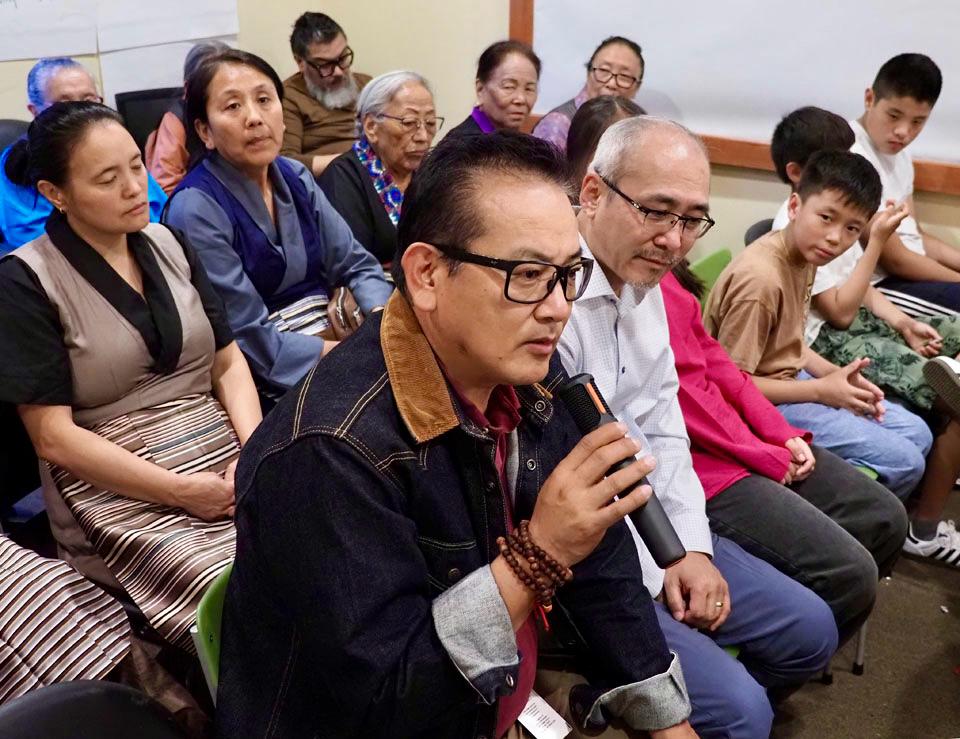
After his speech, the floor was opened for questions and discussion. Community members took the opportunity to engage with Dr Namgyal directly, asking thoughtful questions and offering reflections. The evening ended with informal conversations, and dinner in a potluck style outside of Mewon Sishu Tsogkhang.
–Report filed by the Office of Tibet, Washington DC