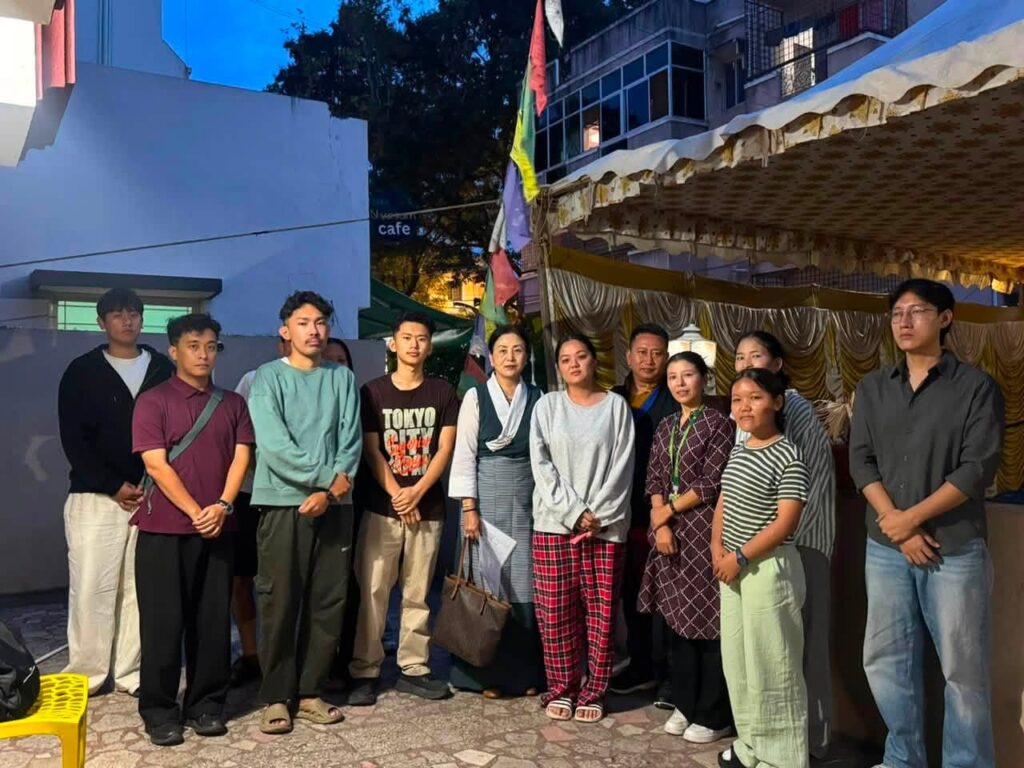


Bengaluru: The Department of Information and International Relations (DIIR) of the Central Tibetan Administration (CTA) successfully concluded its ‘Tibet Outreach Program’ in Bengaluru, engaging with Indian students and faculty across multiple universities that began earlier this week. Following an impactful session at St. Joseph’s University on 21 October, the CTA team, led by Dukthen Kyi, Deputy Secretary and Head of the Tibet Advocacy Section, and Dechen Palmo, Under Secretary and Environment Researcher at the Tibet Policy Institute, along with team members and Office Assistants Tseten Dolma and Rinchen, continued their outreach until 23 October.
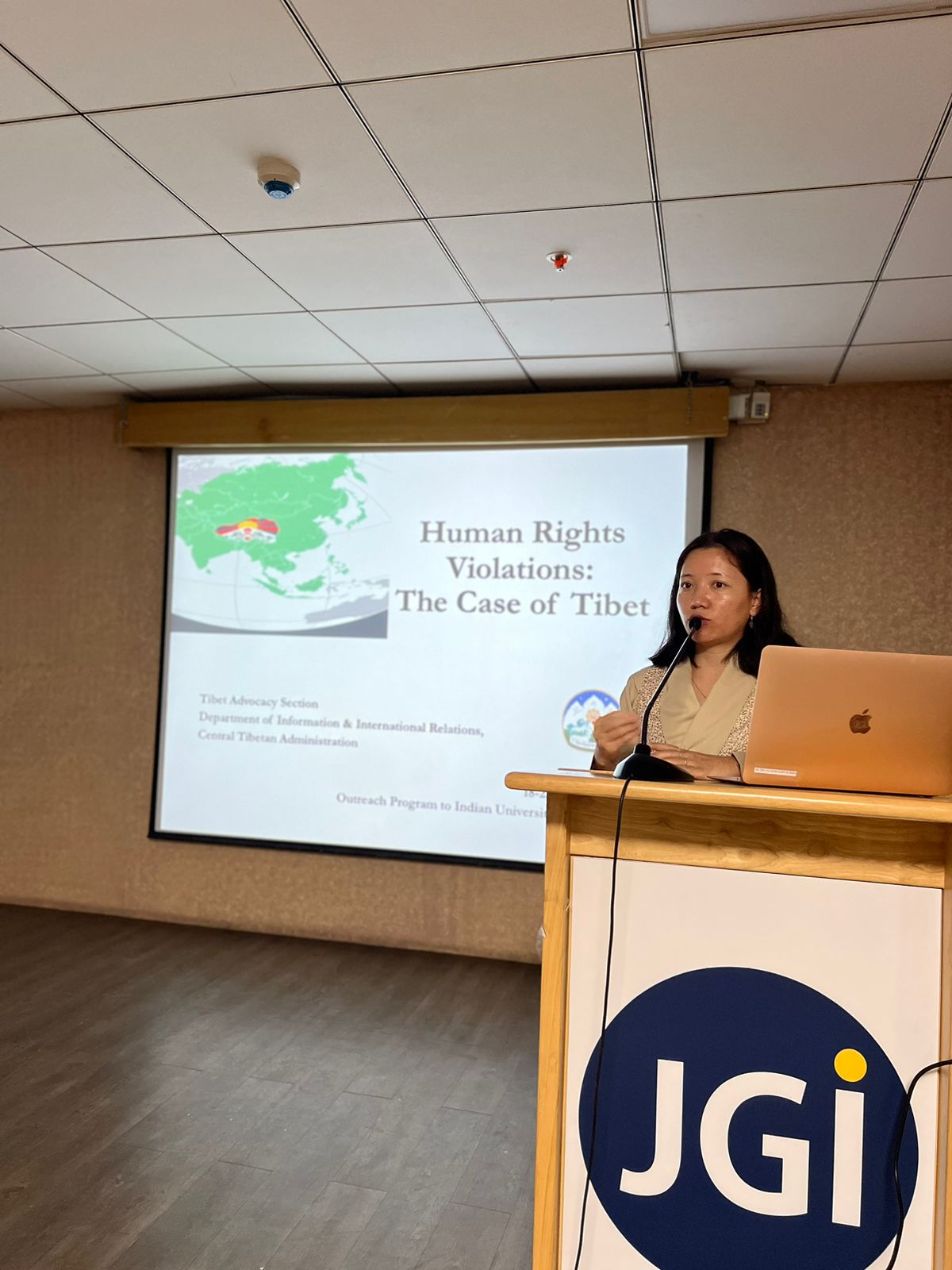
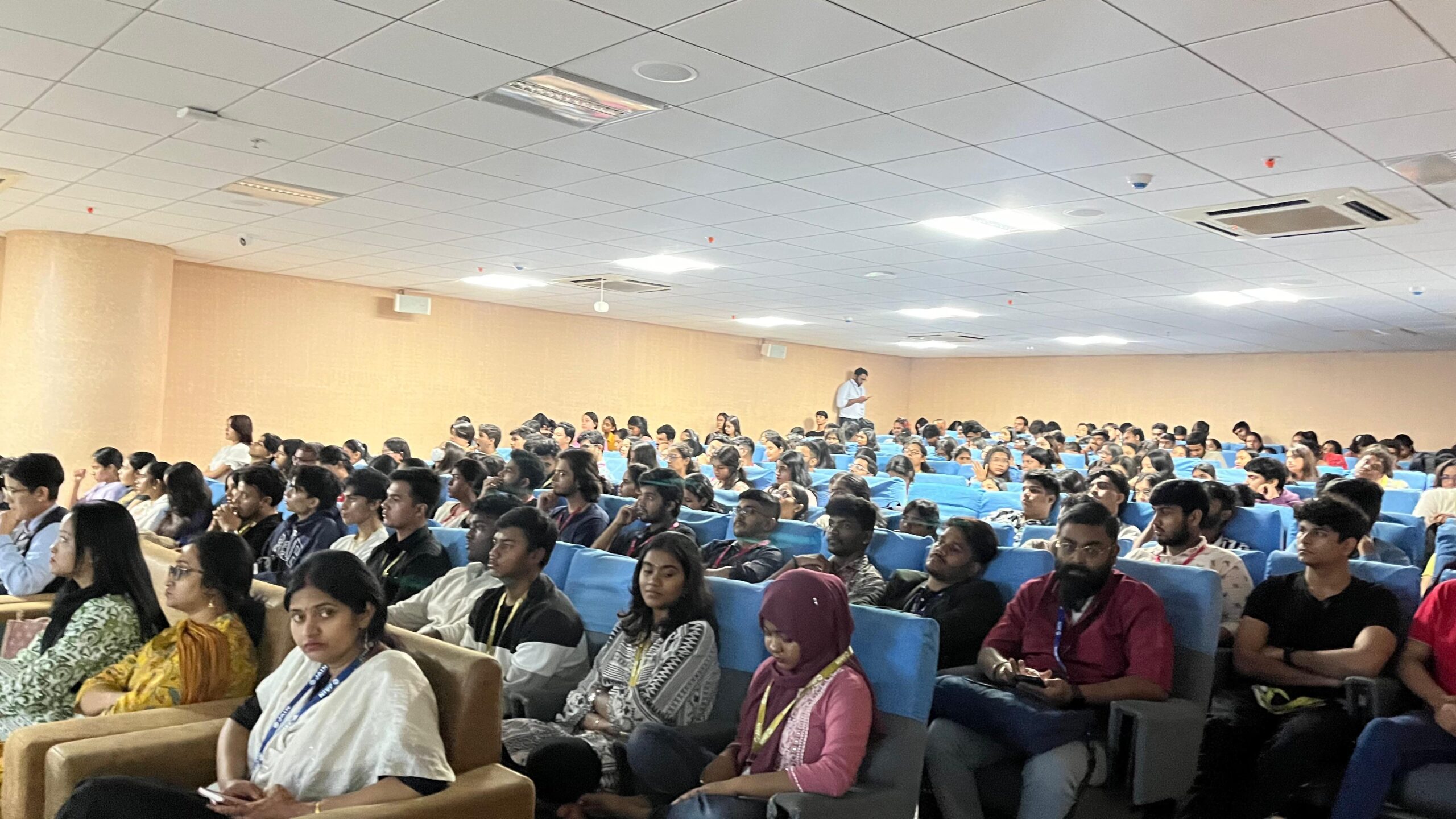
On 22 October, Jain University, Jayanagar, hosted the team with participation from over 265 students and faculty members from the departments of MA, B.Com, MBA, BA, and BCA. Through compelling presentations, the two speakers outlined the Central Tibetan Administration’s role, discussed the exile Tibetan community, addressed key human rights concerns in Tibet, and explored the geopolitical relations between India and China regarding the hydro-politics of the Brahmaputra River. They also deliberated on China’s utilization of the Brahmaputra River as a tool for geopolitical leverage, causing significant consequences for India’s water security and the overall stability of the region.
Later that day, the team visited V.E.T First Grade College, where around 180 students and faculty from the Departments of Language, Commerce, and Management attended the session. The speakers once again discussed the significance of Tibet in a global context, and many were introduced to Tibet and issues concerning the Sino-Tibet conflict.
The final leg of the outreach program took place on 23 October at Surana College, South End, coordinated by the college’s Departments of History and Political Science. It was attended by over 120 students and faculty members from the organising departments as well as those from Journalism, Economics, Literature, and Psychology. The session concluded with another interactive discussion during the Q&A session, where students and faculty raised pertinent questions about Tibet’s geopolitical relevance, human rights issues, and the impact of China’s policies on Tibet’s cultural and environmental heritage.
The Tibet Outreach Program in Bengaluru provided an essential platform for raising awareness about Tibet’s political, cultural, and environmental significance, fostering dialogue and understanding among the Indian youth and academic communities. Although some of the Indian youths knew about Tibet and its ongoing issues, for many, this program proved to be an eye-opening first experience and interaction on the issue of Tibet. The team thanked the universities for their warm welcome and support in making the outreach program truly meaningful.
Following the success of the program, the CTA team expressed their gratitude for the keen interest and enthusiasm shown by the young Indian college students and the opportunity to engage with Bengaluru’s academic community.
-Filed by Tibet Advocacy Section, DIIR, CTA