Bengaluru: A one-day symposium titled “India-Tibet Relations and the Future Discourse” organised by the Department of Information and International Relations (DIIR), Central Tibetan Administration (CTA), in collaboration with M.S Ramaiah University of Applied Sciences, Centre for National Security Studies (CNSS) and Dalai Lama Institute of Higher Studies, was held at the Ramaiah University on 19 October 2024. The symposium provided in two panel discussions, an in-depth examination of the historical, cultural, and political dimensions of India-Tibet relations and explored the importance of continuing and strengthening the discourse on India-Tibet relations.
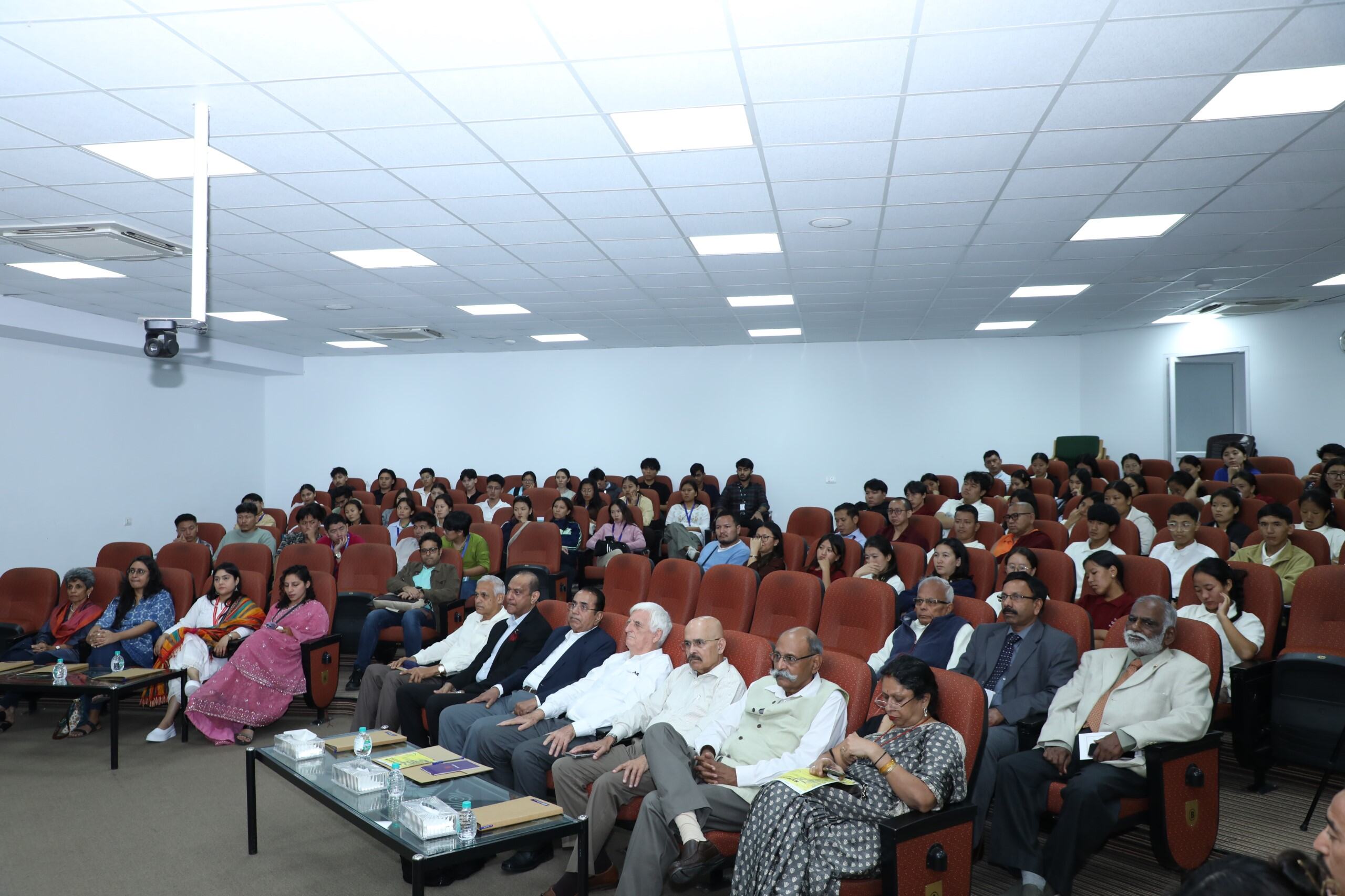
The symposium saw a packed auditorium including panelists, distinguished guests, students and faculties from M.S Ramaiah university, participants of V-TAG South India Training, students and faculties from Dalai Lama Institute of Higher Studies and Men-Tse-Khang, Tibetan and Indian students from various universities around Bengaluru, and people from various organisations in Bengaluru.
The symposium commenced with an inaugural session in the morning, featuring a symbolic watering of a plant to represent growth and renewal. Special Guest P M Heblikar, a member of CNSS, and Major General JV Prasad, Director of CNSS, participated in watering a plant alongside Dukthen Kyi, Deputy Secretary of DIIR, CTA. Dukthen Kyi delivered the welcome address where she thanked M. S Ramaiah for their valuable collaboration and voiced optimism for ongoing cooperation to deepen discussions on India-Tibet relations. The keynote address was delivered by P M Heblikar, focusing on the enduring ties between India and Tibet. Dukthen Kyi then felicitated the keynote speaker and CNSS Director with a souvenir.
Following the inaugural session, the first session, chaired by Dr B M Chengappa, former associate professor at Christ University, explored the Historical Importance of India-Tibet Relations. Renowned speakers, including Claude Arpi, distinguished fellow, Centre of Excellence for Himalayan Studies, Shiv Nadar Institute of Eminence; Ngawang Gyatso, Dean of Regular Studies at the Dalai Lama Institute for Higher Education; and Lt. Gen P R Shankar, former director general of Artillery in the Indian Army and professor at IIT Madras discussed India’s ancient spiritual connections with Tibet, treaties and agreements predating 1950, and Tibet’s influence on India-China relations. The panel examined the complex dynamics of the India-Tibet border dispute and its geopolitical implications.
In the afternoon, the focus shifted to “The Future of the Tibetan Question: India’s Role”, chaired by Dukthen Kyi. Distinguished speakers for the second panel – Manoj Kewalramani, fellow of China Studies at the Takshashila Institute; Balasubramanian C., Head of Indian Strategic Studies Program, CNSS; and Dechen Palmo, research fellow of Tibet Policy Institute, CTA, delved into India’s diplomatic responsibilities, strategies for balancing relations with China, the role of the Tibetan diaspora, and the geopolitical tensions between India and China and their hydro politics of the Brahmaputra river. The speakers also deliberated on the future of Tibet’s political status and environmental degradation on the Tibetan plateau. Major General JV Prasad, Director of CNSS, delivered the closing remarks, emphasising the need for Tibetans to take proactive steps in their advocacy journey.
-Report filed by Tibet Advocacy Section, DIIR, CTA