
Chinese delegates Underscore Common Aspirations of Chinese and Tibetan People[Tuesday, 17 November 2010, 10:24 a.m.]
 |
|
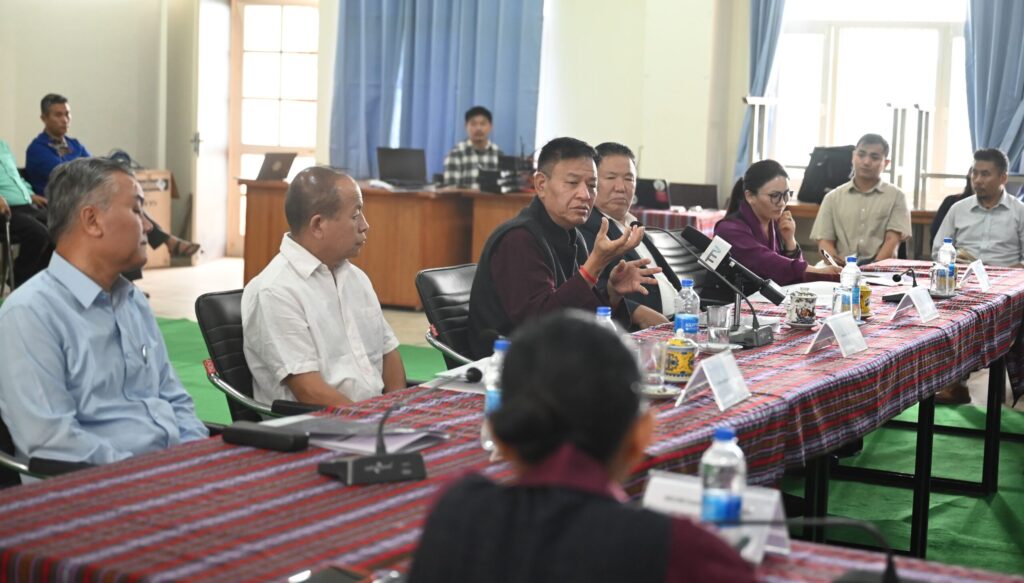
(From right) Mr Xiang Xiao Ji, Ms Gloria Y Fung, Mr Kunga Tashi, Chinese liaison officer at the Office of Tibet, New York, Mr Zhu Xue Yuan and Mr Xia Ming during their interaction with officials of the Central Tibetan Administration at staff mess auditorium in Dharamsala on 10 November 2010.Photos by Jigme Tsering/Tibetonline TV
|
Dharamshala: The
Chinese and Tibetan people share common aspirations as the realisation
of democracy in China would facilitate the achievement of genuine
autonomy for Tibet, a group of four-member Chinese delegation from US
and Canada said during their recent visit to Dharamsala.During
an interaction with officials of the Central Tibetan Administration in
Dharamsala on Wednesday last week, the Chinese delegates expressed
their views on the prospect of achieving democracy in China and genuine
autonomy in Tibet under the frame of Middle Way Approach, and how to
strengthen mutual understanding and friendship between the Chinese and
Tibetan peoples. The movement of democracy in China and
autonomy in Tibet based on the Middle-Way policy should go hand in
hand. If we can realise the dream of democracy in China, Tibetans can
realise the dream of genuine autonomy in Tibet, US-based Chinese
democracy advocate Mr Xiang Xiao Ji said. Mr Xiang was one leading
figure involved in the 1989 Chinese students’ democracy movement in
Tiananman.On the Tibetan people’s choice for independence and
autonomy for Tibet, Mr Xiang said we (Chinese) respect your right to
independence, but for our long-term interest we support high degree of
autonomy in Tibet. We think the Middle-Way Approach is the most
practical way forward in the interest of the Tibetan people.He
said the long history of relationship between Han Chinese and Tibetans
was affected after the People’s Republic of China came into power in
1949. But we will become friends, brothers and sisters after the end of
rule of Communist Party of China. We should join together to
enable Chinese people know about the truth and history of what happened
in Tibet, and the plight of the Tibetan people. The delegates
were asked for their opinions on how His Holiness the Dalai Lama’s
support to Liu Xiaobo on winning the Nobel Peace Prize would help to
accelerate the pace of democratisation process in China. We
are grateful to His Holiness the Dalai Lama for his support to Liu
Xiaobo. The Tibetan people have a common leader in the form of His
Holiness the Dalai Lama but we Chinese don’t have. Today, as Liu Xiaobo
has been recognized for his efforts to usher far reaching freedom and
democracy in China, he is our symbol and spiritual leader, said Mr
Xiang Xiao Ji.The granting of Nobel Prize to Liu Xiaobo is not
only the recognition of his contribution for advocating democracy and
freedom by drafting Charter 08, but also of very hard work made by
hundreds and thousands of Chinese people including those Tibetans
living inside Tibet, said Ms Gloria Y Fung, who is associated with
Canadian Chinese community in Canada. Ms Gloria organised a meeting of
Chinese people living in Toronto with His Holiness the Dalai Lama
during the latter’s visit to Toronto this year.
 |
We are
making plans to invite a representative of the Tibetan government in
exile to attend the Nobel Peace Prize award ceremony in Norway on 10
December, Mr Gloria said.Ms Gloria spoke on the Chinese
government’s policies to manipulate the international public opinion on
Tibet, including schemes to fan nationalism during anti-social crisis
in China and Tibet, control on the media and prove bribes. Elucidating
ways to counterbalance the Chinese government propaganda, she
underlined the need to build Tibetan-Chinese youth dialogue to
facilitate and develop understanding between the two communities. She
said she had called on the Chinese people living in Canada to denounce
the repression and wrong policies imposed by the Chinese government in
Tibet. She said there has been increasing participation from the
Chinese people in the Chinese-Tibetan dialogue during His Holiness the
Dalai Lama’s visit to Canada. The number has increased from 150 to 300.
She underlined the need for dialogue between Tibetans and common
Chinese people.We think it crucial to enhance the understanding
from Chinese scholars and students in mainland China to seek support
and understanding of the plight of the Tibetan people, she added.We
have to expose the repressive policies of the Chinese government in
Tibet to gain support of the international community on the plight of
the Tibetan people.The Chinese people have gained better
understanding that the Middle-Way policy is not equivalent to complete
independence for Tibet and it seeks the preservation of Tibetan
language, culture, education and religion.We strongly believe
that a meaningful resolution of Tibet is not possible without
democratisation in China. You can join in our movement to expedite the
democratisation process. On the Tibetans’ efforts to reach out
to Chinese people, US-based Mr Zhu Xue Yuan underlined the need to
contact as many Chinese people in possible to help them to learn about
the issue of Tibet. The Chinese living in mainland China are
brainwashed on the issue Tibet, we need to rewash their brains, he
added. He praised the efforts to reach out to Chinese being made by Mr
Kunga, a liaison officer at the Office of Tibet in New York who was
accompanying the delegation to Dharamsala. He also said Tibetans should strengthen their campaigns to stop the influx of Chinese migration into Tibet.Mr
Xia Ming, a political scientist at New York City University, gave his
perspectives on the future relationship between Chinese and Tibetans if
China becomes democracy. He said trust among elites in the both the
community, disciple and leadership would help prevent hostility between
the two communities. Co-habitation between the Chinese and Tibetans
would build trust among the Chinese to accept Tibetans to preserve
their language, culture and freedom. Mr Xia contributes article to the
BBC’s Chinese section. He organised a meeting between His Holiness the
Dalai Lama with around 75 Chinese scholars in Hunter college in New
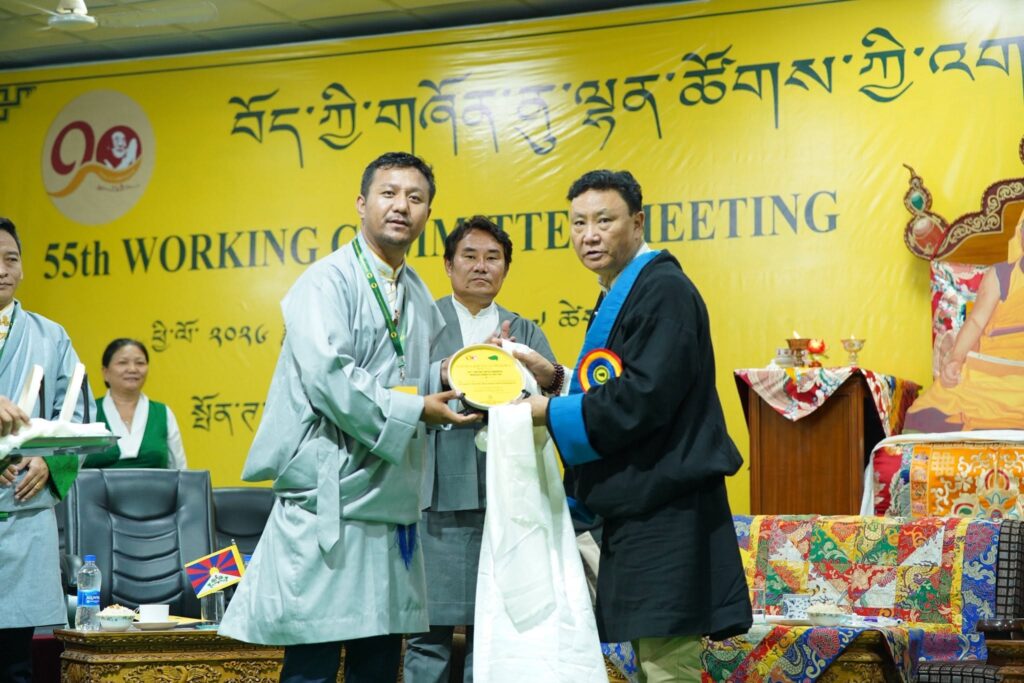
York in May this year.Mr Tashi, Additional Secretary at the
Department of Information and International Relations of the Central
Tibetan Administration, presented Tibetan ceremonial scarves to the
Chinese delegates as a token of gratitude. Mr Tashi called on them to
ask other Chinese to visit Dharamsala to learn about the issue of Tibet
and expressed hope that friendship and brotherhood between the two
communities would continue to flourish.