
Following is a Sunday editorial published by the Toronto Star newspaper with His Holiness the Dalai Lama as its guest editor:Looking for a place called homeBy Tenzin Gyatso, the 14th Dalai Lama, and John Cruickshank, publisher of the Toronto Star[Toronto Star, 24 October 2010]
 |
|
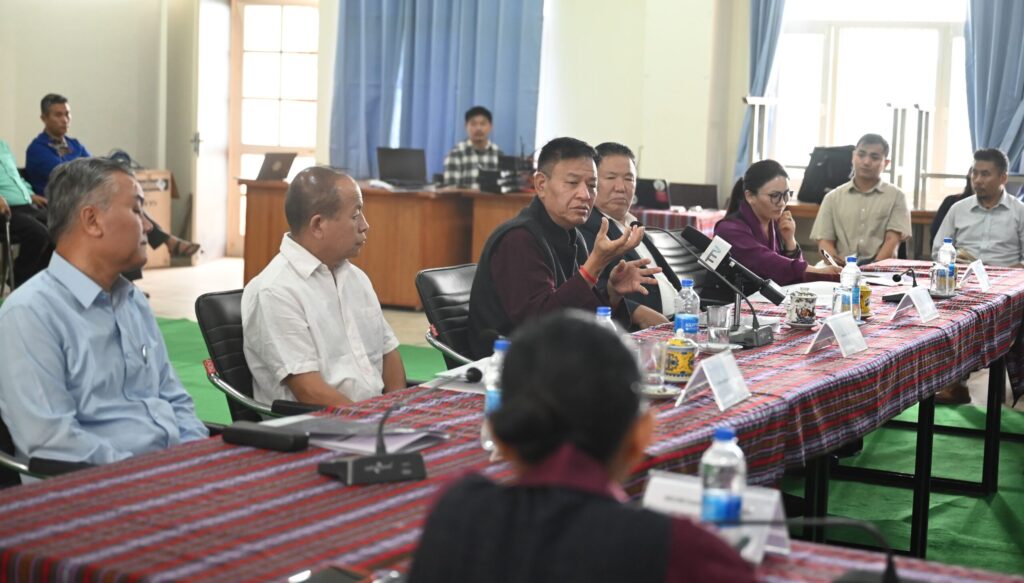
His Holiness the Dalai Lama as guest editor of the Sunday edition of the Toronto Star Newspaper published 24 October 2010. Click here for video
|
“Exile
is strangely compelling to think about but terrible to experience,” the
late Palestinian scholar Edward Said once wrote. “It is the unhealable
rift forced between a human being and a native place, between the self
and its true home: its essential sadness can never be surmounted.”Today,
nearly 50 million people around the world live in exile from their
homes, displaced by conflict, persecution or natural disaster. And this
tragic number is growing daily.More than 27 million of these
people have been uprooted and relocated within their own countries.
Others have sought shelter across foreign borders among strangers.In
refugee camps where violence breeds as quickly and fiercely as disease,
many lead lives of wasted talents and blighted dreams.The
Toronto Star is dedicating today’s special edition to the plight of
these exiles and will chronicle the history and courage of displaced
persons, including the 4,000 Tibetans who live in the Greater Toronto
Area.We believe that the worst of the problems we face today:
violent conflict, the despoliation of nature, poverty, hunger,
religious and ethnic persecution are man-made problems which can only
be resolved through human effort, understanding and the development of
a sense of brotherhood and sisterhood.We need to cultivate a universal responsibility and a universal empathy for one another.Star
reporters and editors acting on behalf of generous readers have learned
a little about this very directly in Haiti during the terrible months
since the devastating earthquake there. Several Star staff members have
become personally involved, arranging schooling and basic medical care
for children who have lost homes and families.The experience in
Haiti has shown how complex such aid giving is in a precarious
community where many thousands are displaced and many critical human
services unavailable.Canada has a long and honourable tradition of accepting refugees.In
1971, Canada under the leadership of then prime minister Pierre Trudeau
started accepting Tibetan refugees. The first 228 refugees arrived in
March of that year. Since then, the Canadian Tibetan community has
grown to now number about 5,000, most of them in Ontario, including
4,000 in the Toronto area.Canada has a record of accepting
refugees that is among the best in the western world. It generally
accepts more than 25,000 refugees a year.The need for countries around the world to accept refugees is great.As
António Guterres, the United Nations High Commissioner for Refugees,
told the UNHCR’s annual meeting this month the world is seeing the
creation of a number of quasi-permanent, global refugee populations
brought about by never-ending conflicts.Some 6 million refugees
for whom UNHCR is responsible live in “protracted situations,” which
UNHCR defines as one where at least 25,000 people of one nationality
have been in one asylum country for at least five years.Nearly
80 per cent of the world’s refugees are in developing countries, which
themselves are struggling to deal with their own internal social,
economic and political problems.Guterres has rightly appealed
for countries to expand their resettlement programs. He estimates
800,000 of the most vulnerable refugees must find shelter in a third
country. However, barely 10 per cent of those found new homes in 2009.As
more and more countries try to close the door to this growing wave of
refugees, people become more frantic to find safe haven.One
consequence is that they turn to human smugglers. For a heavy price,
they are driven or walked through hostile territory and across foreign
borders. Or they are crammed onto aging and often-leaky boats,
sometimes drowning or starving in their desperate efforts to reach
safety. In recent years, some of those refugee-laden boats have landed
on Canadian shores.Together, we must find solutions to the
problems that lead to these vast refugee populations. But we must do so
while opposing the use of violence and instead seek peaceful solutions
based upon tolerance and mutual respect.No matter what part of
the world we come from, we are all basically the same human beings. The
same is true with displaced persons. They all seek happiness and try to
avoid suffering. They have the same basic human needs and concerns. All
of us human beings want freedom and the right to determine our own
destiny as individuals and as peoples.And that is why we must
speak out on behalf of refugees everywhere in the world, who are the
“voiceless” amongst the inhabitants of the Earth.What they are seeking, ultimately, is a place called home.That is human nature.