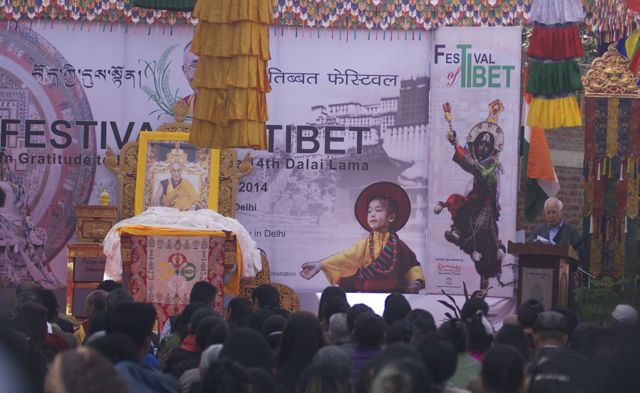
NEW DELHI: The Tibetan community in Delhi under the aegis of Bureau of His Holiness the Dalai Lama and Tibetan Settlement Office, Delhi organised a 5-day Festival of Tibet at Dilli Haat, Delhi from 10 December. The festival is part of a series of programs to celebrate the Year of His Holiness the Dalai Lama, announced by the Central Tibetan Administration.
The festival is co-sponsored by the Karnataka State Tourism Board and the Central Tibetan Administration based in Dharamshala.
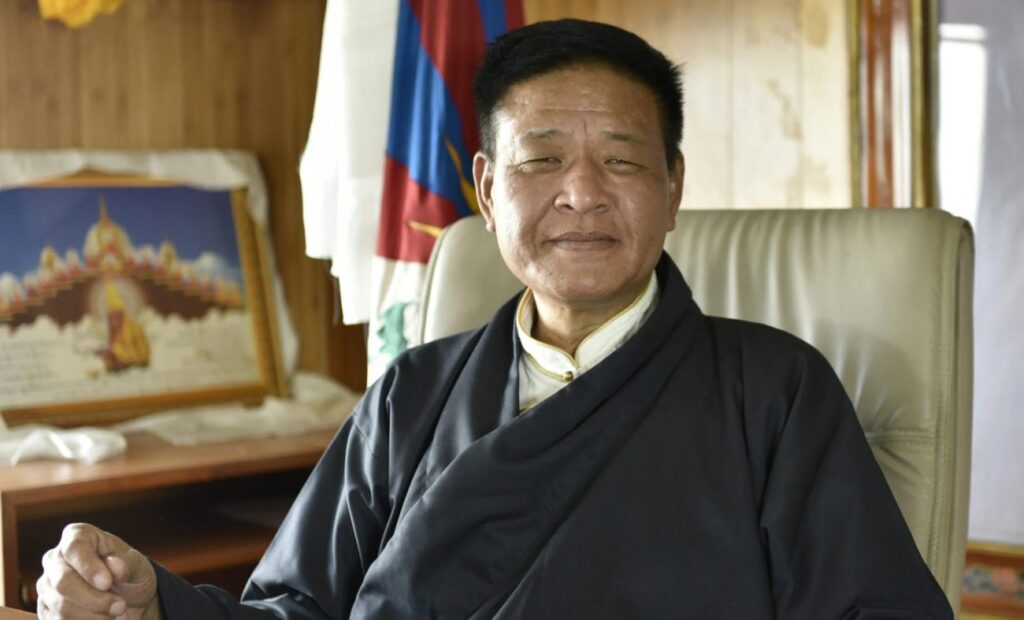
Smt. Sheila Dikshit, former Chief Minister of Delhi inaugurated the festival. Other dignitaries include Mr. Pema Chhinjor, Kalon for the Department of Religion and Culture, Mr. Tempa Tsering, Representative of His Holiness the Dalai Lama, and Mr. C.G Suprasanna, Joint resident commissioner of Karnataka Bhavan, Delhi.
The aim of the festival is to showcase the different aspects of Tibetan culture including Tibetan dances, crafts, and artefacts. Monks from Sakya Centre, Rajpur are constructing a sand mandala of Sixteen Arhat and Torma offerings. Norbulingka Institute, a premium center of preserving Tibetan culture is showcasing a live exhibition of Tibetan sculpture making, wood carving, and traditional thangka painting. They have also installed an exhibition cum sale of Norbulingka products. Tibetan carpet and apron weaving from Rajpur Tibetan Women’s Centre and Dekying Ling Tibetan settlement are also being exhibited.
The Tibet Museum of the Central Tibetan Administration is displaying a photo exhibition on His Holiness the Dalai Lama’s three main commitments in Life while the Tibetan Medical and Astrological Institute has arranged a free medical and astrological consultation, along with the exhibition of their products and materials of Tibetan healing system.
The festival also include talks on Tibetan Buddhism; Tibetan Medicine and Astrology; Sand Mandala and documentary movies on the His Holiness the Dalai Lama and Tibet issue.
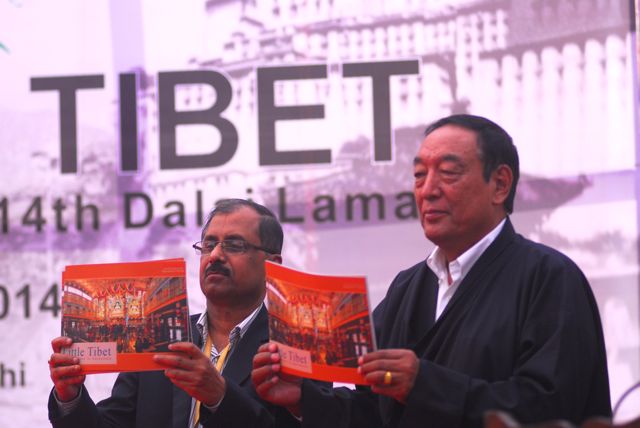
A book titled ” Little Tibet’ was also launched on the first day of the festival. The book gives an insight into the Tibetan settlements and monasteries in Karnataka, where the five largest Tibetan settlements are located.